I went into the @Polkadot Solidity Hackathon planning to add one component.
Ended up building an entire IDE.
Relaycode was made with modularity in mind - every pallet parameter gets its own input. So Revive pallet just needed a Solidity editor component. Simple, right?
Except the interface felt way too small for writing actual contracts.
Two days before the deadline, I scrapped the plan.
And built Relaycode Studio instead. 👇
Polkadot is quietly rebuilding momentum, with important governance changes and a product-focused roadmap:
1. Latest SEC guidance lists $DOT as a digital commodity, not a security, along with $BTC, $ETH, $SOL, $ADA, $XRP, $XLM, $AVAX, $HBAR and others, after extensive compliance work
2. $TDOT, first-ever Polkadot ETP in US, launched March 6
3. Major tokenomics changes went into effect March 14, including a) hard cap (max supply) of 2.1 billion DOT, immediate halving of inflation, and "halvings" of inflation every two years. All approved via on-chain governance
4. You can now pay transaction fees in any approved asset, e.g. $USDT, $USDC (swapped for DOT behind scenes)
5. Focus on "proof-of-personhood" making it easier to avoid bots and Sybil attacks that plague many chains
*Not investment advice, but great to see
Hi @piersmorgan can you help with this?
A Pakistani man called Naveed Akram, living in Australia has had his identity wrongly framed as one of the terrorists in Bondi beach, by thousands of online and published accounts.
He is absolutely petrified and cannot leave his home.
Did you know that one of the most popular Counter-Strike / DOTA 2 skin trading platforms is actually running on top of Polkadot?
Let's take a look at DMarket – which uses Polkadot's Mythos rollup as its Ledger.
Why Gavin Wood Stepped Away — and Why He’s Back Now
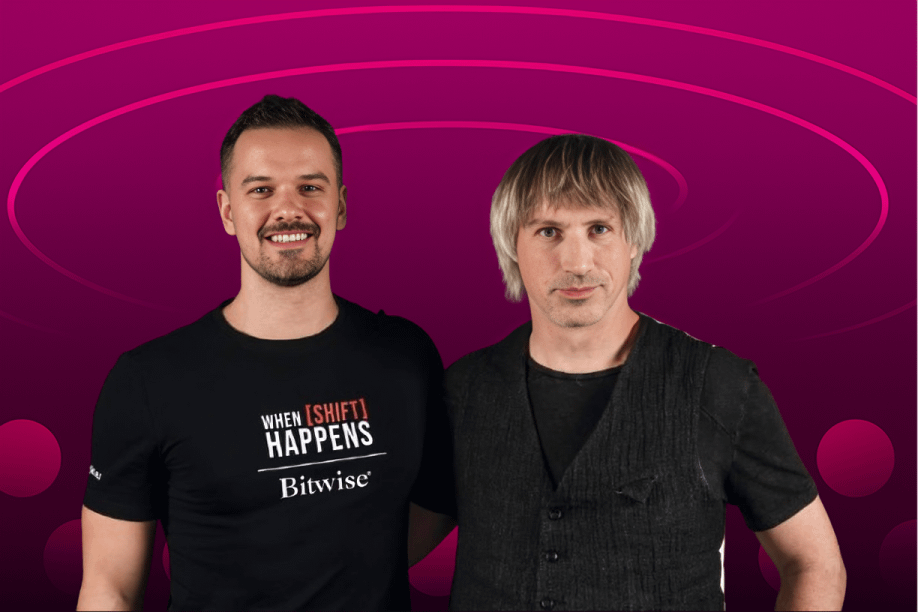
In the 124th episode of When Shift Happens, I sat down with @gavofyork, creator of @Polkadot, founder of @Web3foundation, and soon-to-be CEO of Parity Technologies, to talk about leadership, decentralisation, and the future of blockchain.
Our conversation moved easily from protocol architecture to the nature of happiness, and Gavin’s central belief that the industry can return to its core ethos.
In 2022, Gavin stepped down from his CEO role at @paritytech, telling me, “Running a company is a very particular skill set and it’s not something that I’m particularly skilled at.”
His gift, he said, lies in “invigorating people” and getting them excited about projects, not in management or operations. Those responsibilities left little room for the deep thinking and architectural work he values most.
“There’s a reason academics are left to their own devices,” he told me. “Stress really inhibits this kind of thought.”
Over the next two years, he poured himself into JAM, a major evolution of Polkadot’s protocol design, and watched the architecture he’d envisioned begin to take shape.
A few days ago, Gavin announced he was returning as CEO. This time, he says, the foundations are in place, the market is ready, and with Polkadot 2.0 on the horizon, it’s the right moment to lead one of the most important rollout phases in the network’s history.
A Reluctant CEO, A Committed Builder
Gavin has no interest in building personality cults. “Charismatic leaders have no place in crypto,” he said, arguing that protocols should stand on their own merit and be resilient to the presence or absence of any one figure.
This belief shaped Polkadot’s governance model, which widely distributes decision-making power, even if the results have been “mixed” at times.
It’s also why he created JAM — his vision for a “magic internet supercomputer” that tackles hard problems first.
On Crypto’s Direction and Distractions
Gavin didn’t shy away from critiquing the industry. From Ethereum’s Layer 2 approach, which he views as a “power grab,” to the rise of “fart coins”, he sees a space too often distracted from building real, user-centred value.
Yet, his return signals optimism. “I’m very happy with JAM and the way it’s going,” he said. “This is actually one of the more fun times in my blockchain career.” Now, the focus is on aligning technical progress with market readiness and turning Polkadot’s architecture into real on-chain impact.
The Broader Ethos
Not all of our discussion was about technology. We spoke about the illusion of a free society, the importance of self-sovereignty, and the mixed blessings of wealth.
For Gavin, true progress means building systems that empower individuals without forcing them to trust centralised intermediaries.
And at the heart of it all is curiosity. “Curiosity fuels joyful living,” he said near the end of our talk. Whether in life or code, exploration matters more to him than titles or market cycles.
As Gavin steps back into the CEO role, the challenge will be balancing a visionary architect’s mindset with the realities of scaling a global blockchain network.
If our conversation is anything to go by, he’s returning with both the philosophy and technicalities needed to steer Polkadot into its next era.
👉 You can watch the full conversation on When Shift Happens on YouTube or listen on your favourite podcast platform.
DROPS E12: @playmythical : The Future of Web3 Gaming is here!
I recently flew to New York to sit down with @johnwastaken is the CEO of @polkadot based Mythical Games and one of the minds behind @EnterTheMythos
From his $700 crypto kitty purchase that changed everything in 2017 to building games like @FIFARivals , John explains how blockchain technology is creating real economic value for gamers - without them even knowing they’re using crypto.
He also dives deep into why he believes that Polkadot is the best blockchain to build complex games on and why there was pretty much no alternatives
Timestamps
0:00 — Introduction
2:19 — Explaining My Job to Strangers
2:42 — Who is John Linden?
3:17 — Why You Should Trust Me
4:23 — Gaming’s Dark Side
7:07 — Hiring Challenges in Crypto
8:28 — What Makes a Good Mobile Game?
9:38 — When Is a Game Successful?
12:23 — My Crypto Aha Moment
13:57 — Going All-In on Crypto
15:18 — Why Crypto Gaming Is Slow
18:28 — Web2 Gaming’s Biggest Issues
20:21 — Monetizing Global Gamers
24:13 — Monetizing From 5% to 65%
27:57 — Unlocking African Gaming Markets
30:14 — Understanding Digital Supply Chains
33:06 — What is Mythical Games?
33:29 — Why Mythical chose to build in the Polkadot and DOT Ecosystem
37:23 — Defining Success for FIFA Rivals
39:57 — What’s Next for Mythical Games
41:27 — Creating Sustainability in Web3
44:19 — Web3 That Feels Invisible
45:17 — Concluding Remarks
Smart contracts live on Kusama.
Solidity contracts, off the leash.
Deploy on Kusama, break shit, build free.
All using known tools.
ps new website by @byteboro.
How will Polkadot unlock the DOT tokenomics by creating more demand for the DOT token?
With the next evolution of @polkadot parachains - multi-core elastic scaling. Here is what it enables:
Make your chain run faster, do more transactions and just pay for the extra cores (in DOT) when you need them!
@gavofyork says that multi-core elastic scaling will unlock DOT tokenomics by increasing the DOT demand from parachains that want to pay more for better performance
Currently, the main issue is that there are only 45 parachains, and only one core per parachain.
"But there are chains out that would love to pay more money - more DOT - and have more cores to make their chain run faster. We know this because we are talking to them"
“Crypto Has Lost Its Way”: Gavin Wood speaks on Governance, Greed, and Rebuilding the Blockchain Ethos
Gavin Wood, the co-founder of Ethereum and founder of @Polkadot, sat down with me on the 124th episode of When Shift Happens to unpack why he believes crypto has fundamentally failed its original mission.
Through a long and honest conversation, @gavofyork diagnoses the problems plaguing the blockchain industry and offers a philosophical and technical reimagining of what it could become.
The episode is almost like a manifesto. From Ethereum’s controversial Layer 2 design to the dysfunction of blockchain governance, from the illusion of free societies to the rise of meme coins and financial escapism, Gavin explores what went wrong, how we got here, and what could come next.
“I Stopped Trusting Systems”
Early in the conversation, Gavin traces the roots of his disillusionment with broader systems of governance and power. “We’re not free,” he says plainly, describing modern society as an illusion of autonomy propped up by invisible gatekeepers, regulations, and traditional institutions. He describes our ‘neutral’ world as a tightly controlled sandbox.
His diagnosis? The current social contract is broken, and not just in Web3. His response was to build: to create tools that offer actual sovereignty. But even in the crypto world, things didn’t go to plan.
Stablecoins, Banks, and the Illusion of Progress
One of the early wake-up calls for Gavin was how quickly crypto reinvented traditional institutions under a new name. Stablecoins, he notes, are too similar to digital banks: custodial, opaque, and dependent on regulations.
This critique sets the stage for his broader point: that Web3 has often traded its ideals for convenience, familiarity, and short-term gains.
Ethereum’s Layer 2 Mistake and the JAM Response
For Gavin, Ethereum’s pivot toward Layer 2 solutions was a betrayal of its founding ideals. "It was a mistake." The reliance on L2s, he says, represents a dangerous power grab that undermines decentralisation by consolidating control in fragmented silos with weak trust assumptions.
Instead, Gavin introduces Join-Accumulate Machine (JAM), a new vision for a “magic internet supercomputer.” JAM is Polkadot’s next evolution, a response to Ethereum’s shortcomings. What sets JAM apart is its multi-core elastic scaling architecture. Instead of fragmenting trust across rollups or external execution environments, JAM allows for many parallel “cores” to operate in synchrony within the same trust model. Each core can process its own workloads, like a modern multi-core CPU, and the system dynamically allocates resources based on demand.
We Can’t Remove Greed
One of the episode’s central themes is the challenge of aligning human incentives with the ethos of crypto. Gavin argues that we can’t remove greed, but we can design systems where personal gain aligns with the collective good.
He explores how DAOs can become better models of governance, but only if they’re rooted in shared fate, meaningful transparency, and actual utility. He’s particularly critical of shallow tokenomics and flashy launches that serve only early investors and speculators.
Polkadot’s Mixed Governance and the Limits of Leadership
When I pushed Gavin to explain Polkadot’s journey, from the successes, to the challenges, Gavin admits the governance system has had “mixed results,” with transparency and communication often falling short. Yet he remains committed to experimenting with better models.
He also speaks frankly about stepping down from the CEO role: “I suck at management, I hate managing people.” Instead, he has shifted toward a more architectural/conceptual role, trying to define what “good” looks like for Polkadot and for crypto at large.
The Cultural Decay of Crypto: From Cypherpunk to Casino
Perhaps the most striking part of the conversation is Gavin’s harsh critique of the current crypto culture. What began as a movement for freedom and trustless systems, he says, has devolved into a meme-driven casino, full of "fart coins" and “financial escapism.”
He worries that the space now rewards charisma over engineering, and hype over utility. But rather than abandon ship, he sees an opportunity to rebuild. To use the tools we’ve created to re-centre around values like transparency, curiosity, and decentralisation.
Still, there are bright spots. Within the Polkadot ecosystem, parachains have quietly become home to some of the most grounded efforts in the space. Projects like @playmythical, @EnterTheMythos, and @frequency_xyz aren’t trying to win the attention war with memes or token stunts.
Instead, they’re a reminder that not everything is about hype. Some teams are still quietly chasing that early ethos, solving real problems and building actual products. A great example is the newly released mobile game @FIFARivals .
On Bitcoin, Digital Gold, and the Best Tech Losing
While Gavin is no Bitcoin maximalist, he sees value in Bitcoin as a decentralised store of value. But he’s also realistic about its limitations, particularly in governance and adaptability.
He warns that better technology doesn’t always win. History shows that convenience, inertia, and marketing often prevail. “Sometimes the best tech doesn’t win — but the tech that solves the most relatable problems does.”
Rebuilding Crypto’s Ethos
As our talk came to a close, Gavin returned to JAM, a project that synthesises years of learning from Ethereum, Polkadot, and other chains. He sees it as a chance to get things right from the ground up without compromising on trust.
Gavin’s belief is in crypto as a philosophical project, not merely a financial one. He talks about more than replacing money, but also building better systems to live and govern ourselves. He states firmly that Crypto has an ethical problem as opposed to a technical one.
And that, for Gavin, is the heart of the problem: “We forgot why we were building,” he says.
Still, the episode closed on a note of quiet optimism. If the space can let go of hype, embrace complexity, and return to curiosity, there’s still a path forward.
👉If you enjoyed this summary, head over to YouTube or your favorite podcast app for the full episode and more insights that didn’t make it in here.
Has the Parachains product been a success?
For @gavofyork - Polkadot parachains might not have been a success when measured in "Fartcoin or Dogecoin success terms", but have seen a substantial success in the "Warren Buffett defintion of success": projects taking a punt on, paying to use parachains and staying (!!) despite other L1 blockchains coming with very large checks to incentivize Polakdot based Projects to join their ecosystem
@Polkadot 's Parachains were designed to solve problems that many other Layer 1 blockchains architecture couldn’t - and that's why some teams are choosing Polkadot: because it enables what others can't
Some examples include @frequency_xyz with their decentralized social network graph and @EnterTheMythos / @playmythical with their in game assets: they are replacing centralized services with what people consider useful things, showing that the parachains product is being put to substantial use
DROPS E8: @energywebx : Your Tesla will be earning money for you while you sleep within the next 3 years!
Polkadot June continues, this time with @edhesse79 , the mind behind @energywebx !
This is the second of the 3 conversations I recorded with the 3 @Polkadot Musketeers in Lisbon
Be ready to see a different point of view and different takes on the DOT ecosystem, while understanding why Polkadot is one of the best places to build for highly specific and complicated projects, such as Energy Web
Timestamps
0:00 Intro
0:56 Welcome to DROPS
1:33 From Hype to Deployment
6:23 Who is Ed Hesse?
7:30 Hydropower Meets Bitcoin Mining
12:30 Conviction Through Crypto Winters
16:32 What is Energy Web?
18:48 Why Energy Markets Need Blockchain
21:18 Building on Polkadot
24:06 Why @Polkadot is Better
26:54 Why Governance Evolves Faster On-Chain
30:29 Anonymity Vs. Identity Debate
32:30 Same Values, Different Approaches
33:28 How Energy Web Solves Real Problems
39:46 Attention Drives Token Value
41:05 When Cars Start Trading
42:34 Turn Energy Into Investment
44:37 Future of Energy Earnings
45:59 Concluding Remarks
E124: @gavofyork reveals why crypto has failed and how network founders can work together to save it!
Gavin Wood is the co-founder of Ethereum, the creator of the EVM and the Solidity language, and the Founder of @Polkadot & @paritytech
Timestamps:
0:00 Introduction
1:59 Partnerships:@JupiterExchange, @bitwise, @SuiNetwork, @Mantle_Official, @ForzaBitcoin
2:40 Spending Crypto with @KASTcard
6:26 Stablecoins Are Just Banks
7:26 Regulation Destroys Web3 Vision
11:20 Self-Custody with @Trezor
12:13 The Illusion of Free Society
14:27 Self-Sovereignty or Societal Collapse
15:59 Why I Stopped Trusting Systems
18:46 Attaining Self-Sovereignty
24:33 Rethinking the Social Contract
27:27 Network States Need Territory
33:09 Can Networks Work Together?
39:28 Why Blockchain Governance Is Broken
45:41 DAOs Are Just Better Governments
50:04 Democracy Fails Without Shared Fate
53:10 Turning Greed Into Alignment
56:07 Polkadot’s Mixed Governance Results
58:25 Polkadot’s Transparency Problem
1:06:39 Network Founders’ Hardest Problems
1:09:36 Why I Hate Managing
1:11:57 From CEO To Architect
1:13:21 Defining Good for Polkadot
1:14:56 Letting Go Of Control
1:18:29 Charismatic Leaders vs Protocols
1:23:53 Polkadot Without Gavin Wood
1:26:58 Bitcoin as Digital Gold
1:31:44 Bitcoin: Swiss Bank In Pocket
1:33:33 Does Best Tech Always Win?
1:38:03 Solve Hard Problems, Products Will Follow
1:45:37 Fart Coins and Financial Escapism
1:49:51 Ethereum L2s vs Polkadot Parachains
2:03:20 Building useful stuff on Parachains like @EnterTheMythos & @playmythical
2:04:34 Multi-Core Elastic Scaling
2:10:08 JAM vs. Ethereum Explained
2:20:51 Is JAM Good For Polkadot?
2:22:33 Ethereum’s Layer Two Mistake
2:24:48 The L2 Power Grab
2:26:25 Has Crypto Failed?
2:32:02 Rebuilding Crypto’s Core Ethos
2:36:51 The Mixed Blessing Of Wealth
2:45:35 Dealing With Injustice
2:52:10 Curiosity Fuels Joyful Living
2:53:27 Concluding Remarks
Crypto Networks should NOT have charismatic leaders!
Bitcoin has Satoshi, Ethereum has Vitalik, Solana has Anatoly, Polkadot has Gavin
Yet, @gavofyork firmly believes that Crypto Networks should NOT have charismatic leaders!
Why?
If people follow a protocol because of a leader instead of the protocol itself, we are back in the “football team territory” - echochambers where everyone is fighting for their own team, network, and token
Charismatic leaders create, in essence, competing echo chambers!
This is the biggest thing that will prevent crypto from peacefully consolidating into something sensible
If members of a crypto network look at a leader to make decisions, how have we progressed beyond what we had before Bitcoin: arbitrary leadership and blind sheep following them?
This explains Polkadot and the DOT ecosystem’s vision and push towards building one of the biggest DAOs in the world: OpenGov
Our conversation with Gavin Wood, the Founder of @polkadot is out this Thursday 5th June!
POLKADOT JUNE is kicking off next Monday, 2nd of June!
What to expect? A bunch of high signal and high quality clips and articles based on our 3 long format - in studio - conversions with the 3 @Polkadot musketeers: Gavin, Ed and Mark
Here is the podcasts release program:
Part 1: @gavofyork 3H conversation, out on Thursday 5th
Expect a journey into the mind of the Founder of @Polkadot , we go through a lot: self sovereignty, OpenGov, Gavin relationship with money, happiness, JAM, the next evolution of the parachains and its impact on the DOT tokenomics, and much more
Part 2: @edhesse79 , out on Tuesday 10th
We go deep into Energy Markets, Blockchain, how your Tesla could make you money trading on the electricity price while you are asleep - or at work, @energywebx , Ed’s early encounters with Mark and Gav, Ed involvement in the ETH ICO and his early bet in the DOT ecosystem
Part 3: @mark_cachia_ , out on the 24th
What Mark’s edge is, why he decided to go all in DOT and the Polkadot ecosystem, why he is betting big on @playmythical and @EnterTheMythos , and much more
Expect 3 amazing conversations, tons of clips and articles on X, Youtube, IG, Linkedin, Tiktok, spotify and Apple podcast to make sure everyone learns a lot and has tons of fun - and does so through their favorite medium and platform!
See you all next week for the launch of the POLKADOT JUNE festivities 🥳