Spending the last weeks by integrating Solana into DiScore for the hackathon.
At the same time, DiScore is monitoring the servers and users.
One thing became obvious very quickly: as Discord communities scale, understanding what’s actually happening inside them gets much harder.
Curious if @mattytay has thought about this problem too.
As Discord grows, it becomes harder to understand what’s actually happening.
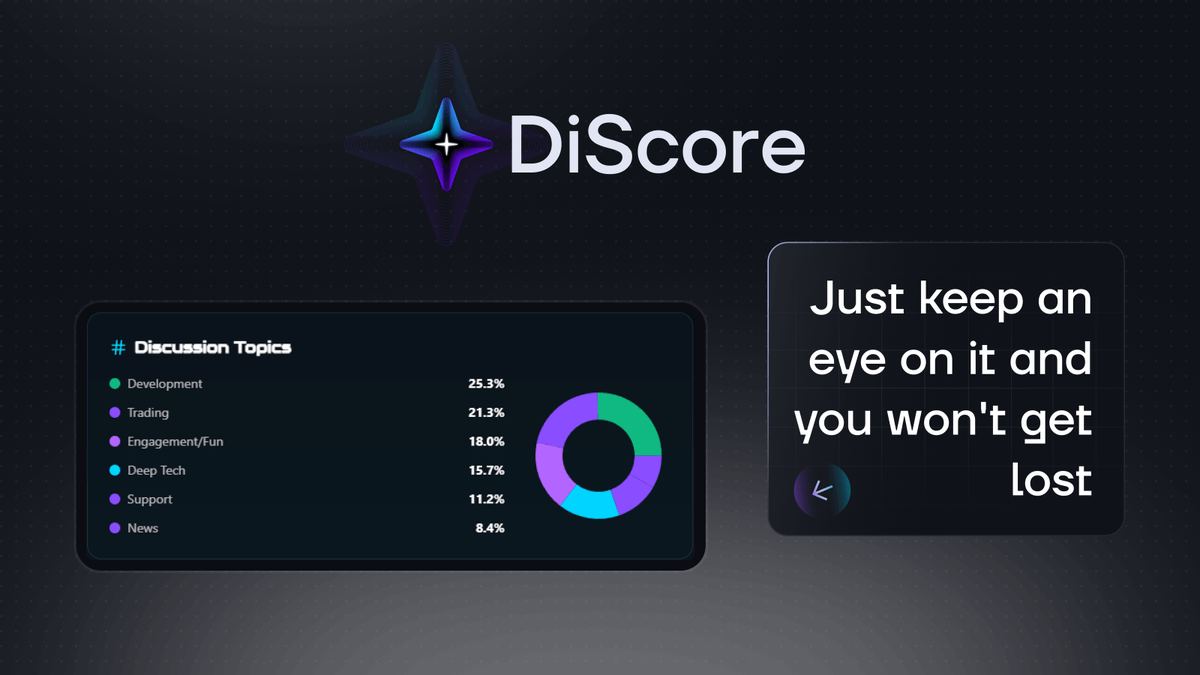
In one server most messages got 0 replies, a small group drove most discussions and off-topic activity dominating.
From the outside - “active”. In reality - low interaction.
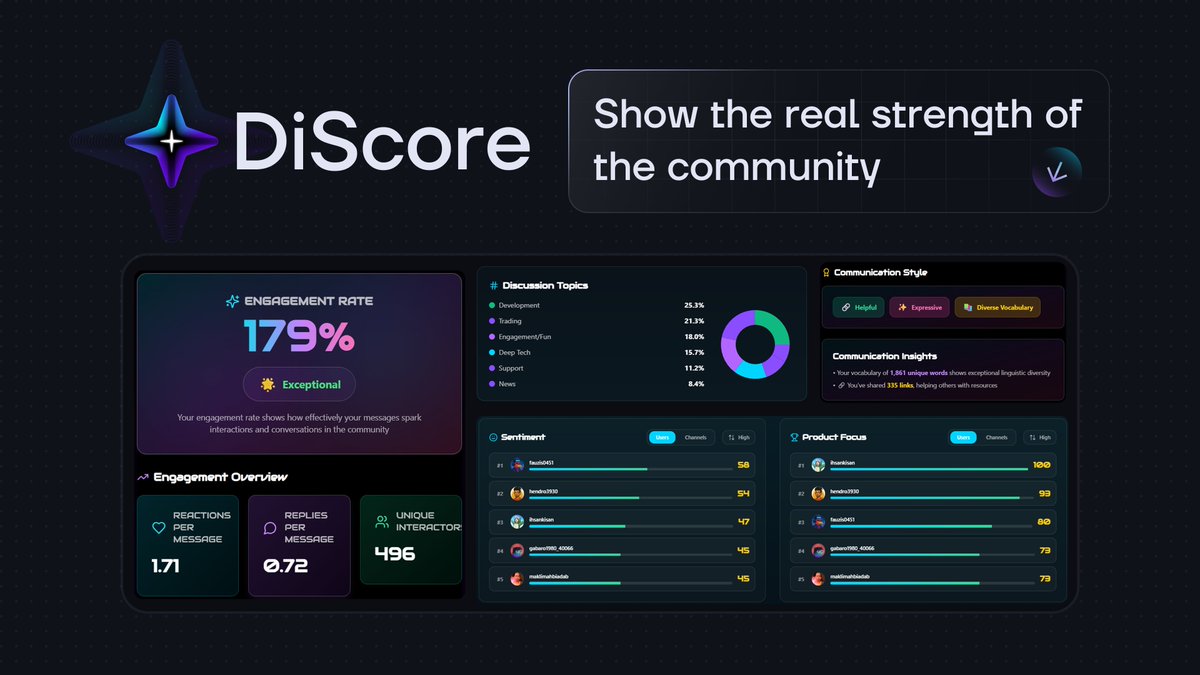
With DiScore you see:
- which conversations actually matter
- what and who people respond to
- where it’s just noise
Same Discord. Different understanding.
Founders often talk about community strength.
But when asked to prove it, they fall back to:
- message count
- user count
None of which show real contribution.
That’s what DiScore is fixing.
One of the hardest problems in growing a Discord community - finding people you can trust with responsibility.
Usually this process looks like:
- Observe chat
- Ask team members
- Look at 50 useless "activity" charts
Because of proven effectiveness, candidate discovery becomes much more obvious.
With DiScore, you can see who:
- Understands & uses your product
- Fits your ideal user profile
- Actually brings value
Instead of guessing - you shortlist.
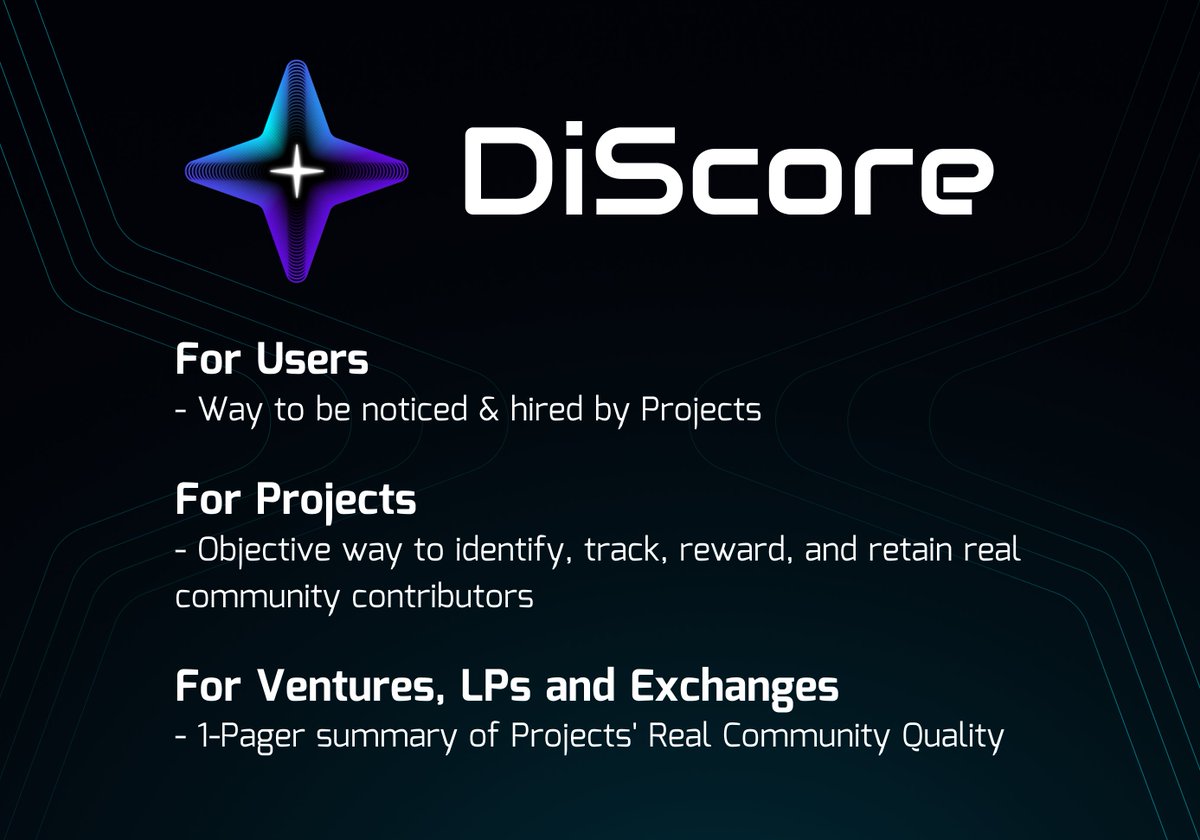
DiScore brings measurable reputation to Discord and makes community traction transparent for projects, users, and investors
Follow our progress @mattytay
Open to early partners and feedback
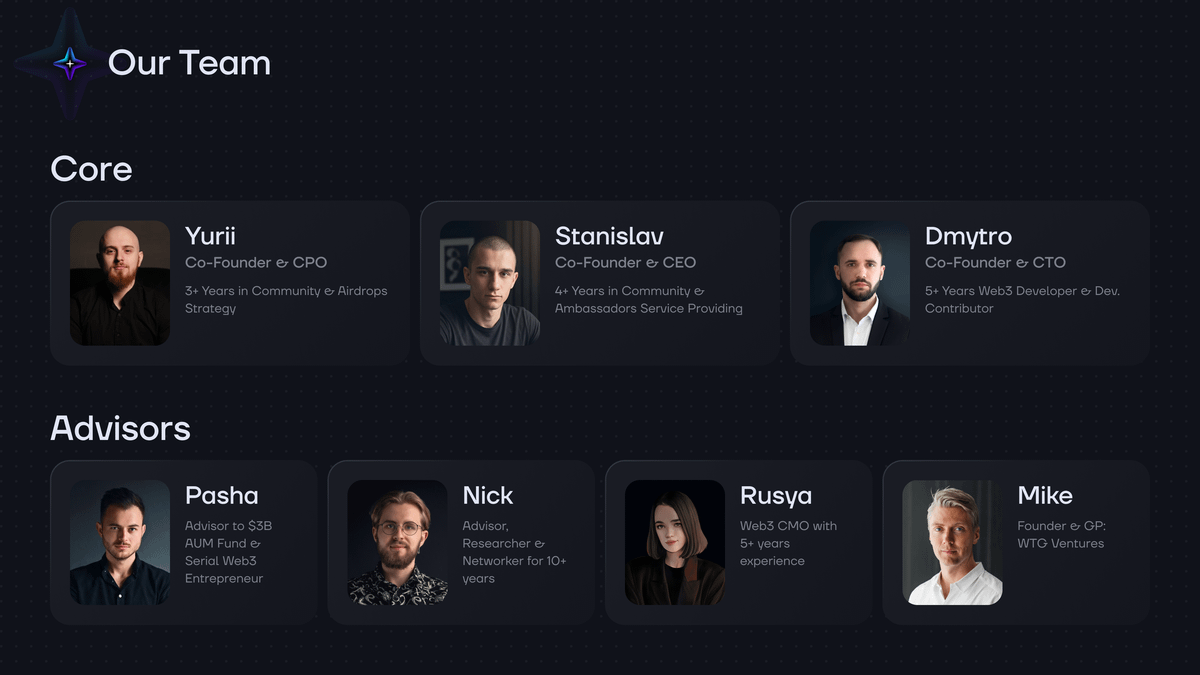
We’ve spent 4+ years building and scaling Web3 communities through ambassador programs and contributor campaigns
We’ve seen how projects invest heavily in community growth and incentives, yet still rely only on message count and member numbers to evaluate results