It was a year ago today we hauled the special Timbers in for the windows of the Theodore Roosevelt Presidential Library . It opens on July 4th it will be absolutely amazing. The view alone is awesome. I had the 100,000 dollar tour minus the 100,000 lol. It’s 600 miles from home, and I’m definitely gonna make a trip out there in my pickup to see the finished job. I wouldn’t walk across the street to see Obama’s POS
@MarcoPolo501c3@HunterBiden@theregardedduck@Raindance_33 Hunter thinks he's resurrecting himself on X, but Marco Polo is working overtime to refute the lies, increasing traffic at https://t.co/Zr6dkkeqj0, and selling more books in the process. Hilarious. Way to go, Hunter.
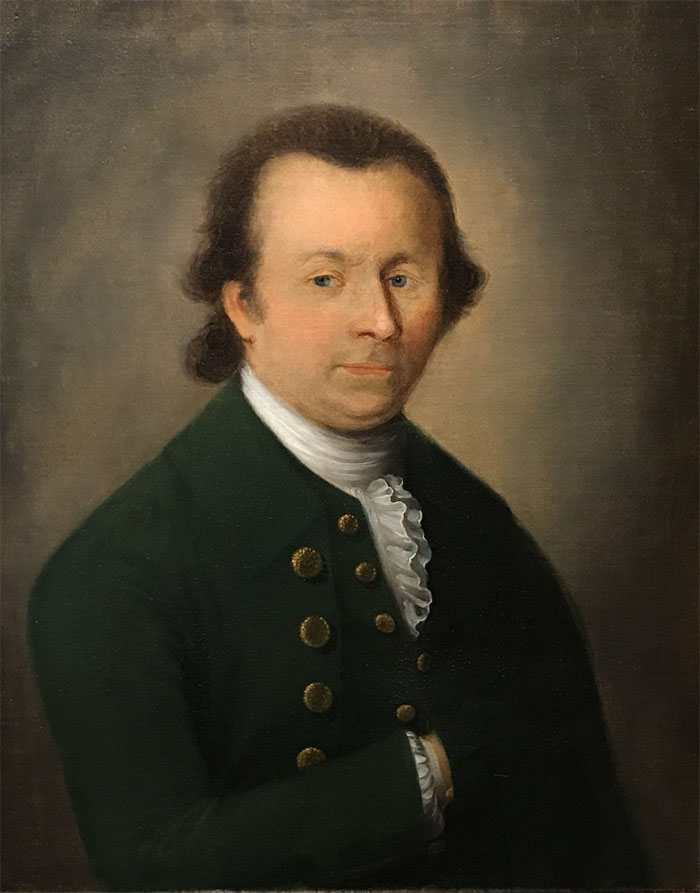
This man's life is so obscure that we are not even sure what he looked like, yet his signature is worth more than a Picasso sketch and historians have hunted it like buried treasure for two centuries. The strange afterlife of Button Gwinnett is one of the wildest stories of the Founding era.
Start with the name. Button Gwinnett. He was born in England, the son of a Welsh clergyman, and "Button" was his godmother's surname, not a nickname. One of only eight signers of the Declaration who were born across the ocean in the country they were about to rebel against.
His actual life was a string of failures. He sailed to America, tried being a merchant, and went broke. He bought a big plantation on St. Catherine's Island in Georgia on credit, tried planting, and sank into debt so deep he lost most of it. By his early 40s he was a struggling, ambitious nobody on the edge of the colonies.
Then the Revolution gave him a second act. Georgia sent him to the Continental Congress, and in 1776 he signed the Declaration of Independence. He rocketed upward fast, even serving briefly as the acting governor of Georgia in early 1777.
And that is where the ambition turned fatal. Gwinnett wanted to lead Georgia's troops, but the command went to a rival named Lachlan McIntosh. The two men blamed each other for a botched invasion of British Florida, and McIntosh publicly called Gwinnett "a scoundrel and lying rascal."
In that era, you could not let that stand. Gwinnett challenged him to a duel. On May 16, 1777, the two men stood twelve paces apart and fired. Both were hit. McIntosh recovered. Gwinnett's leg wound turned gangrenous, and three days later he was dead, becoming the very first signer of the Declaration of Independence to die, less than a year after signing it.
Here is where it gets strange. Because Gwinnett died so early and was so obscure before fame found him, almost nothing he ever wrote survived. Only about 51 documents bearing his signature are known to exist on the entire planet.
That scarcity created a frenzy. Wealthy collectors obsessed with owning a complete set of all 56 signers found that 55 were gettable and one was nearly impossible. Button became the missing piece, the white whale of American autographs.
The prices are staggering. A single Gwinnett signature has sold in the range of $700,000 or more, and a complete signers' collection anchored by his name closed at roughly $1.4 million. Drop for drop, his ink is one of the most valuable substances in the country. A failed merchant who died broke now signs the most expensive autograph in America.
And the final twist: today millions of people know his name and have no idea why. Gwinnett County, Georgia, a sprawling piece of metro Atlanta with nearly a million residents, is named after him. More people live in his namesake county than ever read a word he wrote.
He failed at almost everything he tried, died in a pistol fight over wounded pride within a year of his one great achievement, and somehow became immortal twice over, as a million-dollar signature and a county full of people who never knew the broke, hot-tempered Englishman they were named for.
@TraditionSarah That's a treasure! Very labor-intensive to mend, but worthwhile preserving her work and family memories. The best place for that old fragile fabric is back on the bed where it can be displayed flat. Following cuz I never see other people who sew here 😁
Submitted from can't make it up:
"A Somalian woman was seen carrying a bouquet of cash thru the crowd at the Prior Lake High School graduation ceremony."
On this day in 1943, FDR signed a law that permanently changed your relationship with your own paycheck. You just never noticed, which was entirely the point.
Before the Current Tax Payment Act of 1943, Americans paid their income taxes in one lump sum. Every year, you calculated what you owed and wrote a single check to the government. You felt every dollar. You knew exactly how much the government was taking.
The 1942 wartime revenue act suddenly expanded the income tax to cover millions of working-class Americans who had never paid it before. The government desperately needed revenue. But they had a problem: how do you get people to pay a new, much larger tax without causing a revolt?
A Macy's executive named Beardsley Ruml came up with the answer. Withhold it before workers ever see it. Take it out of the paycheck automatically. Make the number on the check the only number that feels real.
It worked. The psychology was perfect. People don't grieve money they never held. The government went from collecting taxes from 7 million Americans to 60 million, almost overnight, with barely any public resistance.
They also quietly canceled 75% of what was owed from the prior year to smooth the transition. A one-time tax amnesty that almost no one remembers happened.
Economists and historians have noted for decades that withholding is a primary reason Americans never developed the visceral anti-tax anger common in countries where people write the check themselves.
You were supposed to notice. They made sure you wouldn't.
A founding father signed the Declaration of Independence, watched the British seize his home for SEVEN years, lost his wife while living as a refugee, and then at age 69 walked away from it all to start over on the frontier. Meet William Floyd. Buckle up.
He never asked for any of this. His father died when he was a teenager, so Floyd dropped whatever education he might have had and took over the family farm on Long Island. He became wealthy, comfortable, established. His family had worked that same land for generations.
Then he was sent to the Continental Congress, and in July 1776 he became the first man of the New York delegation to sign the Declaration of Independence.
The punishment was almost immediate. Weeks later the British crushed the American army at the Battle of Long Island and took his entire estate. Then they did something extra: they turned his home into a barracks for their cavalry and occupied it for SEVEN straight years. His family fled across the water to Connecticut with essentially nothing.
For those seven years a wealthy landowner and his children lived as refugees, surviving on the charity of relatives and friends, while enemy soldiers ate his food and slept in his beds.
It got worse. In 1781, before the war was even won, his wife Hannah died in exile. She never saw home again.
When Floyd finally returned in 1783, the estate was wrecked. The home his family had held for generations was a ruin left behind by foreign cavalry.
Most men would have spent the rest of their lives quietly rebuilding what they lost. Floyd rebuilt it, remarried, served in the very first United States Congress, and then did the most surprising thing of all.
At nearly 70 years old, an age when most Founders were writing memoirs and posing for portraits, Floyd sold his comfortable life, packed up, and moved to raw frontier land near the headwaters of the Mohawk River in central New York. He cleared wilderness and built a new homestead from scratch.
He lived there until he died in 1821 at 87, a Founding Father who ended his life not in a mansion full of relics, but on the edge of the map, still building.
Some men signed the Declaration and lost everything. William Floyd lost everything, got it back, and then chose to start over anyway.
@elonmusk I agree completely, and have been working with the one legislator in the nation willing to run with this. LET'S GO.
YOUR TIME IS UP, GENDER BUTCHERS.
Your medical license won't save you, and I won't stop until justice is served.
Do you support abortion in cases of rape or incest?
Rebecca Kiessling is the face of this question.
She was conceived in rape.
Rebecca founded her organization Save The 1 to help society recognize that every child’s life is valuable even if they were conceived in rape.
Her life began that way and her mother almost aborted her twice, but Kiessling survived.
“It’s good to be alive," she says.
“But I know there’s nothing extra special about me that makes me more worthy of life than others – so we all must continue fighting so others have the same opportunity at life as I did. We must fight to save the one.”
An attorney, mother and pro-life advocate, Kiessling speaks all across the world about protecting unborn babies from abortion without exception. She said she also speaks to lawmakers and even presidential candidates, urging them to recognize that pro-life laws should protect unborn babies in all cases, including rape.
“My birth mother was abducted at knife-point by a serial rapist and sought to abort me through two illegal abortions in a back alley four years before Roe v. Wade became law,” she told Christian Life Daily. “Because I was conceived in rape, I was targeted for abortion. But although she wanted to abort me, thankfully Michigan law protected me and my life.”
Kiessling was adopted by Jewish atheist parents, but she eventually became a Christian. She said her organization’s name, Save The 1, is based on the parable Jesus told about the lost sheep.
“… when I learned how I was conceived I wanted to defend my own life, and once I became a Christian, it changed and went even deeper, and now I feel a calling to go back and save others,” she continued.
“I feel like my life was rescued from a burning building, and now I’m going back to save others.”