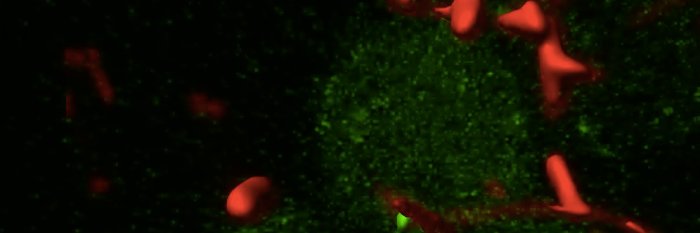
What time is your #immune system strongest? ⏰🧬
@DicaraLab explores how Drosophila is helping unravel the links between circadian clocks and innate immunity—revealing how time-of-day can shape immune responses
https://t.co/DDtwI3V3Hq
#CircadianRhythms#Immunology#FruitFly
🔔 Join us at 3:00 PM EST for an exciting talk by @DicaraLab from @DalhousieU on Peroxisome-dependent immunometabolism and #inflammation 🧬 Don't miss out! 🚀
📝 Poster & registration: https://t.co/ri5u0y29Nq
💻 Zoom Link: https://t.co/TA4oQIhegP
#EarlyCareerResearch
Increasing evidence for the central role of peroxisomes in antiviral immunity. A new study provides in vivo evidence to support a role for peroxisomes in SARS-COV-2 infection. Kudos to the authors on this important study.
https://t.co/M8XCfNaB68
Alterations in ether phospholipids metabolism activate the conserved U... https://t.co/yQ82i1dJJr
And this is the link. It is finally online and it shows the important of organelles cooperation to control lipid signaling in tissue homeostasis in the intestinal tract
"Dumbest Trade War in History" is how the @WSJ Wall Street Journal views the Trump Tariff. Cartoonist Michael @deAdder agrees-showing us an American President taking dead aim on his own left foot.
This February 28th, we encourage you to advocate for peroxisomal disorders. Rare Disease Day is an awareness day to educate policymakers and the public about rare diseases and the 30 million people impacted by them. Learn more https://t.co/L1fLhI56tS
https://t.co/0rUIzwS536
Join us on 27 February for a special webinar to celebrate Rare Disease Day!
Charlene Son Rigby, Daria Julkowska, and Heidi Rehm will discuss efforts to advance rare disease knowledge and enhance global strategies for patient engagement.
Register: https://t.co/xjVfZp9Rur
In an unprecedented move, research-grant reviews have been suspended indefinitely at the world’s largest public funder of biomedical research
https://t.co/rEmlD6lFgE
Accepted!!!!! Soon the link of this exciting story looking at lipids in control of ISC proliferation… and more. Thanks to Postdocs Drs Smitha George and Rihab Loudhaief and to research assistant Stephanie Makdissi for carrying this forward