Men hate hypergamy because it forces them to confront something brutal about reality; women have options. Unlike men, who constantly have to compete against other men just to see which woman will give them attention, women are the ones choosing.
This has been true since the beginning of biology. The egg doesn’t chase sperm; sperm race to reach the egg, and only the best one wins.
Hypergamy is simply that biological reality expressed in human dating; women choose the best option available. The part that bothers some men is realizing the best option might not be them.
Los amigos comparten más genes entre ellos que con otras personas, incluso después de controlar por etnia o antepasados comunes.
Los humanos forman amistades con personas genéticamente más similares de lo esperado por azar, con un nivel de similitud equivalente al de primos cuartos. Este estudio demostró una homofilia genética a lo largo del genoma: los amigos tienden a compartir más variantes genéticas (SNPs) que extraños. Esto sugiere que la amistad actúa como una forma de “parentesco funcional”. Además, ciertos genes muestran heterofilia (diferencias), y los SNPs más homofílicos presentan mayor evidencia de selección natural positiva reciente, indicando que elegir amigos similares ha sido evolutivamente ventajoso.
Entre los conjuntos de genes más relevantes destacan tres:
- Olfativa (transducción olfativa) → Homofilia: genes relacionados con el olfato; las personas que “huelen” el mundo de forma similar tienden a ser amigos.
- Metabolismo del ácido linoleico → Homofilia: metabolismo de grasas y sustancias ingeridas; posible ventaja en preferencias alimentarias o metabolismo.
- Sistema inmune → Heterofilia: respuesta inmune; ventaja en complementaridad (resistir diferentes patógenos).
En conjunto, estos hallazgos indican que los amigos no solo se eligen por rasgos claramente visibles, sino también por una compatibilidad genética sutil a nivel molecular que no es directamente perceptible, la cual favorece tanto la sinergia (cuando son similares) como la complementariedad (cuando son diferentes en lo clave), influyendo en la evolución humana reciente.
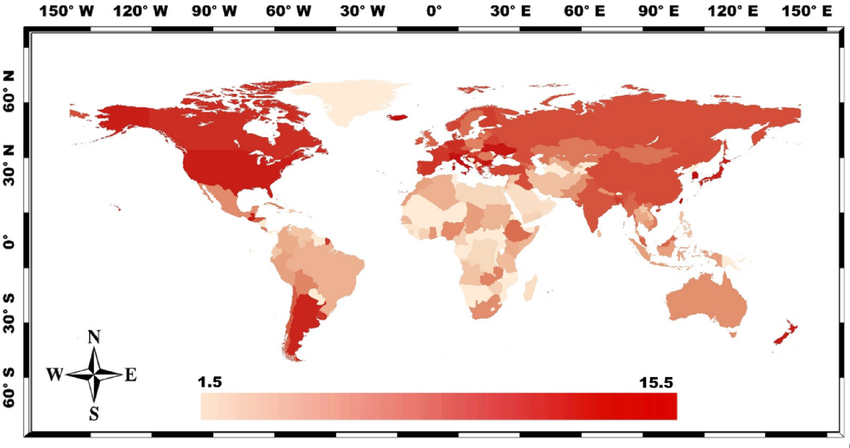
Soil fertility alone explains 34% of the differences in national IQ. Countries on the best soils (Mollisols, Andisols) average 10–15 IQ points higher than those on the wort soils (Oxisols, Ultisols), even before accounting for education or income.
This geographic pattern is visible in real populations. Japan and Taiwan sit on volcanic Andisols and consistently rank among the highest in global intelligence metrics due to their nutrient‑rich, high‑CEC soils. Meanwhile, much of equatorial Africa rests on Oxisols, soils so weathered and nutrient‑stripped that they produce chronically low micronutrient availability.
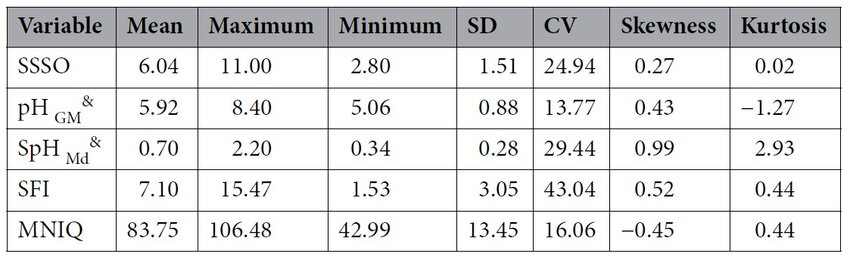
The further a soil’s pH drifts from 6.5, the more national IQ (MNIQ) declines. If your soil is too acidic (like much of the tropics), zinc and iron become unavailable. If your soil is too alkaline (like the Middle East), micronutrients get locked up too. The correlation between soil fertility and national IQ is r = 0.58, meaning soil alone accounts for 34% of the variation. Explaining 34% of a complex human trait is extremely high.
Çekici bir kadının varlığı, erkek beynindeki karar mekanizmalarını (VMPFC) geçici olarak etkileyerek mantıklı risk analizini sekteye uğratıyor ve erkeğin daha riskli davranmasına yol açıyor.
The strongest predictor of whether a couple stays together is how often they respond to each other's small bids for connection. Gottman's term is "turning toward." Your partner mentions the bird outside, you look. They sigh, you ask what's wrong. Couples who stayed married did this 86% of the time. Couples who divorced did it 33% of the time. Marriages that last are built in the small moments.
You can love someone’s face, but you can’t build a life on a vibe.
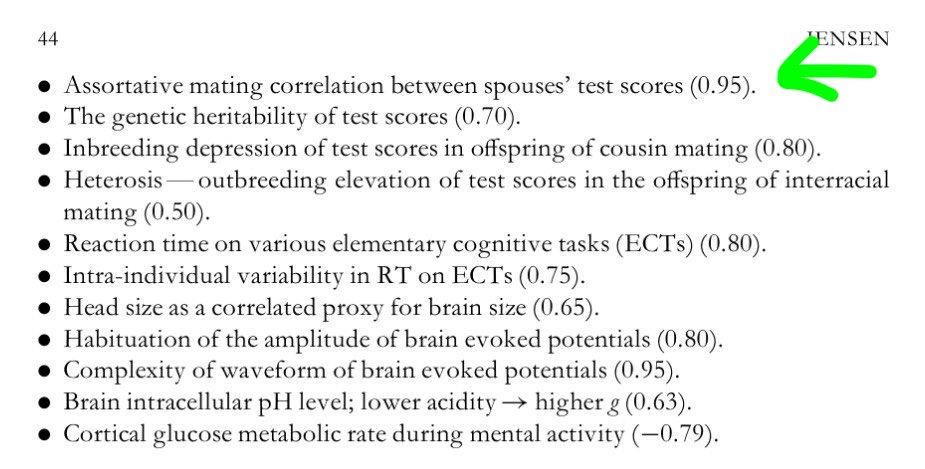
Decades of meta-analyses tracking real marriages prove that the single strongest anchor between partners is intelligence. Every other trait falls behind:
Intelligence (r = 0.45)
Physical Attractiveness (r = 0.25)
Height (r = 0.20)
Personality (r = 0.15)
(Vandenberg, Jensen, Plomin et al.)
Because verbal intelligence is the most socially visible component of general intelligence, it drives a good-sized portion of this 0.45 correlation. A woman evaluates his syntax, his vocabulary, and his ability to track complex nuance. Verbal fluency is the actual vehicle for the communication loop.
Without that baseline symmetry, the conceptual gap becomes too wide to bridge, and the attraction naturally starves.
In a famous study on mate preferences by Kenrick et al., participants were asked to state the minimum percentile of intelligence they would require in a partner for various levels of a relationship.
• For a casual date, both men and women required a partner to be of average intelligence (around the 50th percentile).
• For a steady dating partner or spouse, women’s minimum requirements spiked significantly higher than men’s, demanding a partner in the 60th to 70th percentile of intelligence minimum.
• When a woman is herself in the 90th percentile or above (an IQ of 120+), her minimum required percentile shifts proportionally upward to ensure the partner remains an intellectual peer.
This is true, but it’s also true that women collectively can be hostile to really attractive women. (I’m not claiming this is my personal experience lol)
Çekici olmak nesiller arası sosyal hareketliliği pozitif etkiler. Yakışıklı bir erkeğin ailesinden daha iyi bir konuma gelme olasılığı, ortalama çekicilikteki bir erkekten daha yüksektir.
Özellikle dezavantajlı yaşam koşulları ve ağır travmalarda, zorluklarla başa çıkma başarısı yalnızca kişisel azimle açıklanamaz; bu başarı büyük ölçüde ailemizin, çevremizin ve toplumun bize sunduğu kaynaklara ve desteğe bağlıdır.
GALATIANS 5:22-23 (NIV)
But the fruit of the Spirit is love, joy, peace, forbearance, kindness, goodness, faithfulness, gentleness and self-control. Against such things there is no law.
@SaysSimulation The largest psychological difference between women and men is the willingness to engage in casual sex, but they did not measure that here. It even emerges in experiments that observe actual behavior, and not just in self reports.