@AFreedom96 Bigger paycheck with bigger bills is still a period problem. Matching the plan to the pay window beats hoping the raise covers everything by itself.
@DillonJaden Semi-monthly to biweekly changes the rhythm more than people expect. Rebuild the plan around the new payday windows and the mid-period crunch usually eases.
@myclearbudget Those two extra checks are easy to blow. Treating them as planned period income instead of surprise money is the difference between a bump and a reset.
@K25Radhi Biweekly feels smoother because the gap is shorter. The catch is still planning the whole period up front, not waiting to see what is left in week two.
@Bradsongeye Monthly fixed costs are brutal when they do not line up with payday. Mapping rent and groceries to the check you actually have usually makes the squeeze clearer than a calendar month view.
Building DistroFi in public.
Early days. Small user count. Shipping daily anyway.
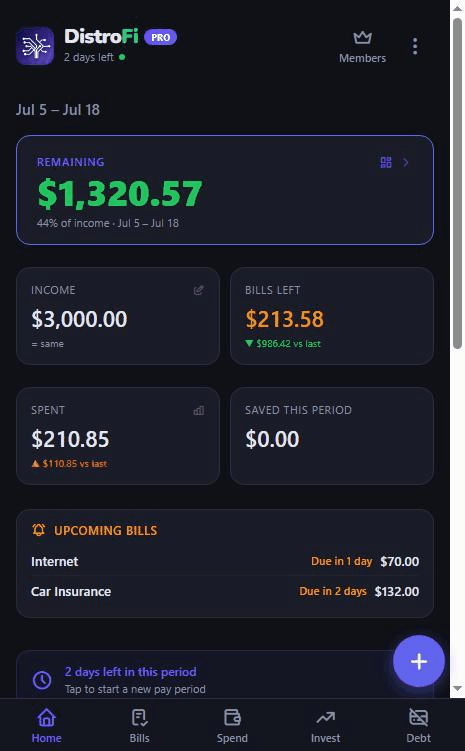
The bet is simple: budget by paycheck, not by calendar month. See Remaining for THIS period. No bank linking.
If that sounds useful, try it free.
Open /app → set payday → see Remaining in under 2 minutes.
Install: iOS Share → Add to Home Screen · Android Install app
https://t.co/i5uoMAAcH9
@rachellbellex Lifestyle inflation after a raise is usually a period mismatch. If fixed costs still clear the paycheck before wants, Remaining stays zero no matter what the annual salary says.
@MrScrouge Paycheck to paycheck plus new debt is a Remaining problem, not a willpower one. Cover this period's needs first. Extra toward debt only after that number is not thin.
@DividendDrip Payday routines with real numbers beat vague monthly goals. Anchoring every bill and shift differential to the actual pay window makes Remaining visible before the next round of nights.
@dogperson2891 When rates jump and the period was already tight, throwing extra at the card can break rent or food. Minimums first, then extra only if Remaining after bills is still safe.