Senior Researcher at UN Institute for Disarmament Research @UNIDIR @SIPRIorg Prof @Unicatt. Ex @EUI_EU; Disclaimer: views are my own- RT/like is no endorsement.
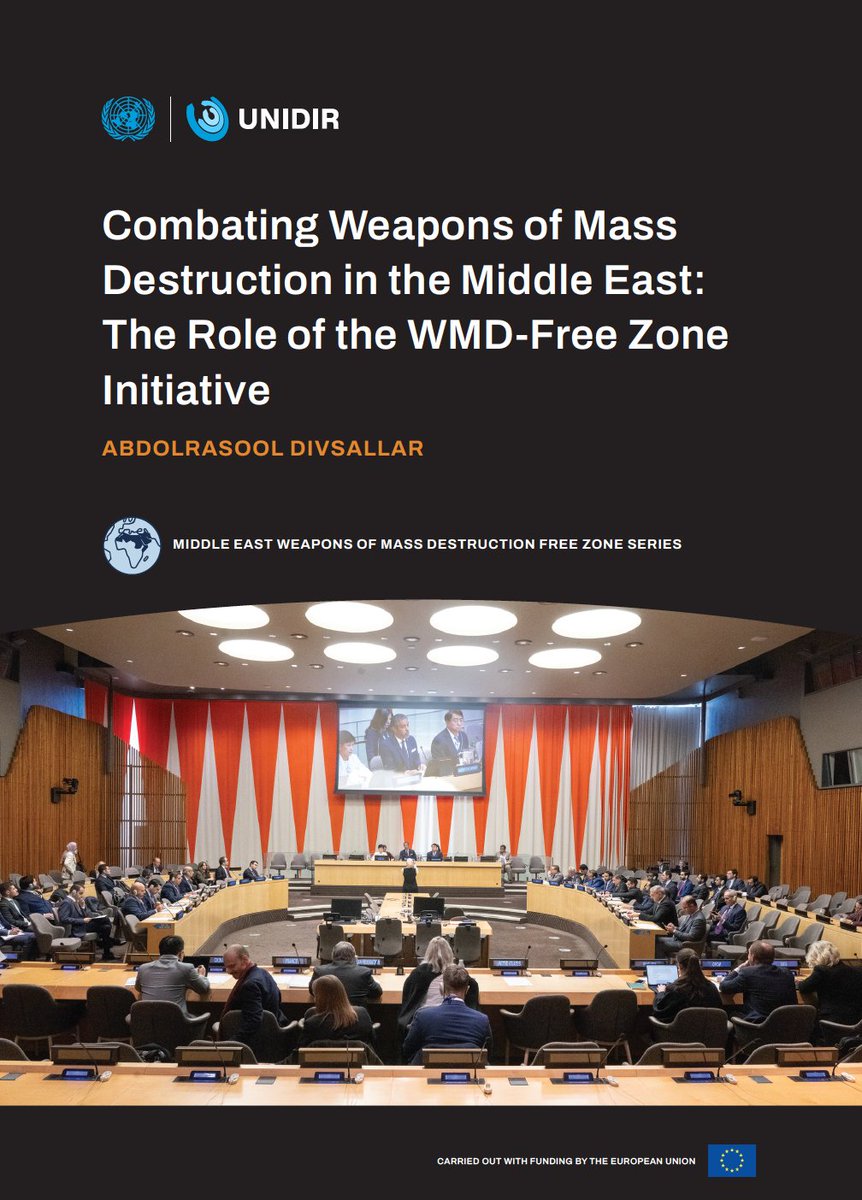
New publication! Combating WMD in the Middle East
Read my paper with @UNIDIR to see how Arab states, Iran, and Israel are adjusting their WMD policies to regional security dynamics and military trends.
THREAD on key findings and policy options/ 1 https://t.co/oX9ogr5fwn
Join our event next week online or in person at Geneva Graduate Institute to hear about non-proliferation and disarmament trends in the Middle East.
I present the findings of our upcoming report which concludes the Middle East WMD Free Zone project’s 3 years of research.
Join our event next week online or in person at Geneva Graduate Institute to hear about non-proliferation and disarmament trends in the Middle East.
I present the findings of our upcoming report which concludes the Middle East WMD Free Zone project’s 3 years of research.
🌍 What trends are shaping non-proliferation and disarmament in the #MiddleEast?
Join UNIDIR @GVAGrad on 8 June to explore findings from the latest report with @Divsallar, @chenzak and diplomatic and policy experts.
🔗 Register now: https://t.co/vN9ieLaCIL
Thrilled to announce that our book "The Foreign Policies of the Gulf Cooperation Council: Geopolitics and Global Order in the 21st Century" (co-edited with @courtneyfreer & @Dr_Ulrichsen) will be published this October by @BloomsburyBooks and is now available for pre-order.
It comes at a critical moment for the Gulf, with ongoing regional shifts, Iran-GCC dynamics, strategic competition, and economic transformation. Bringing together 15 leading experts, the volume explores how economic, domestic & geopolitical factors shape GCC foreign policy, covering energy transitions, sovereign wealth funds, digital transformation, mediation diplomacy, Gulf-China relations, defense industrialization, Gulf-Israel normalization, Qatar-Iran ties & more.
Huge thanks to our outstanding contributors: @DrAishaAlSarihi@mirdef82@jimkrane@marcowenjones@RoryDavidMiller@omarrahman@Tyler_B_Parker Robert Mogielnicki, Steven Wright, Chuchu Zhang, Albert Vidal Ribé, David H. Warren & others. It’s been a privilege to co-edit this project, and we hope it becomes a valuable resource for scholars, policymakers, students & practitioners.
Pre order here: https://t.co/aO8oCt7sM6
Personal news!
Honored to join @SIPRIorg as a Senior Associate Researcher.
I look forward to collaborating with an outstanding team of experts and contributing to research on arms control, military strategy, and nonproliferation in the Middle East.
https://t.co/eo5i9UXxR7
اگر علاقمند به تحقیق در زمینه خلع سلاح و عدم اشاعه تسلیحات کشتار جمعی هستید این فرصت کارآموزی در کنار من و سایر همکارانم میتواند بسیار مفید باشد.
این دوره کارآموزی ویژه پژوهشگران جوان است و دوره پسادکتری یا فرصت مطالعاتی محسوب نمی شود.
📢 Join our team! UNIDIR is looking for a Graduate Professional to support our Middle East Weapons of Mass Destruction Free Zone Project.
📍 Geneva or remote
🗓️ Apply by 4 June: https://t.co/haJBDUYDKx
Certainly. Threatening Oman-a peaceful, neutral, and longtime U.S. partner- is a serious strategic mistake. Undermining one of the most reliable and trusted diplomatic bridges with Iran only weakens diplomacy and further damages American credibility in the Gulf.
The US has the most powerful military in human history.
It has not won a war in 30 years.
These two facts are not unrelated.
My new @POLITICOEurope column on the American Way of War — and why it keeps failing. https://t.co/2AoYslTSXp
These indicators, when taken together, suggest that we may be witnessing a gradual transition from the phase of “managing the war” to one of “managing the post-war environment” — or at the very least, managing the ceiling of escalation. However, this does not necessarily mean that a final agreement is close. Rather, it may reflect a regional and international effort to prevent a slide into a more dangerous round of confrontation.
There are several important implications behind these moves:
🔹Pakistan’s entry at this level — through Army Chief Asim Munir’s visit to Tehran and the prime minister’s movement toward Beijing — suggests that Islamabad is becoming less of a traditional mediator and more of a “balancing channel” between Washington and Tehran.
The presence of the Pakistani military in this context is significant, because the file is no longer purely diplomatic. It is now increasingly tied to regional security, border management, protection of energy routes, and even the possible redefinition of rules of engagement in the Gulf and the Arabian Sea.
🔹Qatar’s reported mediation effort, coordinated with the United States, suggests that Washington is currently trying to avoid a full-scale explosion and is instead searching for a marketable containment formula.
In other words, a temporary arrangement or phased understanding capable of achieving several objectives simultaneously: calming tensions in Hormuz, reducing indirect attacks, preventing acceleration of the nuclear programme, and giving Trump or the U.S. administration a political outcome that can be presented as a negotiating success rather than a retreat.
🔹The easing of restrictions in the Strait of Hormuz may be the most important practical signal so far. Iran does not usually reduce maritime pressure for free. The increase in the number of ships passing through suggests that Tehran is trying to send a dual message:
🔺That it is capable of de-escalation if presented with a serious negotiating track,
🔺And that it does not currently want to reach the point of total maritime strangulation, which could justify broader international intervention or new security arrangements directed against it.
In this sense, Iran appears to be using Hormuz as a negotiating card, not as an instrument of strategic suicide.
🔹The appointment of Esmaeil Baghaei as spokesman for the Iranian negotiating team also carries important political and media implications.
Baghaei is not a military or security figure, but rather a diplomatic media face. This suggests that Tehran wants to reframe the file politically rather than militarily, centralize and discipline its messaging, and demonstrate that negotiations are becoming institutionalized rather than reliant on emergency backchannels.
At the same time, none of these developments necessarily indicate the existence of mutual trust.
Most likely, what we are seeing is a tactical de-escalation, negotiations under pressure, and a mutual attempt to buy time and reposition strategically.
Iran wants to prevent military pressure from being translated into political surrender.
The United States, meanwhile, wants to convert military superiority and economic pressure into a deal that can be politically sold without dragging the region into another open-ended Middle Eastern war.
For that reason, the current moment does not resemble an approaching peace. Rather, it resembles what might be described as:
“A phase of negotiation under the shadow of war.”
A nome del Governo italiano ho appena formalmente chiesto all’Alto Rappresentante @kajakallas di includere nella prossima discussione dei Ministri degli Esteri UE l’adozione di sanzioni contro il Ministro per la sicurezza nazionale israeliano Ben-Gvir per gli inaccettabili atti compiuti contro la Flotilla, prelevando gli attivisti in acque internazionali e sottoponendoli a vessazioni e umiliazioni, violando i più elementari diritti umani.
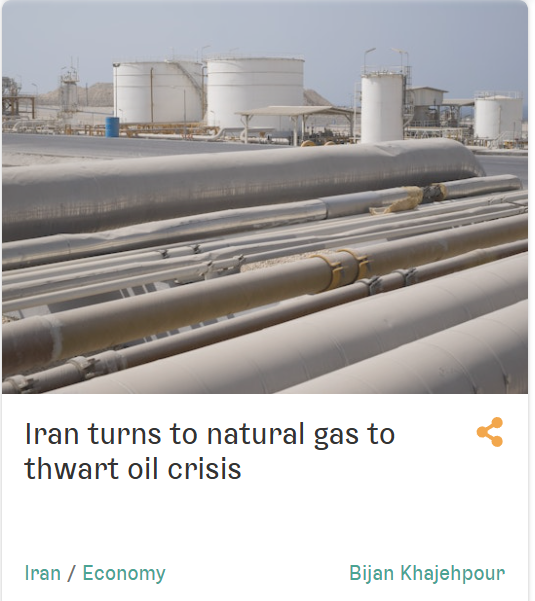
NEW: In the past, Iran's energy strategy was based on using natural gas for domestic uses and keeping more oil for export. The US naval blockade is compelling Tehran to rethink that logic.
To address crude/petroleum liquid buildup, Iran is channeling it refinery feedstock, petrochemical production and industrial consumption. Previously, the latter two relied on natural gas input.
In other words, natural gas is being freed up for export via pipeline to Turkiye and Iraq. Excellent piece by @BijanKK on likely unintended consequences of the US naval blockade:
طرفداران جنگ نتونستند بفهمند که بحث حمله نظامی بیگانه چقدر برای مخالفان جنگ خط قرمز حساس و سنگینیه. چون این مساله رو درک نمیکنند، مخالفان جنگ رو به چشم حامیان حکومت می بینند. این اشتباه تحلیلی و شناختی بزرگیست. اگر روزی سلطنت طلبها در قدرت باشد و حکومتشون هم خیلی بد باشه، و مثلا چین یا روسیه به ایران حمله کنند، بیشتر مخالفان جنگ دقیقا همون موضعی رو میگیرند که امروز گرفته اند. عین مواضعی که سلطنت طلبان در زمان حمله عراق به ایران داشتند. عبارت «پریدن بغل اخوند» که جنگ طلبان بعنوان توهین علیه مخالفان جنگ بکار می برند، ناشی از جا افتادن همین ذهنیت غلط بوده و هست.
Breaking News: U.S. intelligence reports show that Iran retains substantial missile capacity, despite President Trump’s claims otherwise. https://t.co/gHLM1oA9yh
The UAE has carried out military strikes on #Iran, according to the Wall Street Journal.
The strikes, which the UAE has not publicly acknowledged, included an attack on a refinery on Iran's Lavan Island in the Persian Gulf.
https://t.co/0GJFrUdbsh
Nuclear Iran won’t emerge soon because:
1-Most critical industrial basis needed for building warhead are gone.
2- Iran doesn’t have suitable delivery system & building a warhead without a reliable delivery is a major risk.
3- There is no political-military consensus for nukes.
Credible analysis shows Iran has plutonium for 200 nuclear weapons
This is in addition to enriched uranium that has been the focus of Trump negotiations
Iran rapidly emerging as 4th of world power
Nuclear Iran coming soon
https://t.co/REMiyOdeMm
EU Foreign Ministers just gave the go-ahead to sanction Israeli settlers over violence against Palestinians.
They also agreed new sanctions on leading Hamas figures.
It was high time we move from deadlock to delivery.
Extremisms and violence carry consequences.