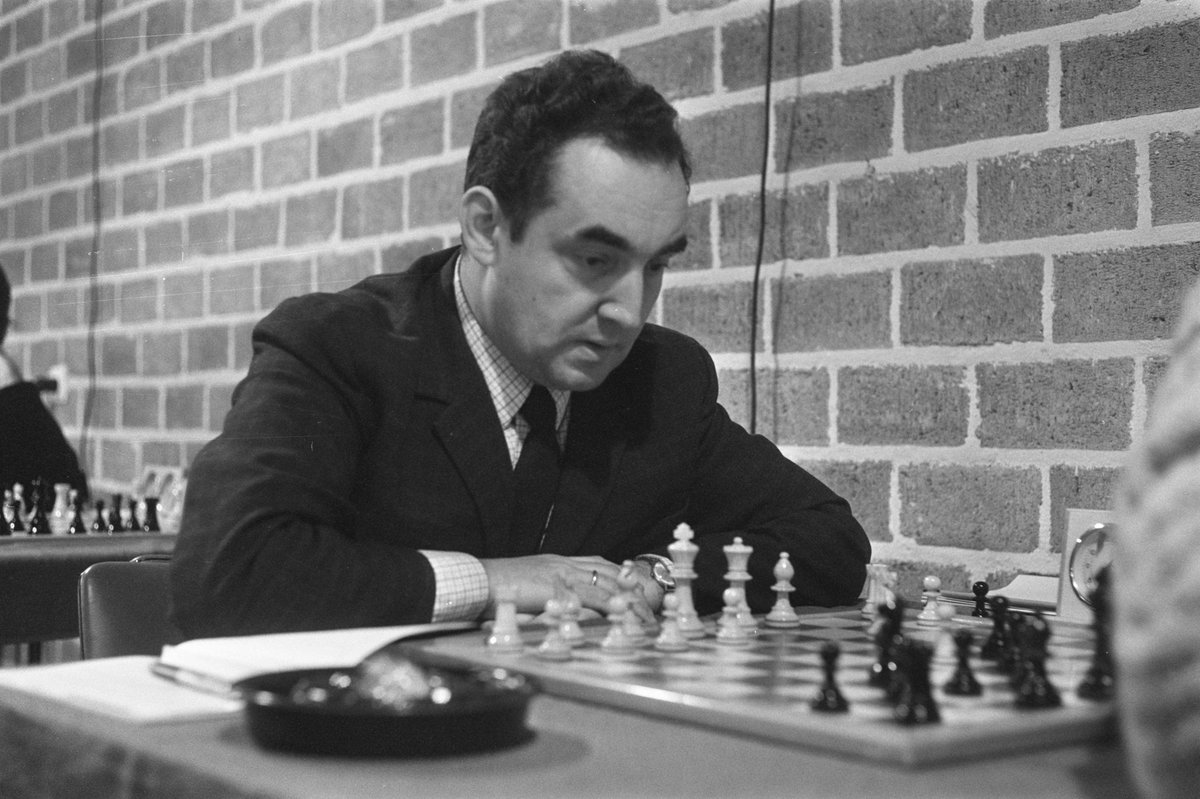
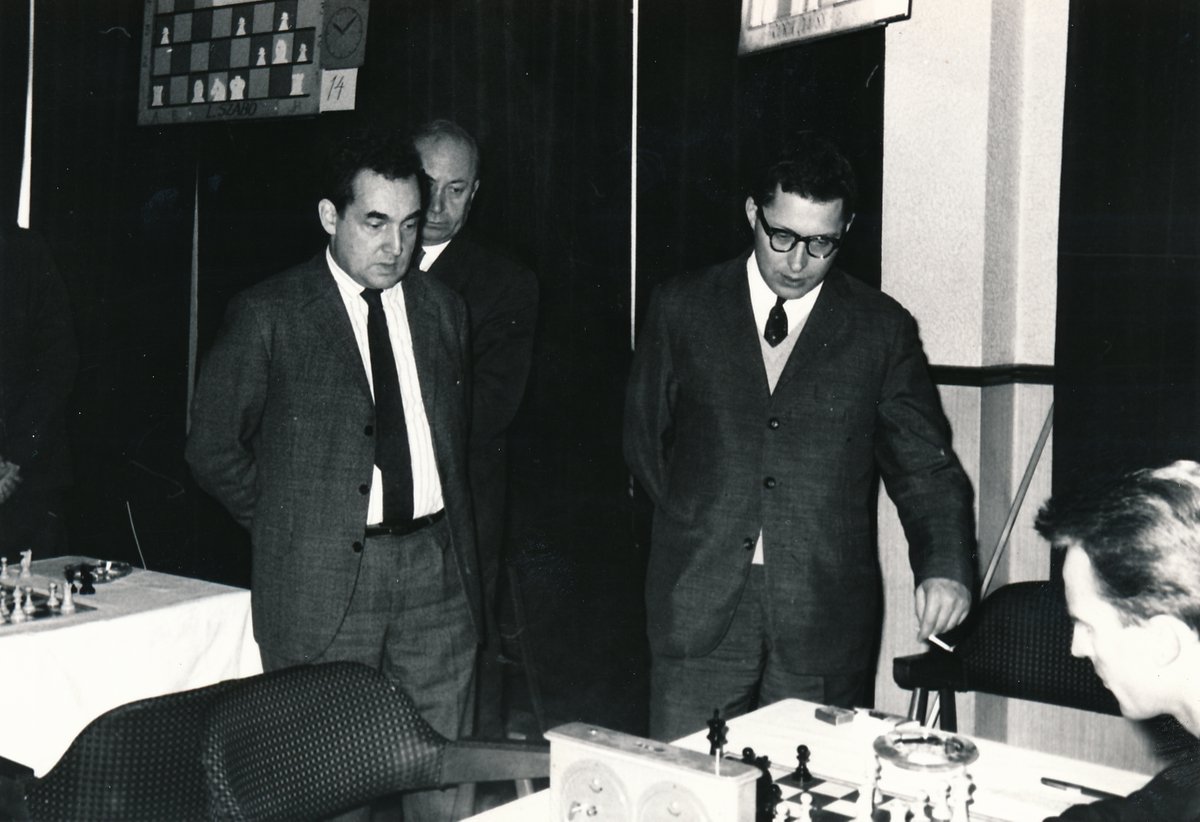
♟🔥 Iconic photo! 17-year-old Bobby Fischer faces newly crowned World Champion Mikhail Tal at the 1960 FIDE Chess Olympiad in Leipzig.
♟ FIDE Chess Olympiad 2026
📍 Samarkand 🇺🇿
🗓 Game days: September 16-27
📷 Ulrich Kohls / Bundesarchiv
#ChessOlympiad
🤯 Quand Michael Adams avait perdu sa précédente partie au Championnat de Grande-Bretagne, l’URSS existait encore !
Depuis le 8 août 1988, le nonuple champion avait enchaîné 87 parties classiques sans défaite dans la compétition.
37 ans et 361 jours plus tard, Svyatoslav Bazakutsa, MI ukrainien de 18 ans, a mis fin à cette incroyable invincibilité.
👉 https://t.co/yv7fo5nUv5
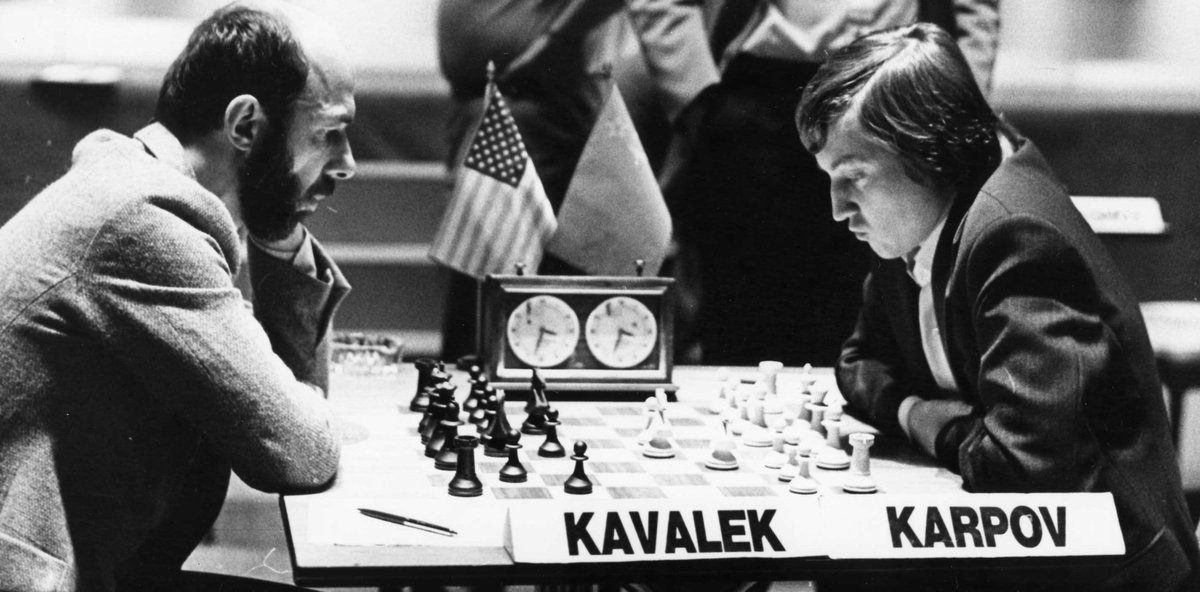
@ArnoldCaballe14@davidllada@USChess Correct. The 1978 US Championship was won by Kavalek with 10/14 points. Tarjan finished clear second with 9/14 points. This was Tarjan's best finish in all of the US championships he participated in. His last US Championship was in 1984.
Born in 1952, James Tarjan became the @USChess Champion in 1978. After retiring from competitive chess, he made a comeback in 2014 and even made headlines when he defeated Vladimir Kramnik at the Isle of Man Open in 2017. The rating difference between them was almost 400 points!
James is one of the participants in the U.S. Open, which concludes tomorrow in Grand Rapids, Michigan.
Ludwig von Mises sat down in 1920 and published a paper that ended the intellectual case for socialism, even if the socialists took another seven decades to notice.
The argument was precise. Mises showed that without private ownership of the means of production, there are no real prices for capital goods. Without prices, you cannot calculate profit and loss. Without profit and loss, economic planners have no way of knowing whether they are creating value or destroying it. They are flying blind, spending real resources with no feedback mechanism telling them whether the factory, the railway, or the grain depot was worth building. Every allocation becomes a guess dressed up as a decree.
This, he called the Socialist Calculation Problem, and nobody answered it. Oskar Lange tried in 1936, proposing that socialist planners could simulate prices by trial and error. Mises read this and was unimpressed (charitably put). Lange assumed you could reproduce the function of market prices without the institution that generates them: private property, genuine exchange, real skin in the game. You cannot fake the signal and expect accurate information.
The Soviet Union spent seventy years proving Mises right. Chronic shortages, misallocated steel, surplus winter boots in Georgia in July, famine engineered by committees convinced they understood grain supply better than the price system. The USSR collapsed in 1991 under the weight of precisely the inefficiencies Mises predicted in Vienna in 1920.
You are watching this play out again today, every time a government sets energy prices, rent ceilings, or pharmaceutical price caps, and then expresses shock at the resulting shortages. The calculation problem did not expire with the Soviet Union. Bureaucrats who override price signals recreate the same blindness Mises identified. Mises told you exactly what would happen.
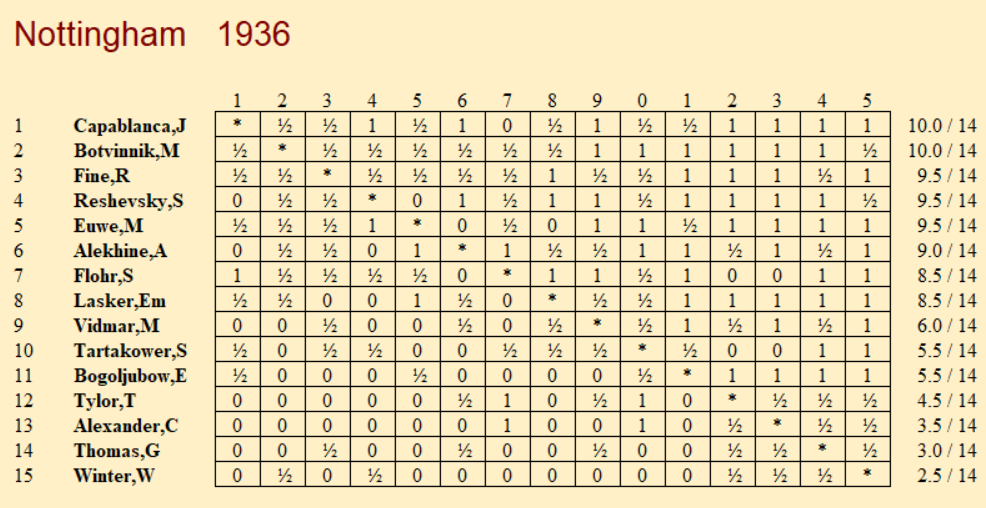
90 years ago today, the great Nottingham tournament of 1936 got under way. It would prove to be Capablanca's second triumph of that summer after his victory in the 2nd Moscow International a couple of months previously.
Great footage of Oegstgeest 1970 with author Godfried Bomans interviewing Larsen (who speaks Dutch!) about his daily routine, Tal & Browne, & Donner speaking about blunders https://t.co/6d7JzaeVGL
Photo of the opening - Botvinnik & Spassky trying to gauge their future opponents😀
Via AP Archive, original colour footage of the famous 1st game of the Fischer-Spassky match in Reykjavík, 11th July 1972.
Fischer's bishop has been trapped on h2; Spassky is pondering his 33rd move. #chess
Via AP Archive, original colour footage of the 12th round of the 44th USSR Championship final, Moscow, 14th December 1976.
Among the pairings featured: Balashov v. Petrosian & Karpov v. Sveshnikov.
The event was held in the Central House of Culture of Railwayworkers. #chess
Reykjavík, 4th June 1968. In Round 3 of the international tournament taking place in the Icelandic capital, Friðrik Ólafsson is in play v. Evgeny Vasiukov, who stands by the board with a cigarette.
Looking on are Mark Taimanov & László Szabó.
(📷: F. Ólafsson archive.) #chess
60 years ago today: World Champion Tigran Petrosian faces Miguel Najdorf in the 8th round of the 2nd Piatigorsky Cup in Santa Monica, California, USA.
(📷via https://t.co/HoLj7ynffe.) #chess
16th February 1935. In the 2nd round of the 2nd Moscow International, which was held in the Pushkin Museum of Fine Arts on the Soviet capital's Volkhonka Street, ex-World Champion José Raúl Capablanca (Cuba) faces Mikhail Botvinnik (USSR).
(📷via https://t.co/Z1togDhC4n.) #chess
16-year-old grandmaster Bobby Fischer in play at Zurich, May-June 1959. He finished 3rd= with Keres, behind Tal (1st) & Gligorić. Four of his games from this event (v. Walther, Ólafsson, Unzicker & Keres) feature in his 'My 60 Memorable Games'.
(📷: Ullstein Bild.) #chess