"Ma penso che tutti sappiano istintivamente che c'è qualcosa che non va."
Quindi torniamo al Medioevo, quando chiunque dicesse una minchiata, tutti gli credevano senza dimostrazione dei dati. Fra un po' qualcuno dirà che esistono draghi e unicorni, perché "tutti sanno istintivamente che è così.
Wanna Marchi farebbe faville con questi idioti.
@cwebbonline The pedophile's Luna Park
Show the Epstein files
Show the Epstein files
Show the Epstein files
Show the Epstein files
Show the Epstein files
Show the Epstein files
Show the Epstein files
Show the Epstein files
Show the Epstein files
Show the Epstein files
@RobertoLocate14 Vannacci fa prima: se tenta un comizio in una piazza di gente 'normale' (e non i suoi leccapiedi) sai la scorta di frutta e verdura? 😉
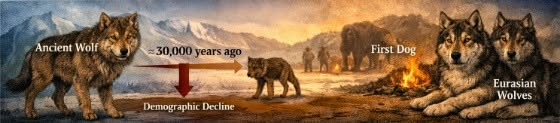
Recent genomic studies have revealed a far more complex history of divergence and admixture between wolves and dogs than previously imagined. The research by Fan, Z., Silva, P., et al. (2015 – Worldwide patterns of genomic variation and admixture in gray wolves, Genome Research, 26(2), 163–173) showed that, on a global scale, gray wolves experienced a strong demographic decline starting around 30,000 years ago, along with a notable presence of dog ancestry in several Eurasian wolf populations.
In the case of the Iberian Peninsula, other studies have demonstrated that gene flow between wolves and dogs is real, recurrent over time, and particularly significant. Yet the picture cannot be reduced to a single event or a single “intentional” explanation. Current genetic traces reveal an intense and long-lasting mixture between wolves and ancient dogs, leaving a deep imprint on Iberian wolves. It is as if, during a period of major climatic and environmental challenges—when wild wolf populations were shrinking dramatically—a space for contact opened between two species seeking survival.
We cannot say with certainty that our ancestors consciously “favored” these crossings, but it is plausible that, in a context of demographic crisis among wolves, human presence created the conditions for more frequent encounters between domestic dogs and local wolf populations. No longer just predators or rivals, but companions navigating a world in transformation.
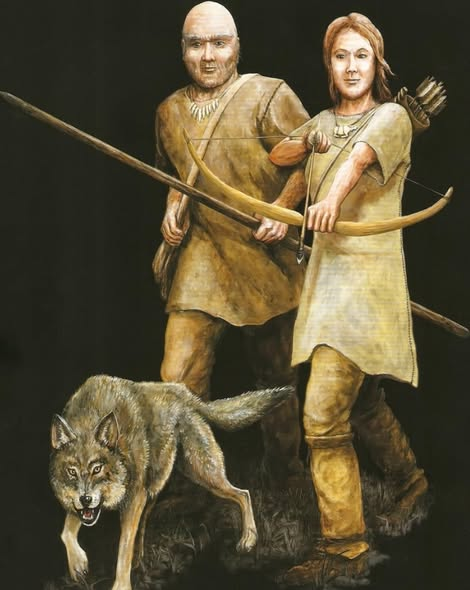
At that time, large dogs also lived among Sapiens communities, as attested in areas such as Erralla. Their presence marks a moment when the human–dog relationship was already well established, though not yet defined in the way we understand it today.
This invites us to reflect on the power of coexistence and on the intelligence of those who, 20,000 years ago, were able to transform fear into alliance—giving rise to a bond that still fascinates those who study the evolution of dogs and humans.
I describe this Late Pleistocene and Mesolithic scenario in 'And dog decided to meet man', where I tell the first steps in the evolutionary history of our four‑legged companion without reducing its complexity to a single romantic tale.
#DogsOnTwitter #wolves #evolution #ancienthistory #BookBoost
@marcopalears@RoVannacci A @RoVannacci servirebbe anche un corso di grammatica italiana, vista la sua approssimazione nel coniugare i verbi. Magari riesce meglio col russo.😉🤪
@pinapic Fatto, per ciò che può contare il mio appoggio. Soprattutto perché La ritengo l'unica persona degna di stare in politica fra i tanti praticoni e ciarlatani.
Dei commenti idioti di questo emerito imbecille ubriacone ne abbiamo le tasche piene, come del suo capetto pedofilo, truffatore ed evasore fiscale. Novembre si avvicina, speriamo che gli statunitensi questa volta mostrino di avere una spina dorsale e mandino a casa questi cretini.
This burial is not the first in history, but it is one of the clearest pieces of evidence we have: a gesture of care that crosses millennia and reminds us that the bond between humans and dogs did not arise from work alone, but from the choice not to abandon.
I describe this event from Paleolithic Germany in the introductory chapter of 'Origins – In search of ancient dog breeds'. #DNA_ItsThatGood #book
The burial of Bonn-Oberkassel is one of the oldest and most moving testimonies of the relationship between humans and dogs. Around 14,200 years ago, a young dog was carefully placed in a pit, and later, in the same spot, two human beings were buried. #dog#ancientdog#books
Bonn-Oberkassel does not tell us about the beginning of the dog as a “tool.” It tells us instead about the beginning of a relationship — a bond made of care, presence, and belonging, long before breeds, long before working dogs, long before the modern idea of what a dog is.