Our CEO, Antony Mattessich, met with Amy Brown at @BiotechTVHQ highlighting how our rationally designed, orally bioavailable, Targeted Glues™ stand out in the field as we advance towards the clinic in 2026. Watch: https://t.co/9T2LoZTzqV
How can any employee of Excel Parking review this and think this is reasonable and blame the driver? Terrible company and “business practices”. Shame on you! Hope any judge getting involved here will set them straight.
I have not posted in a while, but this is so unbelievable. These parking companies are out of their mind. This lady paid for the whole day parking, but apparently it took her too long to do so and so she now owes well over £1k in fines!
https://t.co/u9FqyDcWm9
What really is the damage to Excel Parking here, since she paid her ticket every time anyway! This is daylight robbery and quite frankly should be illegal!
We are delighted to announce the #appointment of Antony Mattessich as our new CEO and Board member. In his new role, Antony will be critical in advancing our next gen Targeted Glue™ protein degraders into the clinic and building a robust pipeline.
https://t.co/gqYun9V9sI
@SamuelBHume Great thread, but for No 3 I think this is very early data and we need to see results from at least one large trial and statistically significant OS data before I would include it as a seminal result.
We're pleased to announce that the first patient has been treated in the ASPIRE-FTD clinical trial, a first-in-human Phase 1/2 study of AVB-101 for people with #FrontotemporalDementia with GRN mutations. Learn more: https://t.co/QlkJbFIXex
#FTD#GeneTherapy#AviadoBio
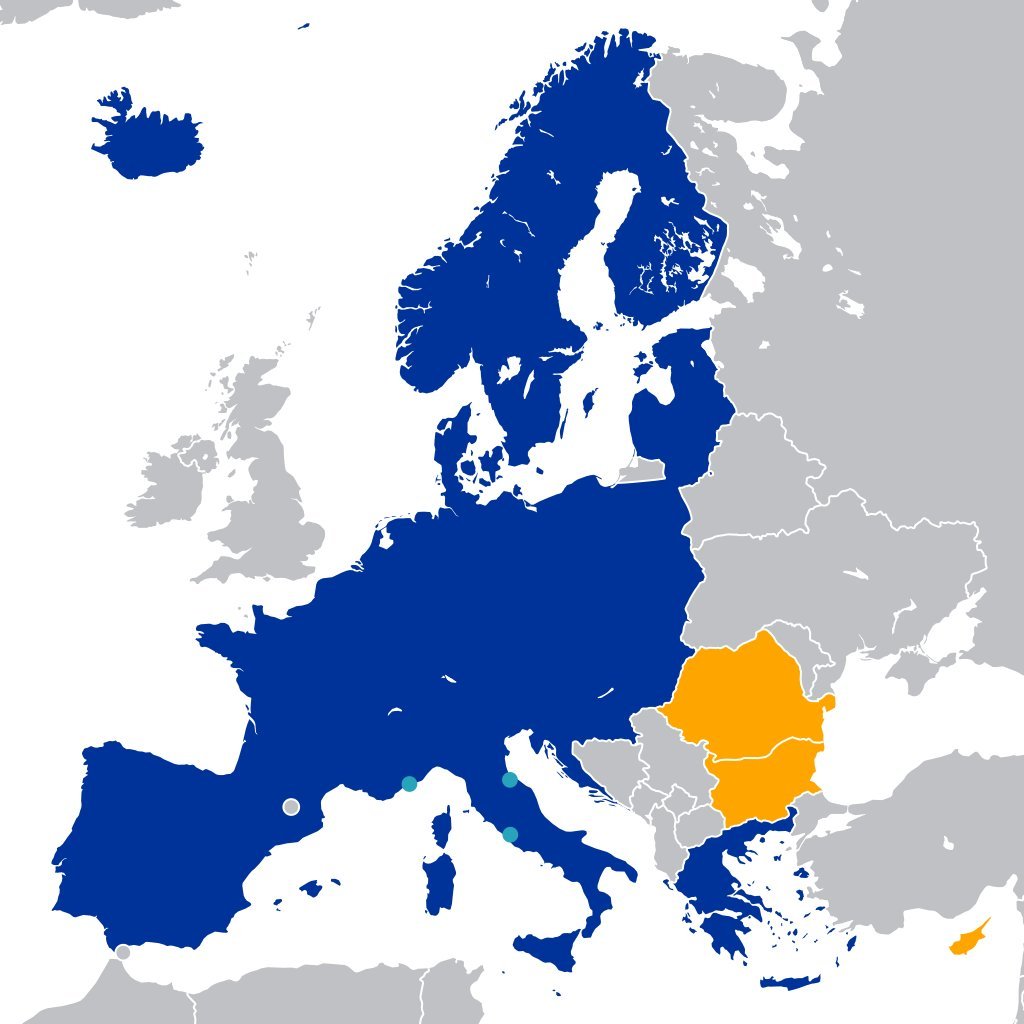
Norway, Switzerland and Iceland are part of the Schengen Area (left). Ireland is part of the EU (right).
That means you have to go as far away from the UK as Serbia (over 1,300 miles) to find the next country without free movement.
We are literally alone in our isolation.
In covering how Egypt cured its population of Hepatitic C thanks to Gilead’s miracle cure Harvoni, @nytimes writes that Gilead charged $1000/pill in the US but Egypt “negotiated” it down to $10. They didn’t negotiate. Egypt had no leverage. The extremely low price was a GIFT from Gilead & the US, whose spillovers benefit poor countries that need our help like Egypt and are taken advantage of by rich countries like Canada and UK (and they have the gall to try to talk us out of it... see the piece about the "European Scorpion" in the next piece).
Just call it a gift. Write about how drug companies did something good because they do a lot of good (yes, also bad… Purdue sucks, Turing price jacked an old drug… but we can talk about the bad without claiming that’s all there is).
Write about how the US premium payor, all the relatively healthy people who put more into healthcare than they take out (for now) created the incentives that makes investment in Harvoni possible. They incentivized the quest to come up with Harvoni that now make's Egypt quest to eradicate it possible.
Everyone who has ever had their their health restored by a medicine can be grateful for the drug industry, its investors (which are many millions of people), doctors, insurance plans, all premium paying people (which is nearly everyone), NIH, and whoever invented the patent system… we should appreciate this remarkable framework that taps human ingenuity to compete to produce such advances.
That competition than also drives down the prices of hepatitis C drugs by over 70% in the US, before they even go generic like most drugs do. Write about that! Every time a drug goes generic, consider that hospitals and nursing homes never do.
When you cover GLP-1s, don’t just talk about their list prices… you surely know better by now… talk about how US insurance plans have negotiated those prices down by 70%. And when someone’s insurance plan doesn’t cover a drug they need, don’t turn on the pharma like it’s a bad guy. Ask why the insurance plan isn’t doing its job.
Does the @nytimes know who gets the best access to medicines in the world? American union members. They negotiate excellent coverage in their contracts, and the healthcare system works very well for them. Write about that negotiation. To people with good insurance, pharma is a source of cures. Most Americans actually say they CAN afford their medicines precisely because their insurance works for them.
Biomedical innovation requires insurance… it always has and always will. You can't expect a company to both invent its medicines and then immediately sell them like they are a generic. Industry invests $200B into R&D every year. That R&D has to be incentivized... but not by the comparatively few patients who need treatment but by all of us who pay premiums. The key to affordable innovation is lower out of pocket costs. Write about that!
OOP should mean "out of premium" not "out of pocket". Forget skin in the game. Who fakes cancer to joyride chemo? Who fakes diabetes to take daily insulin injections? What is there any out of pocket for a medicine your doctor prescribes and your own plan authorizes as appropriate for you? Someone wants a GLP-1 off-label? Insurance doesn't charge an out of pocket... they just deny coverage. Let's not pretend that out of pocket costs are anything except a way of insurance tricking people into thinking they are covered until they get sick and then discouraging them from getting treatment. That's cruel. Write about that.
@nytimes… you don’t have just see the negative in everything the drug industry does. Just suggesting that Egypt "negotiated" with Gilead to get a 99% discount off Harvoni shows your struggle to see things as they are.
With your negative bias against the drug industry (of which I am proudly a part... there's so much science has yet to accomplish and we're doing it every day)... you are goading the public and Congress into shutting down, with price controls a valuable and productive ecosystem.
And no, Medicare negotiation isn’t a true negotiation… what Medicare has been doing all along, relying on the plans it contracts with to negotiate has been how Medicare has long negotiated. There’s a reason the law says Medicare couldn’t “interfere”in that process… because it’s a monopsony… and a monopsony just dictates prices. No one would work for any customer who could just dictate what they would pay after the job was done, and neither will investors who fund R&D. Neither will any pharma board allow profits from today's drugs to be redirected into R&D to make medicines that Medicare can just dictate the prices of once they are made. They will redirect those profits to dividends and put them back into the pockets of all the retirees who are invested in the drug industry to support themselves so they can invest it some other industry.
It’s magical thinking to imagine that price controls won’t shut down the flow of new drugs.
Had the US long ago declared that it would pay as little as Europe for treating Hepatitis C, there wouldn’t have been Harvoni and you wouldn’t be writing about this Egyptian miracle.
Better coverage. @TheEconomist
To learn more about many aspects of the biomedical innovation ecosystem that so many misunderstand, check out https://t.co/zEG72Vbwfa
#biotech @PhRMA@IAmBiotech
https://t.co/MsI8E7Tywk