A historic first for Canada — and a rare victory for an opposition private member’s bill! 🇨🇦
Bill M-214, the Firefighters’ Health Act, introduced by MLA @MistyVanPopta (Congrats!) has officially passed third reading in the BC Legislature today (April 13, 2026). 🏆
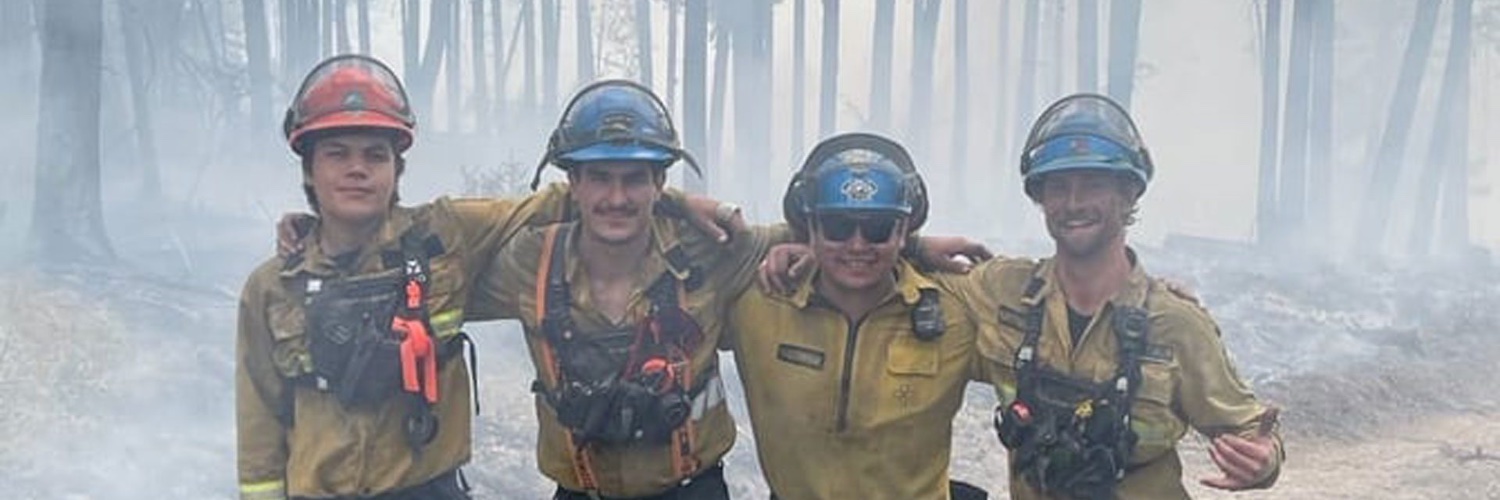
A massive win for the heroes who protect our communities — full-time, on-call, volunteer (10+ years), and wildland firefighters alike.
Once it receives Royal Assent, the government must develop a comprehensive provincial Health Screening Plan within 12 months. This landmark plan will include:
🌲 Coverage for wildland/forest firefighters with at least 5 years of cumulative service (amended from the original 10 years to better recognize their intense exposure)
🩺 Early detection cancer screening — tailored regular screenings designed to catch occupational cancers (such as those linked to smoke, chemicals, and toxins) at the earliest possible stage, before symptoms appear 🏋️ Comprehensive physical examinations on a regular basis
🧠 Integrated mental health assessments
🔬 Comprehensive laboratory and screening tests + ongoing data tracking on exposure risks and long-term health impacts
The plan must be tabled in the Legislature and reviewed every 5 years. It also requires a formal review of occupational disease presumptions under the Workers Compensation Act.
Huge congratulations and thanks to @MistyVanPopta for her determined leadership on this bipartisan-supported bill. It’s only the second time in over 40 years an opposition MLA’s private member’s bill has passed in BC. 👏🚒
Read the announcement: https://t.co/O8fAYIHVdj
#BCPoli #FirefighterHealth #WildlandFirefighters #CancerScreening #MentalHealth #EarlyDetection #BCLeg
🔥🚒 Study reveals #wildfire smoke's sneaky long-term hit on #firefighters' hearts! Using Apple Watches & @atmotube Pro air sensors, researchers found resting heart rate spikes post-exposure. Time for better protections! #WildfireHealth #Firefighters ❤️��
More 🇨🇦 research needed on impact of wildland firefighter exposure, personal exposure monitors. Long term wildland firefighters will all wear personal exposure monitors.
🔥 Latent Effects Post-Exposure: The strongest link between PM₂.₅ and elevated resting heart rate (1.4 bpm per 10 µg/m³) happened after the Park Fire, suggesting lingering cardiovascular sensitivity.
📈 Heart Rate Increases: Mean RHR jumped from 76.1 bpm before the fire to 79.7 bpm during, and stayed elevated at 77.9 bpm after – statistically significant!
🌫️ PM₂.₅ Spikes: Air pollution soared to 76.5 µg/m³ during the fire (vs. ~10 µg/m³ before/after), directly tied to wildfire smoke.
⌚ Wearable Tech Innovation: First study using real-time personal sensors (@Apple Watch for RHR, ATMOTECH for PM₂.₅) on 14 firefighters over 45 days.
🛡️ Call for Interventions: Highlights need for masks, rest periods, and awareness to combat occupational risks for firefighters already under stress.
https://t.co/7CKSRU23w9
🚨 Breaking News: British Columbia expands compensation coverage for firefighters 👨🚒 by adding 8 more cancers, for a total of 26 in total, to the presumptive list
📢 Announcement Today: Announced March 3, 2026 — BC is amending the Firefighters' Occupational Disease Regulation under the Workers Compensation Act, adding 8 new cancers to the presumptive list (plus reducing the minimum service requirement for esophageal cancer from 20 to 15 years).
🎗️ Added Cancers: Skin cancer, mesothelioma, soft tissue sarcoma, laryngeal cancer, tracheal cancer, bronchial cancer, nose cancer, and pharynx cancer.
📈 Total Coverage: Now 26 cancers total — the most comprehensive presumptive list in Canada; changes take effect as soon as cabinet approves; covers more than 15,000 firefighters province-wide.
👨🚒 Who Benefits: Includes ~4,320 career, 8,800 volunteers, >1,500 wildland, 700 First Nations/Indigenous, federal firefighters, and fire investigators;
⚠️ Rationale & Stats: Firefighters face far higher cancer risks from smoke, chemicals & toxins; they represent just 0.5% of BC's workforce but account for 35% of all accepted WorkSafeBC cancer claims (2010–2025) — especially vital with longer, more intense wildfire seasons.
https://t.co/D0DkH8yYXk
🚒🔥 Congrats to @RepJoshG on introducing the bipartisan FIRE Cancer Act—a key bill providing 💰$0 #cancer screenings for all U.S. #firefighters. Awesome!
Hoping the 🇨🇦 Canadian government introduces a similar national screening program!
- Supports blood cancer testing
- Includes ultrasounds targeting thyroid, bladder, testicular, liver, and kidney cancers
- Provides cardiopulmonary evaluations checking skin, mouth, and lymph nodes, with rotation through tests for comprehensive coverage
- Covers screenings no added costs to departments
- Encourages mobile and on-site screening access for easier firefighter participation
- 🔍Funds multi-cancer early detection tests like the Grail test, screening for over 50 types—including pancreatic, lung, liver, colon, stomach, and blood cancers—from one blood sample
Details: https://t.co/laq6bNYrzt
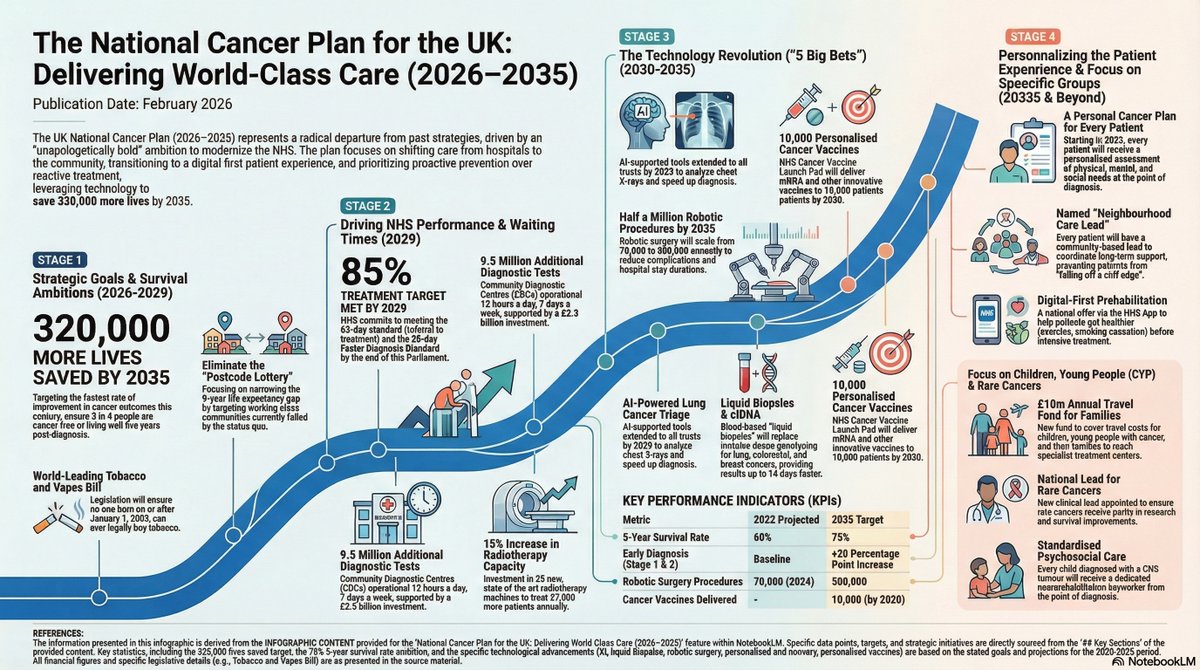
🚨 Fantastic! The UK has just launched its National Cancer Plan for England! 🇬🇧 A bold 10-year roadmap to deliver world-class #cancer care and save 320,000 more lives. I love the focus on #earlyscreening, new technology (vaccines, AI, liquid Biopsies)
Time for Canada 🇨🇦 to develop a strong national cancer strategy with unified prevention targets, a nationwide lung screening rollout, expanded community diagnostics, and innovation investments to boost survival rates and reduce inequities.
💪 75% survival goal — 3 in 4 diagnosed in 2035 cancer-free or living well after 5 years
⏱️ Faster care — Meet all waiting time targets by 2029 with 9.5M+ extra tests & Community Diagnostic Centres
🛡️ Prevention first — Youth tobacco ban, obesity crackdown, HPV vaccination to eliminate cervical cancer by 2040
🤖 Tech & innovation — Liquid biopsies, AI, genomics & NHS App for personalised risk & early detection
❤️ Patient-centred — Personalised plans, neighbourhood care & quality-of-life focus for survivors
https://t.co/C8kKjxod0Y
#CancerPlan #BeatCancer
🎉 Great news for firefighter 🫁lung cancer screening in El Paso County! CommonSpirit Penrose & St. Francis Hospitals have launched FREE low-dose CT lung cancer screening for El Paso County firefighters with 10+ years on the job! 🚒🔥
Congratulations and thank you for your leadership in advancing firefighter health and setting a new standard for others to follow. 👏🙌
Here’s hoping Canada commits, as part of Bill C-224, to include wildland firefighters as a high-exposure group for lung cancer screening research pilots and establish national guidelines! 🇨🇦🌲🛡️
#FirefightersFirst #LungCancerScreening #ElPasoHeroes #CommonSpirit
https://t.co/SIT1k1KH2o
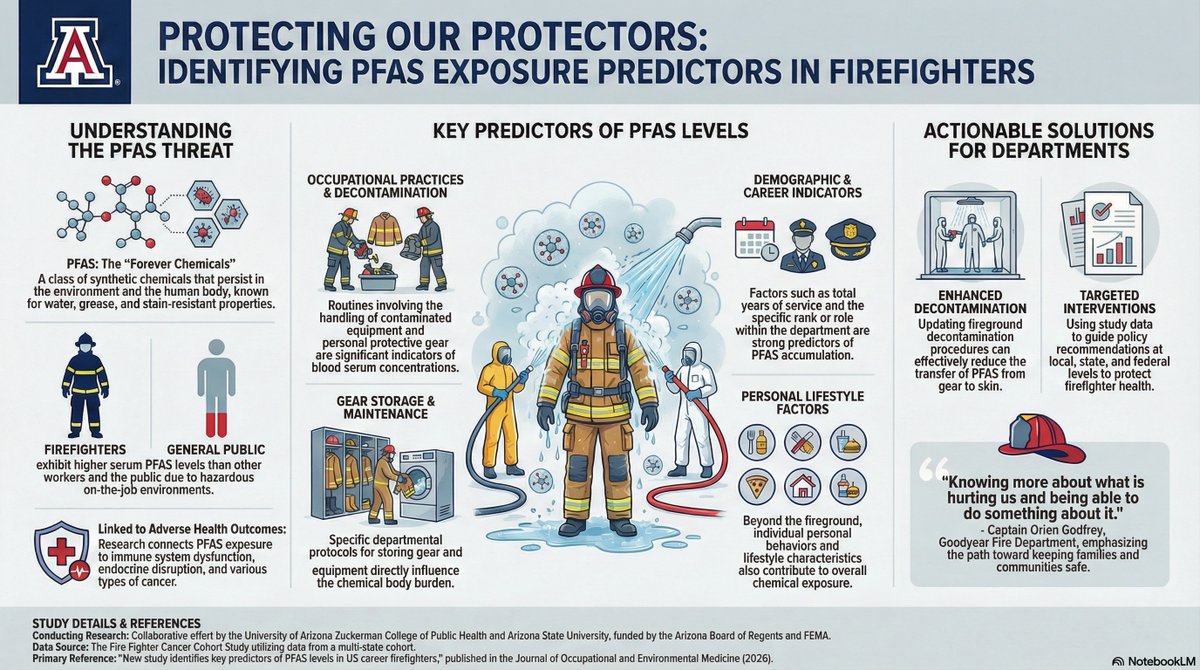
New study identifies key predictors of #PFAS levels in US career #firefighters, great work
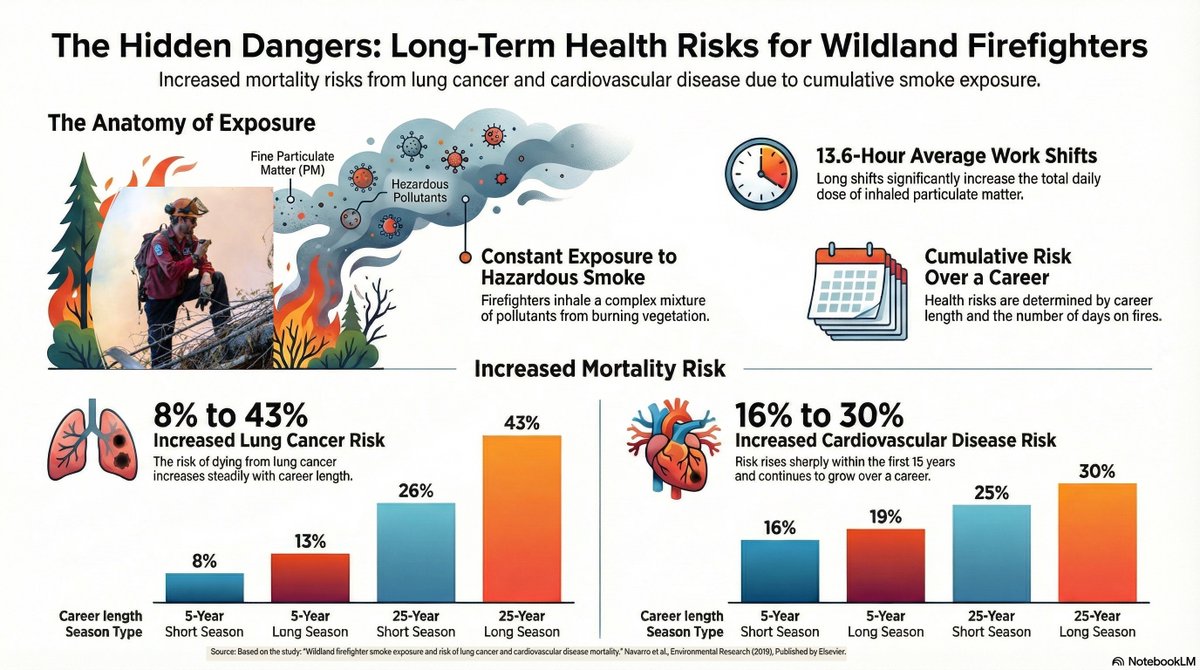
Infographic below I generated with Google NotebookLLM is one example of how AI can be used to improve communications with firefighters.
https://t.co/mpvwxI7jZ2
🎉 Massive congrats to New Hampshire firefighters on the Dec 2025 approval of $5M for the cancer screening pilot program under Gov. Kelly Ayotte, plus the federal Honoring Our Fallen Heroes Act! 🚒🩺 This boosts early detection & support against job hazards— This is a model for Canada, let's amp up our efforts for our first responders too! 🇨🇦 #FirefighterHealth #CancerScreening
💰 **Funding Breakthrough: $5M Contracts Greenlit** – Executive Council approved $2.2M to Grail Inc. for multi-cancer blood tests & $2.7M to United Diagnostic Services for ultrasound screenings and lung CT scans, making voluntary early detection accessible statewide.
🩸 **Life-Saving Early Detection Focus** – Program targets elevated cancer risks for active & retired firefighters, with options based on medical needs; builds on 2024 legislation for pilot proven to catch cancers early.
📜 **Federal Victory: Heroes Act Enacted** – New law provides automatic survivor benefits for families of first responders lost to occupational cancers, a key win at Capitol Hill alongside state efforts.
🛡️ **Tackling Occupational Risks** – Highlights need to address carcinogens like PFAS in gear; NH leads with presumptive cancer laws since 2018, expanded in 2023 for better protections.
🌍 **Model for Canada** – Echoes Canada's investments in firefighter health; with NH's bipartisan push, provinces can expand screenings & prevention—time for nationwide screening!
https://t.co/UZG1Ng56xU
Il y a un écart reconnu, admis par Santé Canada et d'autres, entre la recherche et les pompiers de première ligne. 🇨🇦 Le Canada a besoin d'un modèle « priorité aux pompiers de première ligne » pour combler cet écart. Nous préconisons des essais financés où les pompiers
👩🚒 dirigent la conception et l'évaluation d'outils de santé contre le cancer pilotés par l'IA 🤖. En co-concevant la façon dont l'information sur le cancer est partagée — par SMS, balados ou IA — nous nous assurons que la technologie sert et sera utilisée par ceux sur le terrain. Les sites web généraux sur le cancer sont insuffisants.
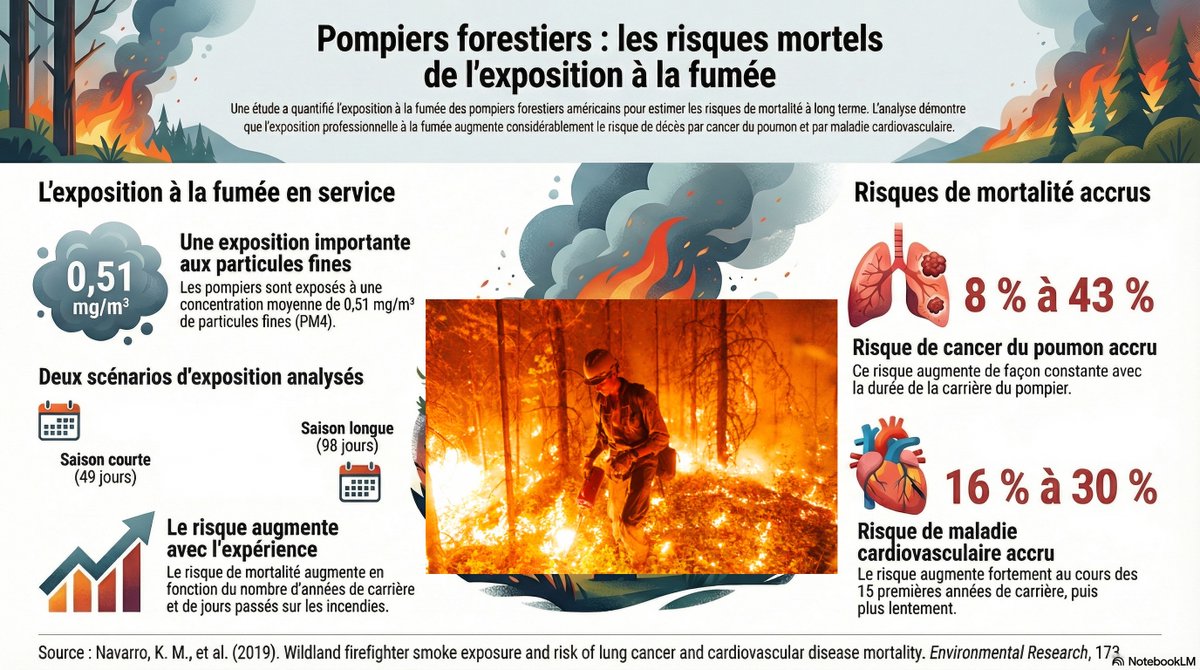
Exemple d'infographie via @Google NotebookLM : L'IA est un outil qui peut aider à combler cet écart. 🌉 Voici un exemple d'infographie générée par l'application NotebookLM de Google. 📊
https://t.co/Jy0dJSZpeY
There is a recognized gap, acknowledged by Health Canada and others, between research and frontline firefighters. 🇨🇦 Canada needs a "frontline firefighter-first" model to address this gap.
We advocate for funded trials where firefighters lead the design and evaluation of AI-driven cancer health tools. By co-designing how cancer information is shared—via SMS, podcasts, or AI—we ensure the technology serves and will be used by those on the ground. 👩🚒 Generalized cancer websites are insufficient.
📊 Example infographic via @Google NotebookLM:
AI is one tool that can help bridge this gap. 🌉 Below is an example of an infographic generated by Google's NotebookLM application. 📊
https://t.co/u12tTpMgJ7
🇺🇸🔥 Félicitations au gouvernement des États-Unis pour avoir signé une nouvelle loi prévoyant des paiements de près de 450 000 $ aux pompiers forestiers atteints de cancers liés à la fumée. Le Canada devrait envisager une couverture similaire. 🇨🇦 Nous devons prioriser le financement qui soutient directement les pompiers, agir vite, et mesurer le succès par les améliorations à leur santé — la seule mesure qui compte vraiment.
Top 5 détails clés :
💰 Paiement unique exempt d'impôt : Paiement unique de 448 575 $ aux pompiers affectés ou à leurs familles s'ils sont affaiblis ou décédés d'un cancer causé par la fumée, reconnaissant les risques bien connus d'exposition toxique.
⏪ Application rétroactive : S'applique aux demandes remontant à six ans, permettant aux familles endeuillées d'accéder aux prestations.
🎓 Avantages en éducation : Jusqu'à quatre ans de financement pour l'enseignement supérieur des enfants ou du conjoint des pompiers affectés.
🩺 Couverture présumée pour les cancers : Considère automatiquement une vingtaine de cancers liés à la fumée comme des blessures en service pour les pompiers d'agences publiques, simplifiant les réclamations.
🤝 Collaboration bipartisane : Parrainée par la sénatrice Amy Klobuchar (D-MN) et le sénateur Kevin Cramer (R-ND), incluse dans un plus grand projet de loi sur les dépenses militaires.
https://t.co/Yprp3j2yBK
🇺🇸🔥 Congratulations to the U.S. government for signing a new law providing nearly $450K payments to wildfire firefighters with smoke-related cancers. 🇨🇦 Canada should consider similar coverage. We must prioritize funding that directly supports firefighters, act quickly, and measure success by improvements to their health—the only measure that truly counts.
Top 5 key details:
- 💰 **Tax-Free Lump Sum**: One-time payment of $448,575 to affected firefighters or their families if debilitated or deceased from smoke-induced cancer, recognizing long-known risks of toxic exposure.
- ⏪ **Retroactive Application**: Applies to claims dating back six years, allowing bereaved families to access benefits.
- 🎓 **Education Benefits**: Up to four years of higher education funding for children or spouse of affected firefighters.
- 🩺 **Presumptive Cancer Coverage**: Automatically deems about 20 smoke-related cancers as line-of-duty injuries for public agency firefighters, simplifying claims.
- 🤝 **Bipartisan Collaboration**: Sponsored by Sen. Amy Klobuchar (D-MN) and Sen. Kevin Cramer (R-ND), included in a larger military spending bill.
@DanAlbas@MLABrennanDay@MistyVanPopta@SherryRomanado@GordJohns@drbrendanhanley@GovCanHealth
https://t.co/Yprp3j2yBK
🔥🚒🫁 Étude américaine toute fraîche de décembre 2025 : les pompiers sont durement touchés par le cancer du poumon à cause des toxines dans la fumée des feux de forêt et des incendies de bâtiments, pourtant IL N’EXISTE AUCUNE ligne directrice de dépistage spécifique à notre métier, nulle part.
Le Canada doit financer des programmes pour créer des lignes directrices de dépistage du cancer pour les pompiers, point final !
Sondage auprès de 60 pompiers de la région de San Francisco : 95 % feraient une TDM à faible dose demain matin 🔥✅, 98 % savent que le dépistage précoce sauve des vies 💪🫁.
Les plus motivés ? Les plus jeunes, les actifs et ceux qui ont bouffé de la grosse fumée de feux de forêt l’an dernier 🌲🔥😷.
Le seul groupe qui hésite ? Les ex-fumeurs… justement ceux qui en ont le plus besoin. Faut leur parler franchement, sans leur foutre la trouille ❤️📢.
Cette étude-là, c’est du carburant de rocket : les pompiers sont prêts, les preuves sont accablantes → il est temps de mettre sur pied des programmes de dépistage taillés pour nous.
🔥 Top 5 le plus urgent d’abord
• Aucune ligne directrice spécifique au métier malgré le risque énorme 🚨
• 95 % des pompiers prêts à passer une TDM à faible dose dès demain ✅🫁
• 98 % convaincus que le dépistage sauve des vies — appui quasi unanime 💪
• Les actifs, les jeunes et ceux avec forte exposition feux de forêt = les plus chauds pour le dépistage 🌲🔥
• Les ex-fumeurs les moins partants — éducation ciblée pour les retraités, c’est urgent ❤️📢
https://t.co/m8C2H7LZqo
🔥🚒🫁 Brand-new December 2025 US study just dropped: firefighters face high lung cancer risk from wildfire and structural smoke toxins, yet no firefighter-specific lung cancer screening guidelines exist anywhere.
Canada needs funded programs to develop firefighter cancer screening guidelines!
Survey of 60 San Francisco Bay Area crews shows: 95% would get low-dose CT screening tomorrow 🔥✅, 98% know early detection saves lives 💪🫁.
Younger firefighters, active-duty, and those with heavy wildland smoke exposure last year were most eager 🌲🔥😷.
Only group less willing: former smokers—the ones who need it most. Reach them with facts, no scare tactics ❤️📢.
This research is rocket fuel: firefighters are ready, evidence overwhelming—time to build tailored screening programs.
🔥 Top 5 takeaways (most critical first)
• No occupation-specific lung screening guidelines exist despite massive cancer risk 🚨
• 95% of firefighters would get low-dose CT if offered today ✅🫁
• 98% believe screening saves lives—nearly unanimous support 💪
• Active, younger, and heavy wildland exposure groups show strongest demand 🌲🔥
• Former smokers least willing—targeted education for retirees urgent ❤️📢
@IAFFCanada@AaronGunn@LailaGoodridge@MelissaLantsman
https://t.co/m8C2H7LZqo
👩🚒Excitant ! Le rôle pivotal des #pompiers de Californie dans l'Étude de recherche sur le cancer (CAFF-CRS) est un modèle que le Canada devrait adopter — un avec un focus pratique qui engage les pompiers dès le début.
Voici comment les pompiers de première ligne façonnent cette étude vitale :
🔥💬 Voix des pompiers : Les pompiers actifs des départements à travers la Californie guident les priorités de recherche, assurant la pertinence aux expositions et risques sur le terrain.
👩🚒📊 Partenariat de recherche : Les capitaines de pompiers co-dirigent les projets aux côtés des scientifiques de l'UC, en abordant les défis pratiques et les préoccupations clés en santé.
💉🔍 Conseillers en données : Les membres du conseil collaborent à la conception des méthodes de collecte de données — comme la surveillance du sang et des expositions — qui reflètent les conditions réelles de combat contre le feu.
🛡️📣 Focus sur la prévention : Ils poussent pour traduire les résultats en protocoles de travail, formations, et changements dans la culture et l'équipement afin de minimiser les risques de cancer.
🤝🗣️ Pont communautaire : Agissant comme un lien vital entre les équipes scientifiques et les pompiers à l'échelle de l'État, ils s'assurent que les insights atteignent et habilitent la communauté.
Ce conseil consultatif grassroots est la pierre angulaire, rendant la recherche vraiment informée par les pompiers, actionable et protectrice.
#FirefighterHealth #CancerResearch #FrontlineVoices #cancer #firefighters