Just finished reading an amazing article on open source by @DoomHammerNG .
This is hands-down the best piece I've come across.
It covers everything you need to know about open source.
https://t.co/BOAkrPt1L4
Consider this. Pre-AI internet content is akin to pre-atomic era shipwreck steel. Metals from before Hiroshima are not radioactive, they're clean and can be used in tech and science – hence, they're expensive.
The scarcity of human-generated content in an AI-dominated future could make pre-AI content valuable for research and trust purposes, similar to pre-atomic era steel's purity and lack of contamination.
In the same way that steel from before the atomic era is valued for its purity and lack of radioactive contamination, internet content from before the widespread use of AI tools could be seen as "pure" or "uncontaminated." This pre-AI content was created entirely by humans without the assistance or influence of AI algorithms.
As AI becomes more prevalent in content creation, it may become increasingly difficult to find content that is guaranteed to be 100% human-generated, just as it's now challenging to find steel that hasn't been exposed to atmospheric radiation post-1945. This scarcity could potentially make pre-AI content more valuable or desirable for certain purposes.
For example, in fields like linguistics or anthropology, researchers might prefer to study human-generated content to get a more authentic understanding of natural language patterns or cultural trends. Pre-AI text could be seen as a more reliable or "clean" data source.
Additionally, as concerns grow about the potential for AI to be used in spreading misinformation or biased content, some people may come to trust and prefer content that they know was created by humans. In this sense, pre-AI content could become a sought-after commodity.
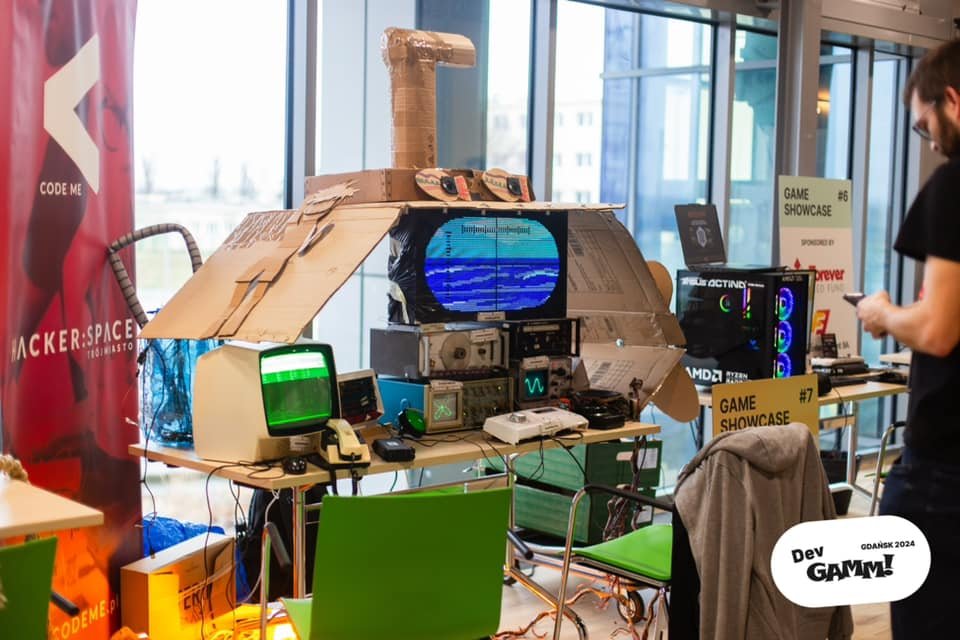
@iWozik @DevGAMM@globalgamejam@LeszekMiotk@traqpl Not every washing machine has as cool a panel as the one we found. But our Evil Aim is to rule the oceans with washing machine based naval fleet.
@traqpl Yup, @Dreat_ sent it to me some time ago and we built something similar for the Festival of Light (though not necessarily 20m long).
Nothing prohibiting us from making it longer, though.
When I started working on AI four decades ago, it simply didn’t occur to me that one of the biggest use cases would be derivative mimicry, transferring value from artists and other creators to megacorporations, using massive amounts of energy.
This is not the AI I dreamed of.
@adafruit@traqpl@Raspberry_Pi@HackSpaceMag Here's a gameplay video from the jam: https://t.co/6Ih3u9Ylah
A better one with tech details and such will be available soon 🔜