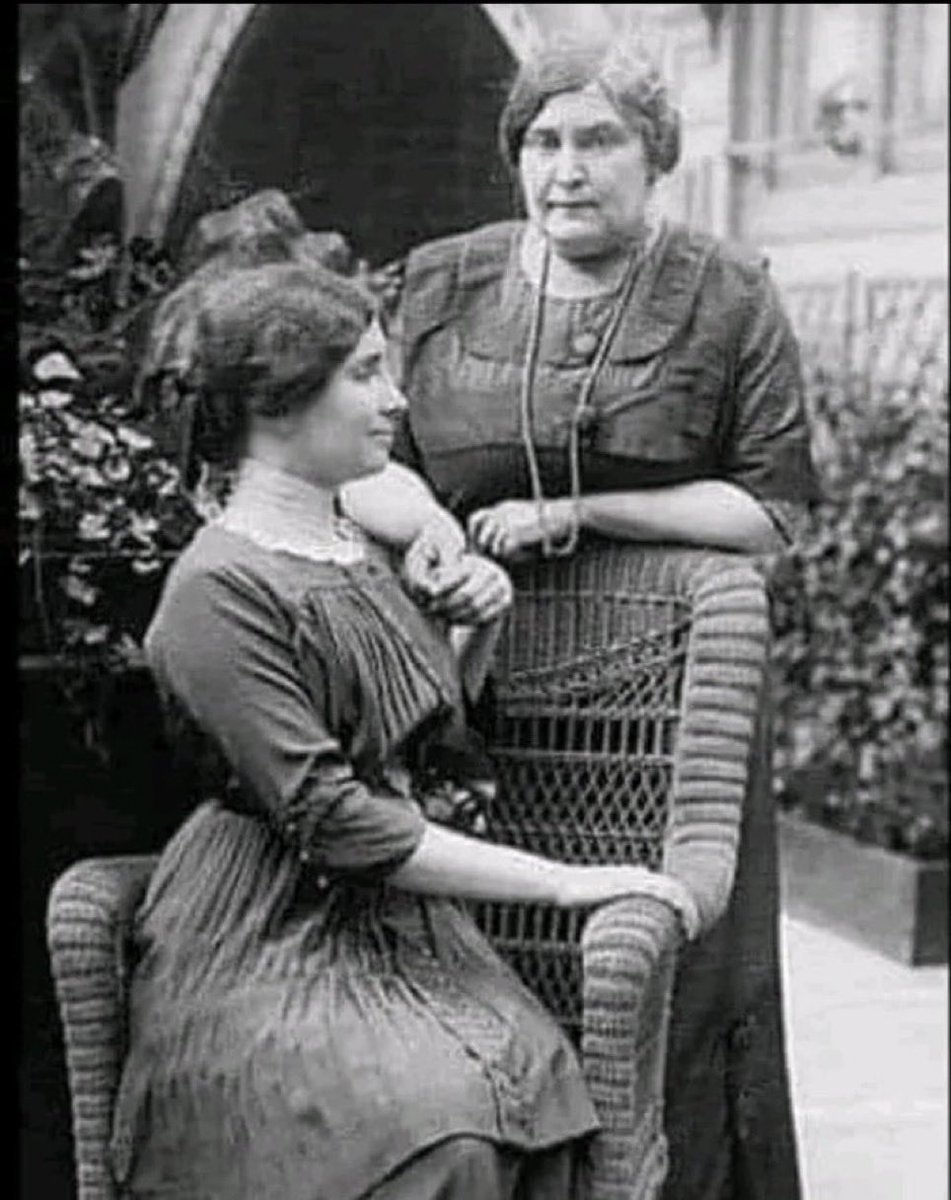
𝗗𝗿. 𝗙𝗿𝗮𝗻𝗸 Mayfield was touring Tewksbury Institute when, on his way out, he accidentally collided with an elderly floor maid. To cover the awkward moment Dr. Mayfield started asking questions.
"How long have you worked here?"
"I've worked here almost since the place opened," the maid replied.
"What can you tell me about the history of this place?" he asked.
"I don't think I can tell you anything, but I could show you something."
With that, she took his hand and led him down to the basement under the oldest section of the building. She pointed to one of what looked like small prison cells, their iron bars rusted with age, and said, "That's the cage where they used to keep Annie Sullivan."
"Who's Annie?" the doctor asked.
Annie was a young girl who was brought in here because she was incorrigible—nobody could do anything with her. She'd bite and scream and throw her food at people. The doctors and nurses couldn't even examine her or anything. I'd see them trying with her spitting and scratching at them.
"I was only a few years younger than her myself and I used to think, 'I sure would hate to be locked up in a cage like that.' I wanted to help her, but I didn't have any idea what I could do. I mean, if the doctors and nurses couldn't help her, what could someone like me do?
"I didn't know what else to do, so I just baked her some brownies one night after work. The next day I brought them in. I walked carefully to her cage and said, 'Annie, I baked these brownies just for you. I'll put them right here on the floor and you can come and get them if you want.'
"Then I got out of there just as fast as I could because I was afraid she might throw them at me. But she didn't. She actually took the brownies and ate them. After that, she was just a little bit nicer to me when I was around. And sometimes I'd talk to her. Once, I even got her laughing.
One of the nurses noticed this and she told the doctor. They asked me if I'd help them with Annie. I said I would if I could. So that's how it came about that. Every time they wanted to see Annie or examine her, I went into the cage first and explained and calmed her down and held her hand.
This is how they discovered that Annie was almost blind."
After they'd been working with her for about a year—and it was tough sledding with Annie—the Perkins institute for the Blind opened its doors. They were able to help her and she went on to study and she became a teacher herself.
Annie came back to the Tewksbury Institute to visit, and to see what she could do to help out. At first, the Director didn't say anything and then he thought about a letter he'd just received. A man had written to him about his daughter. She was absolutely unruly—almost like an animal. She was blind and deaf as well as 'deranged.'
He was at his wit's end, but he didn't want to put her in an asylum. So he wrote the Institute to ask if they knew of anyone who would come to his house and work with his daughter.
And that is how Annie Sullivan became the lifelong companion of Helen Keller.
When Helen Keller received the Nobel Prize, she was asked who had the greatest impact on her life and she said, "Annie Sullivan."
But Annie said, "No Helen. The woman who had the greatest influence on both our lives was a floor maid at the Tewksbury.
Behind the scenes of Goldeneye, which had the largest amount of miniature work ever in a James Bond movie, 1995.
More brilliant historical photos: https://t.co/vKQ8CmLZ3V
When Patricia Neal had a stroke in 1965, the hospital told her husband she should have one hour of therapy a day, because any more would tire her. Her husband was Roald Dahl. He gave her six, and changed how the world treats stroke.
She was 39, three months pregnant, and had won the Oscar for Best Actress the year before. Three blood vessels burst in her brain in one evening in Los Angeles. She was in a coma for three weeks. Variety ran her obituary.
She woke up paralysed down one side, half blind, and without language. She could not read, could not name her own children, and made up words for the ones she'd lost.
Dahl took her home to Buckinghamshire and asked the specialists what came next. An hour a day, they said, and patience. Most recovery was down to nature.
He asked what anyone would learn at school in an hour a day.
Then he went round the village. He drew up a rota of neighbours, none of them trained, and had them arrive at the house in shifts from nine in the morning, six days a week. They did picture cards, jigsaws, counting games, nursery rhymes, the newspaper. When Pat wept and refused, the next volunteer arrived anyway. Doctors warned him he would break her. She called him Roald the Rotten and hated him for a year.
Their daughter Lucy was born healthy that August. Within eighteen months Pat was giving speeches. In 1968 she made The Subject Was Roses and was nominated for another Oscar.
One of the neighbours, Valerie Eaton Griffith, wrote the method up as a short book. Families all over Britain started using it. The volunteer scheme that grew out of it became the Stroke Association, and long, hard, early rehabilitation is now what every stroke unit does.
It was the second time Dahl had done this. When his baby son's skull was shattered by a taxi in 1960 and the drainage tube kept clogging, he got a toymaker and a neurosurgeon into a room and came out with a better valve. It went into about 3,000 children.
He had no medical training of any kind. He just declined to accept that the people who did had finished thinking.
And now you know the full story:
At Christmastime in 1928, a young couple in New York lost their baby boy. He was less than a month old. From then on, every Christmas, the mother made a quiet trip to her little son's grave.
Years later, her husband was spending Christmas far away in California, missing her and missing home. Out of that ache came a song.
He was born Israel Beilin on May 11, 1888, in Russia. His family was Jewish, and like so many others, they fled. His one memory of Russia was lying on a blanket by the side of a road, watching his house burn to the ground.
On September 14, 1893, the family arrived at Ellis Island. He was 5 years old.
They lived in a three-room tenement on the Lower East Side of New York. His father, who had been a cantor, took work in a kosher meat market and gave Hebrew lessons. When the boy was 13, his father died and he went to work.
He sang on street corners for pennies. He became a singing waiter. Before he turned 14, feeling he wasn't bringing in enough, he left home and lived in rough lodging houses with other homeless boys in the Bowery.
He never learned to read music. He could only play the piano in one key. Yet he started writing songs anyway. For his first published song, in 1907, he was paid 33 cents. The world would come to know him as Irving Berlin.
Within a few years, "Alexander's Ragtime Band" made him famous. But the next part of his life broke his heart.
In 1912, he married a young woman named Dorothy Goetz. On their honeymoon in Havana, she caught typhoid fever. Six months after the wedding, she was gone. Out of his grief came his first ballad, "When I Lost You." It sold more than a million copies.
Then, in 1924, he met Ellin Mackay.
She was a young writer and an heiress. Her wealthy father was furious that she was seeing a poor immigrant songwriter, and he sent her to Europe to forget him. Irving wrote her songs instead, songs like "Remember" and "All Alone," and she wrote to him every day.
So they eloped, and married in a simple ceremony at New York's Municipal Building. When people said her father had cut her off, Irving gave her the rights to his song "Always" as a wedding present, so she would have her own income no matter what. People still play it at weddings today.
They were married for 63 years.
But there was one Christmas they never got over. Their baby son, Irving Jr., died at Christmastime in 1928. After that, Ellin visited his grave every year during the holidays.
In 1937, Irving was stuck in Beverly Hills for Christmas, working on films, far from Ellin and their three daughters. He knew she would make that trip to the grave alone.
Out of that lonely Christmas grew a quiet, wistful song about snow, sleigh bells and old-fashioned Christmases at home. He thought it was the best song he ever wrote.
Bing Crosby sang "White Christmas" in the 1942 movie Holiday Inn, just after America had gone to war. Crosby's recording became the best-selling single of all time, with more than 50 million copies.
The immigrant boy also wrote "God Bless America," and he gave away every penny it earned to the Boy Scouts and Girl Scouts. He wrote "Easter Parade," "Blue Skies" and "There's No Business Like Show Business." He wrote about 1,500 songs.
In 1977, he received the Presidential Medal of Freedom.
Ellin died in July 1988, at 85. Irving Berlin died in his sleep at his home in New York on September 22, 1989. He was 101 years old.
A boy who watched his house burn in Russia and arrived at Ellis Island with nothing. A boy who never learned to read music. A young husband who lost his first wife, a father who lost his only son, and a man who loved one woman for 63 years. And a lonely Christmas in California that gave the whole world its favorite holiday song.
He wrote it from the loneliest Christmas of his life. Now it is part of every Christmas we share.
This Christmas, when "White Christmas" comes on the radio, you'll know the story behind it.
A beautiful act of kindness! ❤️ A young woman gives an elderly lady a lovely makeover, making her feel special, beautiful, and loved. Sometimes, the smallest acts of kindness bring the biggest smiles. 🥰❤️
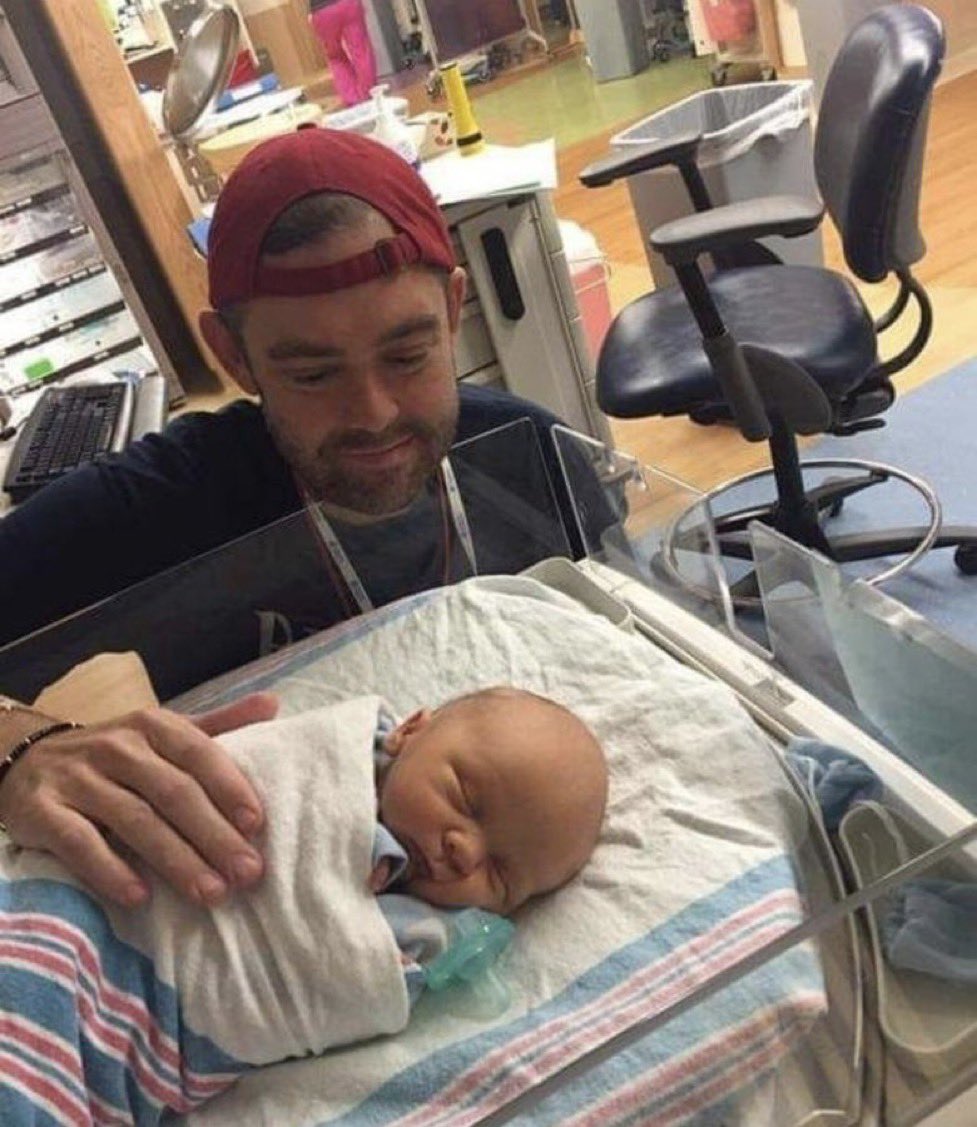
For the last 9-months, my wife, Brooklyn has been pregnant with a very sick baby boy. Three or four months ago, we learned that the baby had severe hydrocephalus. Back in the old days, hydrocephalus was called, 'water on the brain' - too much brain fluid. Ultimately, we were referred to Cincinnati Children's Hospital, where we were told by several of the most highly regarded fetal specialists in the country that his condition was dire. The baby's condition was 'off the charts bad'. It was so extreme that the specialists stopped measuring and monitoring his fluid level because, at that point, it didn't really matter. The MRI's were sickening to look at.
We were told, pointblank, that there was over a 90% chance that the baby would either die shortly after birth or have such severe cognitive impairments that any quality of life would be hard to imagine. We had a meeting with palliative care regarding the use of life sustaining measures and had detailed, awful, and emotional discussions about the ethics of when we might need to remove or cease such measures - which would result in the baby 'passing away peacefully'.
Brooklyn relocated to Cincinnati and lived in a hotel close to the hospital - in case she went into labor. I commuted back and forth. On July 8th, Brooklyn did indeed go into labor. Literally, 15 minutes before they wheeled her back to start the C-section, we had another meeting with doctors regarding the use of a breathing tube and at what point we might need to remove that tube and let the baby go to Heaven. Guess what? The baby came out crying - which was the sweetest sound I ever heard.
In a nutshell, Charlie Schnarr stayed in infant intensive care until yesterday - when we all came home. He seems to be a normal, beautiful baby doing all the things that babies do. He has mild ventricular enlargement, but we can deal with that with checkups.
How did this happen?!
The doctors said, 'We do not have and cannot come up with a medical explanation for what we've witnessed here'. Somehow his brain found a way to naturally clear the blockage or re-route the fluid that was causing the oppressive back up of brain fluid. During the last week, I heard the words, 'divine intervention' and 'miracle' more times than I could count. Nurses with decades of experience and esteemed, nationally admired doctors were flabbergasted but jubilant. Because of the domino effect of friends, family, clients, colleagues and even strangers praying and asking others to pray for us, I do not doubt that there were thousands of people praying for us.
I'm a practical person that certainly believes in science and medical technology, but I absolutely know, from the bottom of my heart, that God was involved in this. I give ALL of the credit and glory to Him. Prayer is positively powerful. God is real, and He still performs miracles."
📷: Nick Schnarr
In November 2007, 21-year-old Zack Dunlap was declared brain-dead at a hospital in Wichita Falls, Texas.
His family was told there was no hope of recovery. They agreed to donate his organs, and a transplant team was preparing to travel by helicopter.
Then something happened that stopped everything.
One of Zack’s cousins, a nurse, took a pocketknife and gently ran it along the sole of his foot.
Zack pulled his foot away.
Another relative pressed firmly on his fingernail. Zack moved his arm across his body, pushing the hand away.
The family immediately questioned what they had been told.
Zack was from Frederick, Oklahoma. He had suffered a devastating ATV accident after swerving to avoid someone. The vehicle flipped, and he landed headfirst on the asphalt. He had not been wearing a helmet.
His injuries were so severe that doctors told his mother they could see brain matter coming from his ear.
After around 36 hours, a radionuclide scan was interpreted as showing no blood flow to his brain. Doctors determined that he met the criteria for brain death, and his family was asked about organ donation.
But the movements witnessed by his relatives brought the process to a halt.
Zack remained in hospital for five weeks before being transferred to a rehabilitation facility in Oklahoma City. Remarkably, he walked out just 48 days after the accident.
He later recalled hearing a doctor pronounce him dead. He said he had been furious, but was unable to communicate what he was experiencing.
His case has continued to raise questions.
A medical review published in 2025 revisited the circumstances surrounding his brain-death determination. The authors highlighted concerns in the original assessment, including the fact that an apnea test had not been completed and that Zack had been receiving a continuous infusion of propofol, a sedative.
The review argued that his case illustrates why brain-death assessments must follow strict medical safeguards and why blood-flow scans must be interpreted carefully.
Brain death is a formal medical determination, not simply a coma or an unconscious state. It requires rigorous testing to establish the permanent loss of all brain function.
Zack’s story is extraordinary, but it is also a reminder of how important those safeguards are—especially when decisions about organ donation may follow.
His family thought they were saying goodbye. Instead, they witnessed movements that changed the course of his story.