After three decades as a knee surgeon, I can say this with confidence…. many people are far more limited by the story their MRI report tells them than by the condition of their meniscus or articulation cartilage.
Tetanus, although preventable by a highly effective vaccine, continues to cause 30,000-50,000 deaths annually.
A recent Seminar explores the current state of tetanus, underscoring the importance of sustained immunisation efforts & improved access to care: https://t.co/SmVB4E29F8
I love being an ER doc. I study 4 hours on stroke updates and immediately use it on shift. I attend 2 talks on anemia updates and immediately use it on shift. It's so easy just to want to study more and more medicine. The payback to help people is literally instant.
One of my absolutely favourite consults in ID is for eosinophilia....and the hunt for a cause
Here's our brand new @biainfection guideline on managing this challenge in migrants and returning travellers!
Kudos to @ClareWarrell for leading on this!!
https://t.co/s1lWIgNOUS
I just released an essay series on a topic I've been thinking about, on and off, for a few years:
What does AI progress mean for medical progress?
Many people working on AI dream it will help cure cancer and prevent disease. I wanted to create a more specific roadmap:
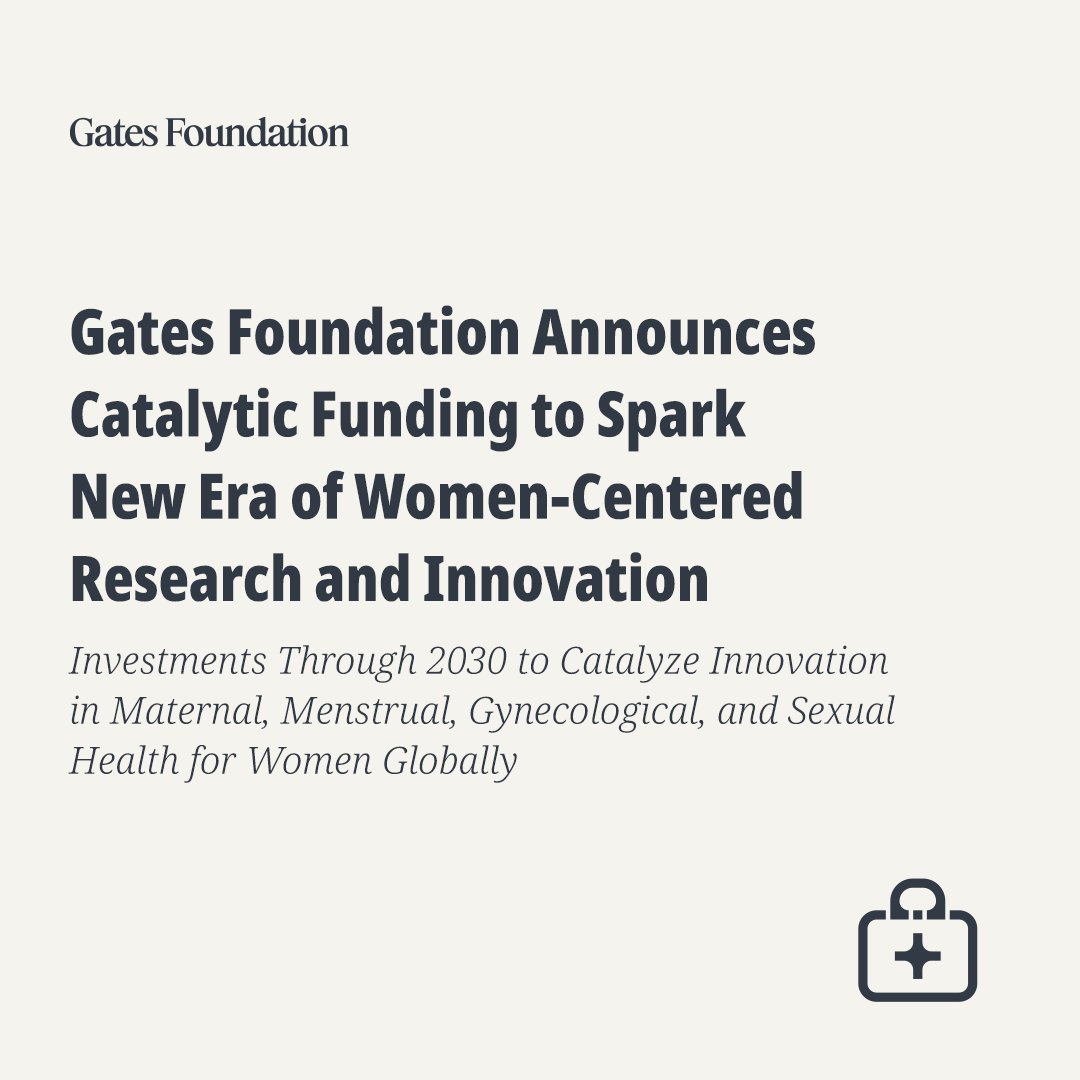
Our next chapter at the @gatesfoundation is about investing in areas with the greatest potential for impact. Today’s $2.5B commitment through 2030 to transform women’s health is exactly that—focused on accelerating R&D across five critical but chronically underfunded areas, especially acute for women in low- and middle-income countries.
When women are healthy, they can lead fuller lives—and as a result, families are stronger, communities are healthier, and economies thrive. We’re calling on fellow philanthropies, the private sector, and governments to join us in making women’s health a global priority.
Learn more: https://t.co/Gbqnx3QDCw.
Excited to share our tool Resub that automatically formats your manuscript for any journal.
We designed Resub for clinical researchers who:
1) Hate wasting time formatting papers
2) Want to save hours per manuscript
3) Are committed to productivity and impact
You can trial it for free at https://t.co/NQSrhBCHq2
Appreciate the repost and you sharing with any researchers you know 🙏
Most toothaches are the result of inflammation, not infection. Our latest toolkit, Taking the Bite Out of Tooth Pain, features a dental prescription pad for avoiding unnecessary antibiotic use in tooth pain. 🦷
Download now: https://t.co/HuuCcPh8XI
@ross_prager@TChanMD@Brent_Thoma@katiewiskar@uOttawamwoo@IM_POCUS@CardioNerds Totally agree. Terminology shapes one's mental model and entrenches key concepts. This is really important for trainees (and generalists). Accurate terminology cognitively sign posts diagnostic and therapeutic considerations that may be lost when using more reductive terms.
Behind every survival of Marburg, there are thousands who work tirelessly to ensure every patient has all the best. Glad to see this incredible leader and astute clinician Dr. Menelas Nkeshimana, @mnls_nke featured on https://t.co/6FSbTsvH0A
@TelGlobalHealth@RwandaHealth
Are you interested in learning how to responsibly integrate AI tools in your research?
If so, sign up: https://t.co/5CiskXfUAN
Depending on interest will either do 1:1 meetings or a webinar with AI leaders.
Was talking with @cliffreid about this recently.. #foamed has been at the front of so much digital innovation (podcasting, blogs etc.).
How can the #foamed community lead the charge in ethical healthcare AI adoption to ensure effective and responsible adoption of AI technologies?
#medtwitter #research
Let's get the discussion going! @john_basmaji@MaratSlessarev@ThinkingCC@DrDylanCollins@khaycock2@ArgaizR@M_Lin @rajivthava
Or, the system is working as designed.
It is a sad reality, but we have to face it: the purpose of a system is what it does.
As systems theorist Stafford Beer argued, there is "no point in claiming that the purpose of a system is to do what it constantly fails to do."
It goes beyond “looks like shit.” The doorway physical exam isn’t passive, but should be an active moment of pause and consideration like all parts of the physical. From here you can see:
Neuro: is the patient awake and alert (implying gross neurological intactness, adequate perfusion) or lethargic.
Resp: is this person breathing comfortably and saturating well?In respiratory distress? How much distress? (RN with pulse ox will almost always get to room before you do) In distress and mentating (Bipap?) or in distress and comatose (intubation)?
CV: Awake and alert? Blood pressure on monitor? Mottled?Presence of bloody mess by airway or on bed? Able to lie flat or sitting up in bed trying to gasp?
Robust or frail? Is the rush to stabilize or is there a moment to clarify the goals of care now that ICU is involved (which means plan A and maybe B have failed)? Frailty is a top 5 physical exam sign for critically ill patients. There is a health cost to surviving critical
Illness and frailty is an indicator whether someone has enough health points saved for the coming battle.
A-B-C. Some of us don’t even notice ourselves doing it but we all go through the process. Most acute decisions are already formulated by the time we step into the room.
Preventing Overdiagnosis 2025
03 – 05 September 2025, Oxford, UK
Call for Abstracts and Registration OPEN.
https://t.co/RmokrGn3JM
Too Much Medicine in in Low-and-Middle-Income Countries https://t.co/HActnaLkkq
We're thrilled to see @OurWorldInData's extremely thorough breakdown of the relative effectiveness of global health interventions. New Incentives is one of the four "extraordinary charities" the article features as recommended by @GiveWell. Thanks, @MaxCRoser for your work on this! https://t.co/gMzL22tGR2
New post, taking a break from science blogging. The topic is something that has often puzzled me about philanthropy: why is there so little of it? https://t.co/vMNEVGc1nT