Very excited to join @ColumbiaNeuro Department of Neurological Surgery and continue breakthrough cerebral aneurysm research and patient care! Couldn't have done without amazing mentors, friends and family along the way!
Meet @DrKNowicki, an endovascular neurosurgeon redefining patient outcomes through world-class expertise and research.
Dr. Nowicki developed a groundbreaking blood test for cerebral aneurysms, earning the 2023 Academy Award from the AANS!
Visit our website to learn more.
In this fun thought paper we review the challenges associated with development of a blood test for cerebral aneurysm detection, and provide the rational assumptions and pathway to turn such translational efforts into reality.
https://t.co/ee01P88xrs
University of Florida ranked Tier 1 by US News & World Report 2026 Best Medical Schools. Tier 1 are the top 16 medical schools in the United States. GO GATORS! https://t.co/boYoxxCBZN
Happy Doctors’ Day to our team of physicians, including our faculty and resident—and to the many partners in medicine we collaborate with every day in service of our patients.
Thank you for your dedication to advancing care, research, and innovation in neurosurgery. 💙
Christopher Ogilvy, MD—BAF Co-Founder and Medical Advisory Board Chairman—is sharing critical insights on brain aneurysm treatment decisions, risk factors, empowering our community with the knowledge to navigate their journey with confidence.
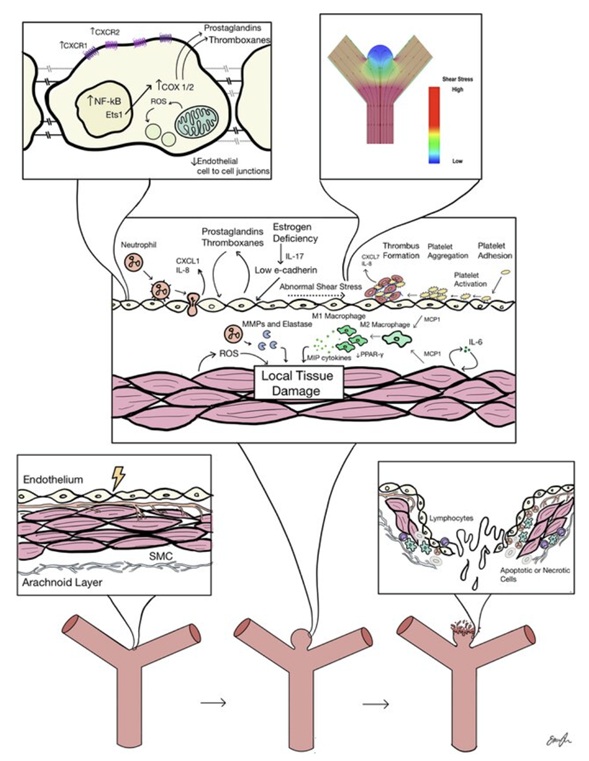
Can platelets drive inflammation to affect cerebral aneurysm micro-environment? You bet! In fact, in this manuscript, we showed that small molecule inhibitors targeting platelet CXCL7-CXCR1/2 inflammatory axis could be used to prevent cerebral aneurysm formation or progression.
https://t.co/7bZYMLFcrd
Congrats to the Esser lab on another study and to my younger sister @elusia07 on her first publication!
Still trying to decide when to exercise? Here's some great data supporting a morning routine for endurance training:
https://t.co/DRdbJzSgEw
🧠 In a prospective multicenter study of 66 patients with NPH, transvenous eShunt placement showed no device-related SAEs at 90 days and significant improvements in gait, cognition, and urinary symptoms.
🔗 Read more: https://t.co/idle9DSfgS
From holographic spine navigation to AI-enhanced tumor detection, the Surreality Lab is redefining what's possible in the operating room.
Co-directed by Edward Andrews, MD, and Jacob Biehl, PhD, this collaboration between the Pitt School of Medicine and Pitt School of Computing and Information is building the OR of the future — and making it accessible worldwide.
Watch online: https://t.co/97Jka0oXWz
My favorite short manuscript in which we showed that M1 macrophages are required for cerebral aneurysm formation. Furthermore, macrophage polarization in this disease process is mediated by neutrophil influx.
https://t.co/BuWJqc2BnV
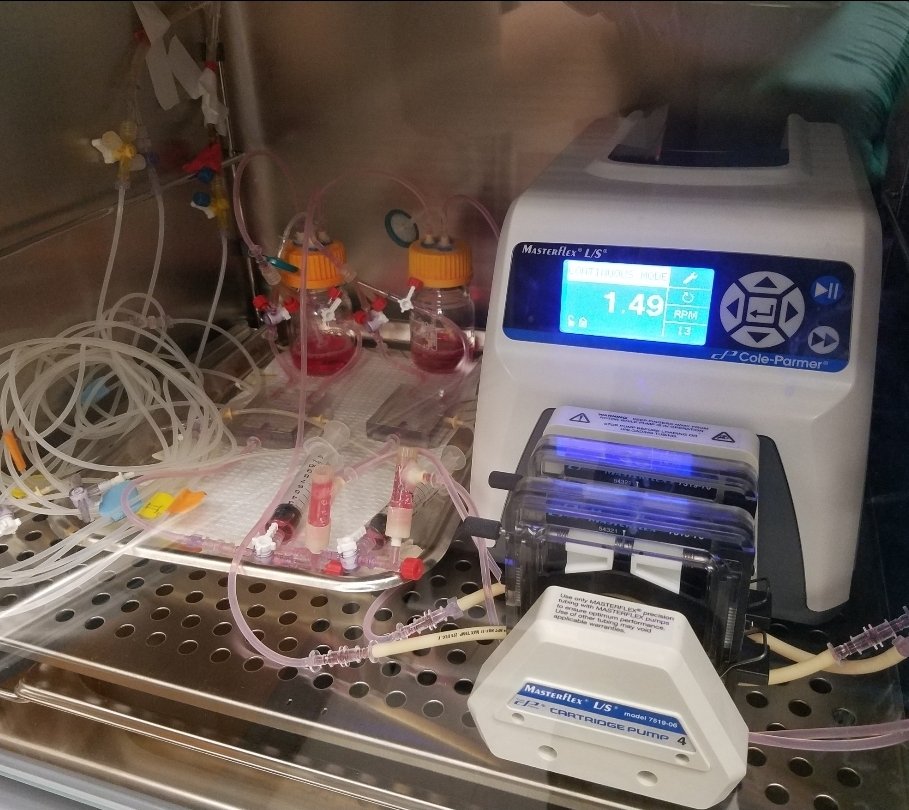
This was my very first 1st author manuscript in which we showed that abnormal shear stress flow patterns lead to increased CXCL1 and IL-8, neutrophil recruitment, and aneurysm formation. Very fun concept bridging an in vitro model with in vivo findings!
https://t.co/osWq401txz
Probably one of my all time favorite projects out of @BrianHoh1 and Koji Hosaka's lab that I had the privilege to be part of:
https://t.co/KM22JKOLa3
"Monocyte Chemotactic Protein-1 Promotes Inflammatory Vascular Repair of Murine Carotid Aneurysms via a Macrophage Inflammatory Protein-1α and Macrophage Inflammatory Protein-2–Dependent Pathway"
One of my first adventures into science involved undergraduate research with the Quantum Theory Project Group at UF. For this project I calculated energy transfer rates for bifunctional non-conjugated dendrimers using classical molecular dynamics (MD) simulations and transition density cube method in an ensemble of conformations. All done under mentorship of Dr. Julio Palma and Dr. Jeffrey Krause. Stay tuned to find out how these computational techniques became an important building block for my translational medical research almost 2 decades later!
It was a pleasure to share the results of our work on a mini-proteomic blood test for cerebral aneurysm risk detection and stratification at Brain 2025! @brainconferenc1
In honor of #NeurosurgeryAwarenessMonth, we're thrilled to highlight how one seed of support can lead to breakthrough innovation in patient care, thanks to the support of @NREFORG
Meet Aditya Mittal, a 2022 NREF Medical Student Summer Research Fellowship recipient from the University of Pittsburgh (@PittTweet@PittNeurosurg), who embarked on a project to develop a blood test for cerebral aneurysm detection.
Here’s how far that one fellowship has taken him:
- Over $500,000 in follow-on funding, including a $275,000 National Science Foundation Small Business Innovation Research Phase I grant with Mittal as principal investigator, plus support from the Brain Aneurysm Foundation (@BAFOUND)
- Two patents filed on the blood test—and the formation of Astria Biosciences, Inc., together with @UPMC neurosurgery faculty
Aditya credits the NREF: “Without NREF, none of these achievements would have been possible!”
Learn more about this story and donate today: https://t.co/c1F3hKIAoX