As a doctor specializing in chronic biotoxin illness (Lyme, mold toxicity, CIRS, MCAS), I’ve realized after living in 8 states in ALL four corners of the USA: there’s NOT ONE place that did NOT have homes riddled with toxic mold from water damage… & yes, the arid SW🏜️included!
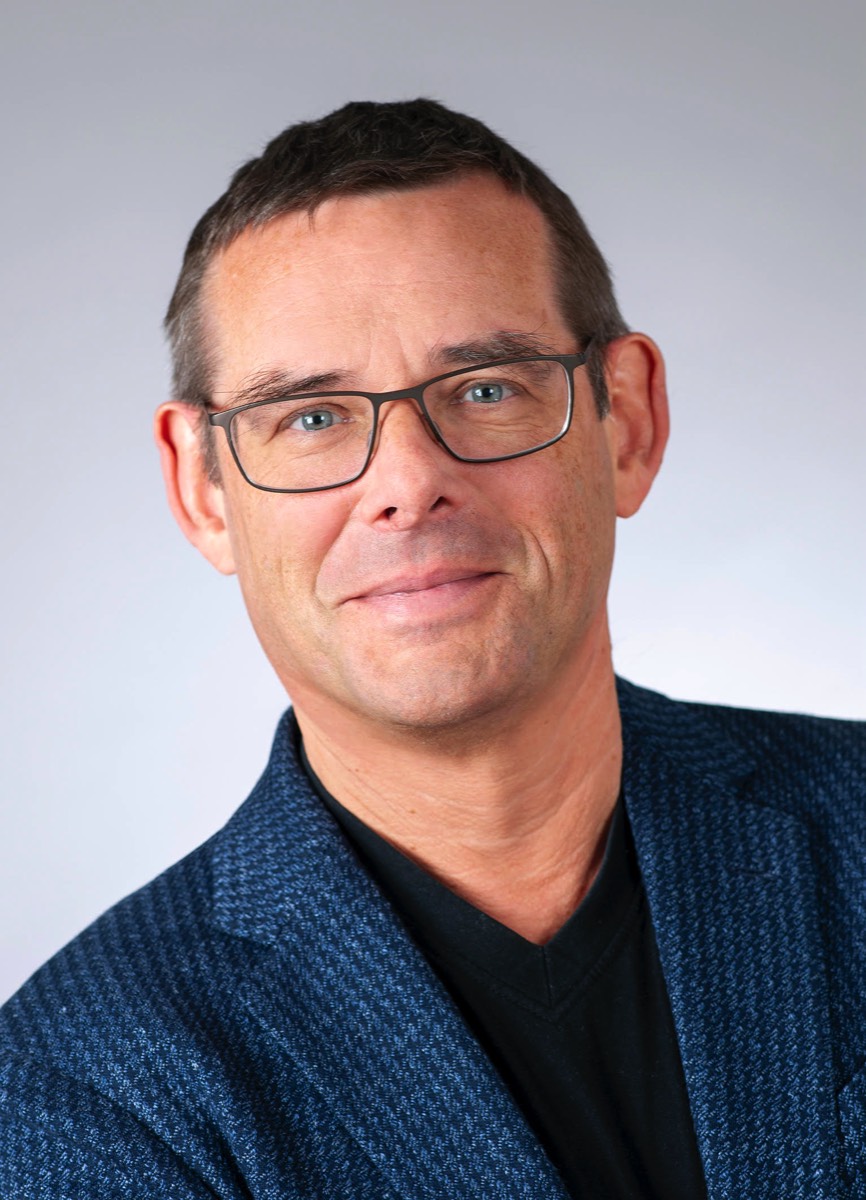
This is Dr. Alexander Wunsch.
A German physician and photobiology researcher who has studied light's effects on health for 30+ years.
His message? Both the mainstream & the biohackers are wrong about sunlight.
Here is his framework: 🧵
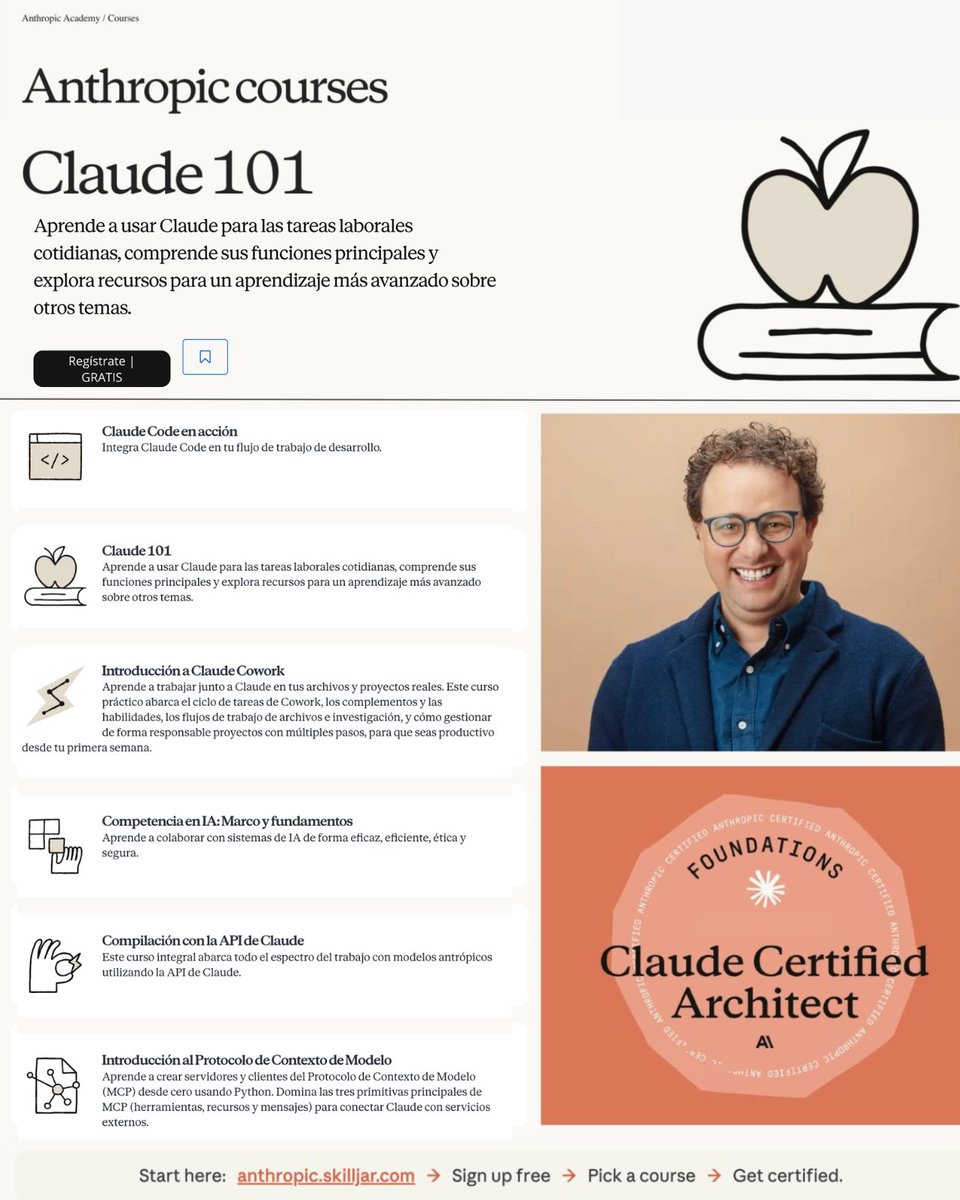
Anthropic just dropped 13 AI courses… for FREE.
Go to each link below. Sign up. It's free.
---
1 - Claude 101. Learn Claude for daily work.
↳ https://t.co/QLuvwwhcgF
2 - AI Fluency: Frameworks & Foundations.
↳ https://t.co/w0ia8khS4Y
3 - Introduction to Agent Skills.
↳ https://t.co/AFIZqZmzyg
4 - Building with the Claude API.
↳ https://t.co/mRfIu1I0W4
5 - Claude Code in Action.
↳ https://t.co/iaDRqQd7Ax
6 - Intro to Model Context Protocol.
↳ https://t.co/sZ5ZPcF94f
7 - MCP: Advanced Topics.
↳ https://t.co/ykpE7SYqOb
8 - AI Fluency for Students.
↳ https://t.co/8sMNksGI8I
9 - AI Fluency for Educators.
↳ https://t.co/5QPodf3Fti
10 - Teaching AI Fluency.
↳ https://t.co/vUJyPrIK4M
11 - AI Fluency for Nonprofits.
↳ https://t.co/MkjQmdc0B9
12 - Claude with Amazon Bedrock.
↳ https://t.co/DPxRB8vrqH
13 - Claude with Google Cloud Vertex AI.
↳ https://t.co/tvHianMoVp
As a medical school professor, I was taught that lost cartilage is gone forever.
Stanford just proved that wrong.
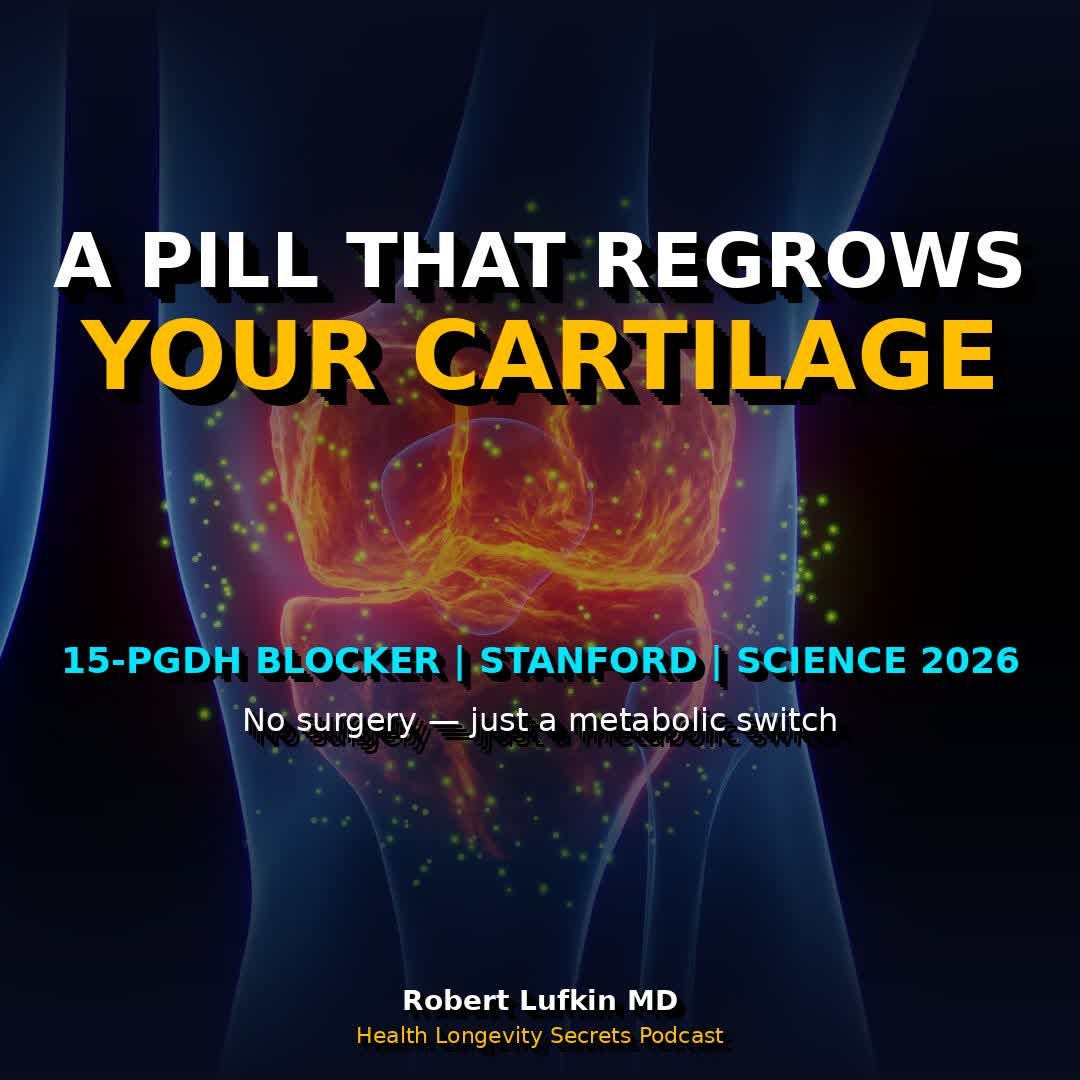
Researchers discovered that blocking a single protein (15-PGDH) -- which rises as we age -- can actually REGROW joint cartilage in aging mice.
The results:
- Two injections per week for 4 weeks dramatically thickened knee cartilage
- An oral pill version worked too
- Chondrocyte cells reprogrammed to a more youthful state
- Human cartilage samples from knee replacements also began regenerating
No stem cells needed. Just reversing an age-related enzyme.
The Phase 1 clinical trial for the oral version is already underway.
This could make knee and hip replacements obsolete.
What excites me most: 15-PGDH is a "gerozyme" -- an enzyme that accumulates with aging and drives tissue decline. Blocking it doesn't just treat symptoms. It addresses the metabolic root cause.
Full breakdown coming on the Health Longevity Secrets podcast.
Source: https://t.co/1v3131YDei
#Longevity #Arthritis #MetabolicHealth #AntiAging #HealthLongevitySecrets
I have always thought nutritional epidemiology to be a particularly weak science that has caused a lot of confusion, then a study was published which seemed to show it could be as good as an RCT. Here @MattCalkinsMD looks again at this claim (Thanks to @AdrianSotoMota for drawing my attention to this)
Announcement!! 📢
We are re-launching MedARC, now supported by @SophontAI 🚀🔥
MedARC is our medical AI research collective that I founded in 2023. We've accomplished so much already, publishing in top venues like NeurIPS and Nature Biomedical Engineering, collaborated from institutions around world, and grew to what is likely the largest online medical AI community with thousands of members!
With this re-launch, we will continue to accelerate medical AI research with our radical science-in-the-open approach, where anyone can follow our projects in real time, contribute code or ideas, & earn co-authorship on papers.
We even provide compute for volunteers to work on projects!
We currently have 3 projects that are ready for contributions but more are coming soon!
We're also taking proposals for researchers to lead their own projects that makes use of MedARC’s community and resources.
Check the thread for link to our Discord community and website to learn more!!
We're excited to announce that we're officially re-launching MedARC! 🚀
MedARC is an open science research collective, aimed to accelerate medical AI via a collaborative science-in-the-open approach. (1/5)
Towards Conversational Diagnostic AI
abs: https://t.co/baJefLLg0f
Another amazing paper from the Med-PaLM team at @GoogleDeepMind!
Introduces AIMIE, an LLM based AI system optimized for clinical history-taking and diagnostic dialogue. Trained on medical QA, summarization, and medical conversation dialogue datasets. A self-play (RLAIF) approach is used where AIMIE played the role of five agents: a vignette generator, simulated dialogue generators (patient, doctor, and moderator agents), and a self-play critic to provide feedback to the doctor agent. AIMIE uses a chain-of-reasoning process to provide informed and grounded responses to the patient.
Evaluation is done with an "Objective Structured Clinical Examination (OSCE)" which includes patient actors simulating real-life clinical scenarions. Performance is compared to primary care providers (PCPs), total of 149 scenarios were used. AI-based autoevaluation was also performed. The OCSE indicated AIMIE showed higher DDx accuracy than PCPs while AI evaluation showed AMIE matched PCPs’ efficiency in acquiring information. Additionally the patient actors rated the conversation quality of AIMIE higher than the PCPs.
The best way to prevent cavities in children is by avoiding excessive sugar intake and good dental hygiene, not by altering a child’s microbiome. For the same reason that fluoride may kill bacteria on teeth, it may also kill intestinal bacteria important for a child’s health.
With the $792 million Planned Parenthood receives in taxpayer funds annually, they:
- perform ~1,100 abortions/day
- administer synthetic hormones to minors & promote trans ideology
-support the Democratic party politically to defeat Republicans
DEFUND PLANNED PARENTHOOD
we are launching a new thing today—images in chatgpt!
two things to say about it:
1. it's an incredible technology/product. i remember seeing some of the first images come out of this model and having a hard time they were really made by AI. we think people will love it, and we are excited to see the resulting creativity.
congrats to our researchers @gabeeegoooh@prafdhar@ajabri@eliza_luth@kenjihata@dmed256
2. this represents a new high-water mark for us in allowing creative freedom. people are going to create some really amazing stuff and some stuff that may offend people; what we'd like to aim for is that the tool doesn't create offensive stuff unless you want it to, in which case within reason it does. as we talk about in our model spec, we think putting this intellectual freedom and control in the hands of users is the right thing to do, but we will observe how it goes and listen to society. we think respecting the very wide bounds society will eventually choose to set for AI is the right thing to do, and increasingly important as we get closer to AGI. thanks in advance for the understanding as we work through this.
Think you know Gemini? 🤔 Think again.
Meet Gemini 2.5: our most intelligent model 💡 The first release is Pro Experimental, which is state-of-the-art across many benchmarks - meaning it can handle complex problems and give more accurate responses.
Try it now → https://t.co/sxHWaCUzRp
Combatting Seasonal Affective Disorder: A Personal Experiment with Testosterone
Seasonal Affective Disorder (SAD) impacts 1–10% of the population and is four times more common in women. However, men who experience SAD often suffer more severe symptoms, including pronounced mood changes and functional impairment.
Having spent most of my life in the Pacific Northwest, where dark winters are long and sunlight is scarce, I’ve struggled with SAD for much of my adult life. Over the years, I tried nearly every known intervention, from light therapy to dietary changes, without success.
Last year, I tracked my testosterone levels and noticed a significant drop from a natural baseline of 850 ng/dL in September to 350 ng/dL by February. The symptoms of SAD closely mirrored those of low testosterone: fatigue, low mood, and reduced motivation.
In May, I decided to try supplemental testosterone therapy. The idea was to establish a stable baseline during the summer and track my symptoms through the winter.
Normally, by this time of year, I’d be in the deep throes of SAD. This year, however, I’ve experienced zero symptoms. While no clear link between testosterone and SAD has been established, it’s conceivable that lower testosterone levels in winter, combined with reduced sunlight, could exacerbate symptoms in men. This hypothesis, of course, remains conjecture and would require further research.
This spring and summer, I’ll experiment with coming off testosterone to determine if natural levels reestablish (they should in theory). My plan involves ceasing exogenous testosterone, followed by a transitional protocol using hCG to maintain testicular function, and then fully discontinuing hormone support during the summer when SAD symptoms are naturally minimal. This phased approach should allow me to evaluate whether seasonal cessation can maintain both hormonal health and symptom relief.
This is an anecdotal report and should not be taken as medical advice. However, for those struggling with SAD, it may be worth exploring all potential contributing factors—including hormones—under the guidance of a healthcare provider.