Arachnophobes beware: spider season is here 🕷 big thanks to @DrTimCockerill for answering all my creepy crawly questions 🕸 https://t.co/ojn8d3zPeY via @MetroUK
I’m a strong believer that one of the best ways to learn about wildlife is to eat it. These are some of the edible plants we collected with the brilliant @cornishwildfood on a field trip with students this week. A… https://t.co/aI8CTRquap
I’m a strong believer that one of the best ways to learn about wildlife is to eat it. These are some of the edible plants we collected with the brilliant @cornishwildfood on a field trip with students this week. A… https://t.co/IvA0czv4XJ
We often overlook the diversity and beauty of microorganisms, yet their total mass on earth outweighs all animals and plants combined. Bacteria like these give us botulism, syphilis and bubonic plague, but also… https://t.co/tQmfaUAVVM
Draco lizards live in the rainforests of South Asia. When faced with danger they have an unusual means of escape – they jump from the trees and glide. Their elongated ribs support flaps… https://t.co/pHCmRJkSB2
The leaf insects (Phyliidae) show some of the most impressive camouflage in nature. As well as looking like leaves, they sway back and forth to mimic the movement of a leaf in the breeze.… https://t.co/GF5ocC412d
Just as humans are left- or right-handed, so elephants can be left- or right-tusked. Some also show a preference to curl their elongated nose in one particular direction when feeding,… https://t.co/olNrSSUJQv
The giraffe weevil Trachelophorus giraffa is so known because of its extraordinarily long neck. The male beetle uses his neck to fight with rivals and, if victorious, will mate with a… https://t.co/U2TZAYT2Af
The leaf chameleon Brookesia therezieni lives in Madagascar’s eastern rainforests. One of the world’s smallest chameleons, it would comfortably fit inside a matchbox. During the day it… https://t.co/gnOI1wpl1n
Phenomenally naive argument from @ProfRWinston on @BBCPM suggesting that species are only worth saving if they confer some benefit to humans. Do we ‘need’ orangutans and birdwing butterflies? @wwf_uk@WWF
I've been talking #FalseWidow spiders on @BBCRadioLondon tonight. Four schools unnecessarily closed. Brilliant response from @Buzz_dont_tweet to the huge overreaction https://t.co/AwOrgvZs1K
@AileenFyfe @irmorus1 @musa_standrews How brilliant! Love that Victorian technology is entertaining the youth of today - we should market it as the iPhonograph and make a fortune...
@wildheartgriff You're on the right track Matt! The closing of schools is an overreaction of monumental proportions based on tabloid sensationalism rather than any real risk. See buglife's response here https://t.co/AwOrgvZs1K
@melissasuzanneh Oh no! If there's sign of a bite it's most likely a mosquito or midge. Or, there's also a little-known but extremely common type of flower bug (Anthocoris spp.) whose bite can lead to those symptoms. Either way, definitely not a spider!
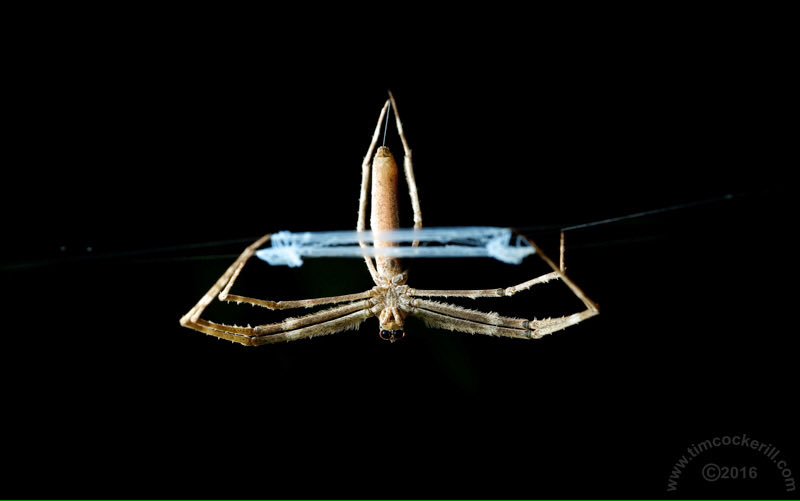
@AirbusRed@BBCScienceNews Another name for the ogre-faced spider (Deinopis spp.) is the net-casting spider. It weaves an intricate web about the size of a postage stamp and sits in wait, holding one corner in each of its four front legs. #papuanewguinea#wildlife#photography
@Heather___Brown@BBCScienceNews I've heard of spiders living in ears but not buried in skin! Could it have been a tick? They bury their heads in when they feed.