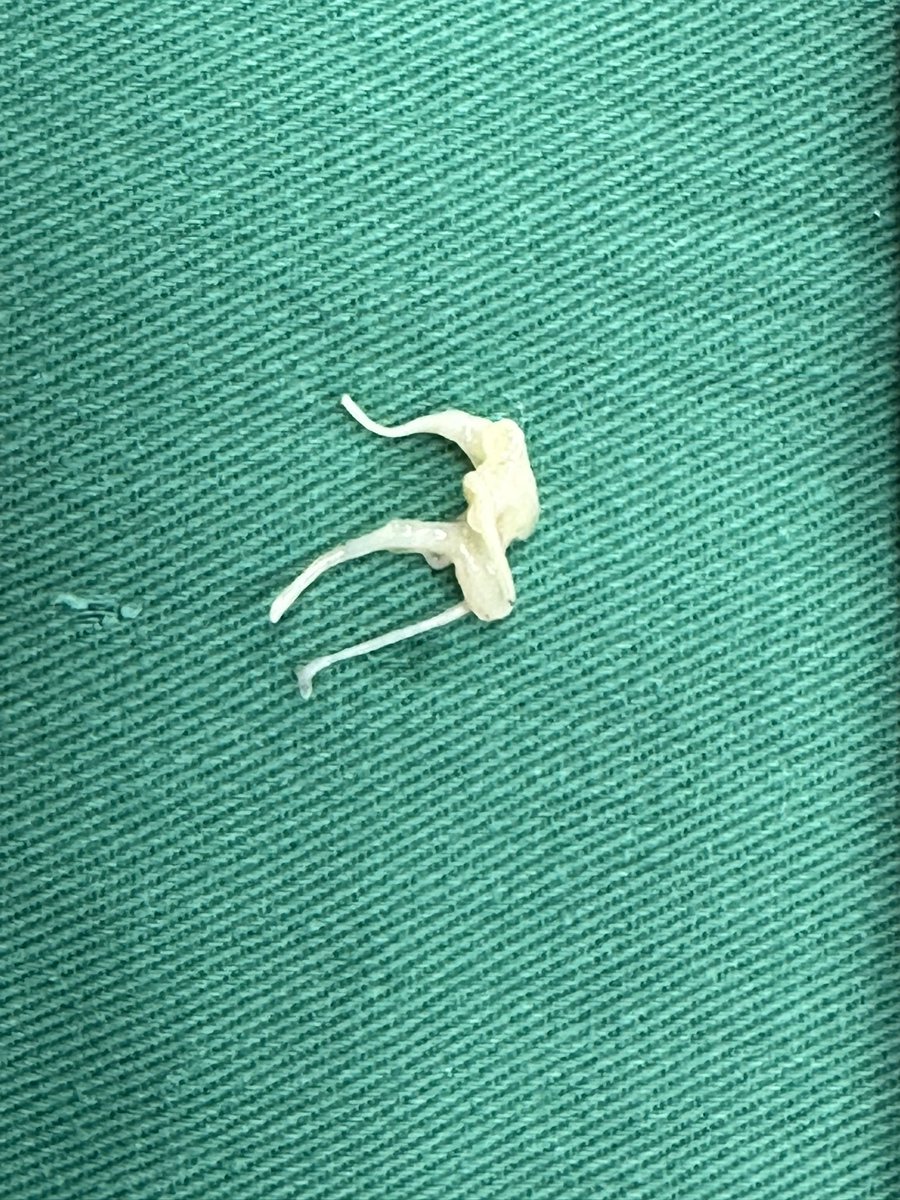
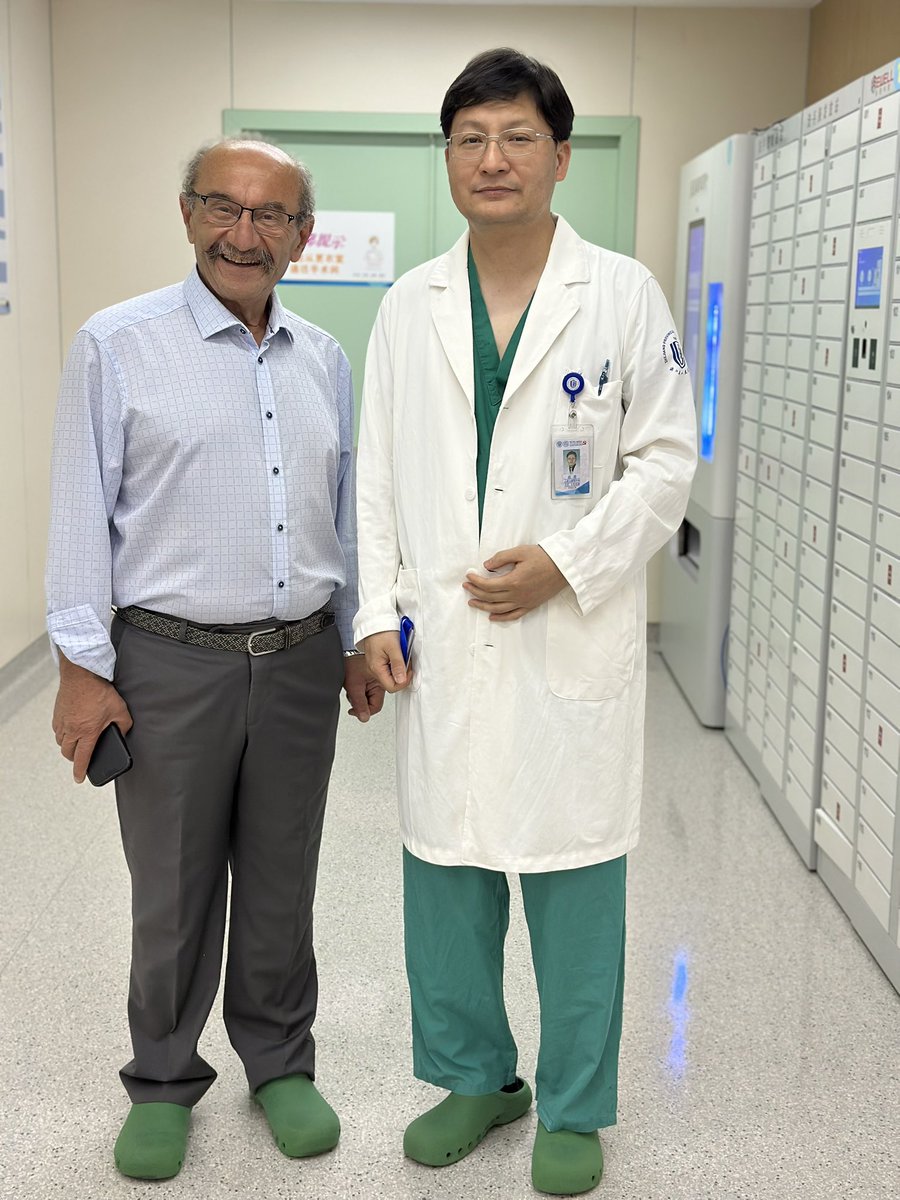
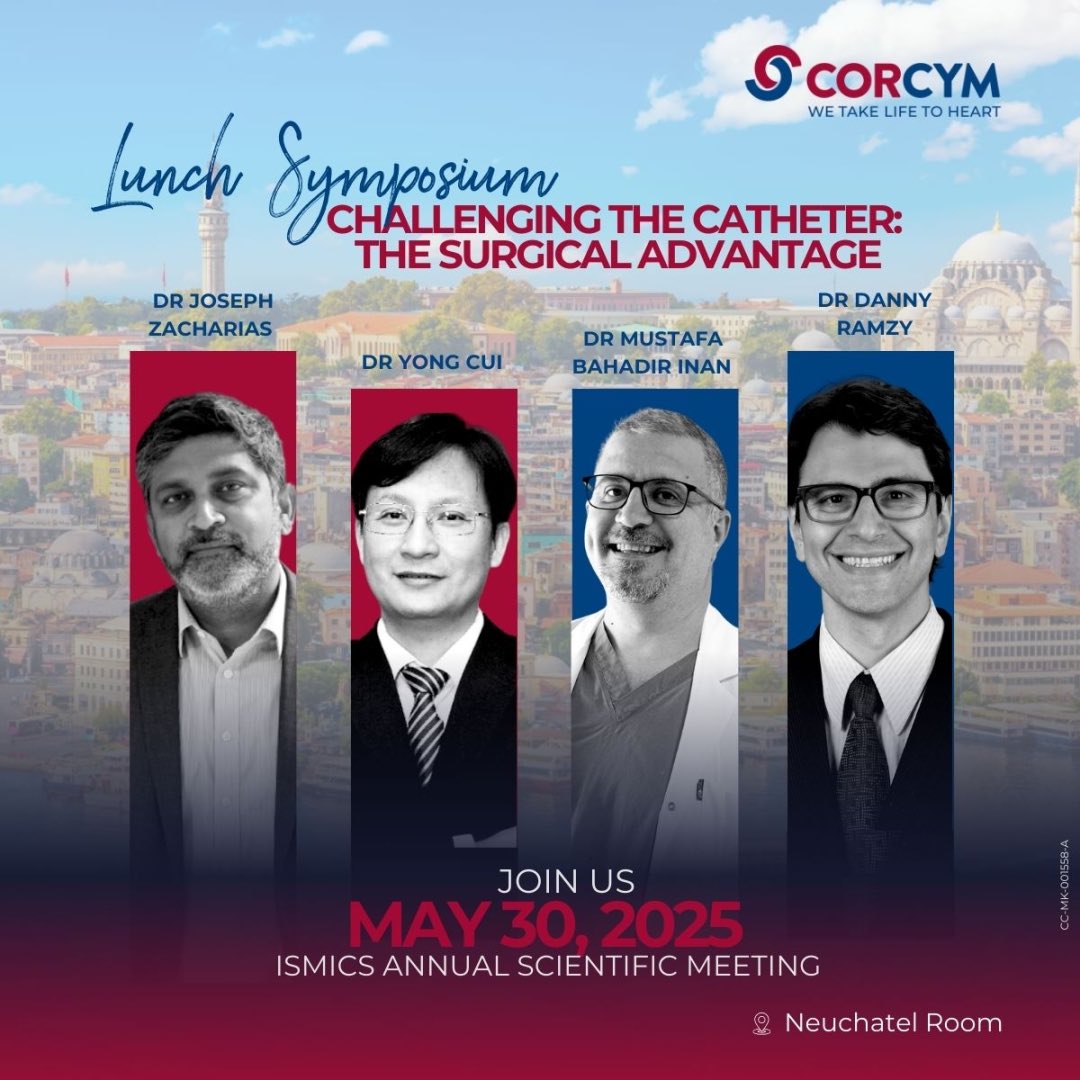
Our work in minimally invasive surgery for HOCM (MESM) has been published! Thanks to my great team! Minimally Invasive Electro Septal Myectomy for Hypertrophic Obstructive Cardiomyopathy Through a Right Infra-Axillary Incision - The Annals of Thoracic Surgery https://t.co/GmQNPXHpmu
This morning, Professor Gebrine El Khoury guided us through a complex aortic repair for a young patient with bicuspid aortic valve (BAV). The procedure (reimplantation) was remarkably efficient, yielded an excellent outcome, and included detailed explanations of the technical aspects. Truly masterful work! The unedited video is available to watch in our Heart Club Live OR.
@Elsayed_balba3 Thank you for sharing. The decision likely depends on the patient’s age, intentions, affordability of the medication, and the availability of an experienced HOCM surgeon.
What kind of results can MESM (Minimally-invasive Electro Septal Myectomy) achieve for a HOCM patient? Check the pre and post TEE of this young patient(27 years old) who doesn’t want to take Mavacamten for the rest of his life!
What kind of results can MESM (Minimally-invasive Electro Septal Myectomy) achieve for a HOCM patient? Check the pre and post TEE of this young patient(27 years old) who doesn’t want to take Mavacamten for the rest of his life!
A 22-year-old guy had open-heart surgery for a ventricular septal defect repair 10 years ago at another hospital. 54 days ago, he underwent a redo aortic valve replacement surgery through a transaxillary MIS approach at our hospital. Today, he told me he did this! Youth is amazing!
Yesterday was a remarkable day, performing three complex redo heart surgeries, all using minimally invasive techniques! The first case (figure 1)was a 52-year-old man who had corrective surgery for tetralogy of Fallot 48 years ago. Recently, he developed severe pulmonary and tricuspid valve regurgitation. We performed pulmonary valve replacement and tricuspid repair via a small left parasternal incision and a right infra-axillary incision. The middle two images show a 44-year-old man who underwent repair for type A aortic dissection three years ago. He recently developed infective endocarditis with aortic valve destruction. Through a small right anterior thoracotomy, we replaced his aortic valve with a mechanical prosthesis , despite challenging adhesions and a low-positioned brachiocephalic trunk graft anastomosis. The third case was a 44-year-old woman who had mitral valve replacement and tricuspid repair via median sternotomy a year ago at another hospital, leaving an untreated aortic root aneurysm. She recently developed severe aortic regurgitation and impaired heart function. adamantly refusing another median sternotomy, we performed a Bentall procedure via a small right anterior thoracotomy. All three patients were awake and extubated immediately after surgery! Minimally invasive cardiac surgery combined with ERAS (Enhanced Recovery After Surgery) offers a transformative treatment experience for complex patients!
I have been afraid to use Dr. Daniel Swistel’s recently published technique of shortening the mitral leaflet (Pic 1-3) in HOCM patients. But I got a suitable young gentleman today and eventually I realized this is the best solution to his redundant A2 segment. So in this MESM procedure, a small piece of A2 was resected and the final result is superb!(Pic 4-7)
I have been afraid to use Dr. Daniel Swistel’s recently published technique of shortening the mitral leaflet (Pic 1-3) in HOCM patients. But I got a suitable young gentleman today and eventually I realized this is the best solution to his redundant A2 segment. So in this MESM procedure, a small piece of A2 was resected and the final result is superb!(Pic 4-7)
Can a 5cm concealed incision under the armpit be used for ascending aorta and aortic valve replacement surgery? The answer is yes! Our team has successfully completed over 100 such cases in the past 4 years! The early experience with this technique has recently been published! We welcome everyone’s attention!