Presented at #ESCCongress:
Among 16,808 adults without known cardiovascular disease, silent atherosclerosis was present in 57.1%, was detectable in early adulthood, and became more prevalent and extensive with age in a sex-dependent pattern. Full REACT trial results: https://t.co/KkNM5hC9RB
@escardio
At least 10% of the population has a significantly elevated Lp(a) above 50 mg/dL (~125 nmol/L), which carries an increased risk of atherosclerotic cardiovascular disease. While we've known that for decades, we've never had a drug to treat it.
There are 5 programs in advanced trials (Table below, 3 in phase 3, pivotal, CV outcomes as endpoint). We may see the results for the first drug (pelacarsen) soon, by end August, and FDA approval is expected in 2027. This likely represents a major advance for preventing heart disease, adding to the first oral PCSK9 blocker approved this week.
Cholesterol trivia question: How many scientists have been awarded the Nobel Prize for work related to cholesterol? Here are 14: Over the next several days I will be highlighting them and their work individually. There are others who were worthy of the prize but were denied. Thanks to my friends at the NIH who are collaborating with me on documenting the history of Lipidology @nationallipid@society_eas@ASPCardio@escardio@TheEndoSociety@FamilyHeartFdn@atherosociety #cholesterol
👉OVER A CENTURY OF SCIENCE. ONE CONSISTENT MESSAGE.
☝️In medicine, few hypotheses have been tested as rigorously as the relationship between LDL cholesterol and atherosclerotic cardiovascular disease.
🐇 1913 – Nikolai Anitschkow demonstrated that cholesterol-rich diets induce atherosclerosis in experimental models.
❤️ 1948 – The Framingham Heart Study established the association between cholesterol levels and cardiovascular risk.
🏆 1964 Nobel Prize – Konrad Bloch and Feodor Lynen elucidated the biosynthesis and metabolism of cholesterol.
🏆 1985 Nobel Prize – Michael Brown and Joseph Goldstein discovered the LDL receptor, transforming our understanding of cholesterol regulation and familial hypercholesterolemia.
💊 1994 (4S Trial) – Lowering LDL-C with statins reduced cardiovascular events and mortality.
💊+ 💊2015 (IMPROVE-IT) – Further LDL-C reduction with ezetimibe translated into additional cardiovascular benefit.
💉2017–2018 (FOURIER & ODYSSEY Outcomes) – PCSK9 inhibitors demonstrated that achieving very low LDL-C levels produces further risk reduction.
🧬👫🏻🔬🩻Today – Genetics, epidemiology, pathology, imaging, Mendelian randomization studies, and randomized clinical trials continue to converge on the same conclusion.
More than a century of basic science and clinical research has consistently pointed in one direction:
👉LDL cholesterol is causal.
☝️Lower is better.
☝️Earlier is better.
☝️Longer is better.
When a scientific concept is supported by experimental biology, human genetics, epidemiology, randomized clinical trials, and two Nobel Prizes in Medicine, it is no longer merely a hypothesis.
🙌 It is biology.
@society_eas@nationallipid
🔥🫀 Inflammation is no longer a hypothesis—it’s a therapeutic target
The 2025 ACC Scientific Statement on Inflammation and Cardiovascular Disease marks a turning point: inflammation is now recognized as a causal, measurable, and actionable driver of cardiovascular risk, not just a bystander .
🧠 Key paradigm shift
Even in statin-treated patients with optimal LDL-C, residual inflammatory risk—best captured by high-sensitivity C-reactive protein (hsCRP)—strongly predicts recurrent events and cardiovascular death. In fact, post-statin hsCRP is often more prognostic than LDL-C itself.
📏 Measure what you want to treat
The statement makes a bold recommendation:
👉 Near-universal hsCRP screening in both primary and secondary prevention.
hsCRP <1 mg/L → low risk
1–3 mg/L → intermediate risk
3 mg/L → high inflammatory risk
Persistently elevated hsCRP (>2 mg/L) identifies patients who remain vulnerable despite guideline-directed therapy.
💊 Anti-inflammatory therapies: what works (and what doesn’t)
❌ Broad immunosuppression failed (e.g. methotrexate in CIRT).
✅ Targeted inflammation inhibition works:
Canakinumab (CANTOS) proved the inflammation hypothesis—reducing events without lowering LDL-C.
Low-dose colchicine (0.5 mg/day) reduced recurrent CV events by ~25% and is now FDA-approved for secondary prevention.
🚧 New frontiers: IL-6 inhibition (ziltivekimab, clazakizumab) in CKD, HFpEF, ACS—results expected soon.
🧘♂️ Lifestyle is anti-inflammatory medicine
Mediterranean/DASH diets 🥗, omega-3 intake 🐟, exercise 🏃♀️, weight control, and smoking cessation are explicitly framed as anti-inflammatory interventions, not just “healthy habits.”
🖼️ Imaging: promising, not ready
Advanced imaging of vascular inflammation (e.g. perivascular fat attenuation index) is exciting—but not yet for routine clinical use.
🔮 Bottom line
Atherosclerosis is an inflammatory disease with lipid involvement.
The time has come to treat cholesterol and inflammation—with biomarkers, lifestyle, and targeted therapies—moving cardiovascular prevention into a new era 🚀
Coronary artery disease is one of the leading causes of morbidity and mortality worldwide.
A new Review presents a comprehensive overview of the diagnosis of the disease, with a focus on cardiac imaging: https://t.co/Pp3V5lmlW7
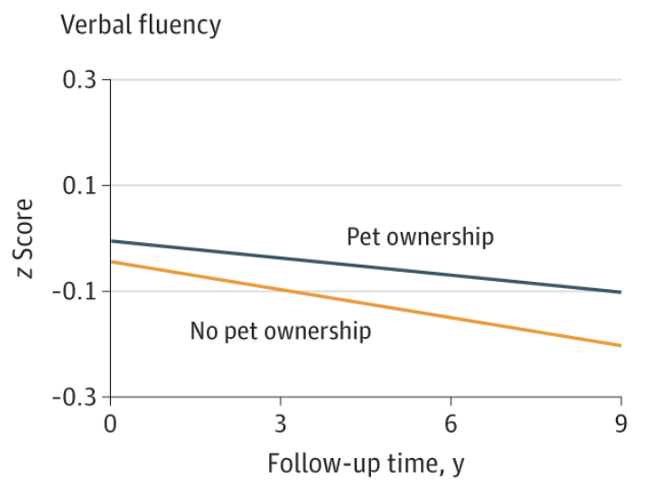
Pets completely protect against mental decline from living alone.
9-year study of 7,945 older adults: People living alone with pets kept their mental sharpness just as well as those living with family.
Your dog or cat might be saving your brain.
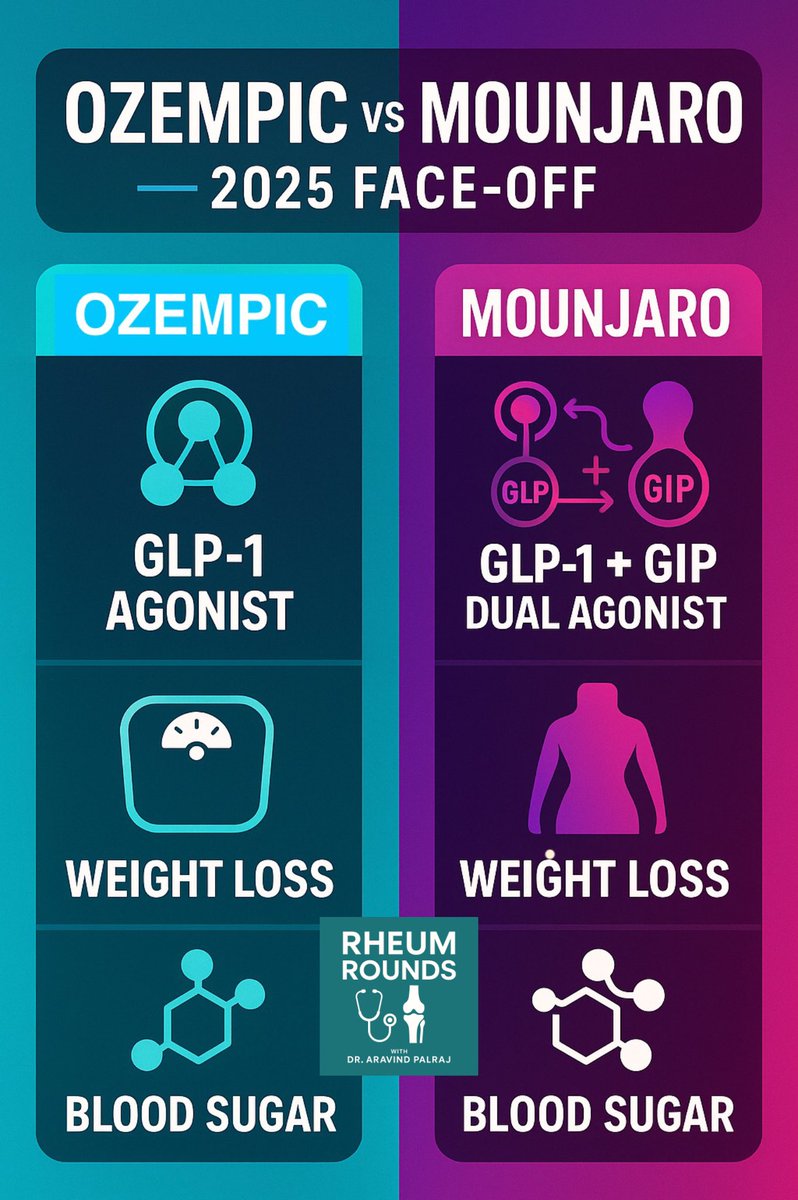
Ozempic vs Mounjaro — the REAL 2025 comparison.
🧵Thread🔥👇
Everyone is talking about weight-loss drugs. But the REAL showdown is Ozempic vs Mounjaro — and the winner is clear.
Ozempic and Mounjaro should be prescribed ONLY after medical assessment — never self-started.
@DrAkhilX @IhabFathiSulima #MedTwitter #ozempic #mounjaro #weightloss #diabetes
Get this: Coffee suppressed atrial fibrillation!
Unexpected results for recurrence from a randomized trial in participants after cardioversion from AF
#AHA25@JAMA_current ☕️ https://t.co/70dPI2R84C
@Doctors_GUILD The hypothalamus releases dopamine into the body - false. Dopamine is primarily released in the brain (synaptic transmission in reward circuits), not “into the body” like a hormone. The pituitary does not secrete dopamine systemically.
And so many too.
🔥 New in @NatureMedicine
How do you communicate lifetime benefits expected with HFpEF therapies?
New data from 3 RCTs (#DELIVER#FINEARTS#PARAGON) estimate up to *5 years* of event-free survival w combination Rx
#GDMT for HFpEF has finally arrived!
🔗https://t.co/ozSx3UwkLN