Excited to share our latest work! 🎉
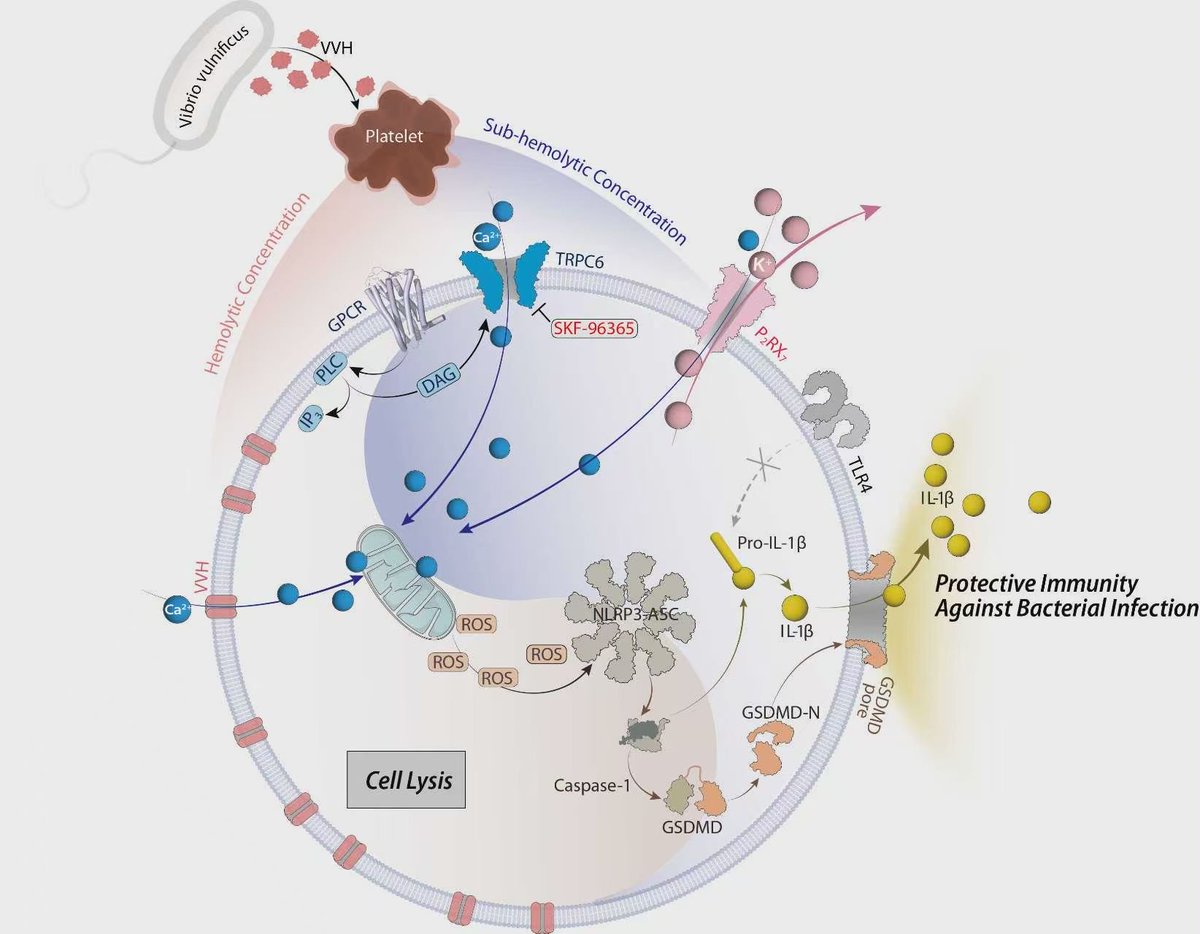
We reveal how *Vibrio vulnificus* hemolysin activates NLRP3 in platelets via TRPC6-mediated Ca��⁺ signaling, uncovering a new link between bacterial virulence and platelet inflammation.
#NLRP3 #Platelets #Vibrio
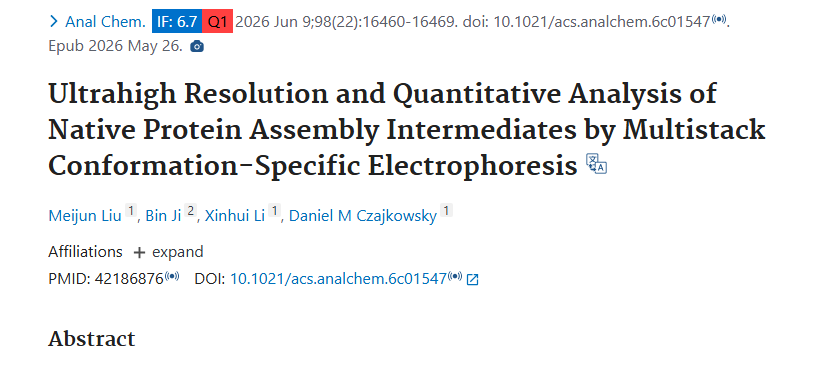
As soon as the article came out, I couldn't help remembering that there were so many interesting points of view in discussing pore-forming protein self-assembly with Liu Meijun. You are welcome to refer to it, which is especially useful in the application of separating oligomers.
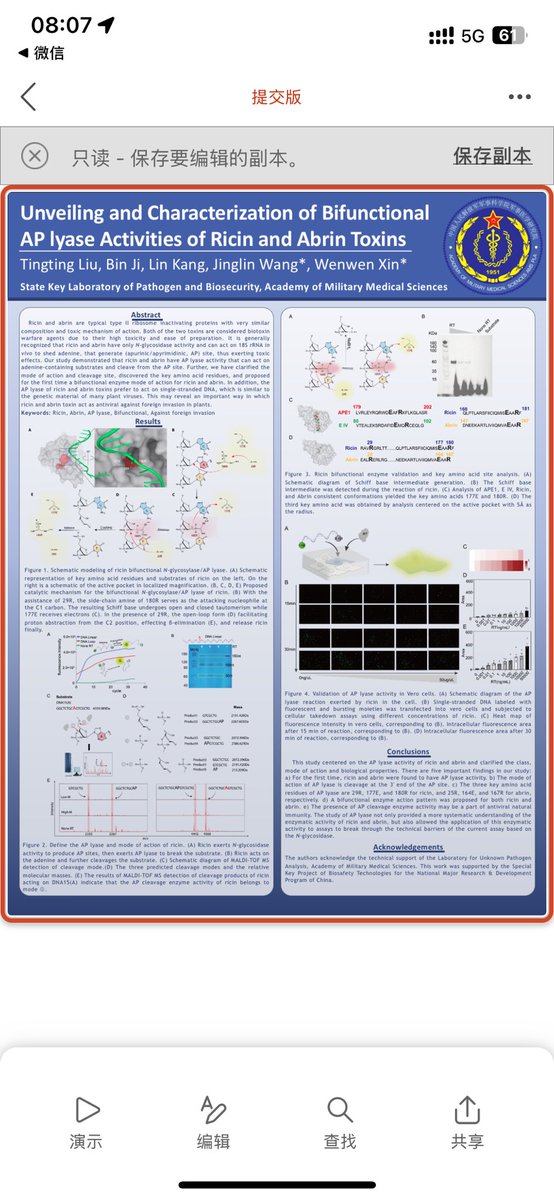
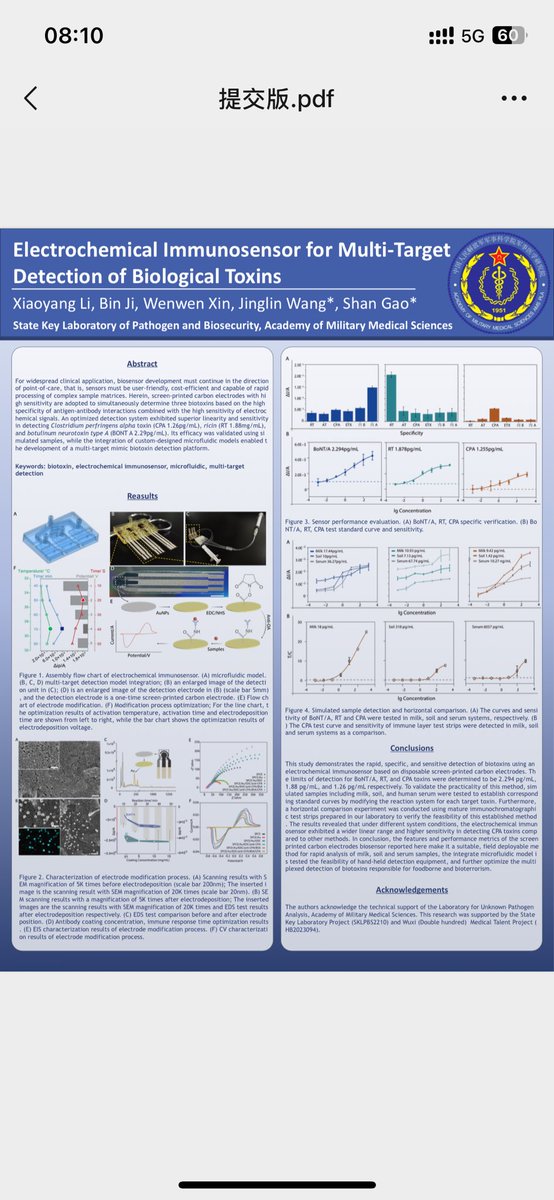
Our work last year on Clostridium perfringens proved the link between CPA and the activation of P2 to induce hemolysis: Purinergic Receptor Antagonists Inhibit Hemolysis Induced by Clostridium perfringens Alpha Toxin https://t.co/kOBawx8ZcP #mdpipathogens from@Pathogens_MDPI
Multiobjective learning and design of bacteriophage specificity
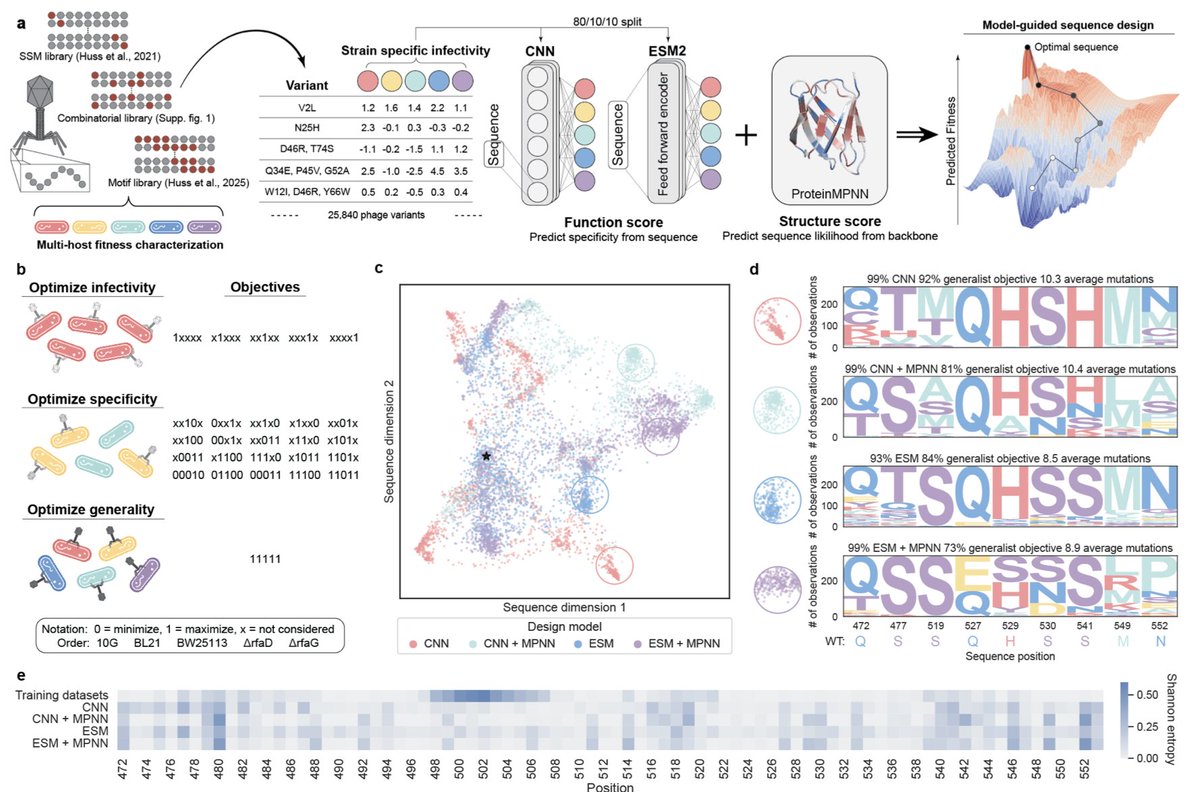
1.This study presents a landmark demonstration of multiobjective machine learning to design bacteriophages with tunable infectivity, precise host specificity, and broad generality, optimizing over 26 complex tasks across five E. coli strains.
2.Using deep mutational scanning data for 26,838 T7 RBP variants, the authors trained sequence-function models (CNN and fine-tuned ESM2) to predict strain-specific virulence, achieving high predictive accuracy (weighted Spearman ~0.8) even on held-out multi-mutant data.
3.Four design strategies were implemented—CNN, CNN+MPNN, ESM2, and ESM2+MPNN—guiding simulated annealing to generate 7,845 synthetic phage variants, each optimized for infectivity, multi-strain specificity, or generalist virulence.
4.Strikingly, only a few mutations were often sufficient to invert or reprogram phage specificity. In several cases, phages with just 3 substitutions achieved completely opposite host preferences to wild-type T7, underscoring the evolutionary plasticity of RBP.
5.The authors validated designs using pooled sequencing-based selection and plaque assays, with some engineered variants showing >10,000-fold increases in specificity or infectivity over wild-type.
6.ESM2+MPNN was the best-performing model for high-complexity tasks, such as simultaneously minimizing virulence on resistant hosts while maximizing it on susceptible ones—demonstrating the value of structure-aware constraints for multiobjective tradeoff resolution.
7.For generalist design, 9-mutant phages generated by CNN or ESM2+MPNN infected all five training strains with >50% success, and ~35% of these also generalized to infect eight unseen receptor-deletion strains, including ClearColi and ΔtonA/B.
8.Despite training only on five strains, generalist-optimized variants exhibited strong cross-host promiscuity, outperforming both infectivity- and specificity-focused phages in broad targeting—highlighting a scalable strategy for rapid phage discovery.
9.Mutation analysis revealed diverse functional optima for similar design goals: even among objectives sharing key host preferences, different sequence clusters and substitution patterns emerged—showcasing the model's ability to navigate a rugged fitness landscape.
10.ProteinMPNN inclusion biased the models toward more conservative mutations, reducing background noise and increasing specificity success in high-order objectives, though it had little effect on single-task infectivity.
11.Importantly, the authors show that models trained on high-throughput fitness data alone—without structure or evolutionary priors—are sufficient for successful single-objective design, but added constraints are beneficial for complex, multi-strain engineering.
12.This work establishes a powerful template for rational phage engineering, enabling low-throughput experimental validation and offering a scalable alternative to slow directed evolution methods that lack negative selection.
13.The framework has broad applicability to other mutable biological systems like enzymes, transporters, and receptors—where conflicting functional requirements must be balanced across large sequence spaces.
📜Paper: https://t.co/KT6TjmGr4D
#BacteriophageDesign #MachineLearning #SyntheticBiology #HostSpecificity #ProteinEngineering #PhageTherapy #AI4Biology #ComputationalBiology
CONSTRUCT: an algorithmic tool for identifying functional or structurally important regions in protein tertiary structure
1. CONSTRUCT is a new computational tool designed to identify clusters of conserved amino acid sites in protein tertiary structures—regions likely critical for function or structural stability—by integrating evolutionary and spatial data.
2. Unlike existing methods, CONSTRUCT captures spatial correlation of evolutionary rates by weighting substitution rates of neighboring residues in 3D space, using either Cα atoms or centers of mass (to account for side chain orientation).
3. The method extends Rate4Site by optimizing a sliding window (1–20 Å) to compute spatially weighted conservation scores, selecting the window that maximizes spatial correlation using a conservative statistical threshold (log(p-value) ≥ 8).
4. CONSTRUCT is designed for accessibility with a graphical user interface, and it supports AlphaFold-predicted structures, making it practical for large-scale analyses even when crystal structures are unavailable.
5. Extensive simulations confirmed the robustness of the method across proteins of various lengths, alignments, and evolutionary depths, demonstrating consistent detection of conserved patches with minimal false positives.
6. In 14 real protein case studies, including CFTR, HRas, KEAP1, and MDM2, CONSTRUCT consistently identified patches overlapping known functional regions, outperforming traditional Rate4Site and aligning well with xProtCAS when applicable.
7. In CFTR, CONSTRUCT recovered known functional residues and disease-related mutation sites in the NBD1 domain, achieving a log(p-value) of 249.92, confirming its utility for guiding mutagenesis and drug design.
8. For transporter proteins like YddG and the GDP-mannose transporter, CONSTRUCT accurately delineated substrate-binding pockets, capturing residues validated in experimental studies, even in AlphaFold-predicted structures.
9. Comparisons between using Cα atoms vs. center of mass coordinates showed that including side chain orientation can improve the precision of patch localization, especially in structurally complex regions like shallow surface pockets.
10. CONSTRUCT is best used at the domain level and may not detect isolated functional residues, but excels at identifying spatially coherent regions under strong purifying selection—making it an ideal complement to other site-based tools.
💻Code: https://t.co/EsFhYk3DSm
📜Paper: https://t.co/bkPsjPOmUY
#ProteinStructure #Conservation #StructuralBioinformatics #FunctionalSites #Rate4Site #Phylogenetics #SiteDirectedMutagenesis #AlphaFold #ComputationalBiology #Bioinformatics
What does AlphaFold3 learn about antigen and nanobody docking, and what remains unsolved?
The article investigates the performance of AlphaFold3 (AF3) in the context of antibody and nanobody docking with antigens, focusing on its successes and areas requiring further improvement.
1/ The study compares AF3’s performance with previous methods, showing a significant increase in the high-accuracy docking success rate for both antibodies (11.0%) and nanobodies (11.4%) when compared to AlphaFold2-Multimer and AlphaRED.
2/ AF3 achieves notable success in predicting antibody and nanobody structures, with CDR H3 loop accuracy playing a crucial role. The accuracy of this loop directly impacts the docking success, with sub-angstrom CDR H3 RMSD correlating strongly with correct docking.
3/ While AF3 improves docking quality, its single-seed failure rate remains at 60%. The article emphasizes that additional seed sampling can help overcome this limitation, with AF3 achieving a 60% success rate when 1,000 seeds are used.
4/ Antigen context is found to enhance the prediction accuracy of CDR H3 loops. The study shows that providing antigen context during AF3 predictions leads to better modeling of both the shape and placement of the antibody's CDR H3 loop.
5/ The authors discuss the optimization of confidence metrics, combining I-pLDDT and ΔGB to improve discrimination between correct and incorrect complexes. This method increases the accuracy of predictions when combined with energy calculations from Rosetta.
6/ AF3’s advancements demonstrate its potential for accelerating antibody engineering, although further refinement is needed. The study’s findings indicate that while AF3’s predictions are promising, a 60% failure rate for docking with single-seed sampling suggests room for improvement.
@jeffreyjgray
💻Code: https://t.co/IOmCk6ggV2
📜Paper: https://t.co/PpOlvt8nyb
#AlphaFold3 #AntibodyDocking #NanobodyDocking #ProteinModeling #Biophysics #MachineLearning #ComputationalBiology
It's late but it came.Our new work on Humoral and cellular immune responses following Omicron BA.2.2 breakthrough infection and Omicron BA.5 reinfection is online.:https://t.co/sbHSwInRxD
My favourite discovery ever has just come online. Can I please tell you about some seriously wacky molecular biology? The story starts with a reverse transcriptase that SOMEHOW defends bacteria from viruses.
(👇 I recommend sound ON for the video 🎹)
1/