It’s official. @DraperDragon $80m @OrionFund is open for business. And Draper University is leading the programs that help find and uplift the earliest builders.
The fund is built to turn Cardano's technical leadership into global, venture-scaled growth.
We are searching for the founders who will drive the next $3b in TVL.
> tier 1 first VC check (up to $90k)
> elite programming
> investor networking
> free housing in Silicon Valley
> leverage the massive Draper ecosystem in web3
Applications for our first cohort are now open. Link below 👇.
@Cardano_CF@Cardano
This is what Draper University is all about! 🚀
Proud to have been part of your journey and excited to see what's next for ChatterPay. Once a Draper founder, always part of the family!
10 weeks in Silicon Valley changed my life.
We arrived with no network, no contacts. Just two Argentines in San Francisco.
@draper_u opened the door and treated us like we belonged.
Excited to welcome founders, investors, and industry leaders to Draper University tomorrow for Tech for Impact: Silicon Valley!
Looking forward to meaningful conversations on the infrastructure powering the future of AI.
The hard part of AI right now is physical. Power and grid access, cooling and chips, where data centers get built, who finances them, and what the buildout costs the climate.
That is the agenda tomorrow at Tech for Impact: Silicon Valley, an invitation-only lunch at @draper_u in San Mateo, co-hosted with @DraperVC, @DraperDragon and Orion Fund, and produced by @SociousDAO for @T4ISummit, under the auspices of the Consulate General of Japan in San Francisco.
@Andytang closes it with a fireside on the infrastructure behind AI, in conversation with @seira_yun, who founded the series.
The wait is over. Meet the APEX founders! 🚀
Eight startups. Bold ideas. One stage at Draper University.
After weeks of building, refining, and pushing their ideas forward, the founders of our Draper University x Cardano APEX Growth Accelerator took the stage to share what they've been working on.
Now it's your turn to meet the teams.
From AI to blockchain and Web3, get a closer look at the founders, their companies, and the ideas shaping what's next.
🎥 The full APEX Demo Day recording is now available!
Watch here: https://t.co/lvdNzGfQrk
Proud of what we've built together with @Cardano_CF, @DraperDragon, and @OrionFund. Excited to see where these founders go next!
#DraperUniversity #Cardano #DraperDragon #APEXAccelerator
MEET THE APEX COHORT: MENTIONED 🇮🇪
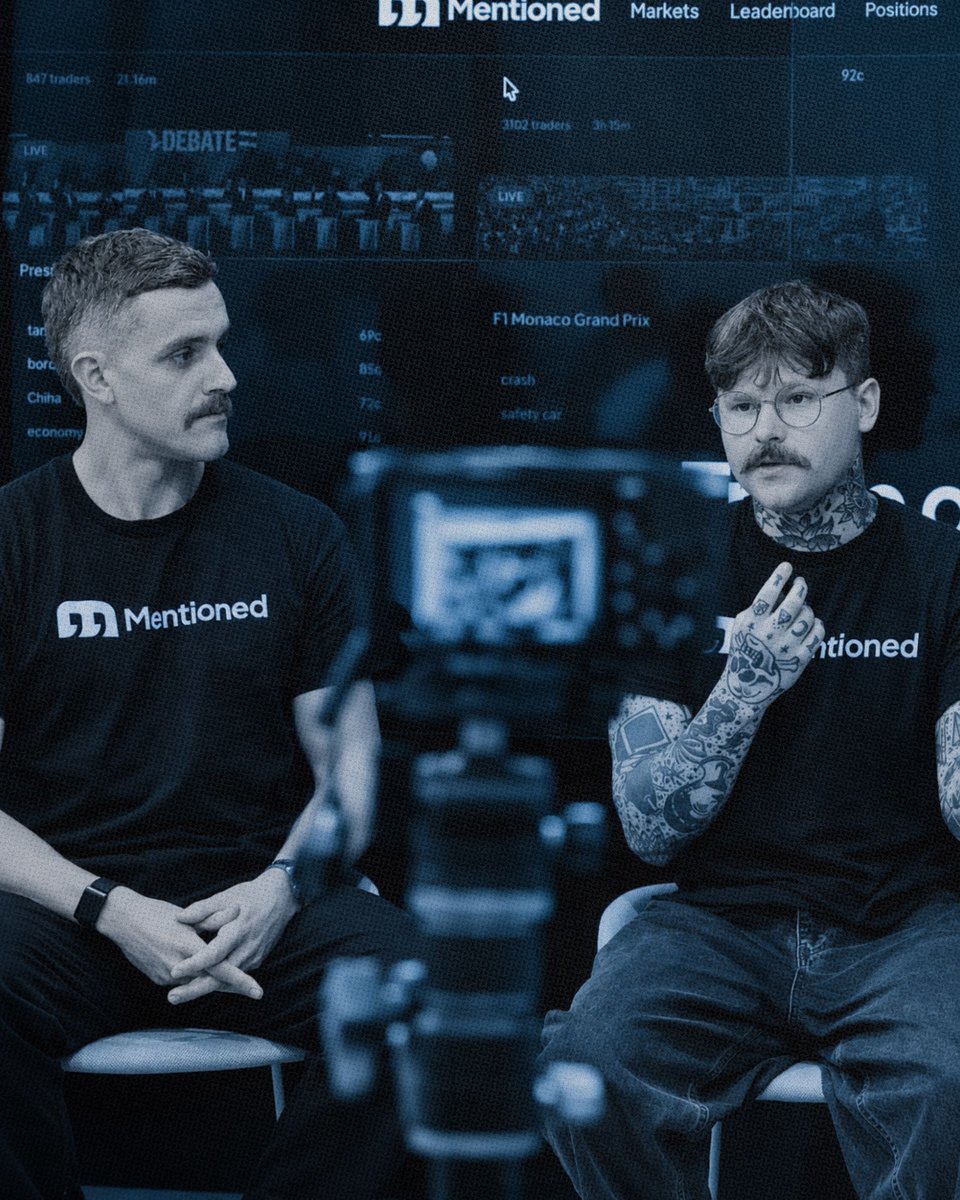
Next up in our Draper University x Cardano Apex Growth Accelerator: Mentioned! 🚀
What if you could trade on what people say during live events?
Meet Mentioned, a startup turning live conversations into prediction markets, where users can trade on which words will be said during sports broadcasts, livestreams, and other live events.
Founded by @taylorferran and Adam in Belfast, Northern Ireland, Mentioned is creating a new way for audiences to engage with the content they’re already watching.
The team has already recorded nearly 8,000 trades in just 20 weeks, with one in four free-to-play traders moving into real USDC trading.
Through the accelerator, Mentioned is focused on growing its user base, strengthening its marketing strategy, and preparing for its next stage of fundraising.
Welcome to Silicon Valley, Mentioned! 🚀
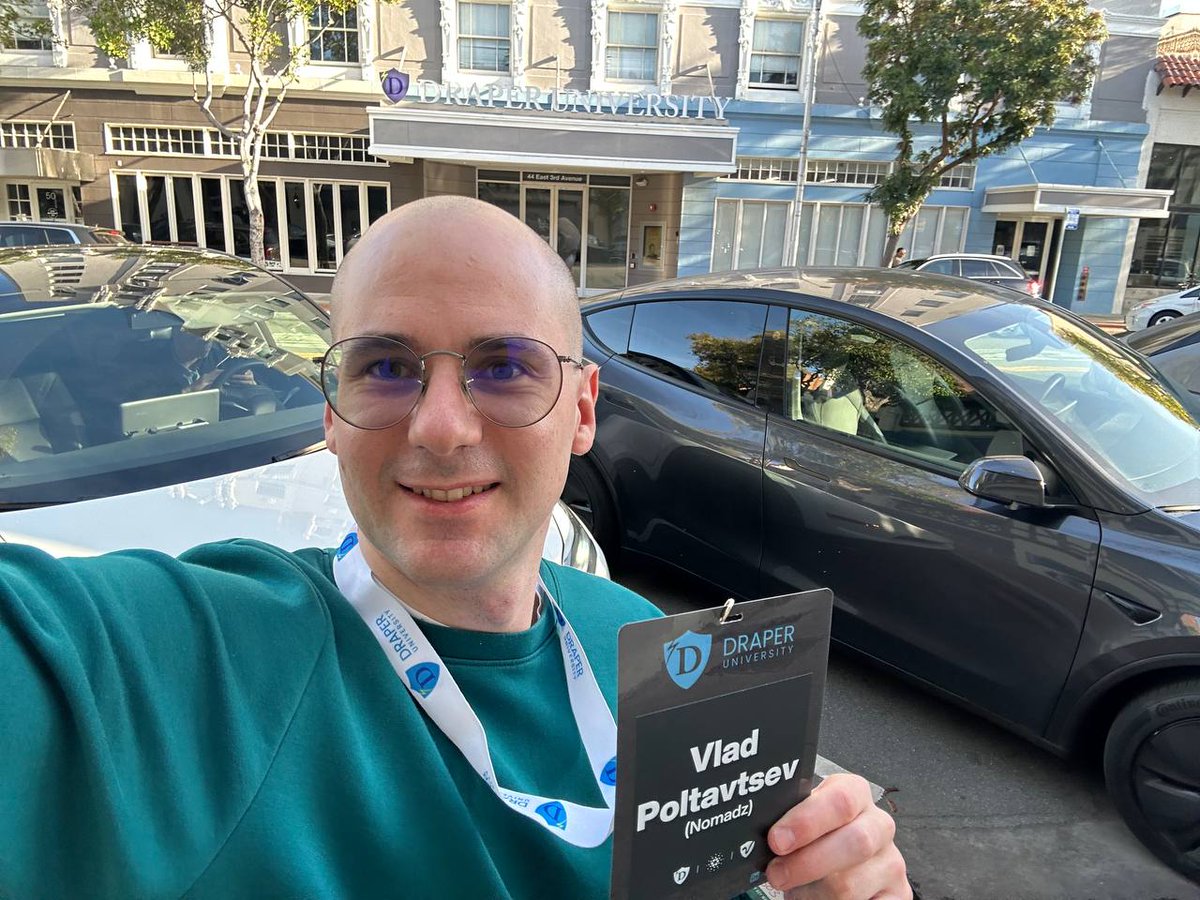
Three rejections, visa delays, and a journey that was anything but straightforward.
A reminder that persistence pays off. Proud to have founders like Ivan and the Nomadz team in our Apex Growth Accelerator. 🚀
The next generation of Cardano builders is at Draper University. 🚀
Over the past few weeks, eight startups from around the world have been building and growing as part of the Draper University x Cardano APEX Growth Accelerator.
Next week, we'll be sharing a special video introducing the founders behind these companies, what they're building, and the ideas driving them forward.
Stay tuned to meet the APEX founders!
Proud to be bringing this program to life alongside @Cardano_CF, @DraperDragon, and @OrionFund.
#DraperUniversity #Cardano #DraperDragon #APEXAccelerator
MEET THE APEX COHORT: KENOMIC 🇪🇸
Our Draper University x Cardano Apex Growth Accelerator is underway!
Over the next few weeks, we'll introduce you to the founders building the future of Web3, AI, DeFi, and beyond as part of our 10-week accelerator in Silicon Valley.
First up: @KenomicAI! 🚀
Launching a token shouldn't require coordinating five different tools, teams, and service providers.
Meet Kenomic, a startup building AI-powered infrastructure to simplify the entire token lifecycle - from tokenomics design and simulations to smart contracts, deployment, and ongoing management.
Founded by @raycotarrida and @caralvmar in Madrid, Kenomic is working to make token launches more accessible, predictable, and scalable for both human founders and AI agents.
Through the accelerator, the team is focused on turning its technology into a scalable business.
Welcome to Silicon Valley, Kenomic! 🚀
BEFORE IT WAS OBVIOUS: BAIDU
A $9 million deal negotiated in the back of a taxi. A stake that would eventually be worth more than $20 billion.
In 2000, Tim Draper was in Beijing, negotiating with Robin Li, the founder of a young Chinese search engine called Baidu.
Tim had already invested in six search engines. He believed China would need its own search infrastructure as internet adoption grew, and he saw Robin as the right founder to build it.
But there was a problem.
Robin wanted $9 million for 28% of Baidu. Tim thought the valuation was too high for a Chinese search company at the time. Robin wouldn't budge.
The negotiations continued in a taxi on the way to dinner.
Ultimately, Tim decided to make the deal.
He believed in the founder, the opportunity, and the future of China's internet market enough to accept a price he wasn't initially comfortable with.
That 28% stake would eventually be worth more than $20 billion, according to Tim's account.
Tim also worked with Robin on the paid-search business model that would become fundamental to Baidu's success.
The lesson? Sometimes the biggest opportunities aren't the ones that look cheap or obvious. They're the ones where you recognize a founder and a market worth believing in before everyone else does.
And sometimes, the deal that changes everything gets made in the back of a taxi 🚖
MEET THE F26 HERO TRAINING COHORT: ANTA BIOTECH
Meet the founders turning ambitious ideas into reality.
Over the coming weeks, we're introducing the startups and founders in Draper University's Fall 2026 Hero Training cohort. They’re bringing sci-fi ideas to life across space tech, AI, biotech, robotics, and beyond.
First up: ANTA Biotech.
The next biology lab might be on a spacecraft 🛰️
ANTA is developing portable, automated sample-preparation tools for genomic analysis where conventional laboratories cannot operate - from remote field sites to low Earth orbit.
Making samples analyzable on site could change how scientists work in extreme environments.
Meet Anjali Gupta, representing ANTA Biotech in the current Draper University Hero Training cohort.
Follow along as we introduce the founders building what comes next.
gm from @draper_u
A few takeaways from my first days here:
➲ Comfortable rooms with everything you need
➲ Reliable Wi-Fi
➲ An inspiring campus environment
➲ Brilliant minds all around you
Will share more insights soon.
Most dApps live on EVM chains, yet UTXO networks like Bitcoin & Cardano hold an enormous share of crypto’s value - held back only by fragmented dev tooling.
The next big opportunity isn't building another chain; it's unlocking the power of UTXO.
We're backing the builders closing that gap. @draper_u@DraperDragon@OrionFund@Cardano@Cardano_CF
DRAPER ASSOCIATES NAMED A 2026 FOUNDER-FRIENDLY INVESTOR BY INC.
What makes this recognition especially meaningful? It comes from the founders themselves.
For four generations, the Draper family has backed bold entrepreneurs willing to challenge the status quo, take risks, and build what others thought impossible.
From early investments in DocuSign, Robinhood, and Coinbase to supporting the next generation of entrepreneurs, the philosophy remains the same: back the people building the future.
At Draper University, we share that belief. We work with founders bringing science fiction to life, helping them turn breakthrough technologies into companies that can change the world.
Congratulations to @TimDraper, @Andytang, @michellebkwok, and the entire @DraperVC team on this well-deserved recognition!
Here's to the founders bold enough to build what comes next!
Read more: https://t.co/Wlr3MInlke
The next space race isn’t only about who gets there first. It’s about who builds what everyone else will need once they arrive.
Rockets opened access to space, but infrastructure is what turns space into an actual economy. Ports. Transportation. Power. Protection. Maintenance. Platforms.
The same layers that allowed economies to scale on Earth now have to be built in orbit. And a new generation of DraperU Ventures founders is building them.
3/3
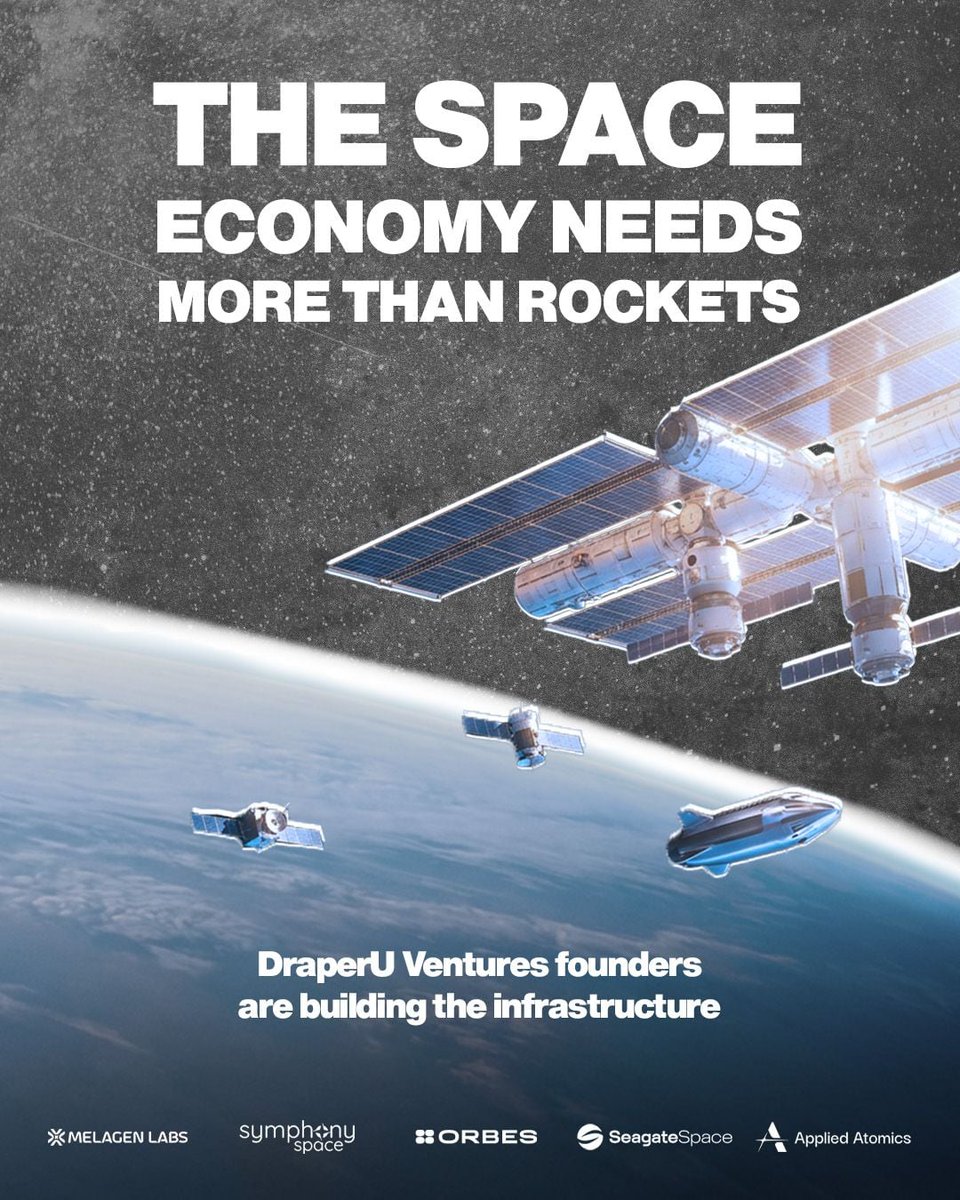
The Space Economy Needs More Than Rockets.
As access to orbit expands, an entirely new infrastructure stack has to be built around it. Launch is one layer, but spacecraft also need transportation, platforms, protection, servicing, and ways to operate for longer once they arrive.
That’s exactly where several Draper University Ventures portfolio companies are building:
🚀 SeaGate Space is developing offshore launch infrastructure, creating new options for where and how missions can reach orbit.
⚛️ Applied Atomics is working on advanced propulsion �� the mobility layer that helps spacecraft and payloads move after launch.
🛰️ Symphony Space is building modular orbital infrastructure through its Adagio platform, designed to give payloads the power, communications, thermal management, and other systems they need to operate in space.
1/3 -> continue reading in the 🧵
🤖 ORBES is developing robotic spacecraft for inspecting and eventually maintaining orbital infrastructure, moving toward a future where expensive assets can be serviced rather than simply replaced.
🛡️ Melagen Labs is working on radiation shielding designed to protect electronics and critical systems against the extreme conditions of space.
What’s interesting isn’t just each company individually. It’s what they look like together: launch, mobility, platforms, protection, servicing. These are the kinds of layers that turn access to a new environment into an actual economy.
And we’re starting to see the pieces connect: ORBES and Symphony Space have already announced plans for Exo-ORB to fly aboard Symphony’s Adagio platform – an early example of different parts of the orbital infrastructure stack working together.
2/3