🚨🪲🧬🦠 We have a new preprint out!
Link: https://t.co/LTwq5uhrGf
Insects and microbes are more connected than we often realize. In fact, some insects owe part of their ability to feed on plants to genes they acquired from bacteria millions of years ago.
In this study, we reconstructed the evolutionary history of the bacterial glycoside hydrolase subfamily GH5-40 across leafhoppers. Starting with genome annotation across 24 species and ending with functional enzyme assays, we followed the journey of these genes from their bacterial origins to their current role in insects.
What did we find?
🧬 GH5-40 enzymes are not native to insects. Leafhoppers acquired them from Actinobacteria through an ancient horizontal gene transfer event.
🌿 Rather than remaining as a single borrowed gene, these enzymes expanded repeatedly, evolved new multidomain architectures, and diversified across leafhopper evolution.
💦 Some are highly expressed in the salivary glands, and our experiments show they are active enzymes capable of breaking down plant cell wall polysaccharides, suggesting that leafhoppers secrete them into plants while feeding.
Genetically modified (GM) papayas protect against papaya ringspot virus (PRSV), but papaya leaf distortion mosaic virus (PLDMV) is rising as a threat. Mu-Zhi Yang et al. found no difference in PRSV infection between GM and non-GM plants. Learn more: https://t.co/ziu3TSAHAu
📑Peptide hormones in plants
https://t.co/nb4Mni4k7g
A general overview for the discoveries, functions, chemical natures, transcriptional regulations, and post-translational modifications of peptide hormones in plants.
@AbioticStress @wimi_biotech
Excited to share our spotlight article on a new study by Wang et al., describing control of root-knot nematodes by expressing Bt proteins in leucoplasts. @AlisonCBlundell. Read the spotlight here: https://t.co/O9PnI45Qf0 and the original article here https://t.co/kSwKNmxl8N
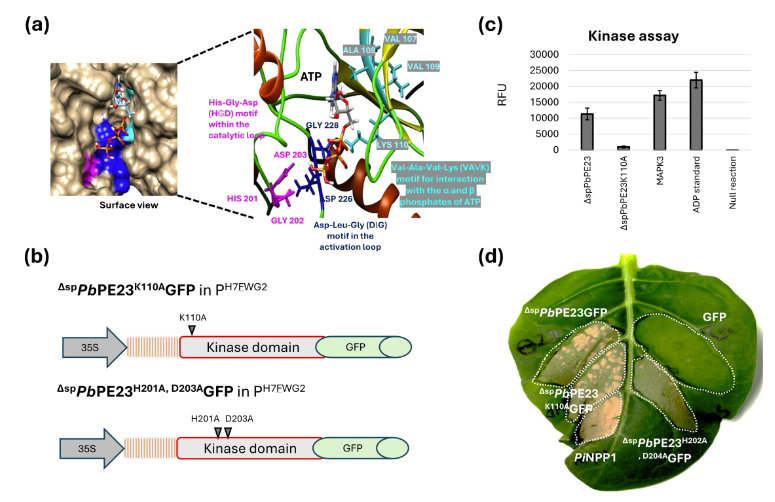
Well, it happened, now 'gene silencing' of Plasmodiophora brassicae without controls or a reproducible methodology has made it mainstream in @PhytopathologyJ ... not a good day for clubroot research ... https://t.co/8ivcnqzQ9Q
#TansleyReview: Photosynthetic ROS and retrograde signaling pathways
Keun Pyo Lee & Chanhong Kim
📖 https://t.co/b6st8gCt6s
#LatestIssue @wileyplantsci
📑 #NEMEMERGE#paper on non-invasive, pre-symptomatic detection of potato cyst #nematode infection in tomato using #chlorophyll fluorescence analysis🔬It was investigated whether chlorophyll fluorescence could be suitable for early #PCN detection🪱
More ℹ️https://t.co/AFMwUGZxUO
My first first-author paper is out in @PLOSCompBiol! Read about why including aphid vector behavior is important for modelling NPT plant virus transmission, in particular when the virus is manipulating plant host phenotype: https://t.co/kFgoi7WYQc
Root-knot nematodes exploit the catalase-like effector to manipulate plant reactive oxygen species levels by directly degrading H2O2: https://t.co/iTG4L2t770
#TansleyReview
Vascular tissue – boon or bane? How pathogens usurp long-distance transport in plants and the defence mechanisms deployed to counteract them
@Malinowskilab, et al.
📖 https://t.co/fZXBevnUTA
@s_deeksha1794 @wileyplantsci
Read this new article in which our researchers @DitaMiguel and @JorgeElicerVarg address the spread of #FusariumTropicalRace4 and how we are fighting this pathogen.
🌱 Don’t miss it! Discover more here👇
https://t.co/5wMmTMNaGE
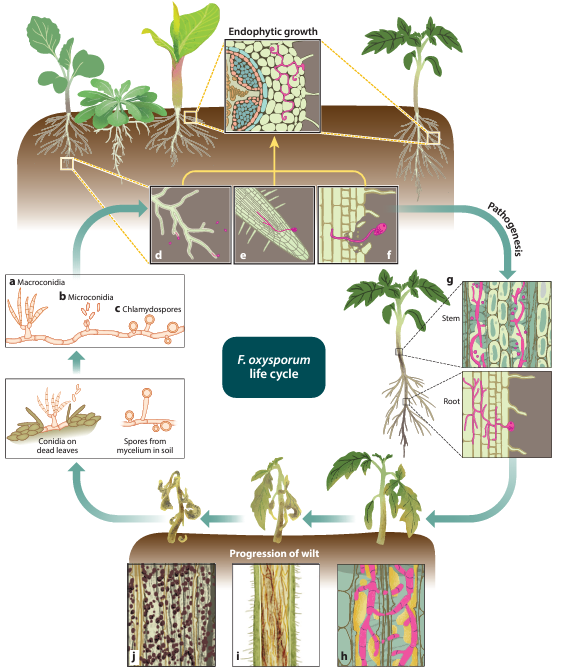
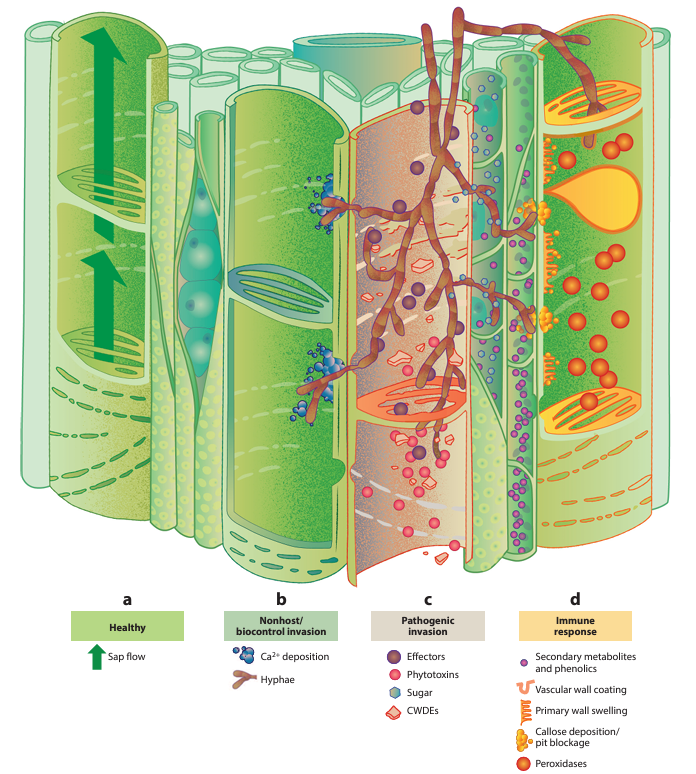
Wonderful illustrations in this nice review of Fusarium wilt
Molecular Dialogue During Host Manipulation by the Vascular Wilt Fungus Fusarium oxysporum | Annual Reviews - https://t.co/82HoFpIVbq
Te invitamos a leer este nuevo artículo en el que nuestros investigadores @DitaMiguel y @JorgeElicerVarg abordan la propagación de #FusariumRaza4Tropical y cómo estamos combatiendo este patógeno.
🌱 ¡No te lo pierdas! descubre más aquí👇 https://t.co/3eEUNq9VGJ