Elon Musk thinks the entire education system is built on a broken assumption.
That every student should learn the same thing. At the same speed. In the same order. At the same time.
Musk: “Everyone goes through from like 5th grade to 6th grade to 7th grade like it’s an assembly line. But people are not objects on an assembly line.”
The model was designed for a factory economy. Standardized inputs. Predictable outputs.
That economy is gone. The assembly line is gone.
But the education system still runs on its logic.
A student who masters algebra in two weeks sits through eight more weeks because the calendar says so. A student who struggles gets dragged forward because the schedule doesn’t wait.
Neither is being served. Both are being processed.
Musk: “Allow people to progress at the fastest pace that they can or are interested in, in each subject.”
AI doesn’t teach a classroom. It teaches a student.
One at a time. Every time.
It skips what a student already knows. It finds where they’re stuck and approaches it from a different angle.
It adjusts in real time. Not at the end of a semester when the damage is already done.
A student obsessed with basketball learns fractions through shooting percentages. A student who builds in Minecraft learns geometry through architecture.
The subject doesn’t change. The entry point does.
No teacher with thirty students can do this. Not because they lack skill.
Because the math doesn’t work.
AI doesn’t have that constraint.
Musk: “You do not need to tell your kid to play video games. They will play video games on autopilot all day. So if you can make it interactive and engaging, then you can make education far more compelling.”
The brain isn’t broken. The format is.
Kids learn complex systems and strategic thinking for hours voluntarily. Then walk into a classroom and can’t focus for twenty minutes.
That’s not a discipline problem. That’s a design problem.
Musk: “A university education is often unnecessary. You probably learn the vast majority of what you’re going to learn there in the first two years. And most of it is from your classmates.”
Four years. Six figures of debt.
And the real value comes from the people sitting next to you. Not the institution charging you.
The degree doesn’t certify knowledge. It certifies endurance.
Musk: “If the goal is to start a company, I would say no point in finishing college.”
The system was built to train employees. If you’re not trying to be one, it has nothing left to offer you.
Every lecture. Every textbook. Every curriculum. Now available instantly. Personalized to any learner. Adapted to any pace.
The question isn’t whether the old model survives.
It’s how long we keep forcing students through it while the replacement already exists.
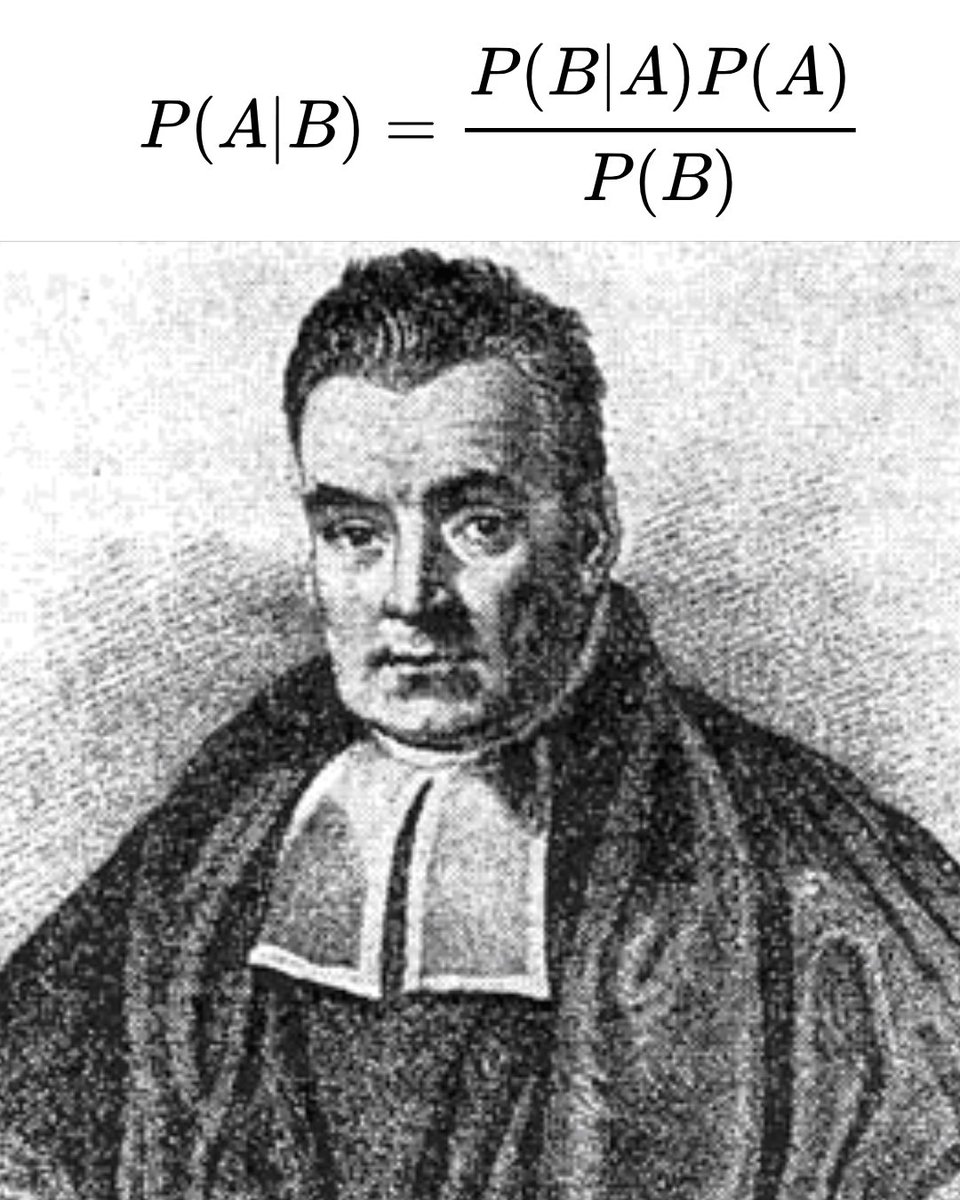
Bayes’ theorem is probably the single most important thing any rational person can learn.
So many of our debates and disagreements that we shout about are because we don’t understand Bayes’ theorem or how human rationality often works.
Bayes’ theorem is named after the 18th-century Thomas Bayes, and essentially it’s a formula that asks: when you are presented with all of the evidence for something, how much should you believe it?
Bayes’ theorem teaches us that our beliefs are not fixed; they are probabilities. Our beliefs change as we weigh new evidence against our assumptions, or our priors. In other words, we all carry certain ideas about how the world works, and new evidence can challenge them.
For example, somebody might believe that smoking is safe, that stress causes mouth ulcers, or that human activity is unrelated to climate change. These are their priors, their starting points. They can be formed by our culture, our biases, or even incomplete information.
Now imagine a new study comes along that challenges one of your priors. A single study might not carry enough weight to overturn your existing beliefs. But as studies accumulate, eventually the scales may tip. At some point, your prior will become less and less plausible.
Bayes’ theorem argues that being rational is not about black and white. It’s not even about true or false. It’s about what is most reasonable based on the best available evidence. But for this to work, we need to be presented with as much high-quality data as possible. Without evidence—without belief-forming data—we are left only with our priors and biases. And those aren’t all that rational.
If science class explained everything with Midwest emo music, we would have a lot more people paying attention.
Nuclear power explained.
It’s just a fancy way to heat water and make electricity.
🔊
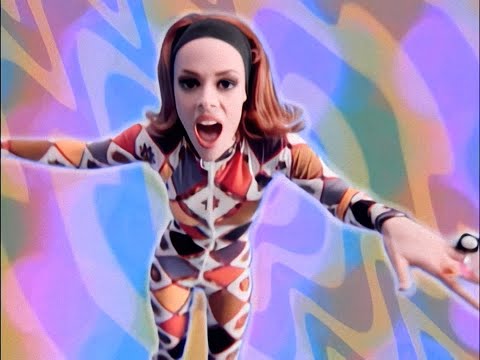
35 years ago today, Deee-Lite released “Groove Is in the Heart,” a kaleidoscopic dance-floor explosion blending Herbie Hancock samples, Bootsy Collins funk, and a Q-Tip verse. With its trippy video and infectious beat, it became an instant club classic.
It’s been 14 years since Nicolas Winding Refn gave us this unforgettable intro. Kavinsky’s ‘Nightcall’ sets the tone perfectly. Drive is a masterpiece — and one of Ryan Gosling’s finest performances.
Pure perfection.
I’m thankful to be alive to watch Amadeus. I know there’s someone out there reading this post who’s been saved by Cinema the same way Cinema saved me. These are films- these are the works of art-that remind you what it means to be human.
The year is 1999. You've just finished the installation and hit that .exe. You never knew it at the time, but this was destined to be, one of the greatest pc gaming experiences in your life.
I mean…let’s just have one more conversation about what freaking class act @carrieunderwood was today. Not only did she wing it flawlessly, she invited the crowd, and she didn’t run away with the song or add anything crazy. It was a group project and she sounded like an angel