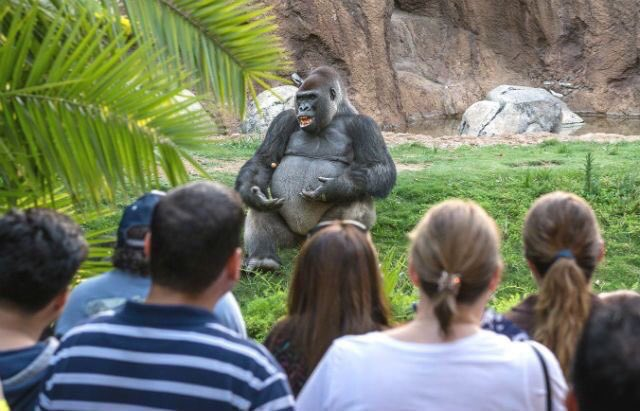
Can someone please share their thoughts upon : What would Artificial Intelligence (AI) do, if all humans go extinct ?
PS: Original and personal views only (Don't ask AI tools)
@OpenAI@sama@elonmusk
Devanagari is an extremely elegant script. But this was never explained to us in school.
A thread on the awesomeness that is devanagari.
Let's start with the things that my teachers did *not* teach me in school:
🧵1/Our @uabmedicine Grand Rounds will feature a diagnostic showdown between Dr Martin Rodriguez and ChatGPT4
I am scared here because I don’t want AI to win
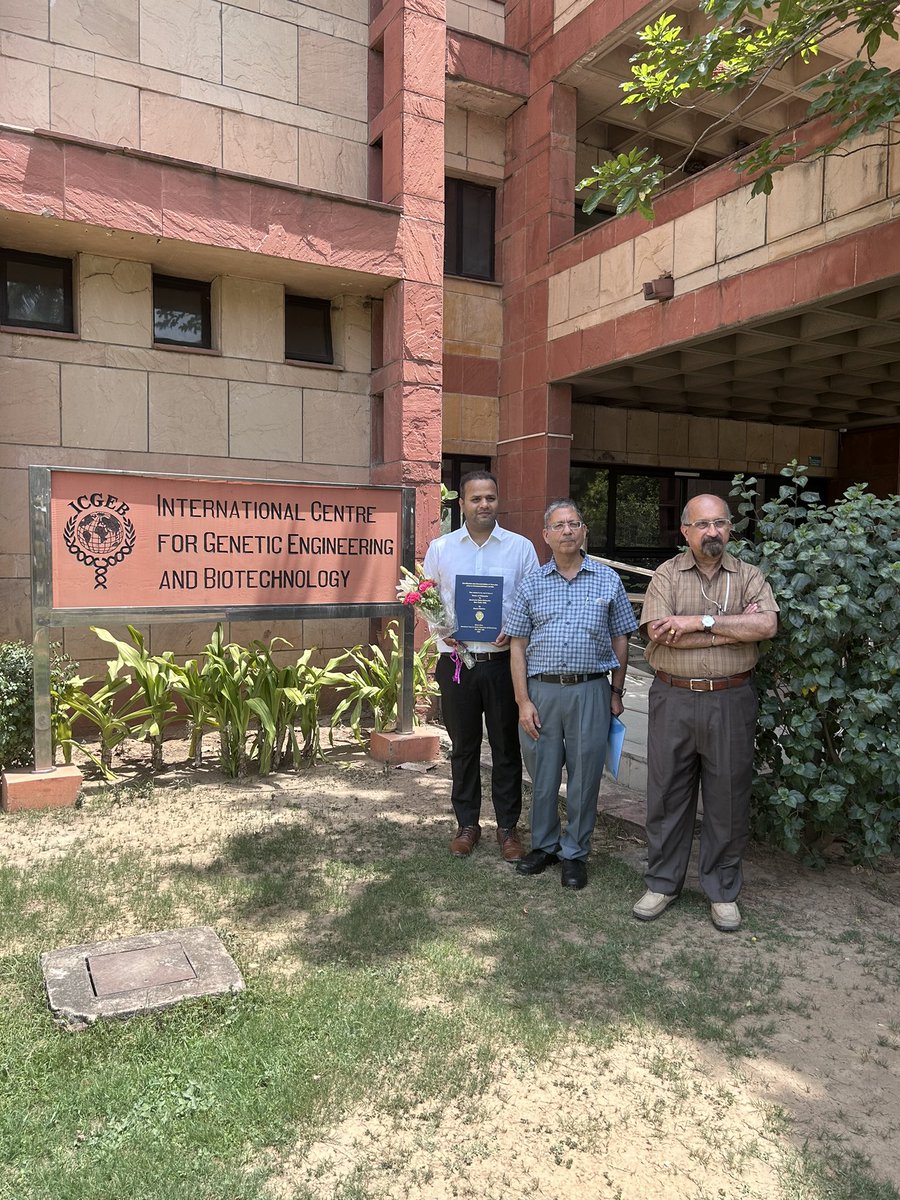
Congratulations to Osama Mukhtar from Malaria Biology Group @ICGEBNewDelhi for successfully defending his PhD thesis. Osama, whose thesis is titled, “Identification and characterization of plasmodium falciparum immunomudulatory protein”, worked under the joint supervision of Dr Pawan Malhotra & @dhirajverma.
Talking to my mom about how we (multitasking, over-performing, over-delivering) women just need to be kinder on ourselves.
'We run houses like we don't have jobs, and we drive our careers like we don't have homes to run'.
🙏🏾💆🏾♀️⏰
When he was 19, Andre Agassi started losing his hair.
Deeply ashamed of his receding hairline, to hide it, Agassi started wearing a hairpiece.
Not long after, at the 1990 French Open, Agassi made it to his first Grand Slam final.
“The night before the final,” Agassi writes,
“Catastrophe strikes.”
As he was taking a shower, Agassi felt the hairpiece disintegrate in his hands. He summoned his brother, who was able to clip the hairpiece back together with 20 bobby pins.
The next morning, Agassi writes, “warming up before the match, I pray. Not for a win, but for my hairpiece to stay on…My tenuous hairpiece has me catatonic…With every lunge, every leap, I picture it landing on the clay. I can picture millions of people suddenly leaning closer to their TVs, turning to each other and in dozens of languages and dialects saying some version of: Did Andre Agassi’s hair just fall off?”
At times, he looks into the stands and sees fans sporting hairdos just like his. This only exacerbates his sense of shame. “I can’t imagine all these people trying to be like Andre Agassi,” he writes, “since I don’t want to be Andre Agassi.”
Because of this fixation on his hairpiece, though he was the heavy favorite, Agassi lost three sets to one.
After, his girlfriend, aware of the hairpiece catastrophe, says, “I think you should just get rid of that hairpiece.”
“Impossible,” Agassi replies, “I’d feel naked.”
“You’d feel liberated,” she says.
He thought it over for a few days: “I thought about the pain my hair has caused me, the hypocrisy and the pretending and the lying.”
And then he went back to his girlfriend, “Let’s do it…Let’s cut it all off.”
His first tournament with a bald head was another Grand Slam, the Australian Open, and, “I come out like the Incredible Hulk. I don’t drop one set in a take-no-prisoners blitz to the final.”
You were right, he told his girlfriend before the final, “my hairpiece was a shackle.”
In the final, he won three sets to one. “Everyone says it’s my best performance yet, because it’s my first victory over Pete [Sampras]. But I think twenty years from now I’ll remember it as my first bald victory.”
Takeaway 1:
In his book, in interviews, and in the documentary “Stutz,” the psychiatrist Phil Stutz talks about the Shadow.
“The easiest way to say it,” Stutz explains, “is that the Shadow is the part of yourself that you’re ashamed of…It’s a flawed part of yourself that you feel you have to hide and once you start to hide things, you become very sensitive to whether other people can see them or not. It becomes an obsession—How do they see me, what do they think of me, do they like me, love me?”
The more you try to hide what you’re ashamed of, as Agassi said, the more ashamed you feel.
“But the beauty is,” Stutz continues, “once you stop hiding it, you can relax and then you get flow. If you stop hiding your Shadow, if you stop hiding, you get flow. And that’s what everybody wants.”
After he stopped hiding his Shadow, Agassi got flow. He went on to win back-to-back Grand Slams and ended 1995 as the number one ranked tennis player in the world, replacing Pete Sampras who held the spot for eighty-two straight weeks.
Takeaway 2:
Keeping in mind that Agassi was so worried about what others would think or say about his shaved head, I went searching for what others thought or said after he shaved his head.
All I could find was a passing mention in a 1995 Washington Post piece (“The wild mane of hair he sported at the tournament last season has been replaced with his new no-nonsense buzz cut.”)
It made me think of a line from the philosopher Seneca, who writes in a letter titled On Groundless Fears: “We suffer more in our imagination more often than in reality.”
In his head, Agassi thought people would think or say nasty things about him.
In reality, no one really cared.
- - -
“The most precious thing we have in life is time, so any time you spend worrying about something, get rid of it.” — Andre Agassi
Follow @bpoppenheimer for more content like this!
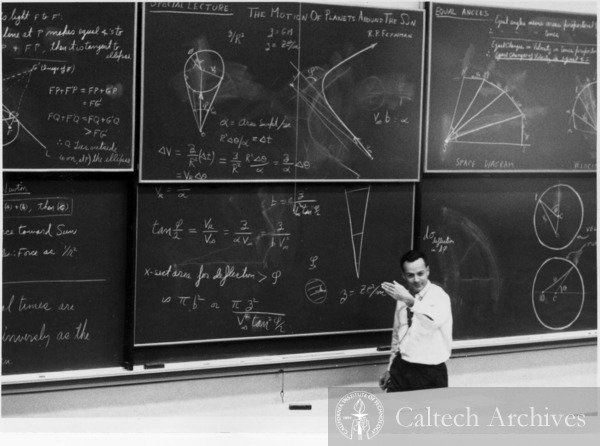
Science is the belief in the ignorance of experts. When someone says 'science teaches such and such', he is using the word incorrectly. Science doesn't teach anything, experience teaches it.
On 23 Jan 1911, Marie Skłodowska Curie was rejected admission to the French Academy of Sciences.
Marie Curie applied for the chair in the section of physics, formerly occupied by her husband Pierre Curie, but was defeated by Edouard Branly by two votes.
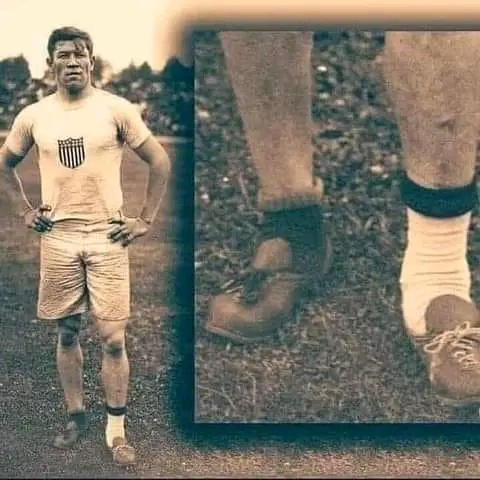
This is Jim Thorpe. Look closely at the photo, you can see that he's wearing different socks and shoes. This wasn't a fashion statement.
It was the 1912 Olympics, and Jim represented the U.S. in track and field. On the morning of his competition, his shoes were stolen. Luckily, Jim ended up finding two shoes in a garbage can.
That's the pair that he's wearing in the photo. But one of the shoes was too big, so he had to wear an extra sock. Wearing these shoes, Jim won two gold medals that day.
We live in a highly patriarchal society. I hv done around 200 kidney transplants. My findings in my series:
1. Around 80-90 % of Kidney Transplant Recipients are men. When a woman develops ESRD( Kidney Failure), it is very hard to find a Kidney donor, among the relatives.
2. In my entire career, not even a single husband came forward to donate his Kidney to his sick wife, & save her life.
3. When a woman is a Kidney recipient, the person who donates is usually a sister or daughter, or mother.
4. Most women r ready to offer their kidneys to their ailing husbands to save his life. The converse never happens.
5. There was once an extreme case, when a 19 yr old legal wife, donated her Kidney to her 45 yr old husband. After the Tx, I was casually talking to her. Her story was bizarre. This was her elder sister's husband. Just for Tx, the entire family had planned it carefully. The husband divorced his wife, & the 19 yr old girl was beaten fr days to marry the 45 yr old man, since her Kidney was a perfect match.
So, a simple survey of Kidney Tx recipients & donors exposes how deeply patriarchal, misogynistic, our rotten society is.
Scratch the veneer of democracy, modernity in India, & u find that underneath, we are still a feudal, casteist, misogynistic, patriarchal community.
Nobel prize shall embark one more "tag" to their scientific achievements. But, their contribution to society and especially young researchers, will be there till ages.
Their work will serve as a beacon of knowledge and inspiration for the future generations of scientists.
In 10 days, the Nobel Prize in Medicine/Physiology will be awarded.
Here are the 73 scientists most likely to get woken up by a phone call from Stockholm, based on looking at recent pre-Nobel “predictor” prizes:
I lived in Singapore for a few years.
Every time, I would board a metro, I would see literally 95% glued to their phones.
This was back in 2014.
Over the next few years, I saw the same thing happening in India as well.
Board a metro now-- and you would see almost 90-95% people glued to their phones.
People don't like to get bored.
Phone provides a constant stimulant.
But, boredom provides an opportunity to engage with your thoughts. And, reflect on the way you think.
Not getting bored, ever-- is one of the fastest ways to kill creative thinking.
Phone is an addition.
You are losing years of your life, without even realising it.


![bpoppenheimer's tweet photo. When he was 19, Andre Agassi started losing his hair.
Deeply ashamed of his receding hairline, to hide it, Agassi started wearing a hairpiece.
Not long after, at the 1990 French Open, Agassi made it to his first Grand Slam final.
“The night before the final,” Agassi writes,
“Catastrophe strikes.”
As he was taking a shower, Agassi felt the hairpiece disintegrate in his hands. He summoned his brother, who was able to clip the hairpiece back together with 20 bobby pins.
The next morning, Agassi writes, “warming up before the match, I pray. Not for a win, but for my hairpiece to stay on…My tenuous hairpiece has me catatonic…With every lunge, every leap, I picture it landing on the clay. I can picture millions of people suddenly leaning closer to their TVs, turning to each other and in dozens of languages and dialects saying some version of: Did Andre Agassi’s hair just fall off?”
At times, he looks into the stands and sees fans sporting hairdos just like his. This only exacerbates his sense of shame. “I can’t imagine all these people trying to be like Andre Agassi,” he writes, “since I don’t want to be Andre Agassi.”
Because of this fixation on his hairpiece, though he was the heavy favorite, Agassi lost three sets to one.
After, his girlfriend, aware of the hairpiece catastrophe, says, “I think you should just get rid of that hairpiece.”
“Impossible,” Agassi replies, “I’d feel naked.”
“You’d feel liberated,” she says.
He thought it over for a few days: “I thought about the pain my hair has caused me, the hypocrisy and the pretending and the lying.”
And then he went back to his girlfriend, “Let’s do it…Let’s cut it all off.”
His first tournament with a bald head was another Grand Slam, the Australian Open, and, “I come out like the Incredible Hulk. I don’t drop one set in a take-no-prisoners blitz to the final.”
You were right, he told his girlfriend before the final, “my hairpiece was a shackle.”
In the final, he won three sets to one. “Everyone says it’s my best performance yet, because it’s my first victory over Pete [Sampras]. But I think twenty years from now I’ll remember it as my first bald victory.”
Takeaway 1:
In his book, in interviews, and in the documentary “Stutz,” the psychiatrist Phil Stutz talks about the Shadow.
“The easiest way to say it,” Stutz explains, “is that the Shadow is the part of yourself that you’re ashamed of…It’s a flawed part of yourself that you feel you have to hide and once you start to hide things, you become very sensitive to whether other people can see them or not. It becomes an obsession—How do they see me, what do they think of me, do they like me, love me?”
The more you try to hide what you’re ashamed of, as Agassi said, the more ashamed you feel.
“But the beauty is,” Stutz continues, “once you stop hiding it, you can relax and then you get flow. If you stop hiding your Shadow, if you stop hiding, you get flow. And that’s what everybody wants.”
After he stopped hiding his Shadow, Agassi got flow. He went on to win back-to-back Grand Slams and ended 1995 as the number one ranked tennis player in the world, replacing Pete Sampras who held the spot for eighty-two straight weeks.
Takeaway 2:
Keeping in mind that Agassi was so worried about what others would think or say about his shaved head, I went searching for what others thought or said after he shaved his head.
All I could find was a passing mention in a 1995 Washington Post piece (“The wild mane of hair he sported at the tournament last season has been replaced with his new no-nonsense buzz cut.”)
It made me think of a line from the philosopher Seneca, who writes in a letter titled On Groundless Fears: “We suffer more in our imagination more often than in reality.”
In his head, Agassi thought people would think or say nasty things about him.
In reality, no one really cared.
- - -
“The most precious thing we have in life is time, so any time you spend worrying about something, get rid of it.” — Andre Agassi
Follow @bpoppenheimer for more content like this!](https://pbs.twimg.com/media/GGefsfDXwAAcRSJ.jpg)