From ST Elevation MI to Occlusion MI: the new paradigm shift in Acute Myocardial Infarction. New @JACCJournals#JACCAdvances state-of-the-art review with Jose Nunes de Alencar, @AslangerE, @PendellM and @smithECGBlog https://t.co/ccnX3at4X2
Pleased to share our DIFOCCULT-3 substudy in JACC: Cardiovascular Interventions.
In 4,398 patients without diagnostic STE, OMI/NOMI triage doubled ACO identification within 2 h without reducing angiographic yield.
https://t.co/TLPh7I26sg
🚨 Tickets are selling fast as 300+ EM colleagues are already registered for #EMCasesSummit.
🌎 World-class EM faculty
💬 Interactive talks & discussion
🚑 Virtual simulations
🎓 CME from home
3 days to reinvigorate your practice.
Nov 19–21
https://t.co/lYCuDr5xtB
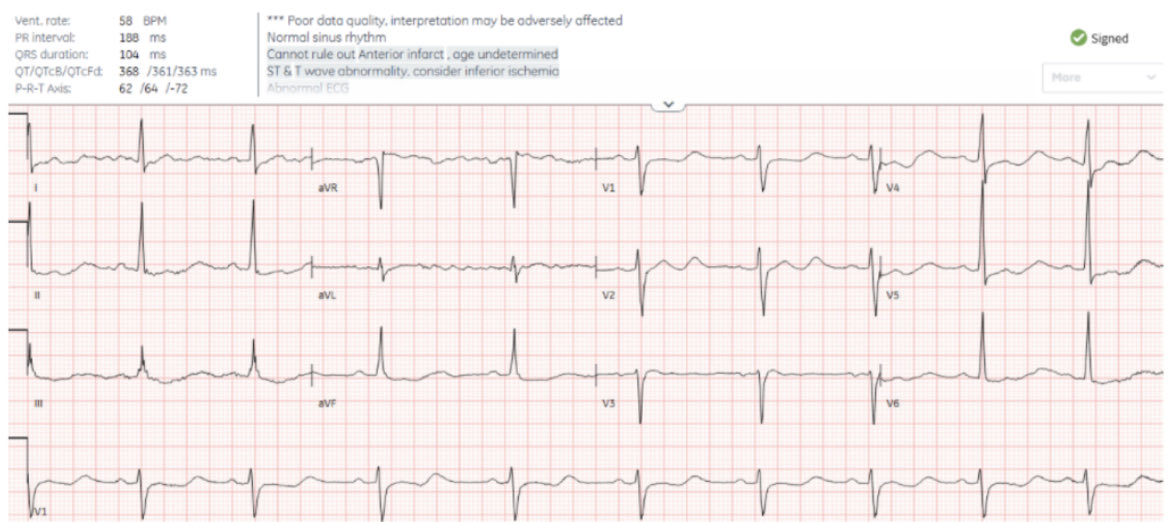
@DrGoblin3@TrackYourHeart Here are examples of the true South African flag sign, where STE is limited to leads I, aVL and V2, due to an occlusion of the 1st diagonal: https://t.co/CKmvXWRkpU
50-year old with chest pain: serial ECG ‘STEMI negative:’ does the patient have Occlusion MI (OMI)?
https://t.co/HSsy7UP9pU
Highlights the stupidity of the NSTEMI guidelines: "NSTEMI" is worthless, and no one follows the "high risk" NSTEMI guidelines.
@ECGcases@PMcardioApp
🚨 Update to OMIGuide!
Huge shoutout to Mriganka Nerkar, MS4, who led a major expansion of the guide - adding 100+ new cases from Dr. Smith’s ECG Blog since our original launch in 2023!
Check out the updates at https://t.co/y1VYtRDdm5
@smithECGBlog@PendellM@WillyFrick
We've built acute MI care around STEMI criteria, but are ECG thresholds missing too many occluded arteries?⚡
1 in 3 patients labeled NSTEMI may actually have a totally occluded culprit artery, often waiting hours longer for reperfusion.
https://t.co/CfhJsF5vAD
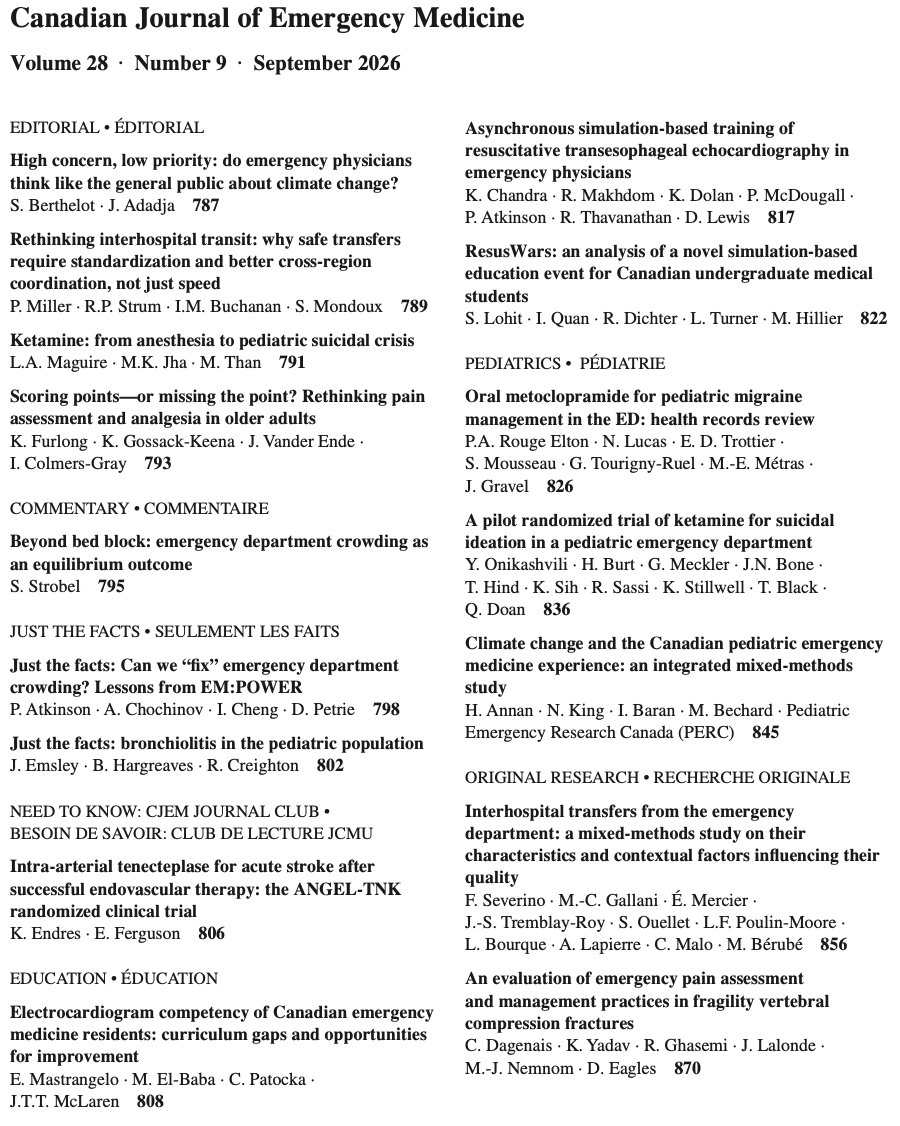
🚨 The September 2026 issue of #CJEM is live!
This month's issue brings together 21 articles tackling some of emergency medicine's biggest challenges and opportunities:
🔹 ED crowding and patient flow
🔹 Interhospital transfers
🔹 Climate change and emergency care
🔹 Bronchiolitis management
🔹 Pediatric suicidal ideation and ketamine
🔹 Pain assessment in older adults
🔹 Stroke care updates
🔹 ECG competency in EM residency training
🔹 Simulation-based education and PoCUS
Featured articles include:
📖 Just the Facts: Can we “fix” emergency department crowding? Lessons from EM:POWER
📖 Just the Facts: Bronchiolitis in the pediatric population
📖 Original research on Canadian interhospital transfers, climate change impacts on pediatric emergency medicine, ketamine for pediatric suicidal ideation, and more.
Read the full issue here: 🔗 https://t.co/exBaPebBxK
#EmergencyMedicine #CJEM #FOAMed #MedTwitter #PedsEM #Stroke #PoCUS #MedEd #PatientFlow #HealthSystems #CAEP
Congratulations to @RodrigoZoniOK on leading our paper: Reconsidering fibrinolysis in selected patients with non–ST-elevation acute coronary syndrome: A hypothesis-generating, research-based framework
#NSTEMI#ACS#reperfusion
🔗@AmericanHeartJ
https://t.co/Ki0x412fyl
The 5th universal definition of MI invokes the concept of "regional ST-segment depression" due to supply-demand imbalance.🤦♂️
This concept is incorrect and misleading, because subendocardial ischemia DOESN'T localize to any region.
There are really just TWO possible patterns of acute myocardial ischemia on an ECG:
[#1] Subendocardial ischemia (diffuse STD).
[#2] Transmural ischemia (which often causes regional STE and regional ST depression due to reciprocal changes).
The concept of "regional ST-segment depression due to supply-demand mismatch" is misleadingly dangerous, because this is often *incorrectly* invoked to explain regional reciprocal STD. This causes clinicians to *miss* the true diagnosis of transmural infarction (e.g., posterior transmural ischemia causing anterior STD).
It would be safest to eliminate the myth of "regional ST-segment depression due to supply-demand mismatch" in order to force ECG readers to choose between the only two real ECG manifestations of ischemia: subendocardial ischemia or transmural ischemia.
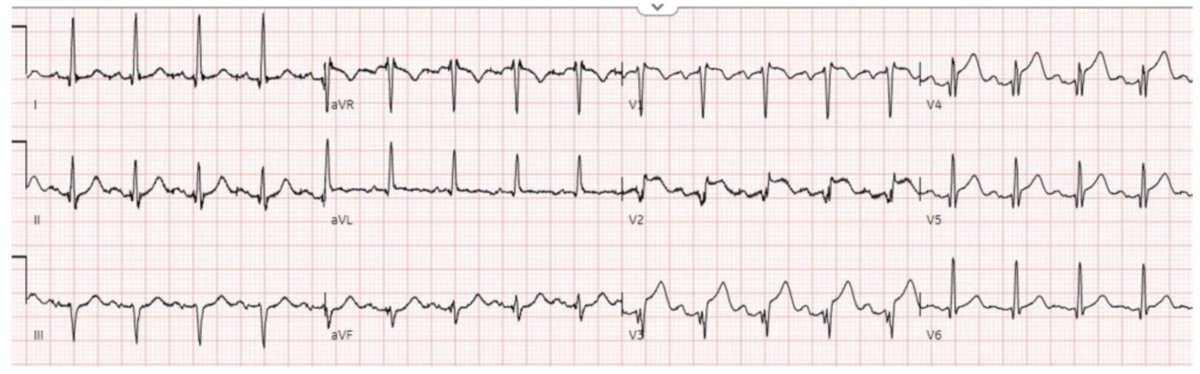
4 patients with ST elevation, infection, and elevated troponin: which is Occlusion MI and which is myocarditis?
https://t.co/PFKQGgFNwB
@PMcardioApp@ECGcases