I used to spend a week curating single-cell studies by hand.
Now AI does it in 5 minutes.
But this isn’t about job loss—it’s about leverage.
Let me show you why every bioinformatician should embrace AI:
If you're still using raw R outputs for presentations, it's time for an upgrade! Tools like gtsummary bring your statistical results to life, making them much more digestible for non-technical audiences.
While base R functions like summary(fit) work well for statisticians, they can be too complex for stakeholders who aren’t familiar with the detailed output. The tbl_regression() function from gtsummary makes it easy to present regression results clearly.
In addition, gtsummary is highly versatile - it’s not just limited to linear regression. You can apply it to generalized linear models, survival analyses, and more. The package even allows you to include p-values, confidence intervals, and other important statistics directly within the tables, helping you to better communicate statistical results.
Here are a few standout benefits:
✅ Simplified output that’s easier for stakeholders to understand
✅ Works seamlessly with a variety of models
✅ Customizable tables with key statistics like p-values, confidence intervals, and more
The visualization included here was originally shared in a recent post by Dr. Alexander Krannich.
#rstats #gtsummary #statistics #datascience
how does PCA projection work? How do KNN and MNN for label transferring work in Seurat? A blog post on how I attempt to understand it at a low level. #singlecell#bioinformatics RT if you like it! https://t.co/3EvBoFQNCQ
We are delighted to share our manuscript on our @UCSF_PROPEL program! We have accomplished so much over the last few years, and are evermore excited for new innovations and expansions of this model for equitable access to post-baccalaureate research! https://t.co/geHk9oXBUh
How much fun it was to come back and chat with a great mentor and role model @clarklabucla1!! Can’t wait to see you again at @ISSCR this year, Madam President!
#firstgengraduates
Professors have the best job in the world, especially when prior mentees like the phenomenal Ernesto Rojas come to visit. His career will be one to watch!
Dr. Sissy Wamaitha, a stem cell biologist in Dr. Clark's lab whose research interests center on mapping cell fates in early human development gave a captivating talk today for CRSHE's March Seminar Series! @clarklabucla1@UCLA#reproductivescience
Travel Tips Thread!
Many of you have reached out, asking me what company I used to plan my trips. I actually plan the vast majority entirely myself. So since so many of you seem curious, here’s how I do it: 1/
We’ll be wrapping up our conference weekend with our gala at the Luxe Hotel in Westwood! All conference guests are welcome to join in an evening of celebrating of our LMSA community and our graduating seniors. Buy tickets here: https://t.co/gufnSwmEHn
@arjunrajlab I’ve used it to generate code for visualization and running loops to get several graphs printed out to review. I suggest using GPT4 (paid ChatGPT). It has had some issues but either providing an e.g. of code you want to generate or your image + describe what you want to change
Really encourage all my Med student and Pre-med student friends to attend this incredible conference! There’s nothing like seeing a huge group of future Latinx doctors learning and teaching each other about the journey it took to get us here. #SiSePuede
Registration for our LMSA West 2024 Regional Conference is now LIVE. If you’re a high schooler interested in medicine, premedical student or medical student you don’t want to miss out on this event! Buy tickets here: https://t.co/cuHLlEsrOP
Please think about submitting an abstract! All disciplines are open to apply and they are on rolling acceptances. It’s also a great way to get some funding from your institution to come join us at LMSA-West Conference!
Are you a medical or premedical student interested in presenting your research at our Regional Conference? Submit your abstract before our March 22 deadline! https://t.co/vrw3QrfOSo
Joining us for our regional conference in Los Angeles and need a place to stay? We got you covered! Secure your hotel reservation for the LMSA West Conference while supplies last! Group rates are available till March 21st. Link: https://t.co/CNBzr47N2c
@davisidarta@Frank_Txu Super helpful Davi! Do you have some better methods to use than PCA pre-processing? Or could you point to some papers/posts about where to look for alternatives?
Happy to share the peer-reviewed version!⛺️
Now including additional analyses of i) impact of celltype composition imbalance across samples, and ii) noise in celltype labels on integration performance. Thanks to reviewers & editor for constructive feedback
https://t.co/DU0PGRLNnH
Great News: DeepVelo finally published in Genome Biology (@GenomeBiology)! 🎉 🙏❤️🔥
DeepVelo: Deep learning extends RNA velocity to multi-lineage systems with cell-specific kinetics
In-press: https://t.co/IE8BYuKveH,
#bioRxiv preprint (April 2022) : https://t.co/QrTrxM8XvX
Data & Code: https://t.co/4lFfR6SHSz
After a loooonger journey than expected, we're happy to have found a fitting home for this innovative work!!
Why DeepVelo is a game-changer?!
1. Cell-specific kinetics modeling (Fig.1): DeepVelo stands out as one of the first techniques to harness deep learning, specifically graph neural networks, for enhancing RNA velocity estimates. It transcends the limitations of previous methodologies by offering cell- and gene-specific kinetic rate estimation, breaking free from biologically unsound constraints like uniform rates of transcription, splicing, and degradation across different genes and cells. This leap forward allows DeepVelo to exhibit exceptional performance in a range of scRNA-seq settings, from the simplest to the most complex.
2. Support for complex gene dynamics (Fig.2): The real-world impact of DeepVelo is evident in its ability to support complex gene dynamics, particularly in scenarios involving genes with multifactorial kinetics, such as those seen in branching developmental processes. For example, our studies in dentate gyrus neurogenesis and mouse hindbrain development have shown how effectively DeepVelo models these intricate dynamics.
3. Identifying driver genes (Fig.3): DeepVelo excels in identifying driver genes, which are crucial in differentiation and cell-state transitions. Our thorough analysis of mouse hindbrain development, which includes the enrichment of relevant pathways in the driver gene signal, stands as a testament to its capability.
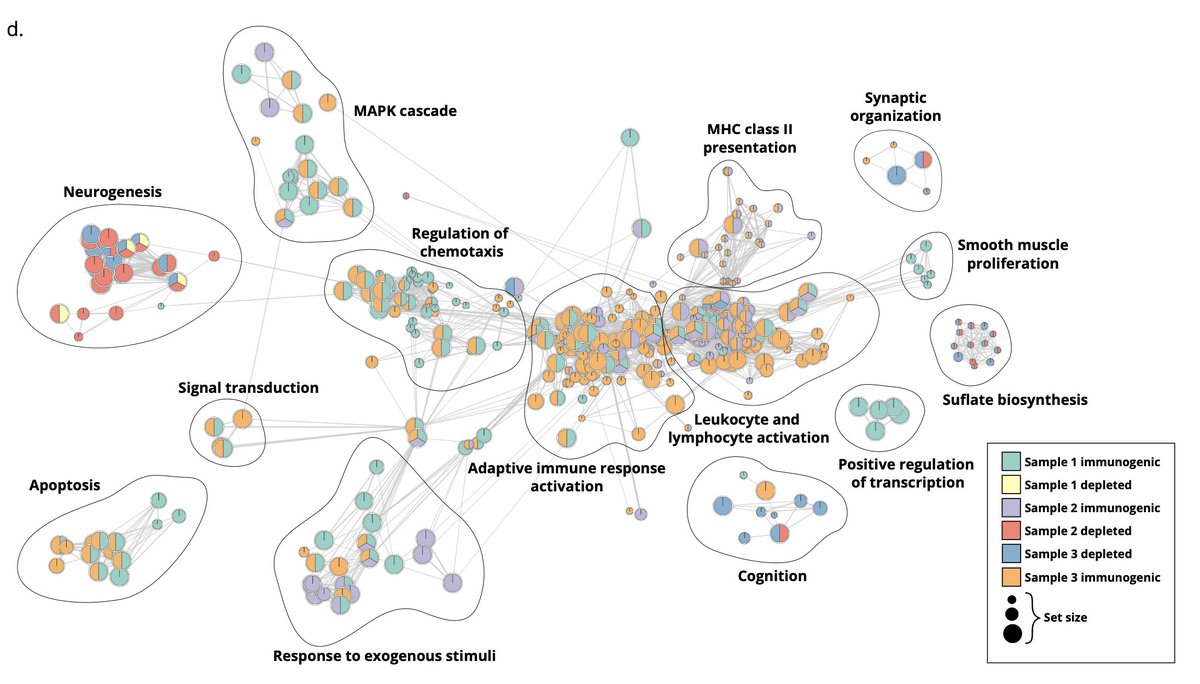
4. Finding new biological signals (Fig.4): Perhaps most excitingly, DeepVelo has demonstrated its potential in uncovering novel biological signals in previously uncharacterized datasets. A case in point is our discovery of immunogenic depleted and enriched subsets in cerebellar pilocytic astrocytoma, marking a first in this cancer type and highlighting DeepVelo's capacity to unravel multifaceted programs and lineages in tumor tissue.
Overall, DeepVelo outperforms previous techniques, especially in datasets where genes are involved in multiple functions, a common scenario in developmental data and tumor biology. And we're thrilled to see it already being widely used and cited even before its final publication.
A huge shoutout to the two co-first authors, two rising stars in computational biology, Haotian Cui (@HAOTIANCUI1 ), and Hassaan Maan for their perseverance and exceptional leadership on this project, and heartfelt thanks to our amazing collaborators from the Michael Taylor group.
@UHNAIHUB@VectorInst@pmcc_ai@UofT_LMP@UofTCompSci@UofT@UHN@bradwouters@drbarryrubin@SKeshavjee
#DeepVelo #Genomics #Innovation #RNAVelocity #OpenScience