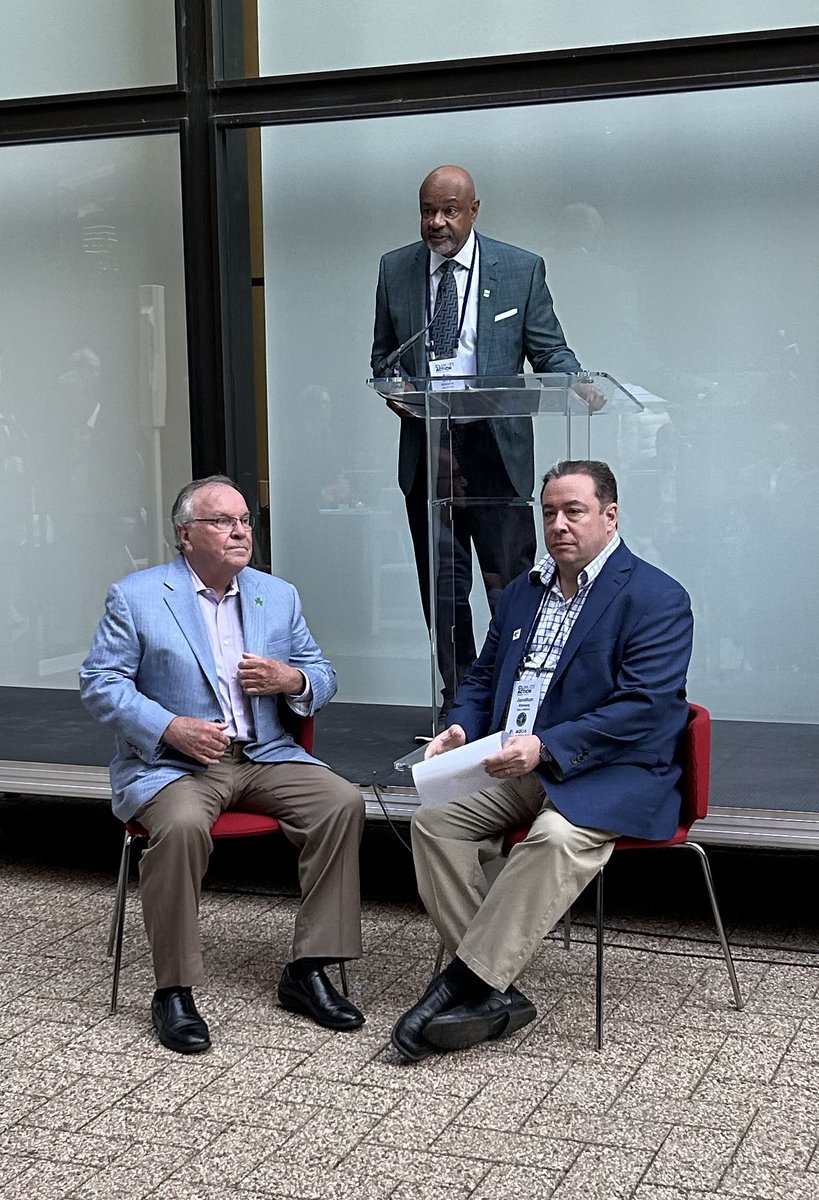
"Earmarking the SRFs is such a mistake."
States have systems for identifying communities that need help, but now Congress is directing SRF dollars to infrastructure projects they choose, says Tim Male of @EPIConservation.
Episode: https://t.co/uSluuZoCPH
From @ReservoirCenter
Thank you @SarahForMD for joining our panel yesterday to discuss cheaper, faster, more effective ways to clean the Chesapeake Bay and waterways around the country!
MD has led in this new way of thinking and policy making.
I was thrilled to share at yesterday’s Environmental Restoration Business Association Policy Conference the progress we’ve made via the Clean Water Commerce Act, the Conservation Finance Act, and the Whole Watershed Act.
How did the small town of Hazel Crest fund lead line replacement?
Village Manager Dante Sawyer says the Greenest Region initiative of the Metropolitan Mayors Caucus helped identify the project, find technical assistance, and secure funding.
#podcast: https://t.co/NwLIMlAN1L
@EPAwater's leadership and commitment to advance water equity will result in improved public health and economic outcomes nationwide. EPIC is humbled and honored to serve as an EPA Environmental Finance Center in support of this critical work. https://t.co/U9Q3tjBlQJ
In this opinion piece, Harry Huntley at the @EPIConservation discusses the needed changes to the Regional Conservation Partnership Program and funding the Inflation Reduction Act in the farm bill. https://t.co/XVjWUttKAs
🌟 New positions! 🌟 Senior Policy Analyst, Lead Service Line Replacement and Senior Policy Analyst, Water Infrastructure
Follow the link below to learn more.
https://t.co/H68hm2jplZ
Join our Director Alicia Gibson next week as she discusses the key learnings emerging from the nascent Biodiversity Net Gain (BNG) market in England as part of a webinar hosted by @EPIConservation
Register here: https://t.co/gxIC0UzA7S
EPIC's Harry Huntley describes how $5 billion of IRA dollars could--with a few simple tweaks--deliver on the mandate Congress created 5 years ago to pay farmers directly for conservation results.
https://t.co/l3pD1MVaJn
These blooms are typically caused by excess nitrogen and phosphorus running off of broad landscapes.
As waters warm, finding new solutions to prevent these nonpoint sources from reaching waterways becomes even more urgent.
Has a lake near you suddenly turned green or blue? It’s probably cyanobacteria— sometimes referred to as blue-green algae. These blooms can be toxic to people and animals.
Report harmful algal blooms with EPA’s bloomWatch app: https://t.co/f42WNg2q1m
#LakesAppreciationMonth
We’re excited about our work to assist overburdened and disinvested communities in applying for State Revolving Funds and other public funds. We have opened a Request for Qualifications (RFQ). Follow this link to learn more about the RFQ and how to apply. https://t.co/JySxX7BhHO
New Policy Report: @EPIConservation and WaterNow are excited to share a new report to help your utility access SRF funding for Green Stormwater Infrastructure. Read on to see how utilities in Milwaukee and Hoboken unlocked GSI financing options: https://t.co/U8TYTw9TqY
Please join us on May 31st from 2:00pm-3:15pm ET to discuss technical assistance available to help water systems access public funds for infrastructure. We are grateful for this opportunity to present the Funding Navigator with our partners! Register here: https://t.co/p1qNtsJ47B