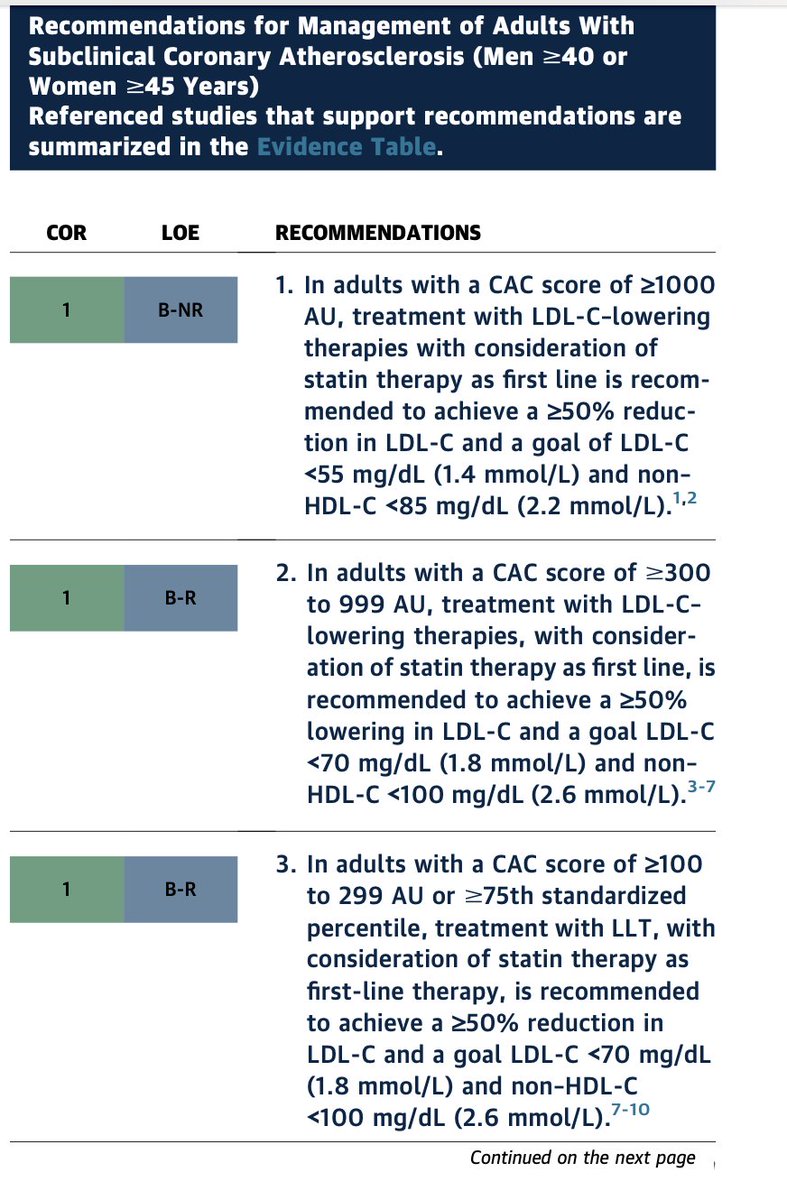
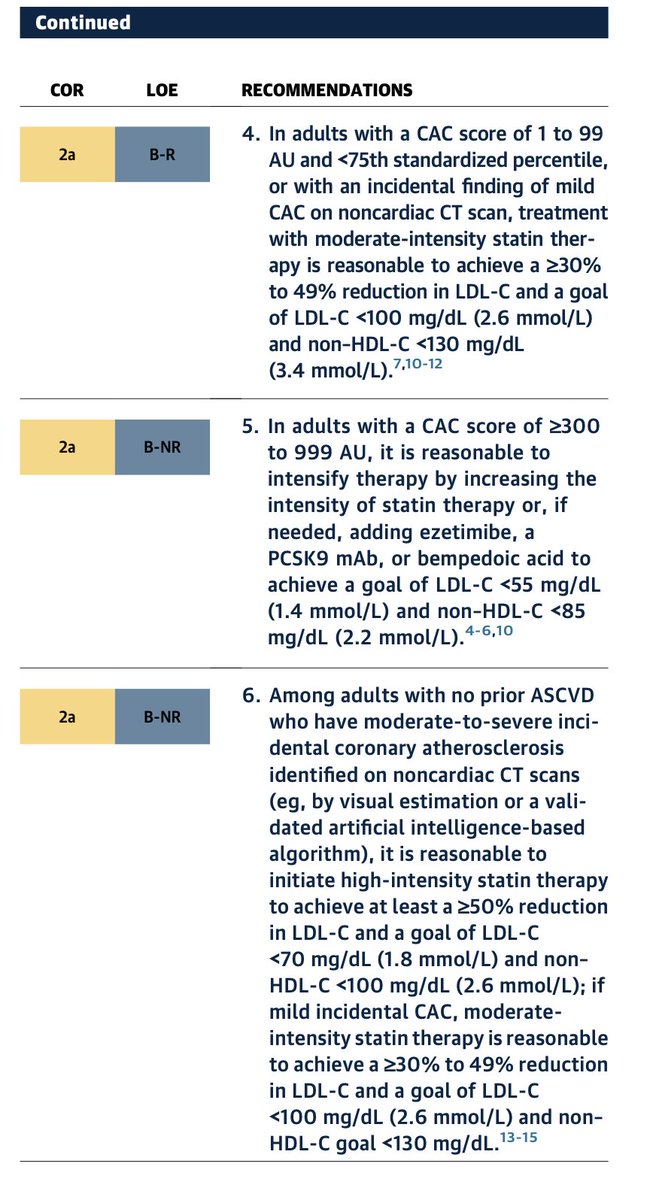
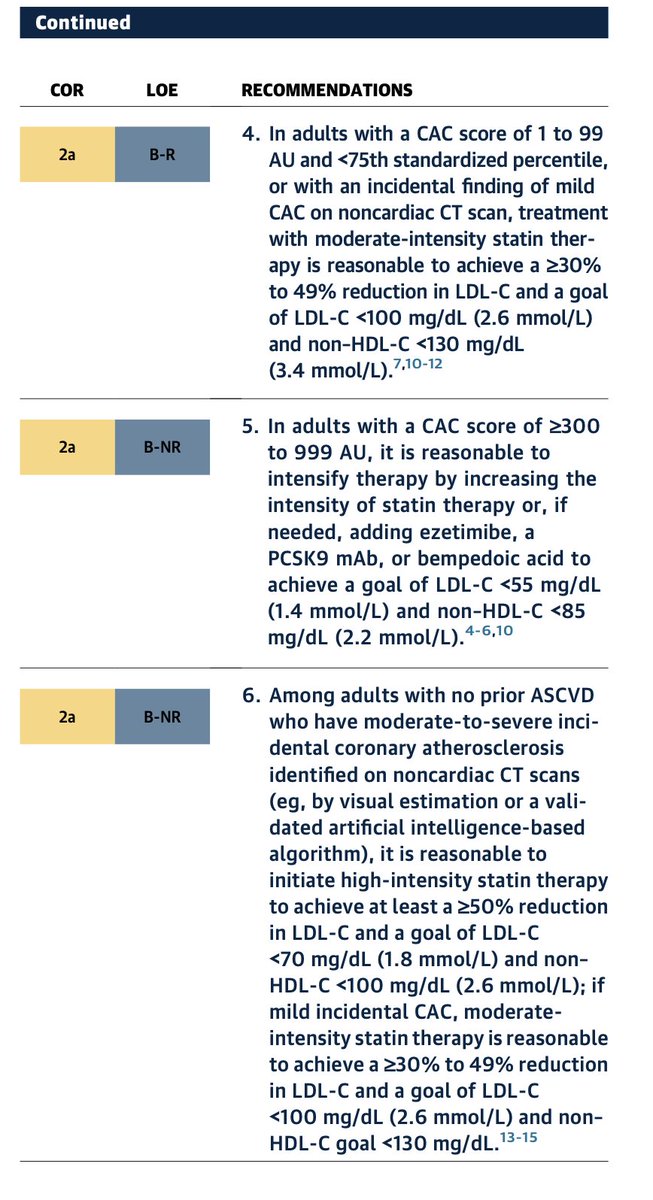
One of the most meaningful evolutions in the 2026 ACC/AHA dyslipidemia guideline is the continued elevation of CAC as a central tool in preventive decision-making.
We have come a long way.
1. In the 2013 guidelines, CAC was effectively sidelined.
2. By 2019, it re-emerged as a decision aid.
3. In 2026, it is now clearly embedded in the framework of risk assessment, treatment initiation, and treatment intensity.
Two messages stand out.
1. First, CAC has become the preferred decision aid when treatment decisions are uncertain. This is not an uncommon situation. In real-world practice, uncertainty is the rule rather than the exception, especially in borderline or intermediate-risk individuals. #PowerOfZero provides a clear distinction who is and not at risk that for the decision whether lipid-lowering therapy should be initiated.
2. Second, the guideline goes beyond initiation. CAC is increasingly used to guide the intensity of therapy. Increasing plaque burden corresponds to progressively more aggressive LDL targets and therapeutic strategies. For example, individuals with CAC ≥300–1000 are recommended to pursue LDL reduction strategies approaching secondary prevention intensity, reflecting event rates comparable to treated ASCVD populations.
This is a MAJOR shift.
CAC is no longer simply a tie-breaker for statin decisions. It is evolving into a disease-guided framework for preventive intensity.
From a practical standpoint, this matters.Risk equations estimate probability. CAC visualizes disease.
1. When uncertainty exists, seeing the burden of atherosclerosis often changes the conversation for both clinician and patient.
2. It also aligns therapy more closely with biology (GREATER DISEASE, MORE INTENSE THE TREATMENT) rather than risk-factor projections alone.
IN 2026. CAC has moved from the margins of guidelines to the center of preventive cardiology.
For clinicians, that represents one of the most practical advances in translating risk assessment into actionable care.
Congrats @rblument1@RonBlankstein@DrMichaelShapir & rest of the guideline authors
@AJPCardio@ASPCardio@MichaelJBlaha@Sadeer_AlKindi@HMethodistCV
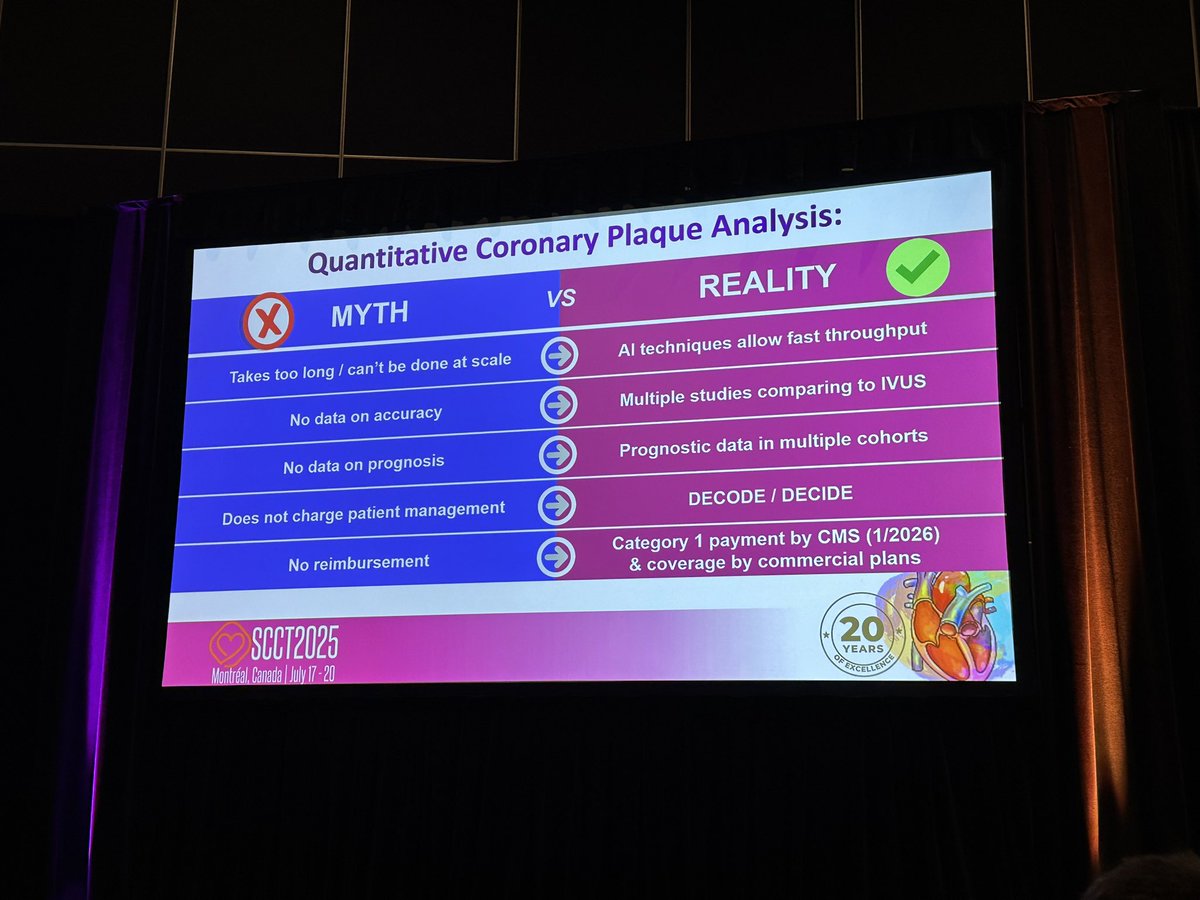
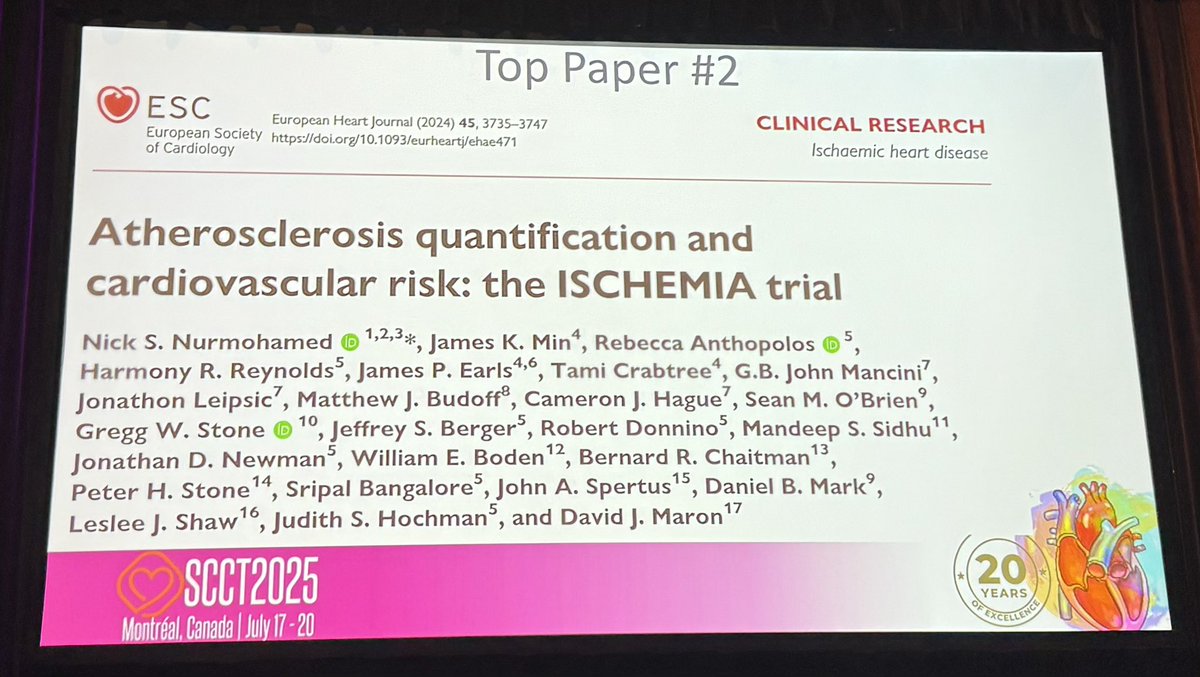
Top paper of #yesCCT at #SCCT2025 this year at opening ceremony!
https://t.co/CWZUkpA3jX
📊 Key Findings
➡️primary evens 6.6% in the CCTA group vs. 8.2% in standard care.
➡️Non-fatal MI decreased significantly: Lower in the CCTA group (8.3% vs 10.3%; HR 0.80; p=0.026)
➡️ Procedural interventions similar between groups (~15%) .
➡️ Increased preventive therapy in the CCTA arm: Targeted prevention: CCTA enables visualization of atherosclerotic plaque, leading to more informed risk assessment and more preventive therapies leading to less MACE and CV death
✅ Adding #yesCCT to standard care for stable chest pain not only improved risk stratification, but also prompted more preventive interventions, collectively leading to significantly fewer cardiac deaths and non-fatal heart attacks over 10 years.
#SCCT25
Top 5 📝 @Heart_SCCT#Scct2025
5.promise & Scot heart - CTA first better than ST for mod risk patient
4. CT FFR leads to more ICA & peri procedure MI
3. AS calcium score 3x ⬆️in men than females 🆚 3x fibrotic load
2. Ischemia trial CTA advanced plaque analysis does not add to risk stratification
1. 10yr f/u Scot heart results sustained https://t.co/alUSdT7xLW
Nothing will kill more children than the ongoing decimation of CDC, NIH, and USAID work to lift vaccine uptake in the US and world.
Child survival rose 75% in the last 50 years. Vaccines account for 40% of that. Measles vax alone was 60% of the benefit. https://t.co/GgQeCuAcJc
Aside from the general issues about Trump‘s tariff and his economic nationalism strategy, today’s actions against Canada and Mexico are inexplicable and dangerous. 1/8
"@NovoNordisk is expected to rake in $65B this year from its Ozempic and Wegovy injectables, while @EliLillyandCo's Mounjaro and Zepbound are forecast to earn $15B"
So maybe bring the price down? Just a little?
#TipsForNewDocs
Past medical history--
Wrong:
- AF
- DM
Right:
- Persistent AF managed w/rate control/anticoag, CHA2DS2-VASc 3
- Type 2 DM, Hgb A1c 7.5% 7/20, no end-organ dz
The PMH should provide descriptions of dz severity. Don't list- stratify!
#kittlesonrules
Check out our paper that correlated peak VO2 by CPET vs smartwatch in patients with complex congenital heart disease. @buber_yonatan@steiner_md@apara_v
https://t.co/AIc4G7pRCV
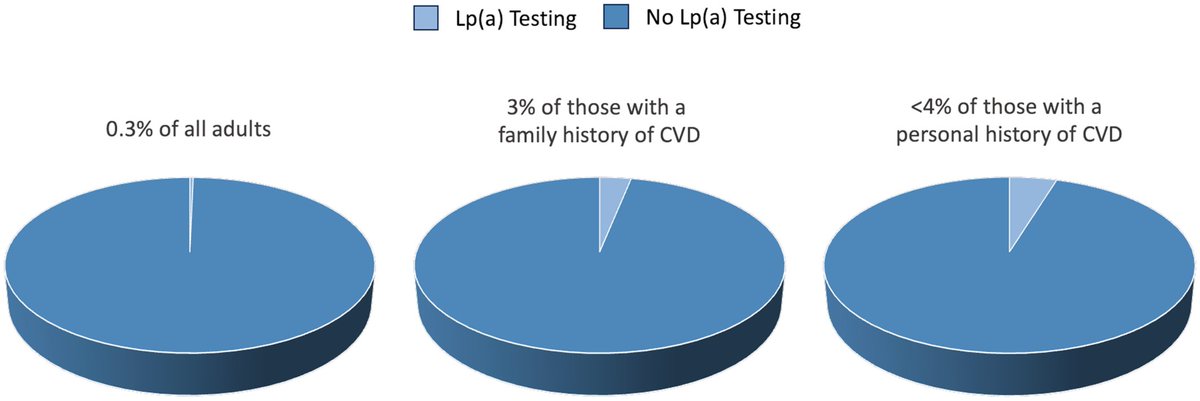
🚨In our study of >5.5 million patients across California, only 0.3% had Lp(a) tested from 2012-2021. Only 3% with family history and <4% with personal history of CVD were tested. @JAHA_AHA@AHAScience@calvinyeang@UCSDCardiology@UCSDCardFellows
https://t.co/7Z6SY0VoPt
Lauren, to say things like this without mentioning you VOTED AGAINST the bipartisan infrastructure bill designed to fix these issues is wildly disingenuous.
We see your gaslighting and we will hold you accountable.
On-call as a cards fellow 0500-0600:
- 5:06am / MICU RESIDENT: yesterday renal note said bolus dose and cards said Lasix gtt. What should I order?
- 5:34am / ED ATTENDING: I ordered an OP stress test and want to make sure it gets done
This is death by 10,000 paper cuts.
Oh you’re going to a teaching hospital in July? Well get ready…
for the most compassionate care from extremely empathetic interns along with their vigilant supervising attendings. Hope you like open ended questions and doctors listening to you bc you’re gonna drown in it.
56m with EtOH use d/o and afib, EF 32%. P/w 24 hours of constant 4/10 chest pain. Troponins 18 > 21 > 17. Ongoing chest pain, non-ischemic ECG. BP 149/131. What do we do?