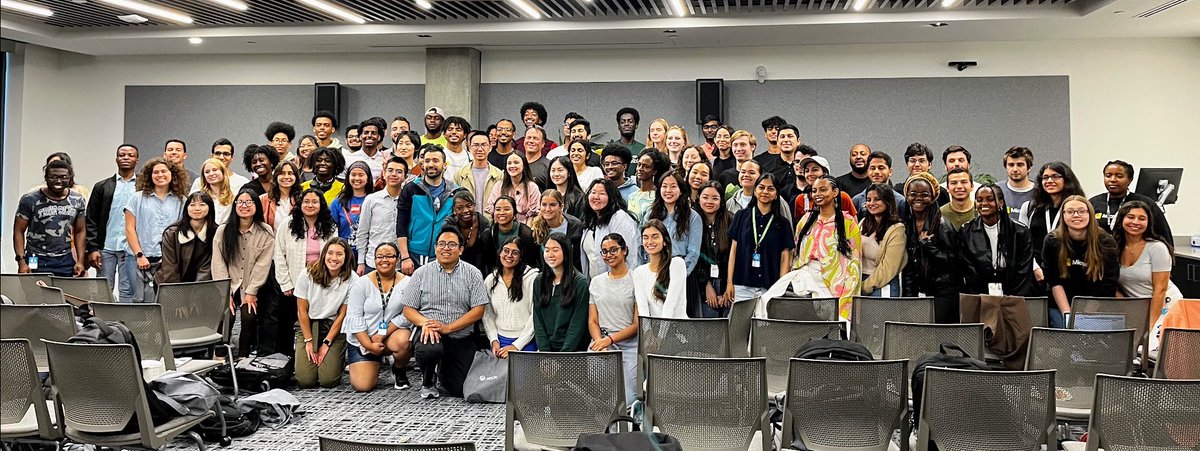
Somewhere in this roomful of interns are the future leaders of Xbox. It's always great to spend time listening to and learning from the next generation.
One of my favourite long jokes:
An infinite number of mathematicians walk into a bar.
The first mathematician orders a beer
The second orders half a beer.
The third orders a quarter of a beer.
"I don't serve quarter pints" the bartender replies
"Excuse me?" Asks mathematician #3
"A half pint is fine. No quarters" The bartender remarks.
"Oh c'mon" says mathematician #1 "do you know how hard it is to collect an infinite number of us? Just play along"
"I've got to clean all these glasses, remember"
"But that's not a problem" mathematician #2 chimes in "at the end of the joke you serve us a whole number of beers. You see, when you take the sum of a continuously halving function-"
"I know how limits work" interjects the bartender
"Oh, alright then. I didn't want to assume a bartender would be familiar with such advanced mathematics"
"Are you kidding me?" The bartender replies, "they are tricky sure, but hardly advanced! What kind of mathematician thinks limits are advanced mathematics?"
"HE'S ON TO US" mathematician #1 screeches
Simultaneously, every mathematician opens their mouth and out pours a cloud of multicolored mosquitoes. Each mathematician is bellowing insects of a different shade.
The mosquitoes form into a singular, polychromatic swarm. "FOOLS" it booms in unison, "I WILL INFECT EVERY BEING ON THIS PATHETIC PLANET WITH MALARIA"
The bartender stands fearless against the technicolor hoard. "But wait" he inturrupts, thinking fast, "if you do that, politicians will use the catastrophe as an excuse to implement free healthcare. Think of how much that will hurt the taxpayers!"
The mosquitoes fall silent for a brief moment. "My God, you're right. We didn't think about the economy! Very well, we will not attack this dimension. FOR THE TAXPAYERS!" and with that, they vanish.
A nearby barfly stumbles over to the bartender. "How did you know that that would work?"
"It's simple really" the bartender says. "I saw that the vectors formed a gradient, and therefore must be conservative."
Excited to share our recent paper + python package for partitioning prestige hierarchies, hyperbolic embeddings, and other networks embedded in one dimension https://t.co/deCLol3Nos
Here's the published version! "Evaluation of Model-Based PM2.5 Estimates for Exposure Assessment during Wildfire Smoke Episodes in the Western U.S."
See synopsis below and main takeaways in🧵
https://t.co/9cBu2C1s2s
If you're a prospective statistics PhD student, join us for the third annual virtual panel with current statistics PhD students from @UWStat, @UCBStatistics, and @UMichStatistics on Thurs Nov 3 at 5:00PM (PDT). Register and learn more at https://t.co/DJKefdJQ7h.
We are offering pre-application review service (PARS) again this year for Statistics PhD applicants! Get your application materials reviewed by our PhD students and post-docs before applications are due. Please retweet! #statistics#PhD#PhDapplications
1/ New paper! https://t.co/E1iAwyqr3g with @_szhang@aaronclauset @DanLarremore.
🎓 We analyzed all 295K tenure-track faculty at US PhD-granting universities in 10,612 departments over 10 years to quantify hierarchy and dynamics in US faculty hiring and retention.
🦥 A summary:
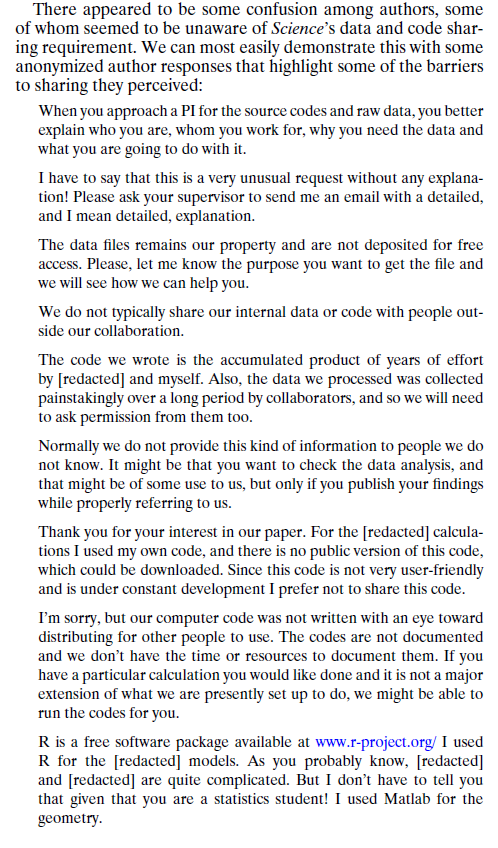
Eventually, you get a compressed folder containing files with suffixes like _v1, each with >5k lines, little comments/documentation, poor variable names, and bugs because it was never tested.
Writing good reusable code is an essential but untaught skill in academia.
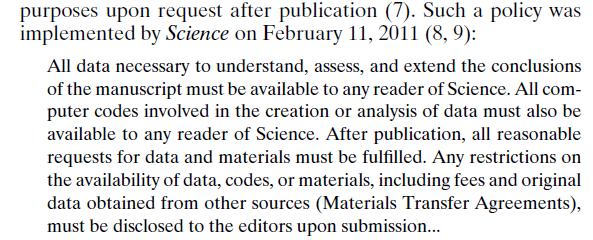
When you ask the authors of articles in Science® to share their data, which the journal told you was mandatory when you submitted your article, the response very often boils down to GFY. https://t.co/E9XUzljNCT
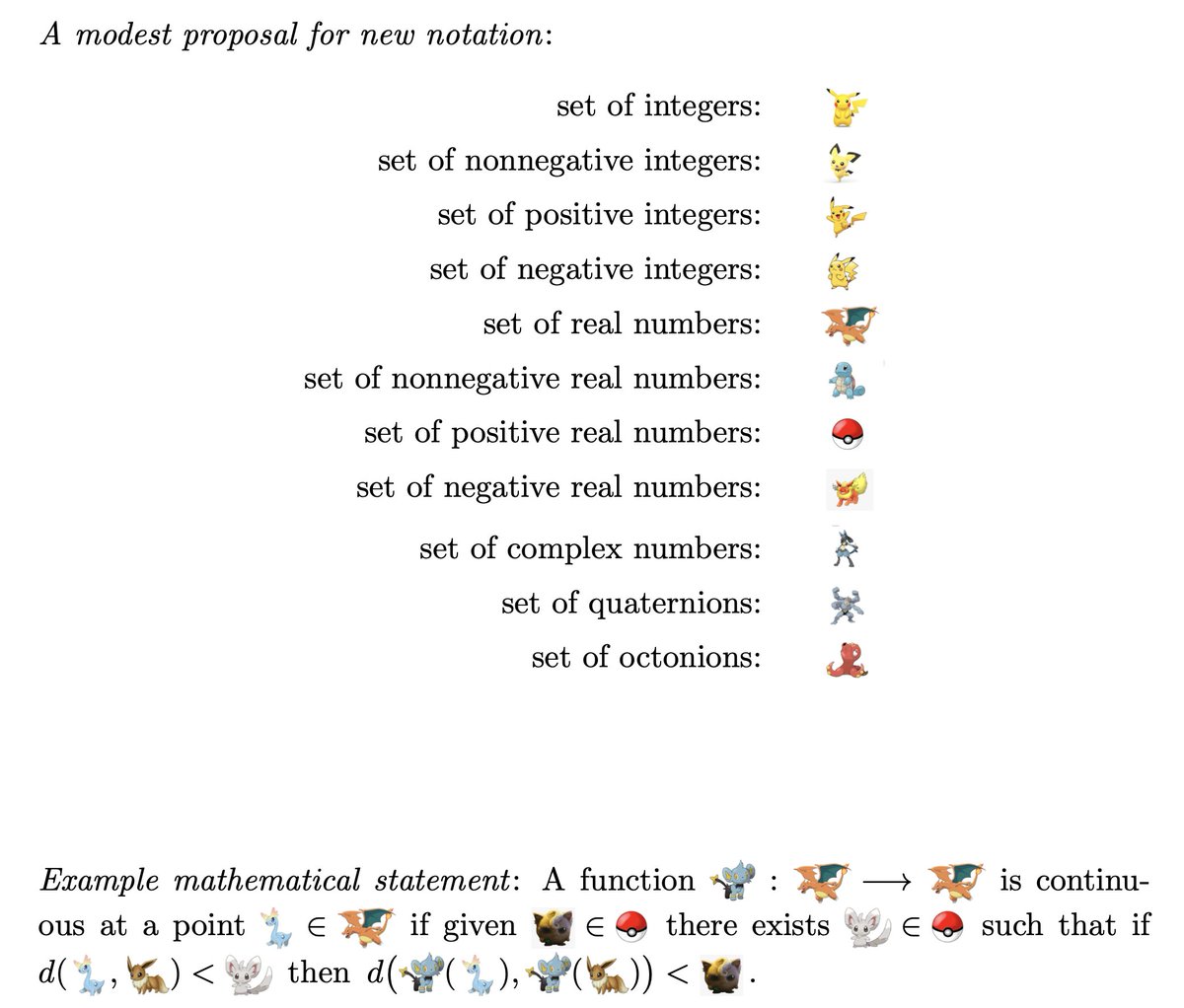
In the last few days, I have seen some discussions on Twitter of mathematical notation.
As a service to the mathematics community, I have decided to propose some new notation, which I am sure that we will all be happy to adopt.
@JulietteBruce12 1. Calc 1. I took calc 1 and 2 is high school and felt calc 1 the second time in college wasn’t useful.
2. Numerical analysis.
3. Spatial stats.
4. Chaotic dynamics, networks, randomized algorithms.
I'm teaching "Networks" at Stanford again this quarter, my 7th run of the course with 100+ students, following the excellent Easley & Kleinberg textbook (and mega-class at Cornell!). Always a thrill. If you teach a related class, here's an awesome lecture trick… 🧵 1/
As a software developer, you may be called upon to perform some of these tasks in your career.
How well a CS degree prepares you for these tasks (and whether it even should prepare you for these) is left as an exercise to the reader.
🧵
1/