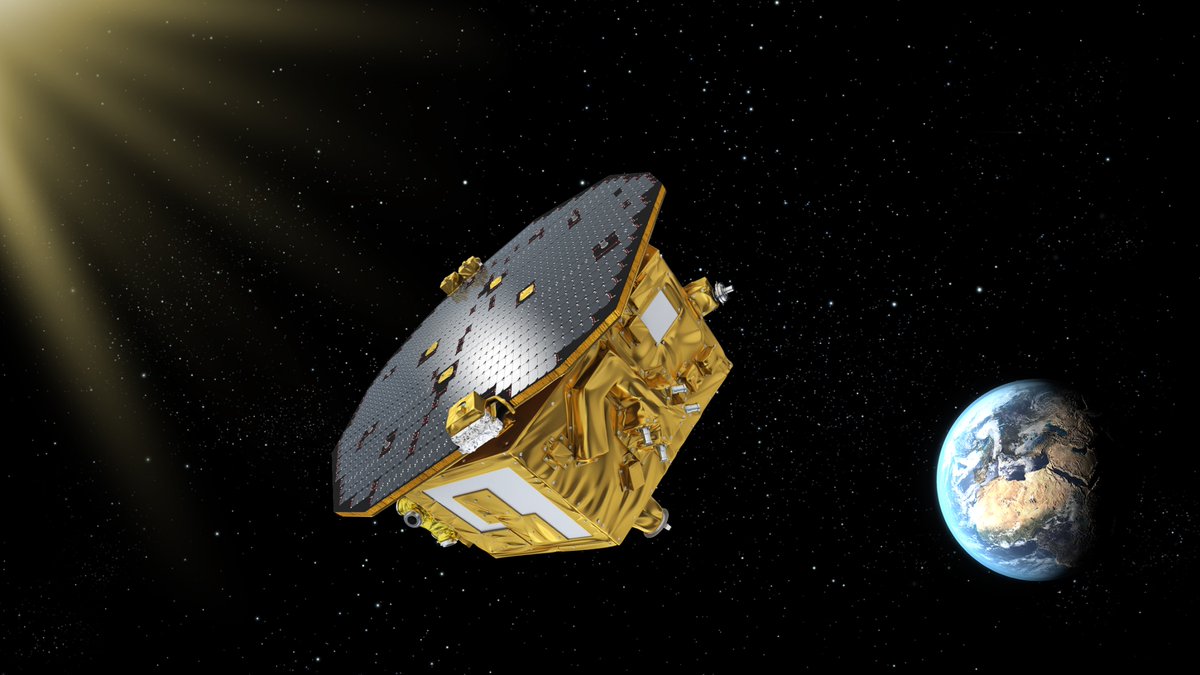
Happy 10th launch anniversary, LISA Pathfinder! 🥳
For the first time ever, this mission tested in space the technology needed to detect gravitational waves, which paved the way to @ESA_LISAmission 🤜 🤛
Planned to launch in 2035, LISA will be first gravitational wave detector in space 👉 https://t.co/Ui8GkFp9Zb
The industrial development of the @ESA_LISAmission kicked off mid 2025. Once the spacecraft design is finalised, construction can begin.
The mission is planned to launch in 2035.
Led by ESA, the LISA mission is a collaboration between ESA, NASA and the LISA consortium.
5/ #CM25
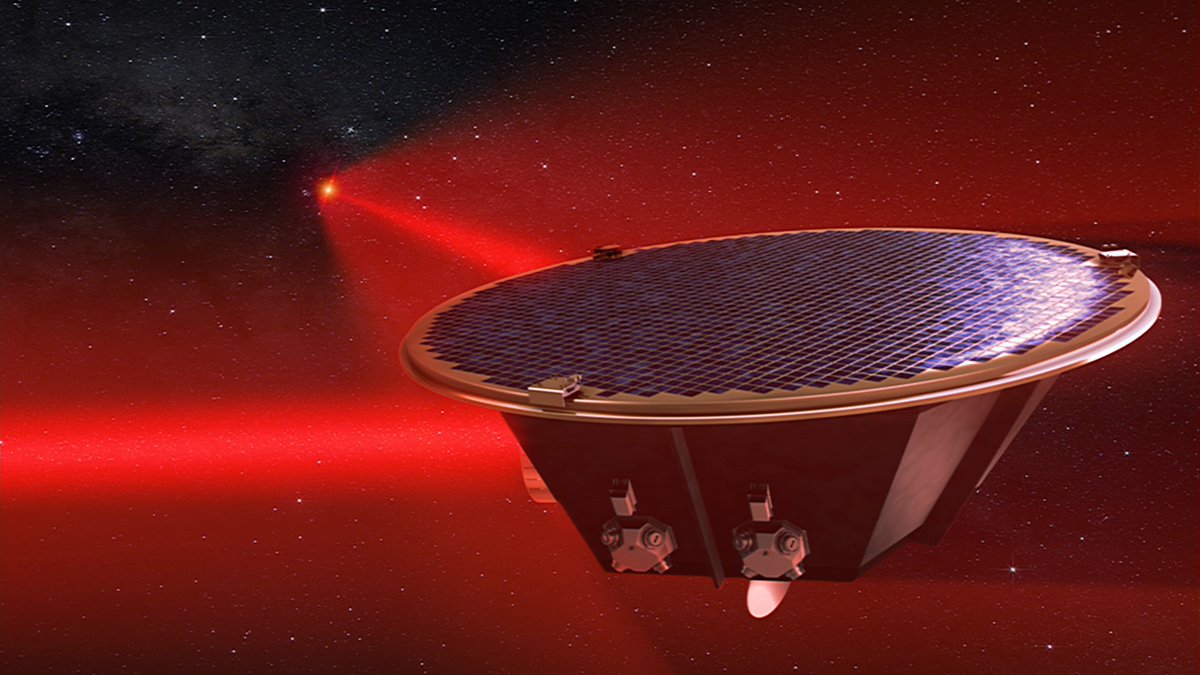
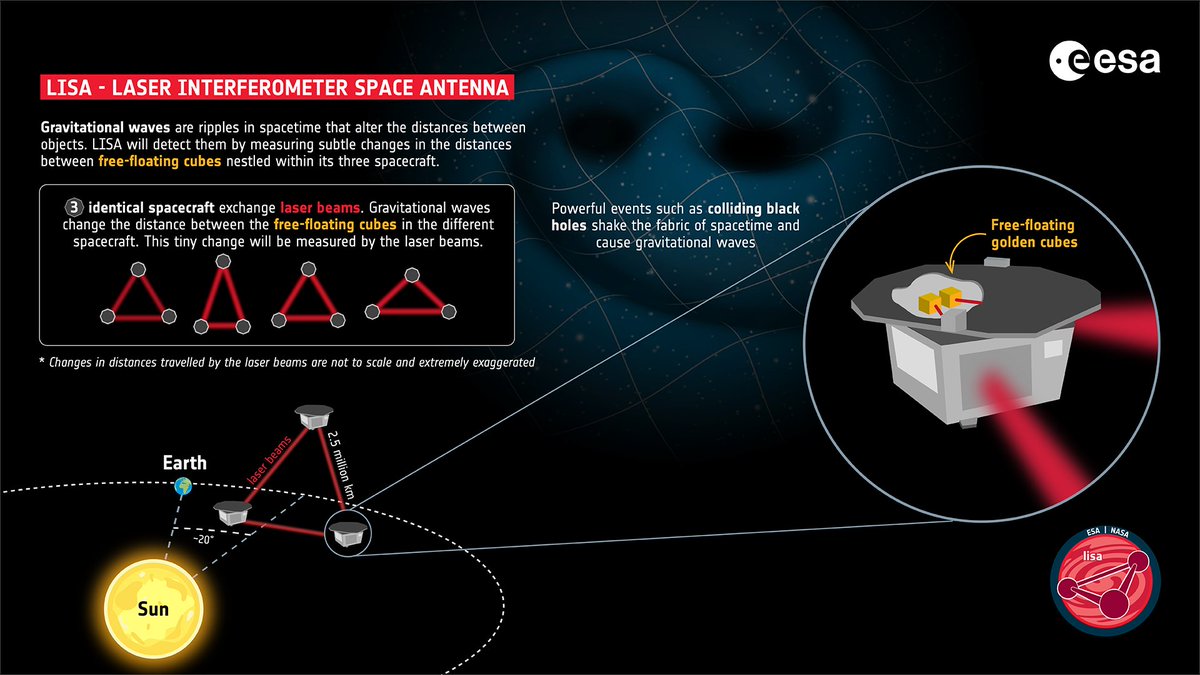
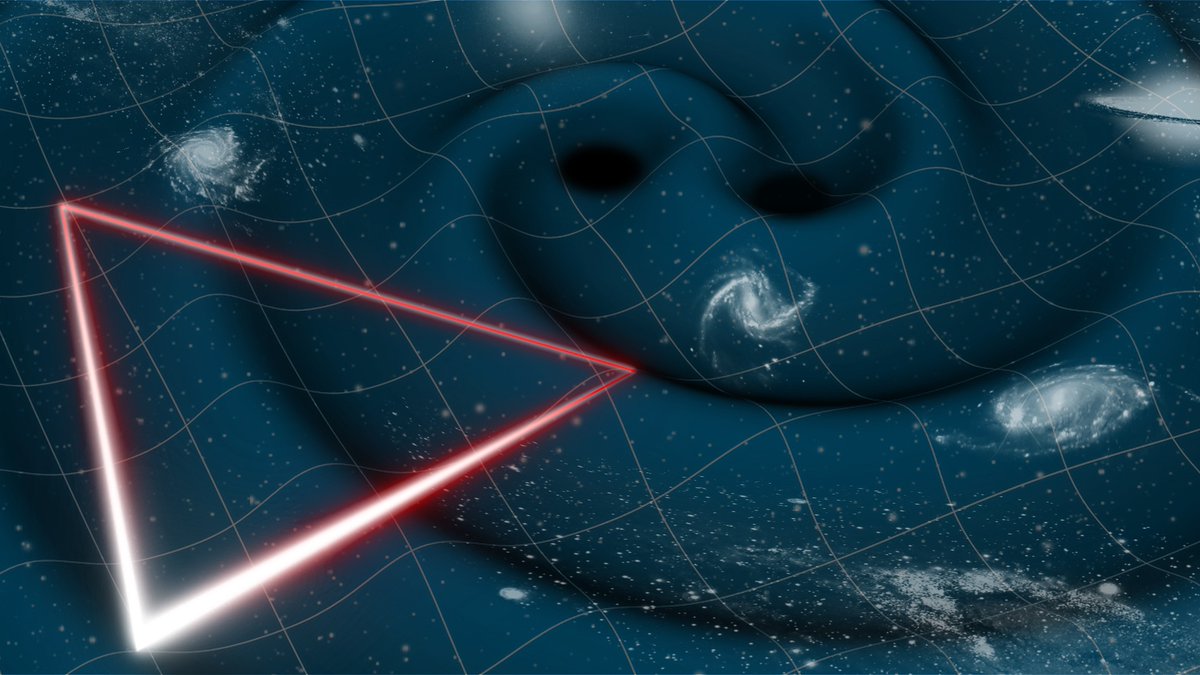
The @ESA_LISAmission has three spacecraft flying in a triangular formation, 2.5 million km apart, exchanging laser beams.
Inside them, two golden cubes are in free fall.
Gravitational waves alter the distance between objects so LISA will measure the tiny distance changes between the cubes.
4/ #CM25
The @ESA_LISAmission will be able to detect these elusive waves from across the Universe and across a large range of frequencies.
LISA will be the first mission to probe the history of the Universe by studying such waves. It will also study the nature of gravity itself.
3/ #CM25
The @ESA_LISAmission will detect millions of gravitational signals to study:
⭐ ⭐ binary star systems in our Milky Way to understand their mutual evolution
🕳️ 🕳️pairs of massive black holes to discover how they were born
⭐ 🕳️ compact objects falling onto single supermassive black holes
2/ #CM25
A #CosmicVision mission, the @ESA_LISAmission will be first gravitational wave detector in space.
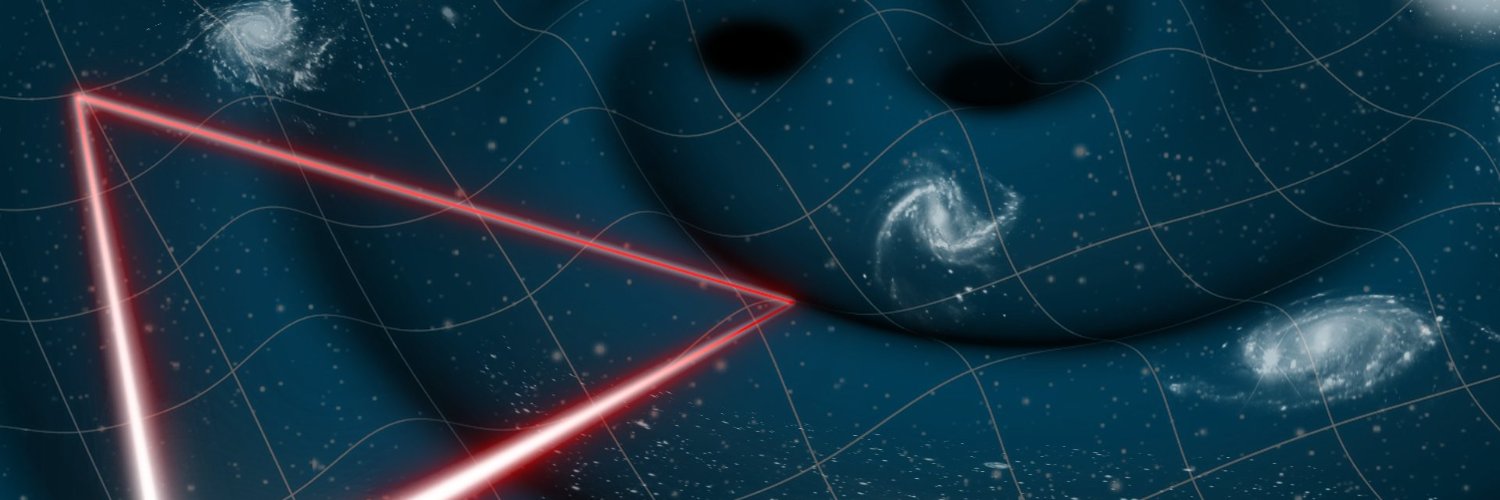
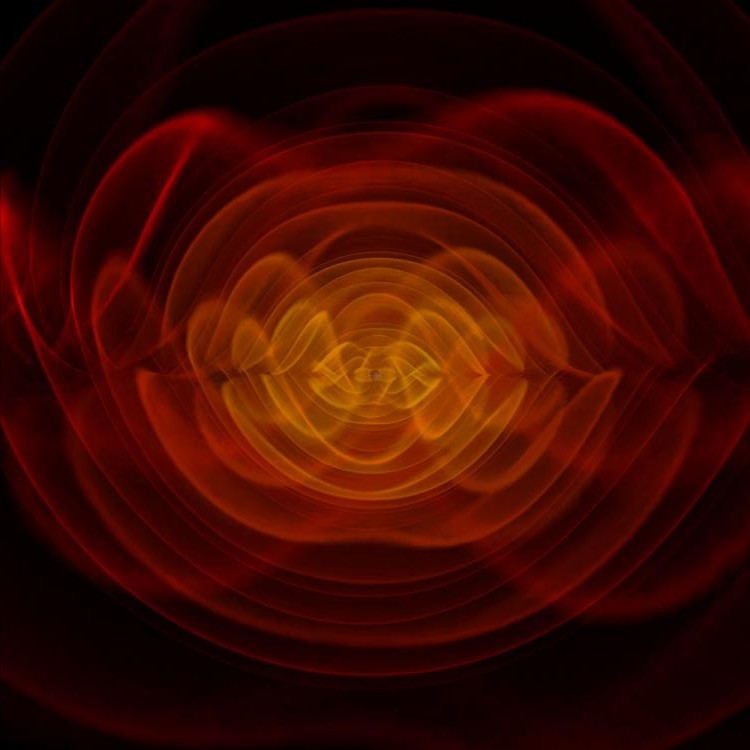
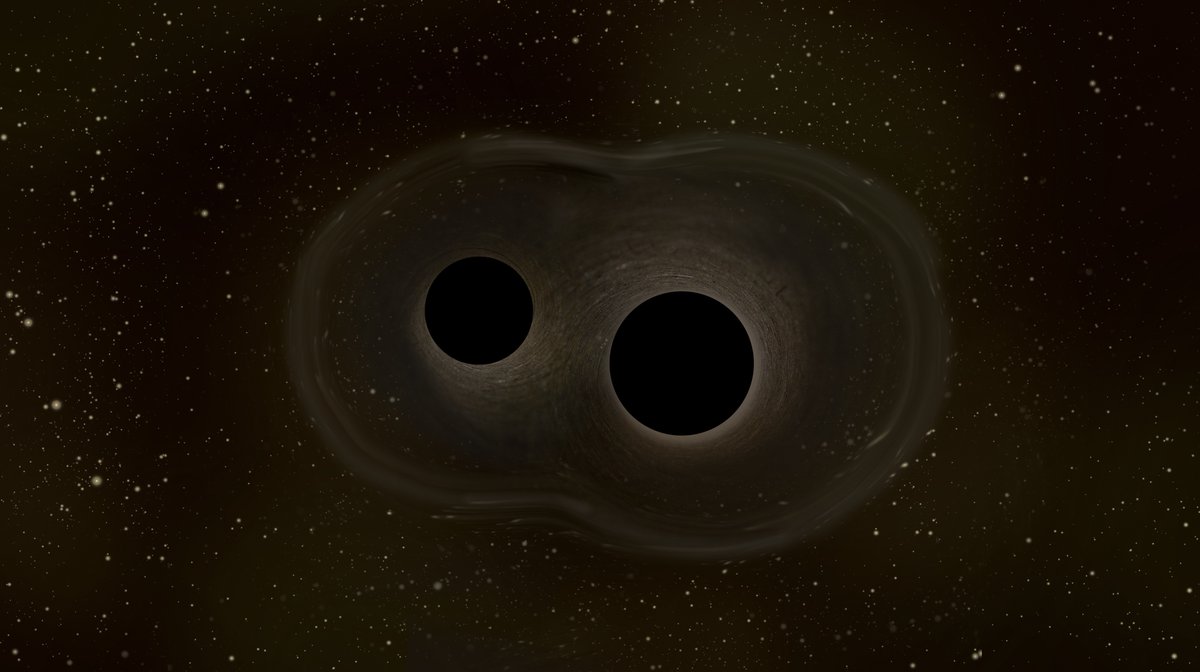
LISA will study these ripples in the fabric of space-time emitted during the most powerful events in the Universe, such as pairs of black holes coming together and merging.
1/ #CM25
LISA moves forward! 〰️
Today, at the #ParisAirShow, ESA and OHB System AG have sealed their agreement to build ESA's Laser Interferometer Space Antenna.
The triple-spacecraft mission will be the first space-based observatory to study gravitational waves 👉 https://t.co/eW7jaAexe0 1/
The upcoming preparatory events for ESA's Council Meeting at Ministerial Level include LISA Industry Days on 7–8 May.
Programme and registration 👉 https://t.co/Ucds8wojGx
In November, we will host a Council Meeting at Ministerial Level in Bremen, Germany.
Here, decisions will be made that will shape Europe’s ambitions in space.
We are inviting industry to several events where ESA directorates will communicate and coordinate with the community on their proposals and intentions in relation to the meeting.
For further information and how to participate in these preparatory events, please click here: https://t.co/NqqzzeB1M8
📢Announcement: The #LISA Science Team is now complete!
Two new members have joined as Complementary Scientists: Catia Grimani (Space Weather) and Zoltán Haiman (Multi-messenger)👇
📢 Several mission opportunities announced!
The ESA Director of Science, Prof. @CGMundell, solicits the scientific community in ESA's Member States for proposals for:
➡️ a Fast mission to be launched around 2034
➡️ a Medium-size mission to be launched around 2041
➡️ mini-Fast mission concepts
Details about the F- and M-missions can be found here 👉 https://t.co/OZnxIAiJKn
Details about the mini-F proposals can be found here 👉 https://t.co/8MvqKwOTnh
The calls are part of the long-term plan for ESA's Science Programme, Voyage 2050.
“A cornerstone of Europe’s scientific and technological framework, ESA's Science Programme has enabled the study, development, launch, and operation of groundbreaking missions over the past 50 years,” declared Prof. Mundell.
“With pioneering advancements across multiple fields and iconic missions currently under development, the Science Programme continues to drive excellence in space science and technology. We are looking forward to receiving these new proposals to continue advancing European leadership in space.”
🗞️The latest edition of the ESA Science Newsletter is out!
Learn about:
📢 A call for Medium and Fast missions
📢 An Exploratory Call for mini-Fast mission proposals
🗓️ Upcoming ESA conferences
Access the edition & subscribe 👉 https://t.co/qPnwg98hF5
On 23 January, from 14:00 CET, join us online for the second Director of Science Town Hall meeting with Prof. @CGMundell .
At the event you'll learn more about:
🔴 recent highlights of the ESA Science Programme
🔴 the Science programme priorities
🔴 the ESA Science milestones for 2025
The presentation will be followed by a Q&A session.
Register here 👉 https://t.co/cv3kMjkzMT
🗓️ Mark your calendar!
23 January is the date for the second Director of Science Town Hall meeting with Prof. @CGMundell.
All members of the scientific community are invited, regardless of career stage or affiliation.
Join us online to learn more about the plans and priorities of the Science programme in 2025 and beyond 👉 https://t.co/cv3kMjk1Xl
📢 @ESA_XMM has detected an unprecedented X-ray signal coming from the very edge of a supermassive black hole 👉 https://t.co/iIcC84TZBK
This defies how we thought matter falls into black holes, and points to a potential source of gravitational waves for @ESA_LISAmission.
📢 Open call to join the LISA Science Team (LST) as Complimentary Scientist!
The LISA Science Team is looking for two additional members whose scientific areas are complementary to the core science of the mission (gravitational waves).
If you're a scientist based in an @ESA Member State, apply for this opportunity by 22 Jan. 2025 12:00 CET.
We encourage applications from early career scientists & historically under-represented groups in astronomy and space science.
Details: https://t.co/g990QrXoVw
#ESALISA #LISAmission
As a partner on @ESA’s LISA (Laser Interferometer Space Antenna), @NASA has provided a full-scale prototype for the six telescopes that will help LISA's three spacecraft detect gravitational waves in space.
Meet the Engineering Development Unit Telescope: https://t.co/mwllICVEE4
📢 Our postdoctoral Research Fellowship programme is now open for applications!
If you're an early-career scientist or engineer join us to carry out research in a variety of disciplines related to space science, space applications or space technology 👉 https://t.co/CkGQyWsjfH
LISA's formation flying will be so incredibly precise that it will detect shifts of less than the diameter of a helium nucleus over a distance of 2.5 million km between its three spacecraft 🫨
🛰️
🛰️ 🛰️
Next up in the #ESAGames: synchronised constellation swimming 🏊
Lane 1 - Swarm surfs the solar wind 🌈
Lane 2 - Cluster dances the rumba, salsa, samba & tango 💃
Lane 3 - Proba-3 precisely flying in formation 🛰️
Lane 4 - LISA probes ripples in the fabric of space-time🌊