Official @ESA feed for James #Webb Space Telescope – an international partnership between NASA, ESA and CSA #WebbSeesFarther#BFFinSpace with @Hubble_Space
3. The correct answer is a) Brown dwarf. The search revealed brown dwarfs with just twice the mass of Jupiter!
Read more: https://t.co/0yDTvtOf3O
📷 @ESA / @esa_webb , @NASA & @csa_asc , K. Luhman, C. Alves De Oliveira, M. Zamani (ESA/Webb)
#WebbSeesFarther
📷 @ESA / @esa_webb , @NASA & @csa_asc , WIYN and NOIRLab, NSF, AURA, DSS2, A. Pagan (STScI), N. Bartmann (ESA/Webb), E. Slawik, N. Risinger, T. A. Rector, H. Schweiker, M. Zamani (ESA/Webb)
🎶 Tonelabs – The Red North (www.tonelabs. com) 2/2
Journey into a technicolour dreamscape with Webb!
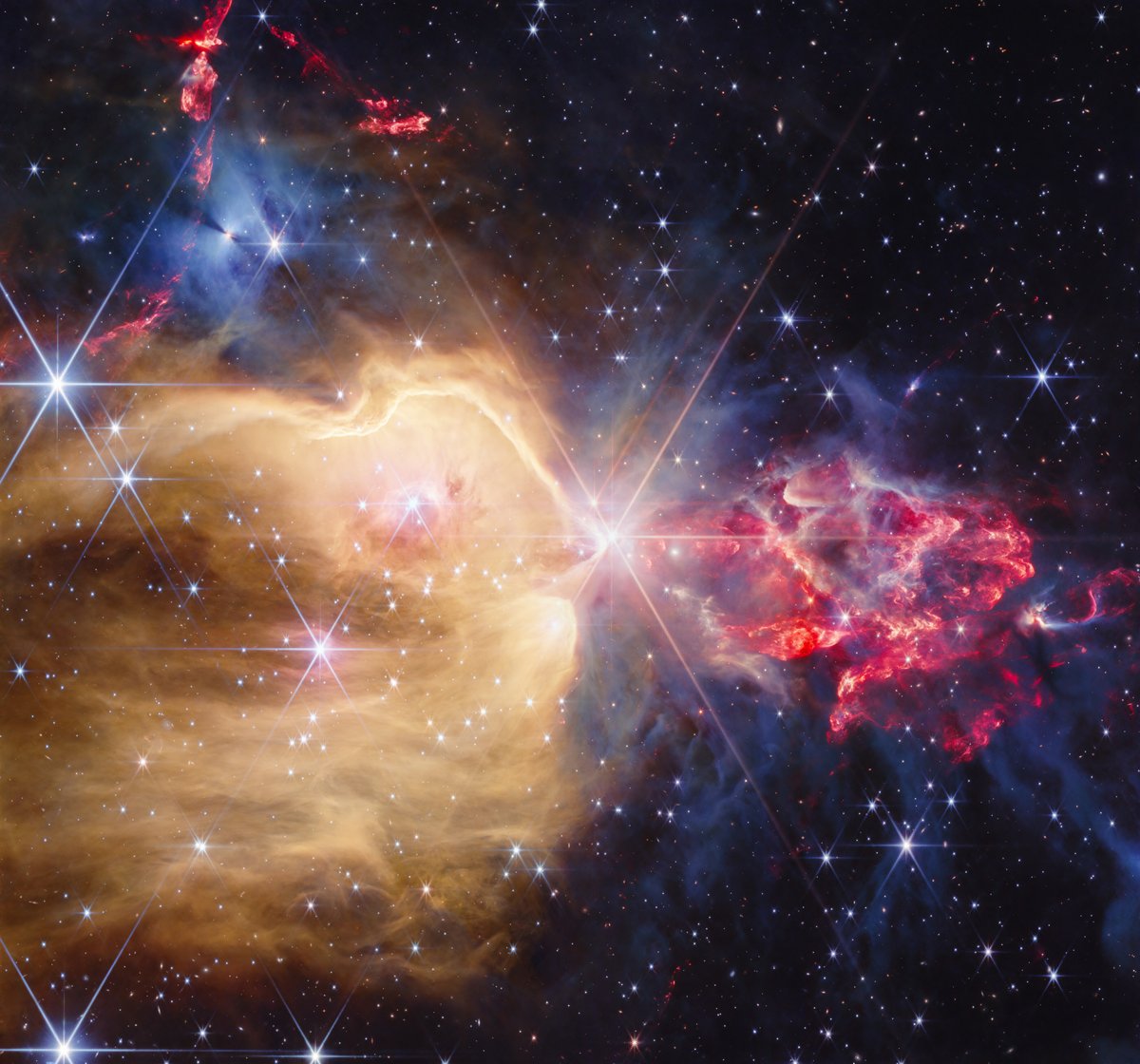
Our destination is the stellar nursery NGC 7129, which contains numerous protostars and stars within its fields of gas and dust. Webb captured infrared light, which pierces through this matter that scatters or absorbs other types of light, revealing the sparkling stellar objects within the nebula ✨ 1/2
Webb’s filters restrict the light reaching its detector to specific wavelengths mainly in the infrared, rather than visible, part of the spectrum. These raw frames are sent back to Earth for combining, cleaning, and colourising, using a technique very similar to that used to create the first colour photographs. While this produces beautiful and scientifically valuable images, they do not match what would be seen with the unaided eye.
🆕 This crash course on planet-shattering collisions is brought to you from Webb 🌏💥
Long ago, a Mars-sized object, Theia, smashed into Earth, vaporising massive amounts of rock 🪨♨️ and blasting it into space. Now, Webb has turned its attention to stellar systems that show signs of similar upheavals: extreme debris discs. 1/3
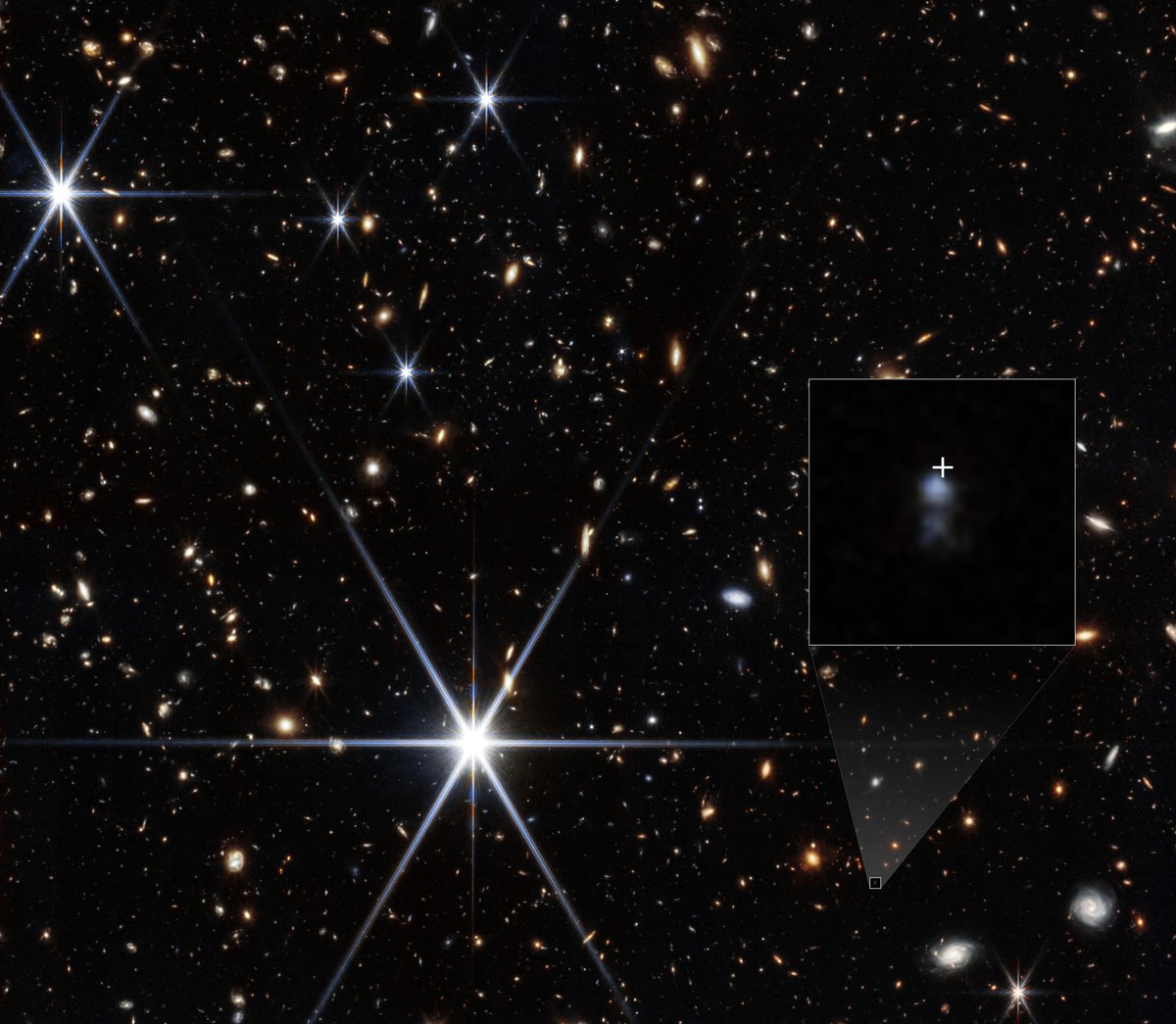
This has implications for the origin of FRBs. They are unlikely to come from the merger of neutron stars (associated with older galaxies) as one theory suggested.
They may, however, come from a type of neutron star known as a magnetar 🧲⭐ which can form in younger galaxies.
Read more: https://t.co/spiHqIOUuo
#WebbSeesFarther
📷 @NASA , @ESA , @csa_asc , STScI, T. Nanayakkara (USYD). Image Processing: J. DePasquale (STScI) 3/3
🆕 Webb has found the origin of the farthest fast radio burst yet!
Fast radio bursts (FRBs) 💥 are mysterious, millisecond-long flashes of radio emission from the distant Universe. 1/3
In 2024, astronomers using the MeerKAT telescope spotted an FRB which appeared extremely distant – perhaps more than any other yet discovered.
With help from Webb, the FRB was confirmed to have originated 3 billion years after the Big Bang, in a surprisingly small and young galaxy. 2/3
3. The correct answer is b) White dwarf. This is ‘cooking’ everything from the inside out, producing a bubble of ionised gas as it does (the lion’s face).
Read more: https://t.co/e5w3GbhBsj
📷 @NASA , @ESA , @csa_asc , STScI. Image Processing: A. Pagan (STScI).
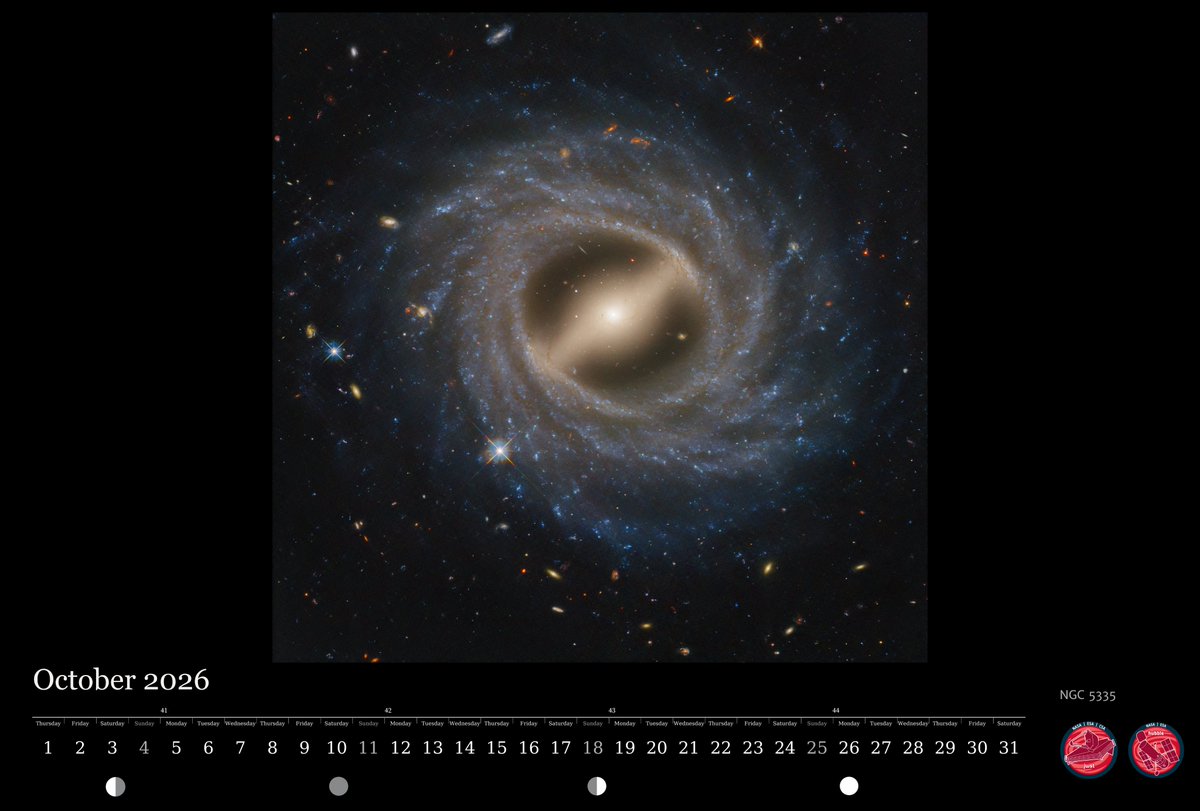
In the 2026 ESA/Hubble and ESA/Webb calendar, the month of October features the flocculent spiral galaxy NGC 5335. It has patchy streamers of star formation across its disc 🌟 and a bar structure slicing across its centre!
Ready to print .pdf here: https://t.co/raDi8UQbv9
📷 @NASA , @ESA , STScl
Outflows from this star carved out the golden cavity seen to its left, compressing it and creating the conditions for even more stars to form!
Read more: https://t.co/eu6RNA9Kby
#WebbSeesFarther
📷 @NASA & @ESA 3/3
🆕 Our ESA/Webb Picture of the Month features a glowing and evolving star cluster ✨
Webb has peered through layers of dust to reveal the young stars hidden in NGC 7129, a stellar nursery just 3,300 light-years from Earth. 1/3
The stars in this cluster have different ages – although they are all born from the same cloud, they formed at different times. The very luminous central star, LkH(alpha) 234 🌟 is especially influential. This pre-main-sequence star weighs around 5 to 8 times our Sun! 2/3