Our paper on reproducible cell divisions that pattern the first flat Marchantia body is now available on @CurrentBiology. With big thanks to @DolanLab. I always appreciate beautiful geometry and developmental patterns - stay tuned for more! https://t.co/MIWEr95dJ5
Our paper on reproducible cell divisions that pattern the first flat Marchantia body is now available on @CurrentBiology. With big thanks to @DolanLab. I always appreciate beautiful geometry and developmental patterns - stay tuned for more! https://t.co/MIWEr95dJ5
The three-dimensional anatomy and dorsoventral asymmetry of the mature Marchantia polymorpha meristem develops from a symmetrical ... https://t.co/KCo1TKzyCD #biorxiv_plants
Happy to share our new preprint on de novo meristem formation from a single-celled Marchantia spore with @DolanLab. We discovered that a set sequence of cell division patterns develop the first flat and dorsoventralised plant body (flabellum) on which the meristem forms de novo.
Reproducibly oriented cell divisions pattern the first flat body structures to set up dorsoventrality and de novo meristem formation in Marchantia polymorpha https://t.co/IEFKzzcAgm #bioRxiv
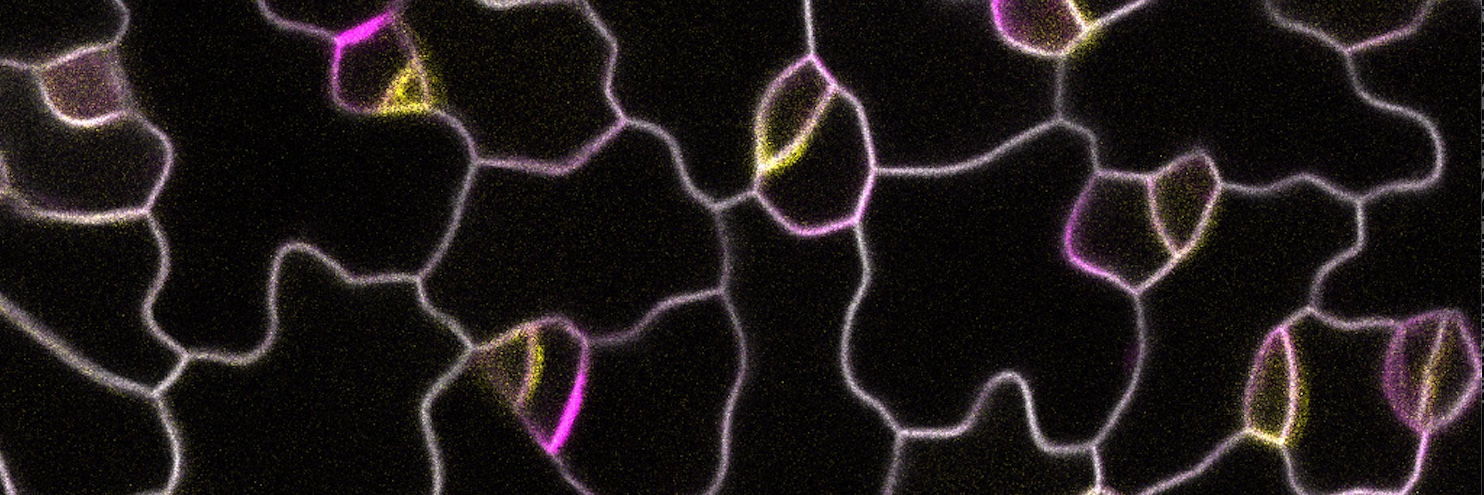
My second paper on the OPL2 polarity complex in stomatal development is now peer-reviewed: proximity labeling + Alphafold-multimer and novel AI tools predict an OPL2 scaffolding complex and interaction partners that co-localize at phragmoplasts during epidermal cell divisions.
Online now: Spatially resolved proteomics of the Arabidopsis stomatal lineage identifies polarity complexes for cell divisions and stomatal pores https://t.co/6L0ujrLG1S
Our latest work from Dr. Qingtian Li @Qingtia95731962
We find that degradation-resistant SMXL proteins attenuate strigolactone signaling by interfering with targeting of other members of the SMXL family by D14-MAX2.
https://t.co/vA7tq8kyui
Part 2 of my postdoc project with @stanfordstomata is online now: we identify proteomes of stomatal lineage polarity domains, predict protein interfaces with the identified scaffolding proteins and show how SOK3, DLC1 and OPL2 co-localize at the phragmoplast.
Dive into the fascinating world of A.thaliana cotyledon cells with this stunning cover image by @ES_Wallner 🌱 to find out more about polarity proteins and their dynamic roles in asymmetric cell division and stromatal lineage fate, check out the new issue. #ScienceArt
Happy to present the first part of my postdoc with @stanfordstomata: the stomatal lineage uses oppositely oriented polarity domains to regulate cell division and fate. In collaboration with @DolanLab (including some exciting Marchantia data). https://t.co/VO0NYsZnDG
I hope this contributes to the quest of understanding the meristems evo-devo and work as a useful community resource for markers. This is complementary to other approaches such as the recently published scRNA-seq.
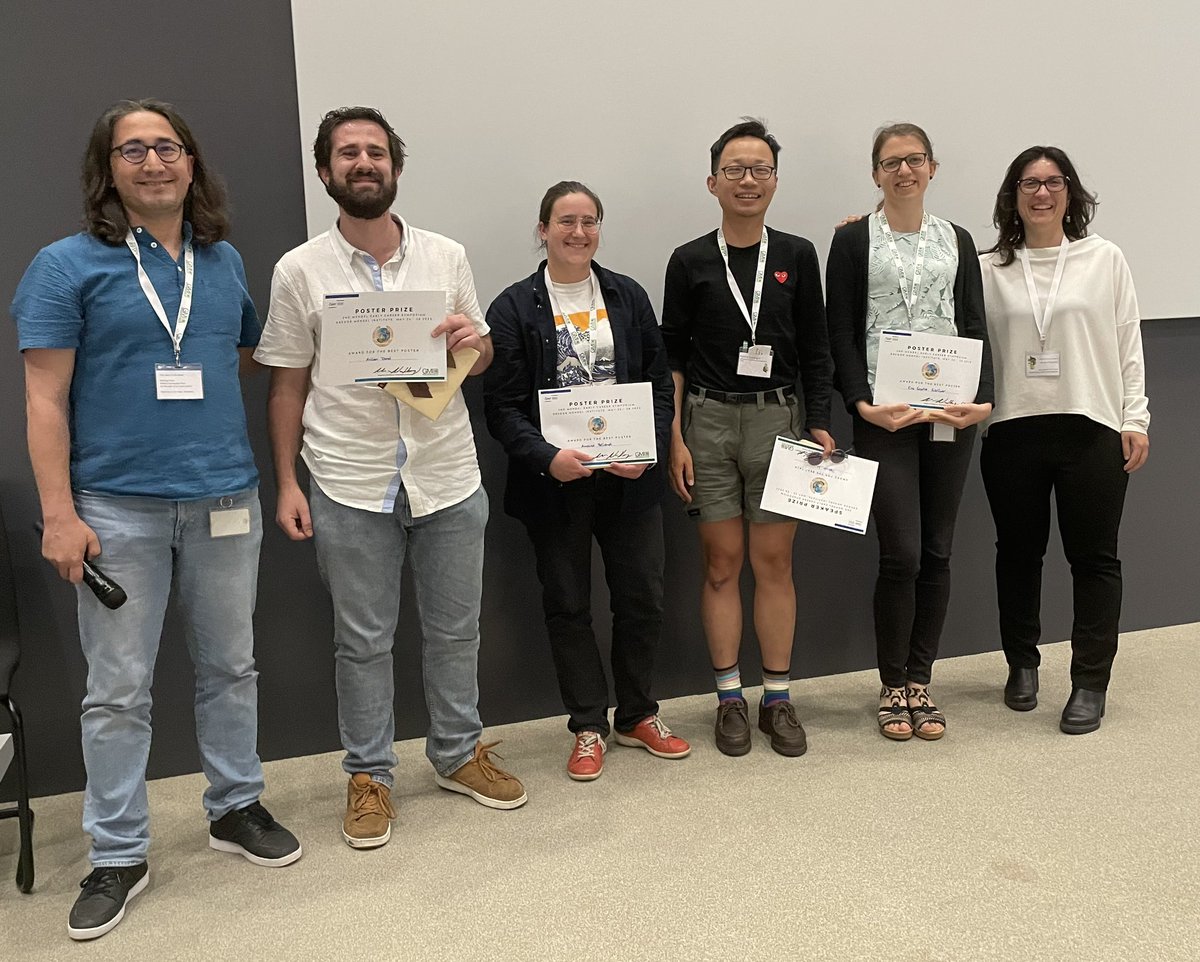
Such great talks, a friendly atmosphere and fruitful discussions at this year's #Mendel_ECR_23. Big thanks to the organisers (@gmivienna@PlantoPhagy), the @DolanLab and all the people who got excited about Marchantia sporeling development at my poster!
Glad to see the 3rd and final part of my PhD project (SMXLs interact with OBE3 in phloem development) published in a journal. With great support from @NinaInHD (SMXLs vs. other phloem regulators), Laura (ATAC-seq) and many others. Thank you for collaborating!
@ETwilbertson@NickDesnoyer@AlexGirFon To induce gametangiophores you need to transfer the plants from white light to conditions with a certain ratio of R-FR light. https://t.co/PeQdX5gtpe
@GARNetweets I am feeling quite achy all over my body at the moment, but it will pass. Do not worry. You couldn't have known. ICAR2022 was still a great event and thanks a lot for uploading all the talks in such good quality. Get better soon!
Excited to attend my first in-person conference after a long break. Looking forward to great discussions and learning about new insights into plant biology. #ICAR2022 in #Belfast🌱
Over the moon to share @danzhanghappy et al’s #preprint “Opposite polarity programs regulate asymmetric subsidiary cell divisions in grasses” - we identified a novel, distal polarity domain formed by the POLAR homolog in #Brachypodium@biorxiv_plants https://t.co/MsG7rlv4dV🧵/1