In which case I feel more confident about this narrative: there is no relative decline until 2020 and thereafter it’s not ICT driven capital deepening but big fiscal.
Europe is stagnating and needs reforms—but not Americanisation.
14/
Europe vs America: Supplemental
Once more with feeling: here’s a small test that strengthens the case that the productivity wedge since 1995 in the constant PPP series is a deflator asymmetry mirage and that the chained PPP series adjusts for along with Balassa-Samuelson:
1/
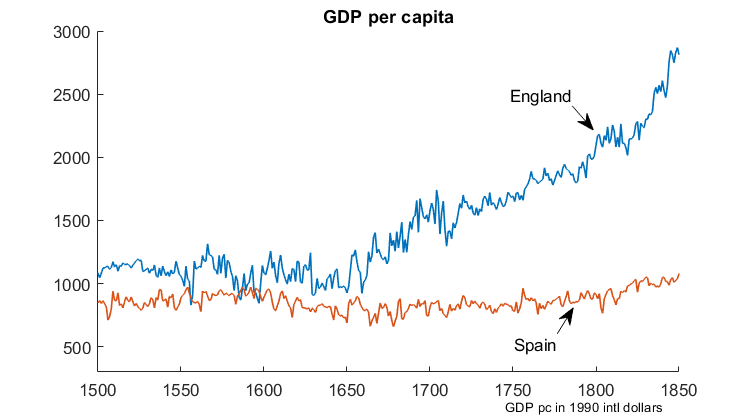
"The series also shows that Spain did not benefit from its empire. That is a problem for every theory tying colonies to modern growth." This is important and surprising: with all the gold and new territory, GDP per capita in Spain did not increase. The figure below shows the same message with a different dataset. GDP per capita in Spain is almost flat between 1500 and 1800. It is not gold that explains the wealth of nations
The warming projections that freaked the world out then are all now effectively baked in. Things could get much worse from there. RCP8.5 has not looked plausible as an emissions future for some time — as I wrote in 2019, and again in 2022 — but we are far from out of the woods.
Overall there is still a gap. But as I discuss in my next essay: much of this results from the valuation of non-market services both at the ICP level (understating wealthy countries’ GDP with large public service sectors i.e. Europe) and at the nominal output level, particularly through the imputation of healthcare services (inflating the GPD of the one country with abnormally rents in these sectors especially healthcare i.e. the United States).
When discussing relative shifts in living standards between the US and Europe, we invariably use productivity data and the 'it's just a denominator effect' argument invariably crops up.
As I say: when differences in hours worked are not adjusted for, it is countries who translate productivity gains into leisure who get 'punished'.
The recent empirical literature suggests that higher productivity reduces hours worked and shorter hours raise productivity. So, Europe's higher hourly productivity is not just an arithmetic artefact of dividing by fewer hours but partly a genuine productivity effect of working less.
If anything, then, GDP per hour measures systematically understate the welfare gap between high-hours and low-hours economies not at the detriment but in favour of the latter, i.e. the United States.
Price controls
Nationalization
Financial repression
Fiscal-monetary coordination
@GitaGopinath warns that all four of these policies might form a heterodox response to our current situation of high economic tension.
Es sind nicht nur Solarpanele, nur EVs. China übernimmt systematisch, Technologie für Technologie die Vorherrschaft am Weltmarkt - der neue #Geldbrief von Max Paleschke https://t.co/sWv4EnquoV
“As Cory Doctorow, author of Enshittification, is fond of observing: you won’t be replaced because an AI can do your job, you’ll be replaced because an AI salesman convinces your boss that it can”
Conned by a chatbot https://t.co/tms4ijEmpb
Teaching this essay from Socialist Register 2026 for my final end of year class on "capitalism and democracy" and I agree @SteveMaher18 , it is excellent! I might wanna wrangle with you and Scott Aquanno over significance of China but I almost entirely agree with yr US story.
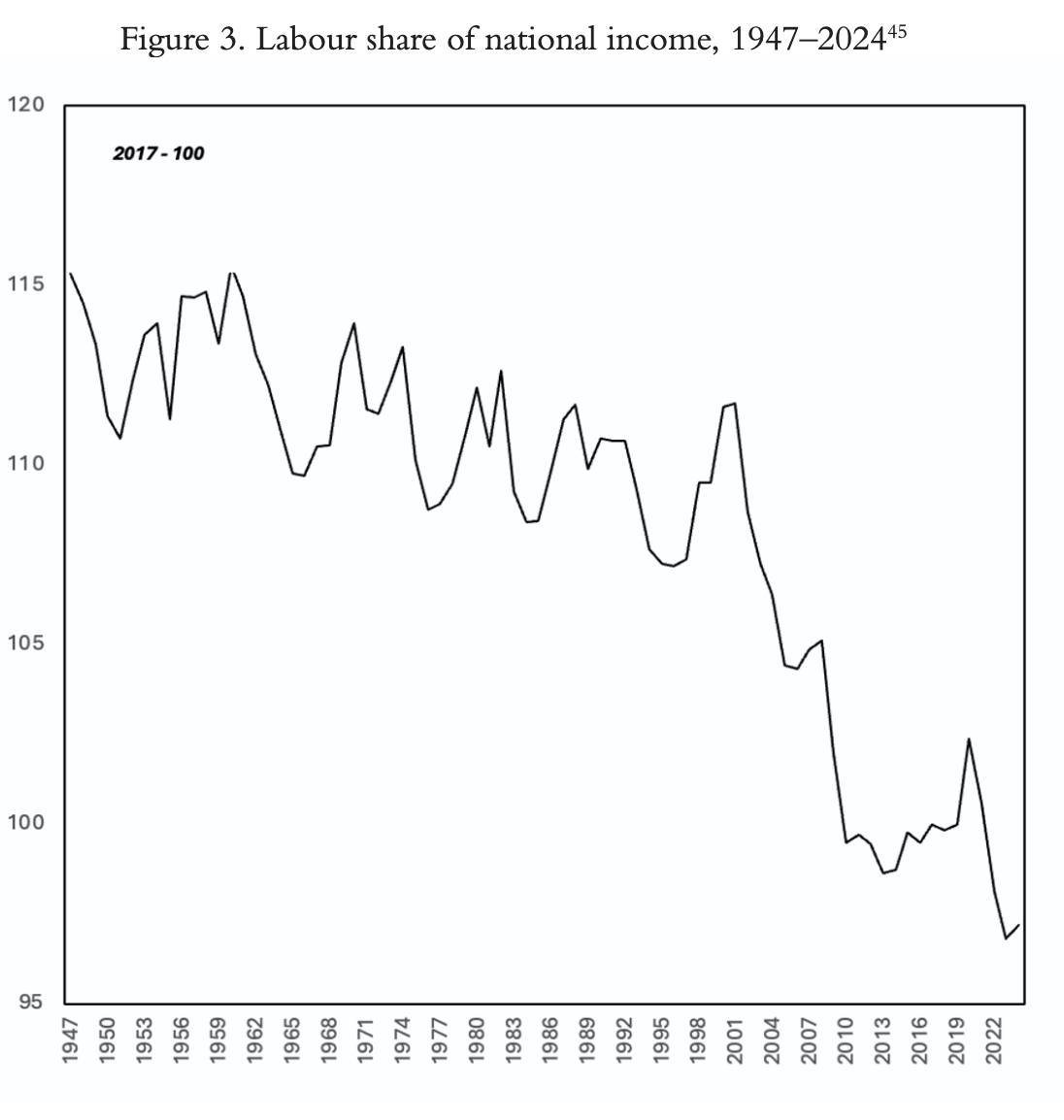
Instead, we argue that Trump emerged from the *strength* of capital – which came at the expense of the workers. In other words, the crisis that has given rise to MAGA is rooted not in capitalism's breakdown, but the inability to contain the contradictions of capital's *triumph*.
If you want to understand how we got to this place, a good place start is with the bankers and lawyers who built the vast archipelago of banking secrecy jurisdictions. Always been a tag team.
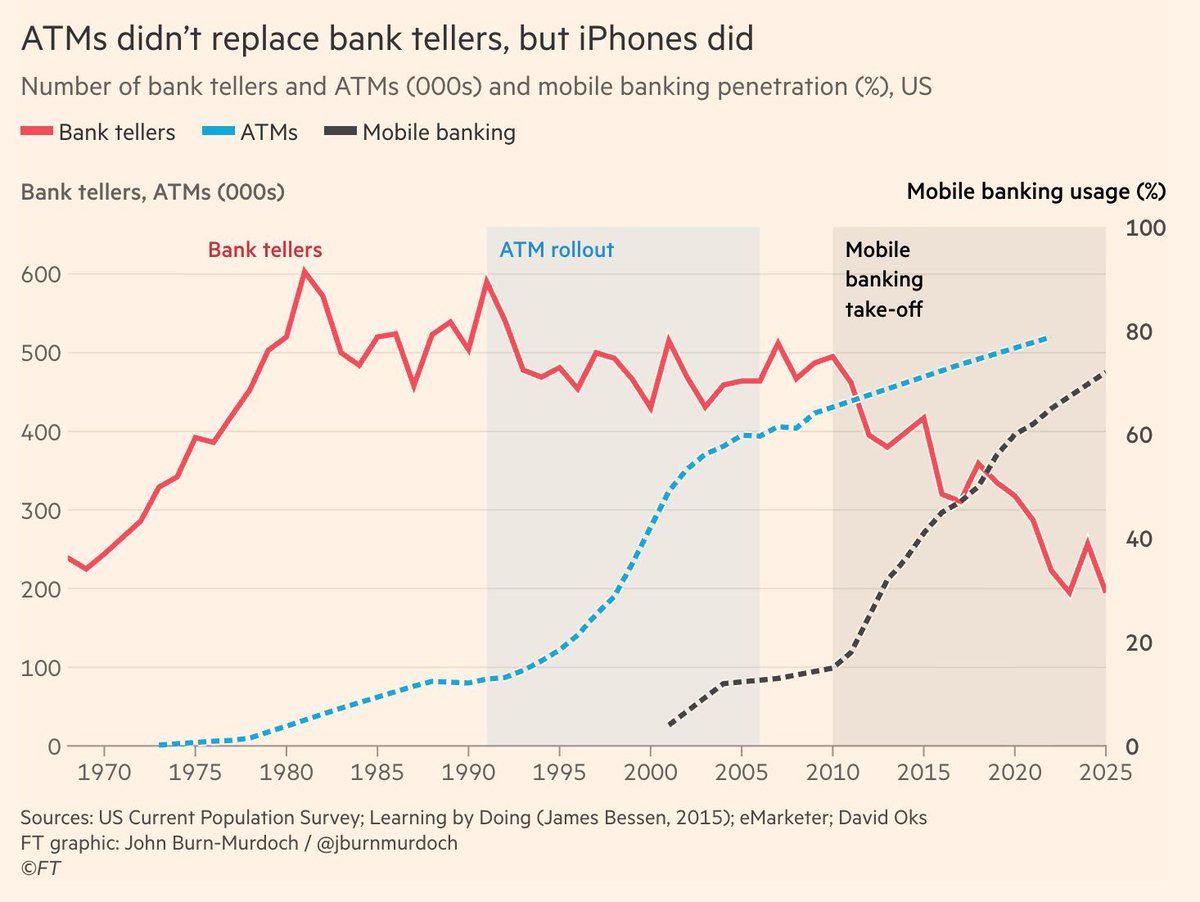
This graph shows why it’s so hard to predict what a new technology will mean for jobs.
It would've been natural to predict the decline of bank teller jobs when ATMs came out—which didn’t happen. It would’ve required a larger leap to do so when Apple released the iPhone—which did. https://t.co/jH5OaCor5i
What can countries do against Trump's carbon shock therapy?
We propose a Decarbonised Sovereignty, combining new politics of stabilization with transformative interventions around electrification, credit+industrial policy and a green social bargain
https://t.co/xz3hRbZdIp
From AI to agriculture, China is applying industrial policy on the newest sectors to the most ancient.
Brilliant piece from @adam_tooze https://t.co/Kbi31Skhqk
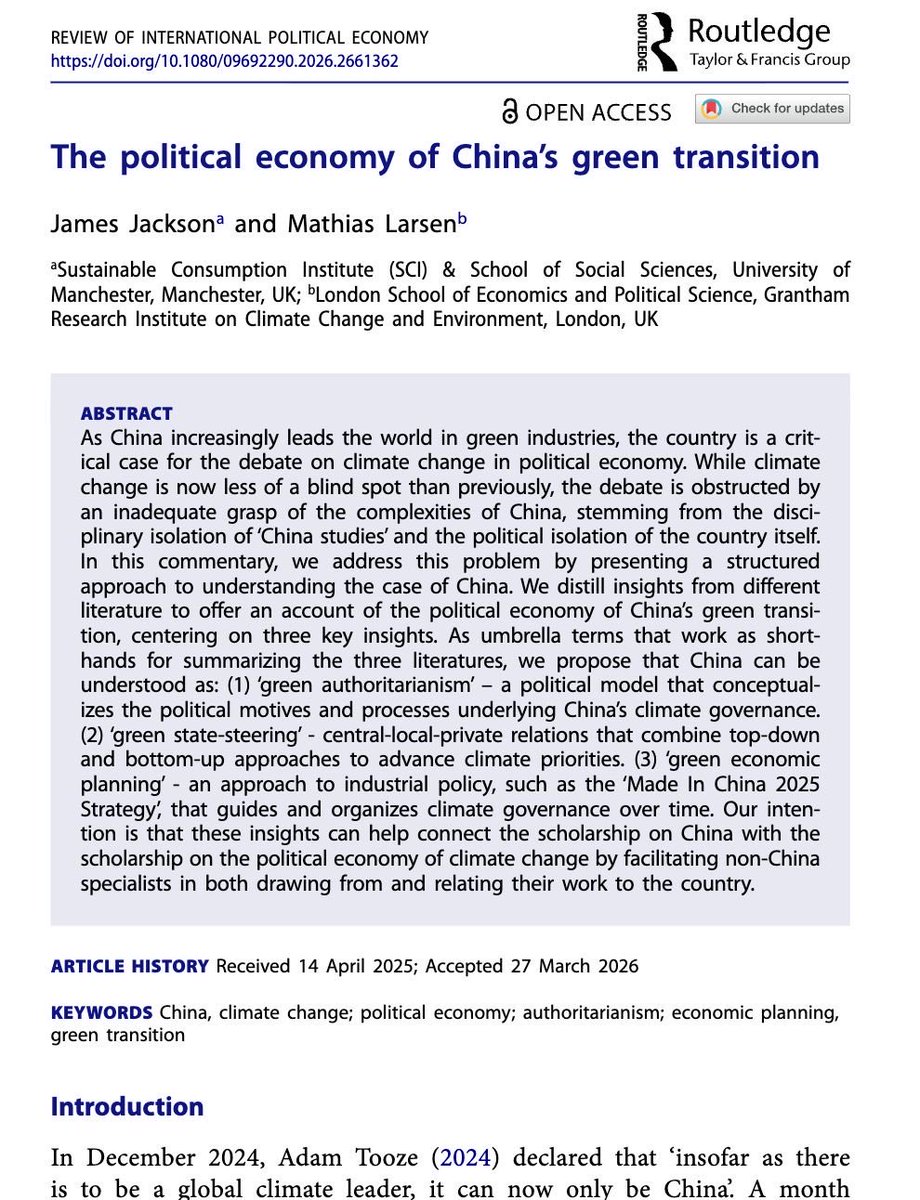
🇨🇳 China is now the undisputed leader in green technologies, but how its political and economic model has shaped the transition is often unclear. In this new article in @RIPEJournal with Mathias Larsen, we provide a structured approach to understanding China's green transition.
One thing that most people may not realize is that taking off 10% of the energy from the world economy does not mean a 10% shock to GDP. Because energy is required for all economic processes, from upstream to final demand, the shock is much larger. Stagflation will mask this shock. The shock to real living standards will be much more painful than people realize bc of the inflation illusion. Most people might even get a raise in nominal terms!