The EarthScope-Oceans Consortium. Using MERMAID instruments to explore our planet's interior by detecting seismic waves while profiling and mapping the oceans.
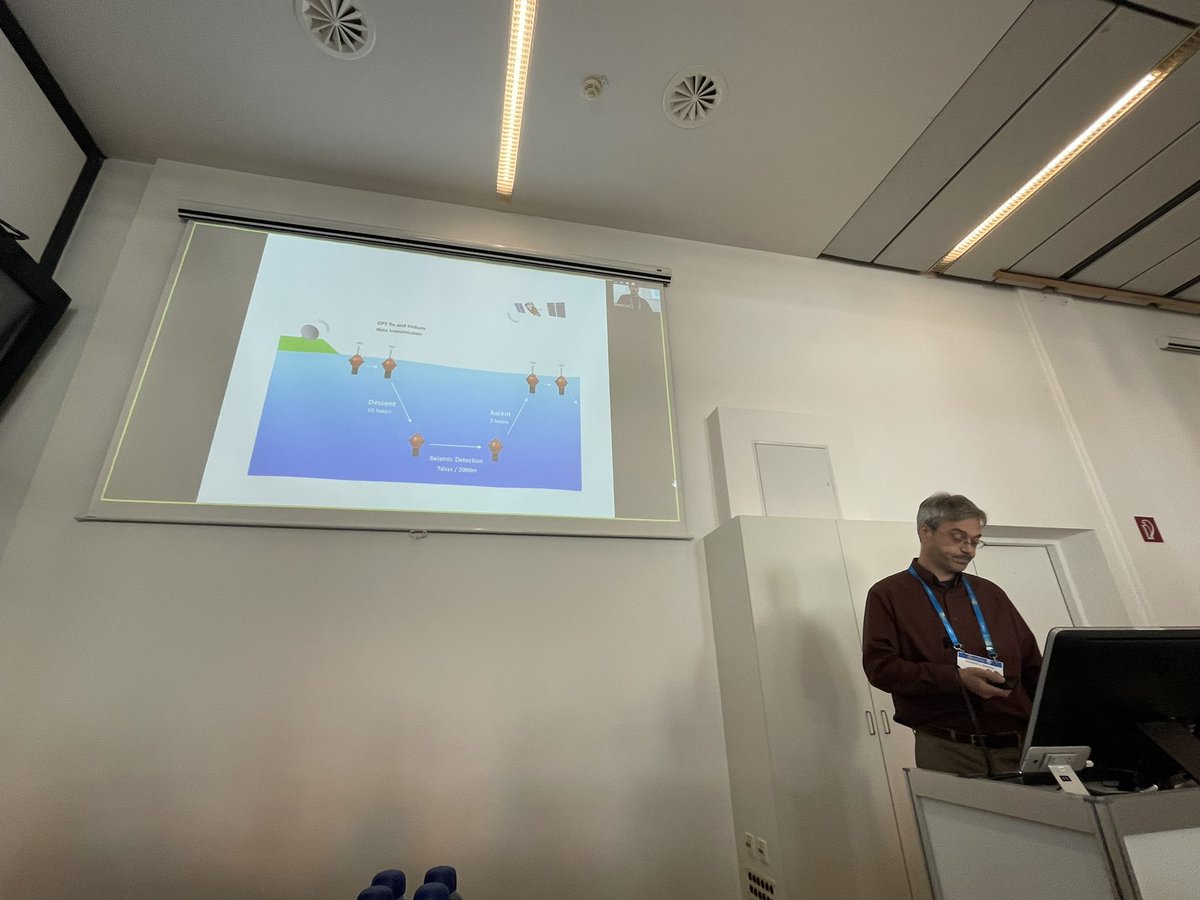
At the 3rd @UN Ocean Conference in Nice, Karin Sigloch and Sebastien Bonnieux presented Ocean Decade Project 171: observing earthquakes, volcanoes, storms, rain, whales, ships, and other sounds in the ocean via MERMAID.
On this day, 7 years ago, the third-generation MERMAID, created by @osean_tech, recorded its first earthquake. Seven years hence, our program of earth(quake) observation from within the oceanic domain by mobile marine sensors is going strong! Through the ocean, to the mantle!
Announcing automaid v4.0.0, the main engine to track our fleet of MERMAIDs and their multidisciplinary data. Software includes server functionality to convert raw files into miniSEED earthquake events, spectral densities, CTD profiles, GeoCSV trajectories, and vital metadata.
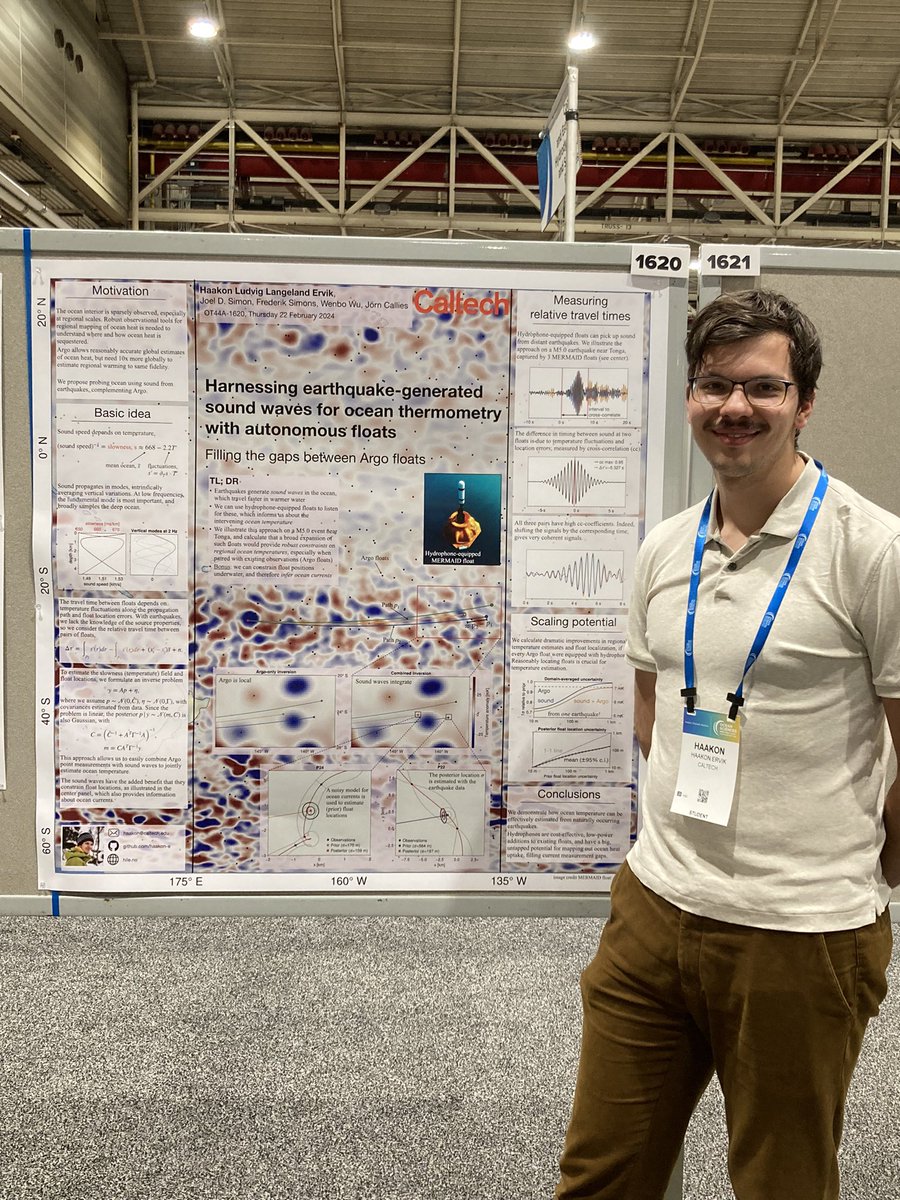
Brush up on MERMAID science at #AGU24! Mon 16:30 Joel D. SIMON (Oral S14A-04) | Tue 13:40 Alexander PACUBAS (Poster V23C-3339) | Thu 14:10 Frederik J SIMONS (Oral S43E-01) | Thu 17:00 Sirawich PIPATPRATHANPORN (Oral S44B-07). And visit @osean_tech at the Exhibit!
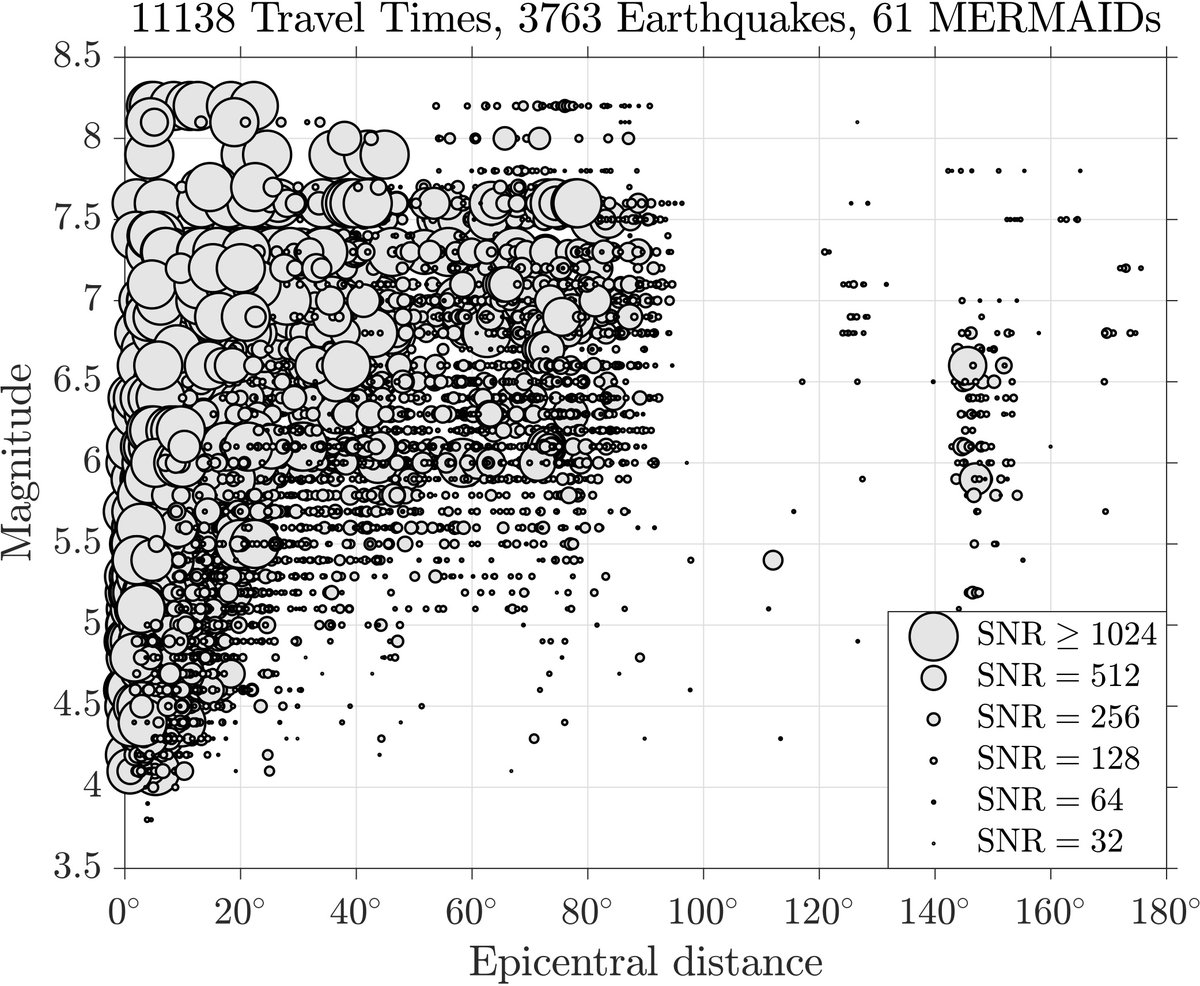
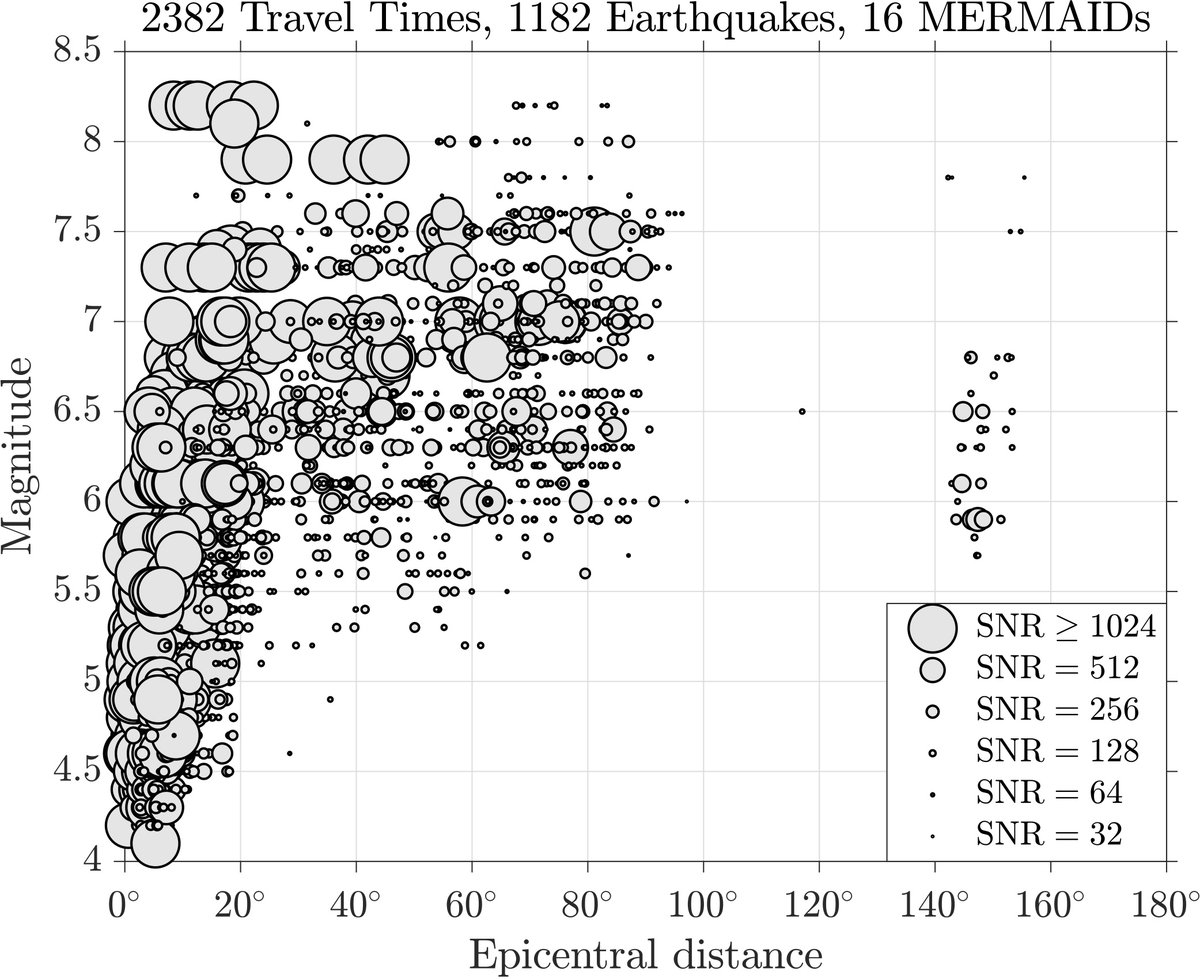
Thursday, 18 April, 10:45–12:30 (CEST)@EGU_Seismo Hall X1 | X1.109. See Dalija Namjesnik's take on exactly how much free-floating MERMAIDs contribute to detecting and locating (tele)seismic events worldwide. Hint: a lot! With @ISCseism and @umrGeoazur.
SIX years ago, this iconic photo by Alex Burky showed a third-generation MERMAID instrument rinsed off after her mer-maiden voyage which showed that earthquakes could be recorded in marine areas by independent divers! The photo was published a year later in @ScienceMagazine.
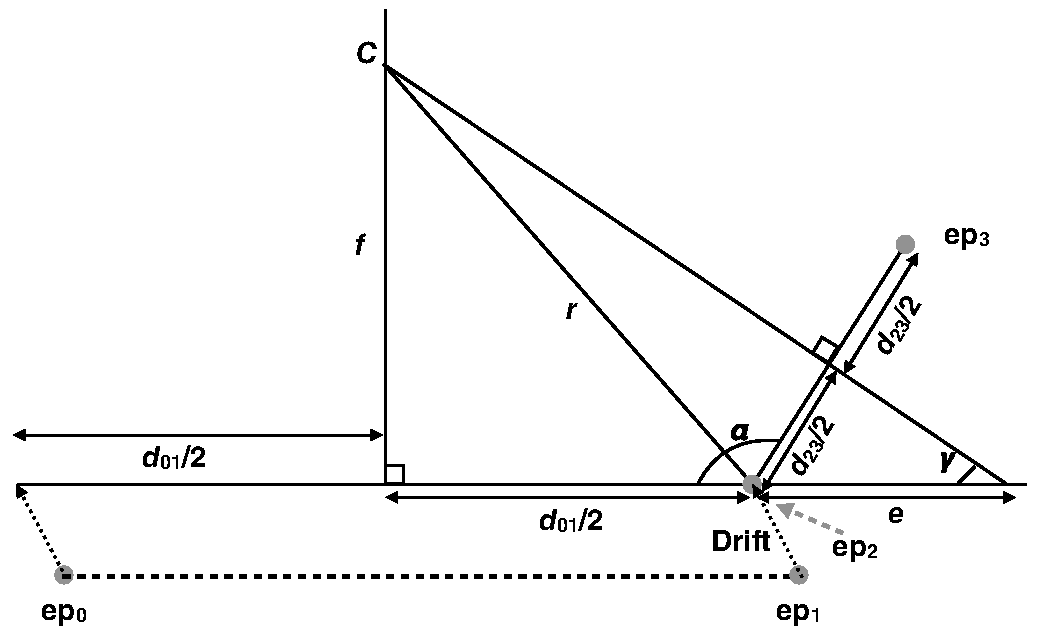
How Accurately Are MERMAID Seismograms Located? Nolet, Simon & Bonnieux https://t.co/duFU2Ni98R separate localizations that directly follow triggered ascent from those interpolated later. The first have an average mislocation of 99 m, or a 27 ms equivalent arrival-time error.
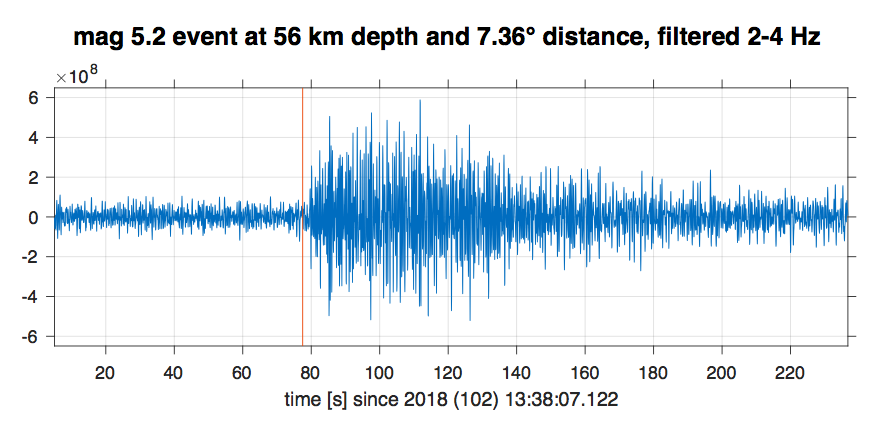
It's 2024, well over five years after the launch of @osean_tech's first third-generation model, and 67 MERMAIDs have returned 34,433 traces with hydroacoustic seismic data from earthquakes large and small, submarine volcanoes, and other sources, collected from 1,500 m depth.
At #AGU2023? Today, head to MC South 156 at 10:30 PST to hear Mathurin Dongmo Wamba talk about seismic mantle structure underneath the Pacific, and also to MC South 156 at 15:00 PST to hear Joel D. Simon explain how wave propagation effects influence how MERMAID heard 2022 HTHH.
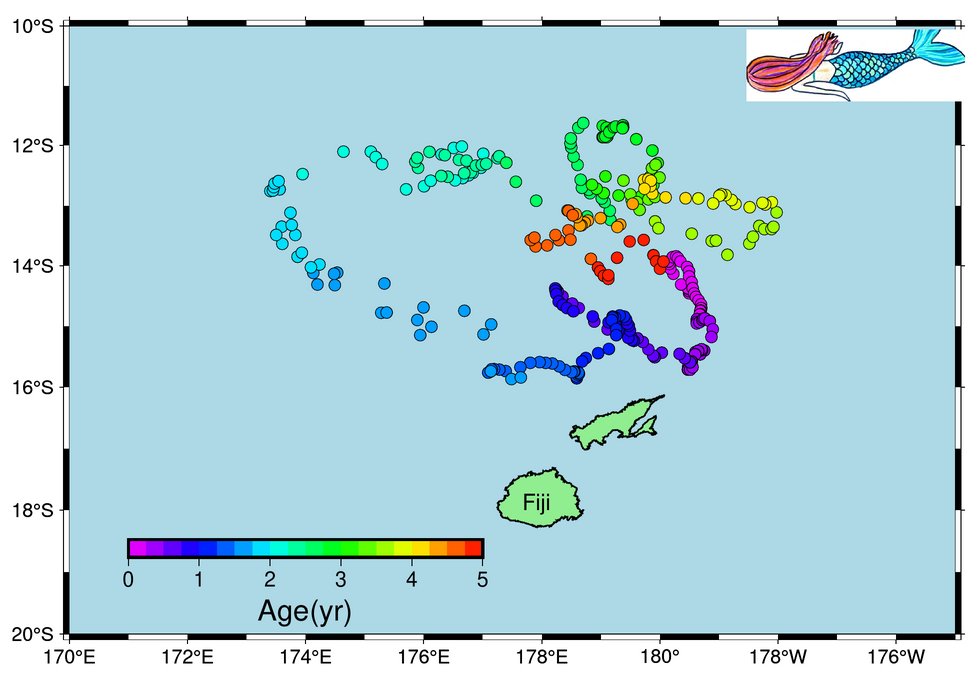
Lotsa 5-year birthdays! Here's to a combined 16x5=80 MERMAID years of exploring our planet's interior by the acoustic detection of seismic waves! All of them alive and well and continuing to report about weekly from the depths of the Pacific.
Happy birthday, MERMAID P0006! Launched *five* years ago, 239 dives, 608 miniSEED transmissions, 5880 km traveled - and *still* sending new earthquake data about once a week! Thanks, @osean_tech, thank you, @Ifremer_fr, thank you, @umrGeoazur!
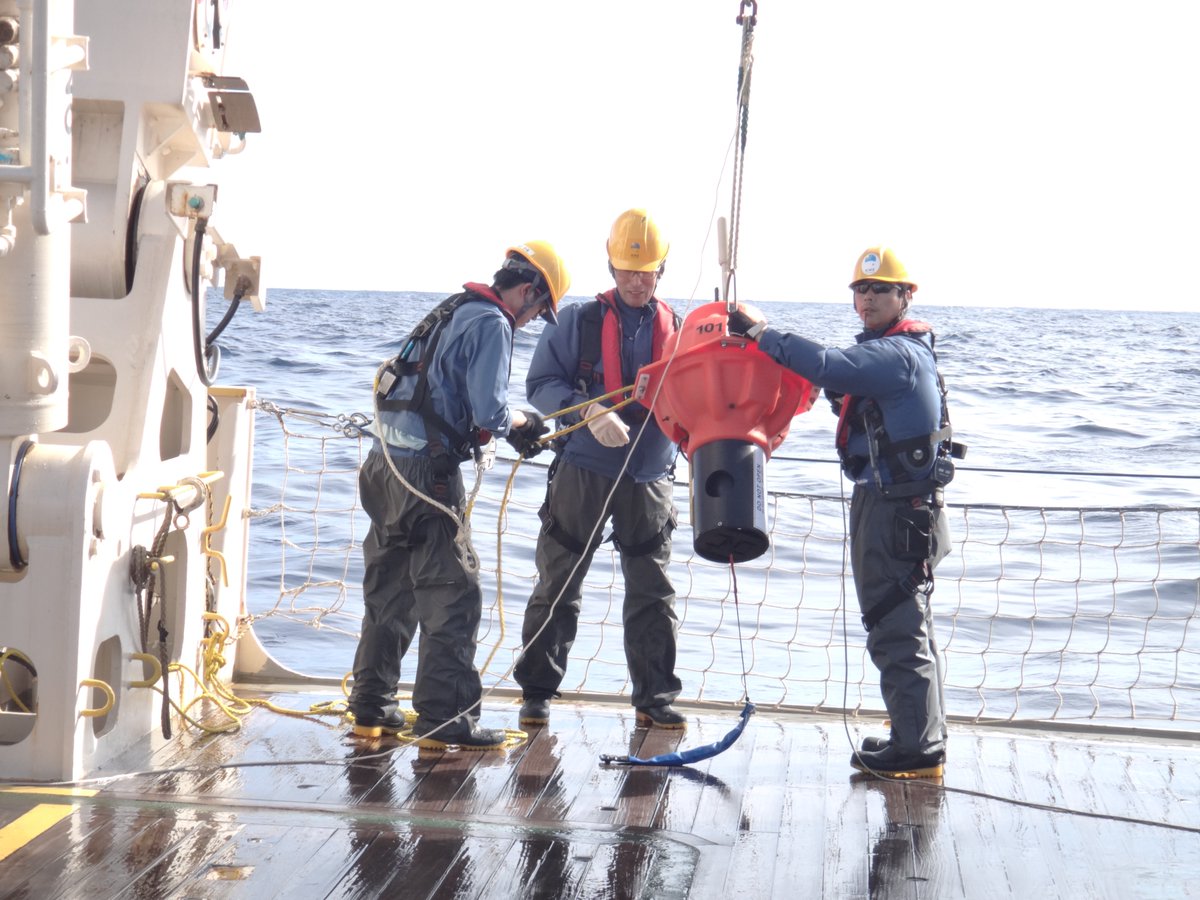
First sound! Successful launches of the first two MERMAIDs that combine acoustic earthquake reporting with CTD hydrographic profiling down to 4,000 m depth in the oceans! Shigeki Hosoda and Masayuki Obayashi @JAMSTEC_PR@Princeton#argofloats
The 5000th Princeton MERMAID trace has just been archived at @EarthScope_sci, 4000 of which are open-access and available for immediate download! For those at #EGU2023, more live in Room -2.91 today at 16:40 Vienna time! @MTsekhmistrenko
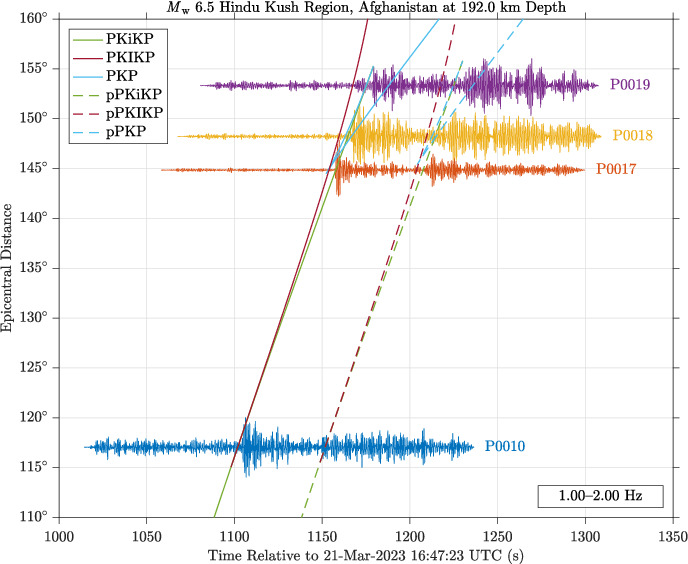
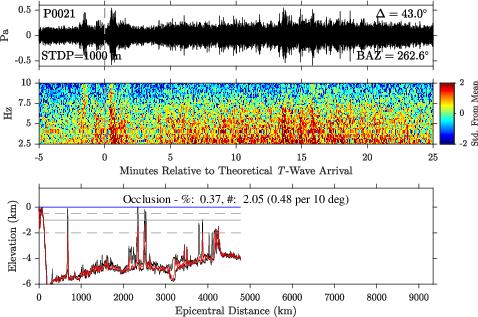
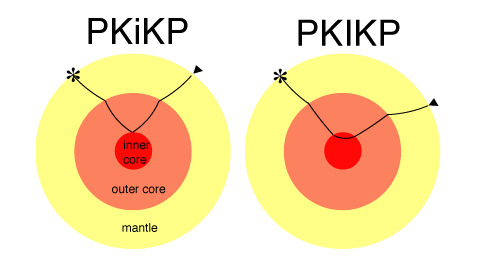
Floating about the oceans, reporting earthquakes while you sleep! Waves from the 21 March Hindu Kush quake that traveled through the core to reach MERMAIDs halfway around the Earth! Dashed lines are for phases that went up and bounced off the surface before diving into the Earth.