Daily answers to economic questions. Policy briefings, writing & data masterclasses & a new data hub | @econromesh @RD_Economist @Josh_Hellings @fmcevoy_ds
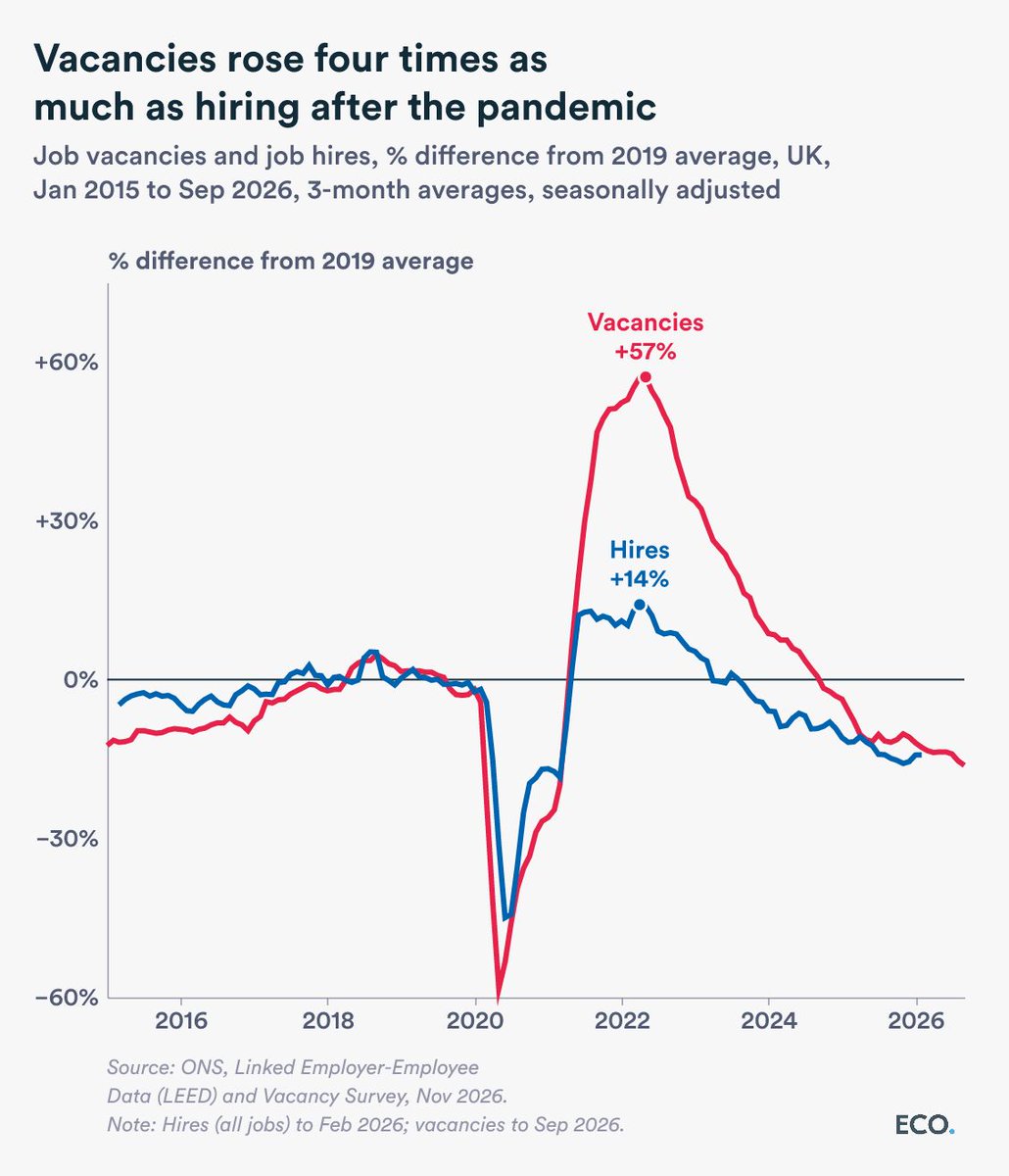
Headline jobs figures show how many people are employed, not how often they start, leave or switch jobs. New @ONS data, built with @ESCoEorg, link payroll records to employers every month since 2014. The first results show a UK jobs market that has quietly slowed down 🧵
@ONS@ESCoEorg After the pandemic, UK job vacancies peaked 57% above their 2019 level. Actual hiring peaked just 14% above it. The new data show how far vacancy figures overstated the hiring boom. Both are now below pre-pandemic levels.
@econromesh@BristolUni@ucl@QUBelfast@AnuAnandHall@EcHistSoc@EconObservatory@wshed I may have sounded a bit “you’ve never had it so good” on Wednesday, but researching what work and housing were like in the 1920s was a very salutary wake up call to just how amazing the advances in technology, health, infrastructure, equality and skills have been since@EcHistSoc
What really matters is the level of output per head (and levels of inequality) rather than measured output per hour, which has been revised up as @ONS have started to account better for annual leave and time off related to illness. Sadly the new accounts do not say we are materially better off. As @IssamSamiriEcon explains in his excellent blog.
@Frencheconomics@TPIProductivity@EconObservatory
Have better data solved the UK’s productivity puzzle? - Economics Observatory https://t.co/PeMdlnPKYJ
We’re groping in the dark when it comes to explaining the economy. And this is why the mismeasurement of the economy is so important. See more here: https://t.co/6XCwuUIE9Z
Jobs AI-pocalypse?
#economicsfest conversation with @FT journalist @sarahoconnor_, @BristolUni Professor in Practice in AI & Digital Technologies Sue Turner & Andrew Kelly @pandaemoniumnow, co-founder of the annual festival of economics, now its 15th great year
Why have so many UK companies been badly managed for so long?
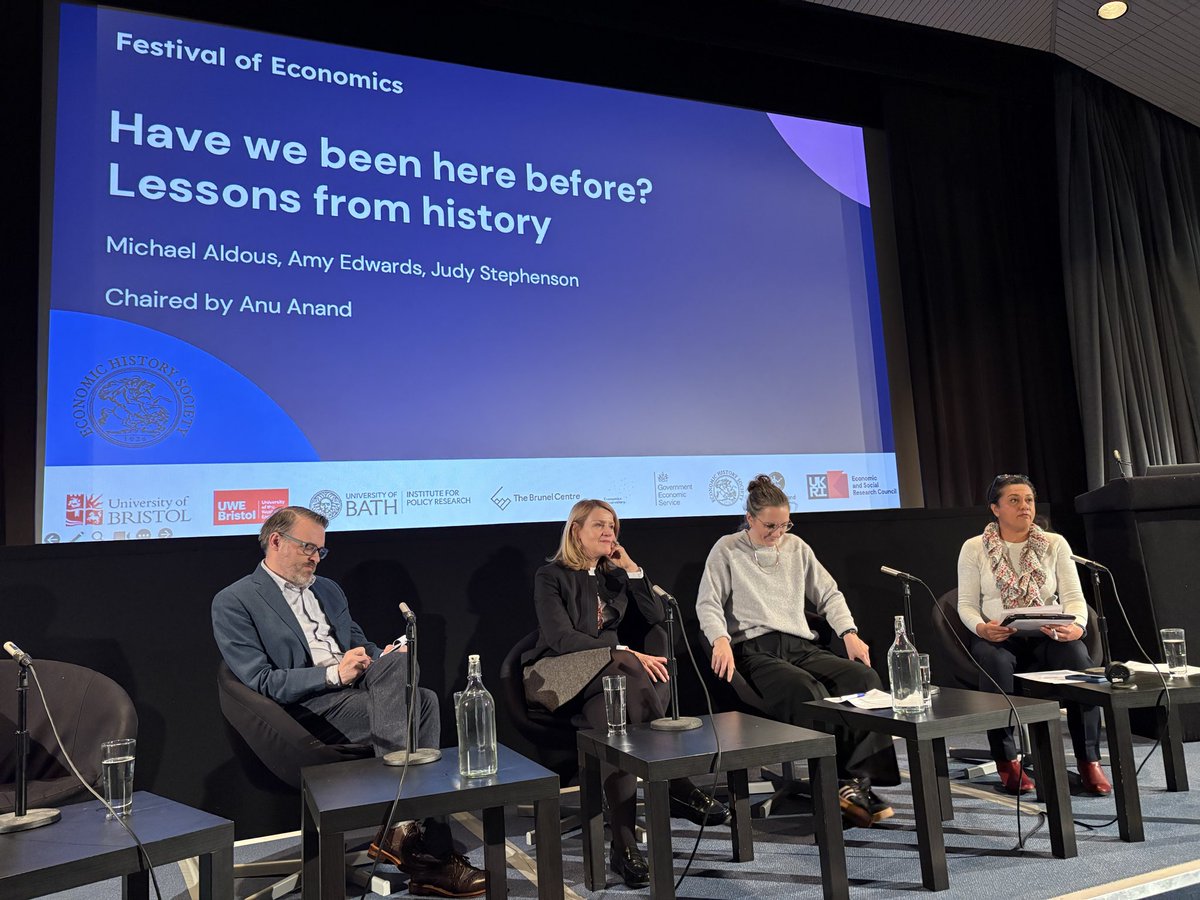
Michael Aldous @QUBelfast@EconObservatory#economicsfest conversation about lessons from economic history @EcHistSoc
https://t.co/hQBuVJ8R2T
What’s the historical context for Britain’s low productivity growth?
@judyzara@EconObservatory#economicsfest conversation about lessons from economic history
https://t.co/qyFp34krEK
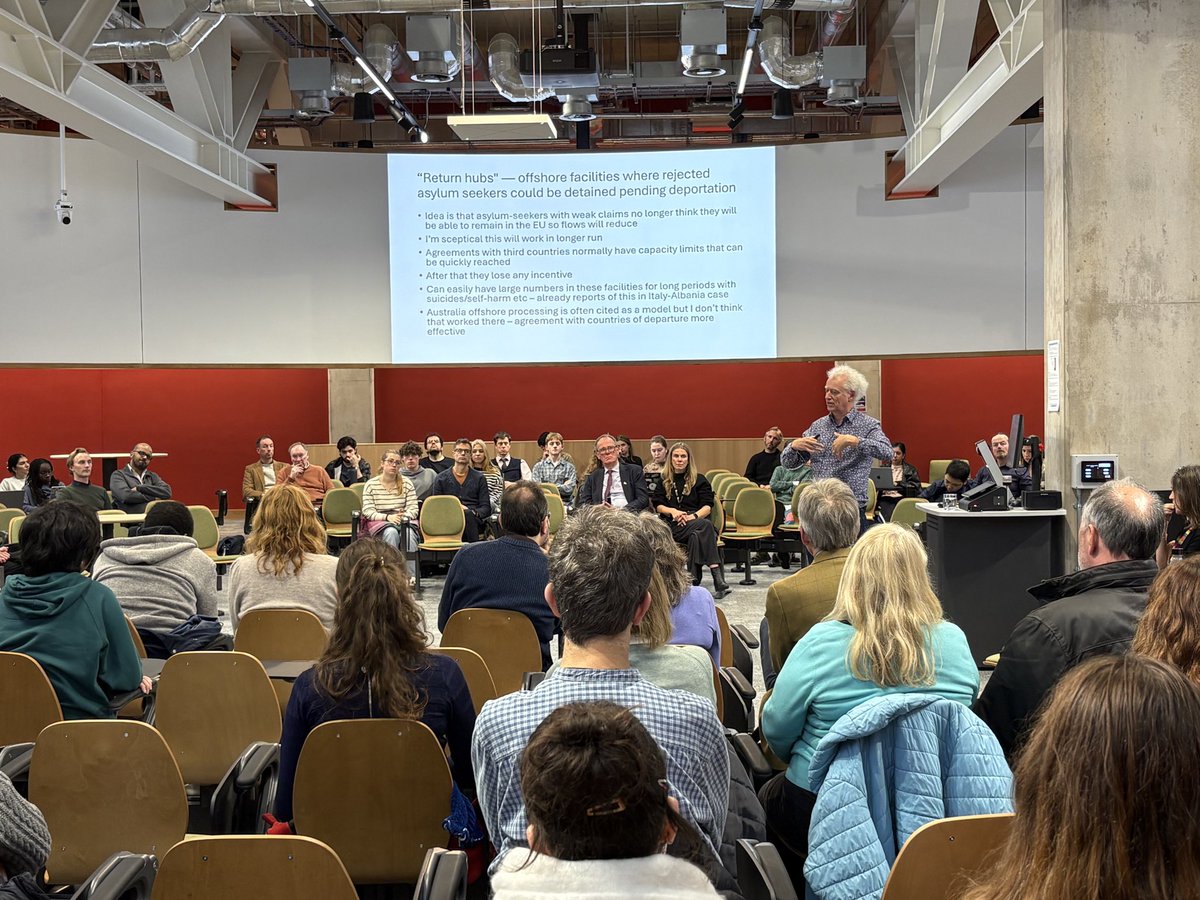
Alan Manning delivering the annual Marshall Paley lecture @BristolUniEcon@BristolUni on why immigration policy is hard, including discussion of return hubs for failed asylum seekers & other irregular migrants (zoom in on slide)
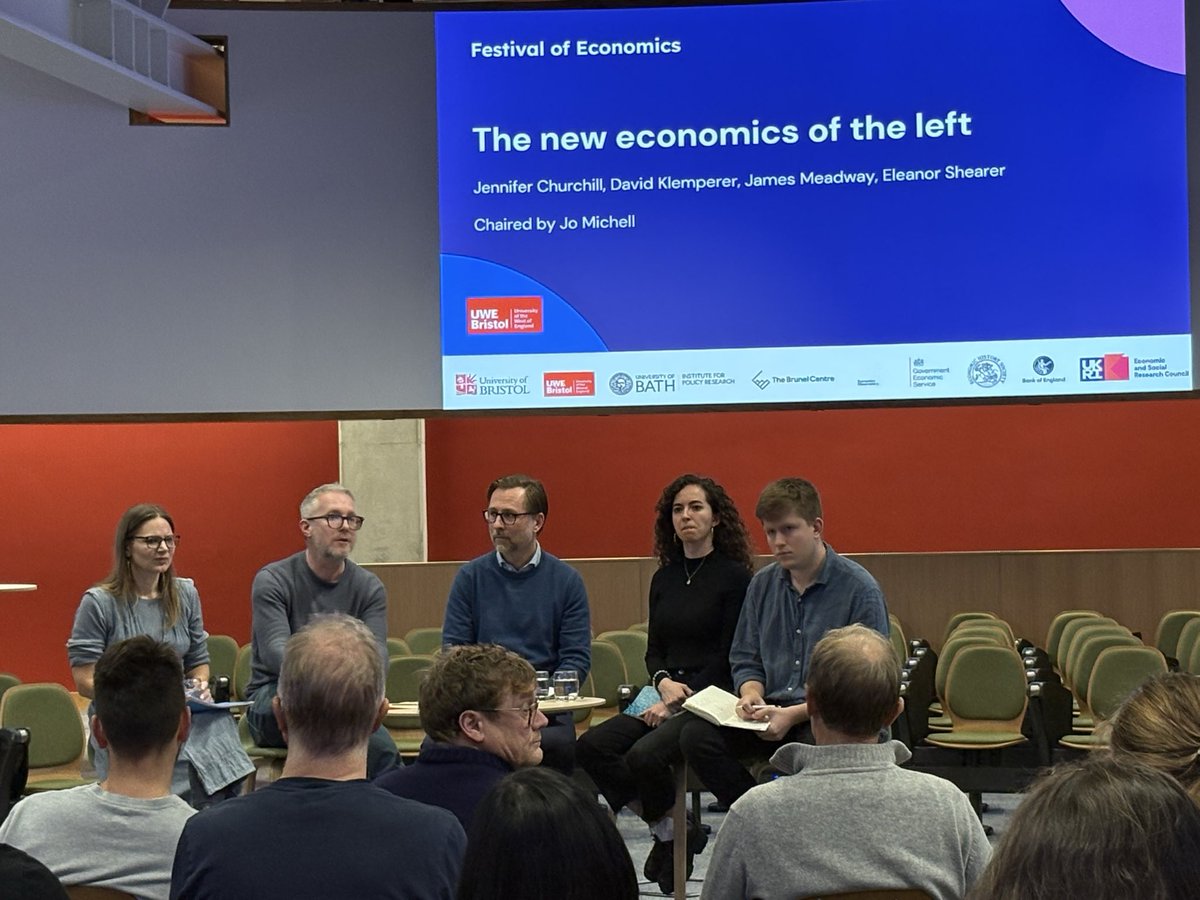
#economicsfest 15th annual festival of economics