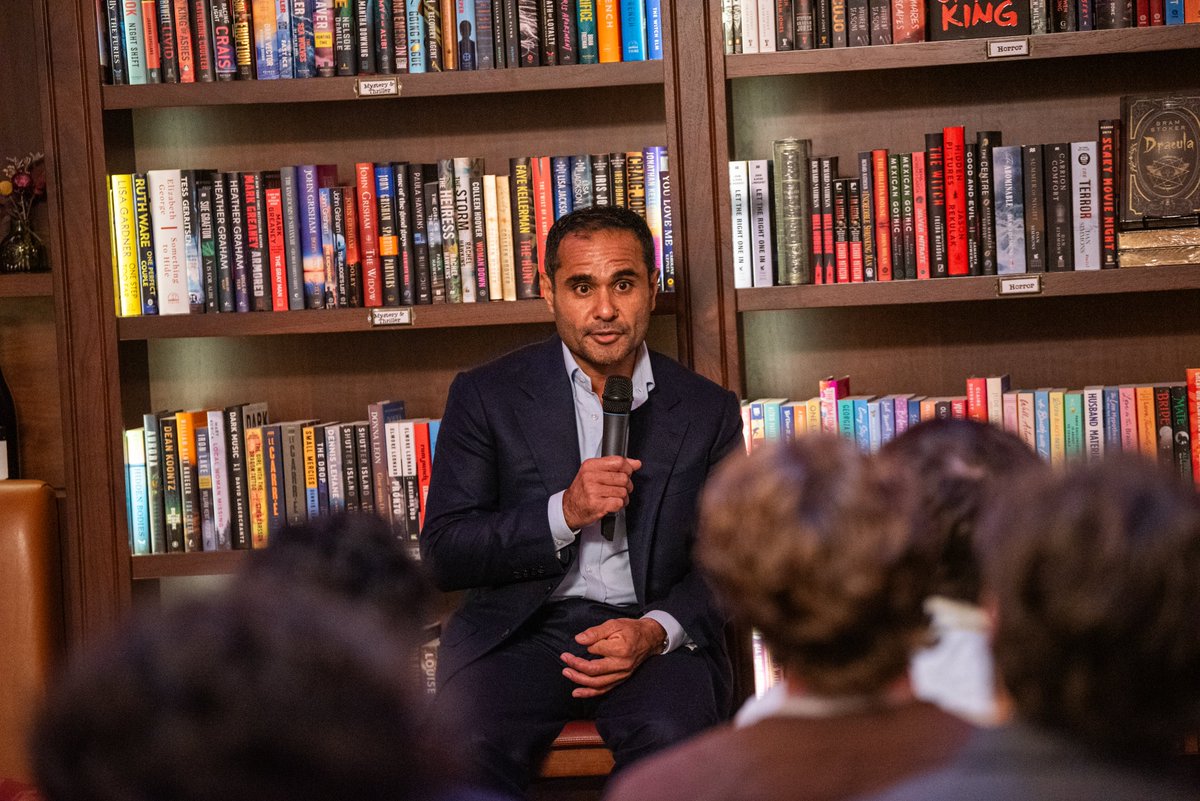
Thank you to everyone who joined us for @EconomicSecProj's conversation with @realtahiramin and @gabyaboulafia on how corporate power is driving the healthcare affordability crisis!
California’s next governor will decide the state’s AI future, and will have a long list of priorities to tackle upon taking office. In a new @Capitol_Weekly OpEd, our VP of States Strategy Teri Olle and James Irvine Foundation CEO Don Howard argue that the future of AI and how it will impact California’s workforce should be at the top of the list.
They ask three key questions the next governor needs to answer: As AI transforms the state’s workforce, which public support systems need fixing in order to support displaced workers? Who’s going to pay and who’s going to benefit from this rapid change? And most importantly: who should decide all of this?
The midterms are a week away. California can be both the epicenter of AI development and the model for AI accountability, but only if the next governor treats this as the emergency it already is.
Read the op-ed: https://t.co/7g3Ozf9vpk
ESP co-founder @chrishughes's new @BrookingsInst paper shows that even the Fed’s most technical decisions are choices about who the economy works for. His Elastic Reserves proposal would shrink the Fed’s footprint to its smallest share of GDP since 2008 and cut the interest it pays banks by about two-thirds. https://t.co/Havs1FcI4e
Direct cash should be part of the toolkit for addressing America's housing crisis. Philadelphia put it to the test.
Nearly half of all American renters are burdened by housing costs—and the federal voucher program, the country's rental assistance program, reaches only about 25% of eligible households.
PHLHousing+ tried something different. The pilot put cash in the hands of 301 low-income renter families with children, and who were on the voucher waitlist, to help with high housing costs. Unlike traditional housing vouchers, the assistance went directly to families, and 100% of households offered the cash were able to use it.
Preliminary findings from the University of Pennsylvania show that after at least a year of receiving cash, families experienced up to 75% fewer forced moves than families receiving no assistance. Cash also reduced homelessness by over 50% and improved housing quality concerns.
Earlier this year, ESP released Building Affordability, our policy agenda for tackling America’s housing crisis. One of its core recommendations is providing supplemental cash to families facing severe housing insecurity. Philadelphia’s results show that cash belongs in the toolkit to make housing more affordable, right alongside modernizing vouchers, more housing, and stronger renter protections.
Read our report: https://t.co/JsxIZ1Ruon
What distinguishes the 1% from the merely affluent? How about having a third child.
New post on a topic I've long been fascinated by (the economics and financing of having a third kid) where I finally felt bold enough to go into the latest SCF microdata to get a good answer. /1
Who’s still raising big families? According to the Federal Reserve’s new SCF data, the 1%. But as ESP’s @mtkonczal explains in his latest Substack, the interesting part isn’t that the 1% started having more kids—it’s that fewer families can afford to.
Fed Chair Kevin Warsh has a task force to reconsider the balance sheet and the Ample Reserves operating system.
My new Brookings paper proposes Elastic Reserves: dependable lending facilities, paired with reforms that reduce banks’ need to hold reserves.
https://t.co/eBQFWP8Q14
Tax credits work, and Illinois is proving it. 🎉
Nearly 950,000 Illinois working families received more than $600 million in tax relief through the state’s Earned Income Tax Credit and Child Tax Credit in 2025. The average family benefiting from both credits kept $1,460 in their pockets.
That’s real money for groceries, childcare, and housing at a time when working families are feeling the squeeze.
Economic Security Illinois led the fight to expand the EITC and create Illinois’ first-ever Child Tax Credit, alongside our affiliate Economic Security Illinois Action, advocates from the the Cost-of-Living Refund Coalition, and state leaders. These results show exactly why it was worth fighting for.
Read our full statement: https://t.co/keXMOfIOoH
“The payments made it feel like my 10 problems turned to nine. I had more time to think about the life I wanted to start living.”
That’s what one #GI participant told the @nytimes this week, which followed three people receiving cash over the course of a year.
The article asks whether guaranteed income could help address AI-driven job losses. But what emerges is a much bigger story about the power of cash, not just as a lifeline during difficult times, but as a way to give people more stability, choices, and control over their lives.
For participants, cash meant help with groceries, rent, and everyday expenses. But it also meant being able to afford things that brought comfort and dignity, like clean laundry, swimming classes, and a family trip to an amusement park.
These experiences show how cash can give people the breathing room to think about what they want for themselves beyond their immediate needs.
At a time when families are struggling with rising costs and policymakers are considering how to navigate an increasingly AI-driven economy, these stories are a powerful reminder that the case for cash is already clear. Cash can help people meet their needs today while giving them greater freedom to build the lives they want, beyond just getting by.
Read their stories: https://t.co/IfCHzwh6NF
Seven in 10 families will need long-term care as they age, and Medicare doesn’t cover it. Most will drain their savings, and even that won’t be enough.
Join @mtkonczal, @TheSCANFndtn , and other experts TODAY at 12:30 PM ET to talk solutions. Register: https://t.co/3qBrtUBpye
NYC! Join us for a deep dive into @realtahiramin's new book, Pharma Monopoly, and how corporate power is driving the healthcare affordability crisis.
Bibliotheque (54 Mercer Street)
Tuesday, October 20
5-7PM
Featuring: @realtahiramin and @gabyaboulafia of @EconomicSecProj
RSVP: https://t.co/iFwZadcum5
Please join @gabyaboulafia and me for conversation on corporate power, healthcare costs, and the fight for affordability. Thank you @EconomicSecProj for organising!
Bibliotheque, 54 Mercer Street, NYC
Oct 20, 5-7pm
Free and open to the public with RSVP: https://t.co/T18FdkkRPs
AI and the cost of living crisis usually get talked about separately. But as former FTC chair @linamkhan explains, they shouldn’t be. From surveillance pricing to wage suppression, AI is already making life less affordable for families, and any serious plan to lower costs has to address it.
When a grocery store closes, families shouldn’t have to wait decades for another one to take its place. But for too many Californians, that has been the reality.
The status quo in California has allowed monopoly grocery chains to put restrictions in the property deed blocking another grocer from opening there, sometimes for decades after they left the community. A chain could leave a neighborhood and still keep competitors out, leaving families with fewer options for fresh, affordable food. In Vallejo, a Safeway restriction blocked a replacement grocery store for 15 years. With nearly three million low-income Californians living in food deserts, these restrictions created yet another barrier.
California’s new law changes that. It creates a legal process to remove these restrictions, giving other grocers a path to move into spaces chains have left behind. It’s a step toward more competition, more choices, and better access to affordable food for California families.
Congratulations to our affiliate, @ESP_Action, Assemblywoman Aguiar Curry, and the California Food and Farming Network, who worked to make this happen.
Read our full statement: https://t.co/hAiMq0FD6O
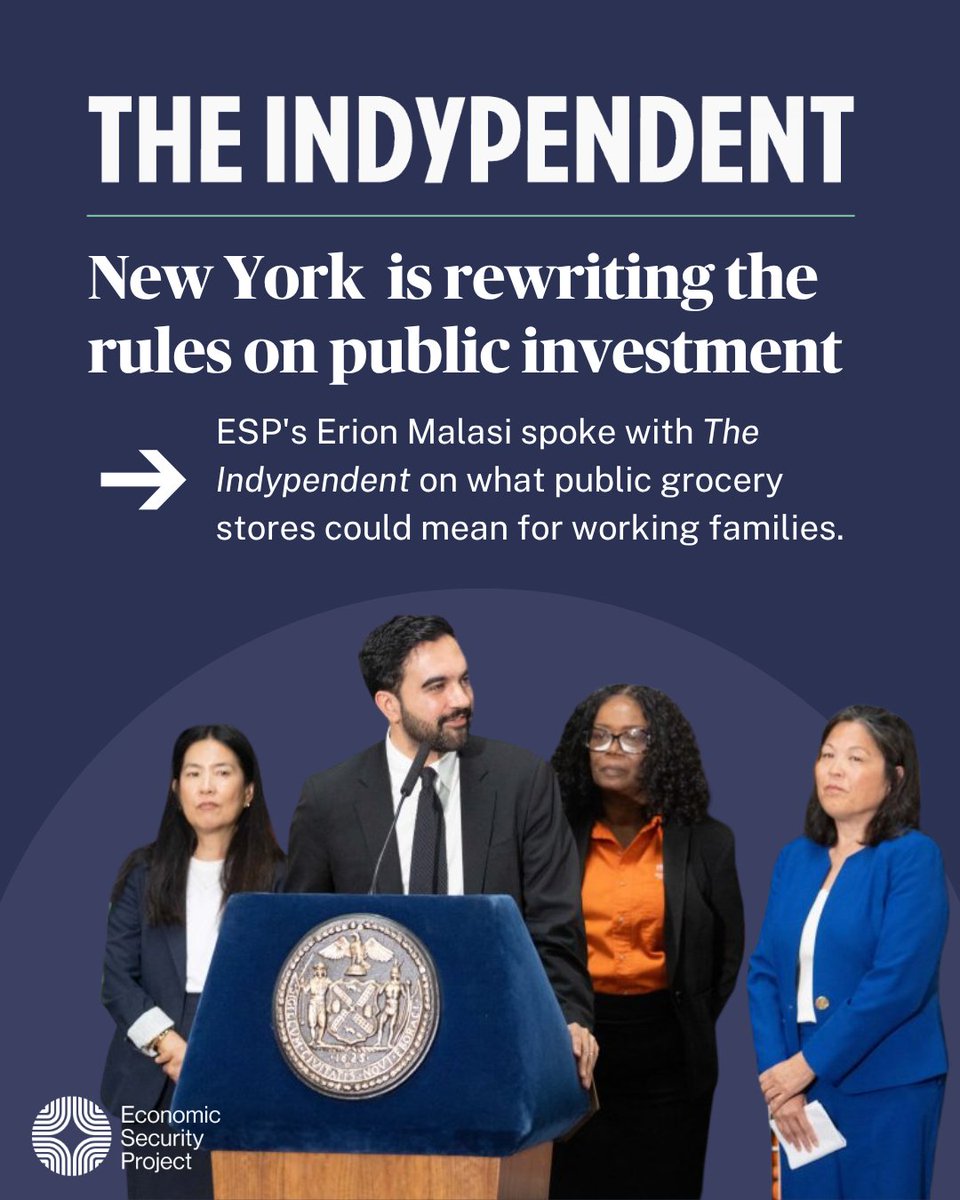
1/ Across the country, cities like New York City are showing just how far our tax dollars can go by investing in public grocery stores.
As ESP's Erion Malasi explains in @TheIndypendent, the beauty of a public option is that when communities are in need, tax dollars can be used to support people directly, rather than offering tax credits to corporations and hoping they care enough to show up.
"We have to have public policy and the law regulated beforehand."
Many in the tech industry say the threat of lawsuits will keep AI companies from taking big risks. People said the same thing about banks before the 2008 financial crisis. Banking regulation gives us a blueprint for managing systemic risk, and we should use it on AI now, explains ESP co-founder @chrishughes via @TheBeatWithAri.
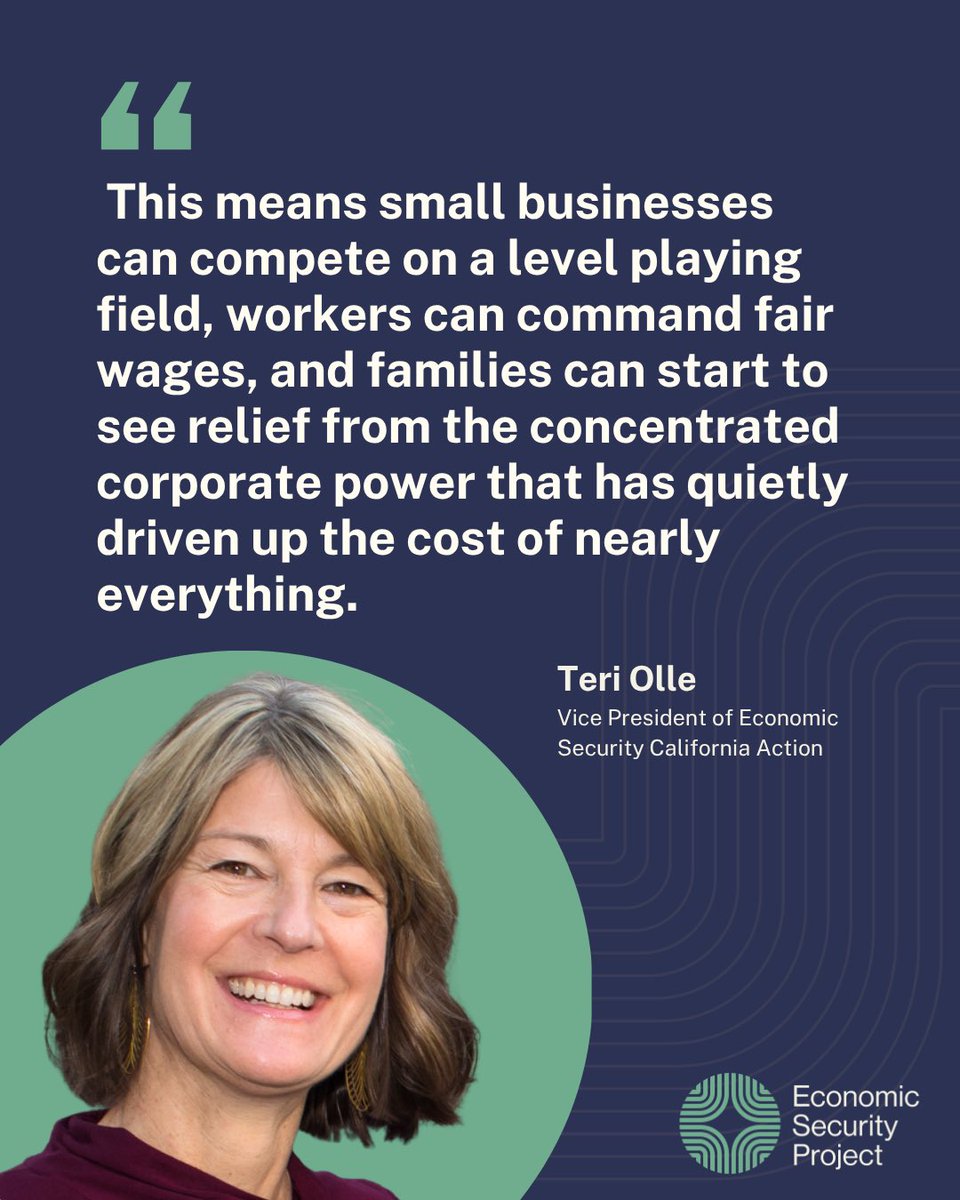
🚨California just took a major step toward tackling corporate power and the affordability crisis.
Gov. Newsom signed a new law updating California’s antitrust laws for the first time in more than a century, following a multi-year campaign led in part by our affiliate, @ESP_Action, alongside a broad coalition of advocates, organized labor, and small businesses.
California’s antitrust framework had remained largely unchanged since 1907, even as corporate power and the economy transformed around it. The new law gives state enforcers stronger tools to take on monopoly power and closes loopholes that have allowed dominant corporations to block competitors, squeeze small businesses, suppress wages, and consolidate their power.
Amid an affordability crisis, as families struggle to afford groceries, housing, healthcare, and other everyday essentials, taking on concentrated corporate power is a critical part of making life more affordable. More competition means more choice for consumers, a fairer shot for small businesses and workers, and less power for dominant corporations to set the terms of our economy.
This is a huge win for Californians and for everyone fighting for an economy that works for people, not just the most powerful corporations. Congratulations to everyone who helped make it happen.🎉
Read our full statement:
https://t.co/vxrkn7qDCr
The development of AI is moving fast, and we need our rules need to keep up.
ESP co-founder @chrishughes stopped by @SquawkCNBC to talk about what bank regulation can teach us about keeping AI safe and holding AI companies accountable.