New paper published!
Addressing power imbalance in research: exploring power in integrated knowledge translation health research. Great to work with @JacquiCameron18 and Anita Kothari on this one. We are deeply passionate about addressing power in research
https://t.co/pTa3pxN8cs
New paper on Queensland’s public health system 👉 “It’s Feeding the Beast”: Lessons for Governance of Public Health Surveillance and Response From an Australian Case Study Analysis https://t.co/kv7nMdVgmz
@globalstopp@jcu@AITropHealthMed@TropAusAHC@MenziesResearch
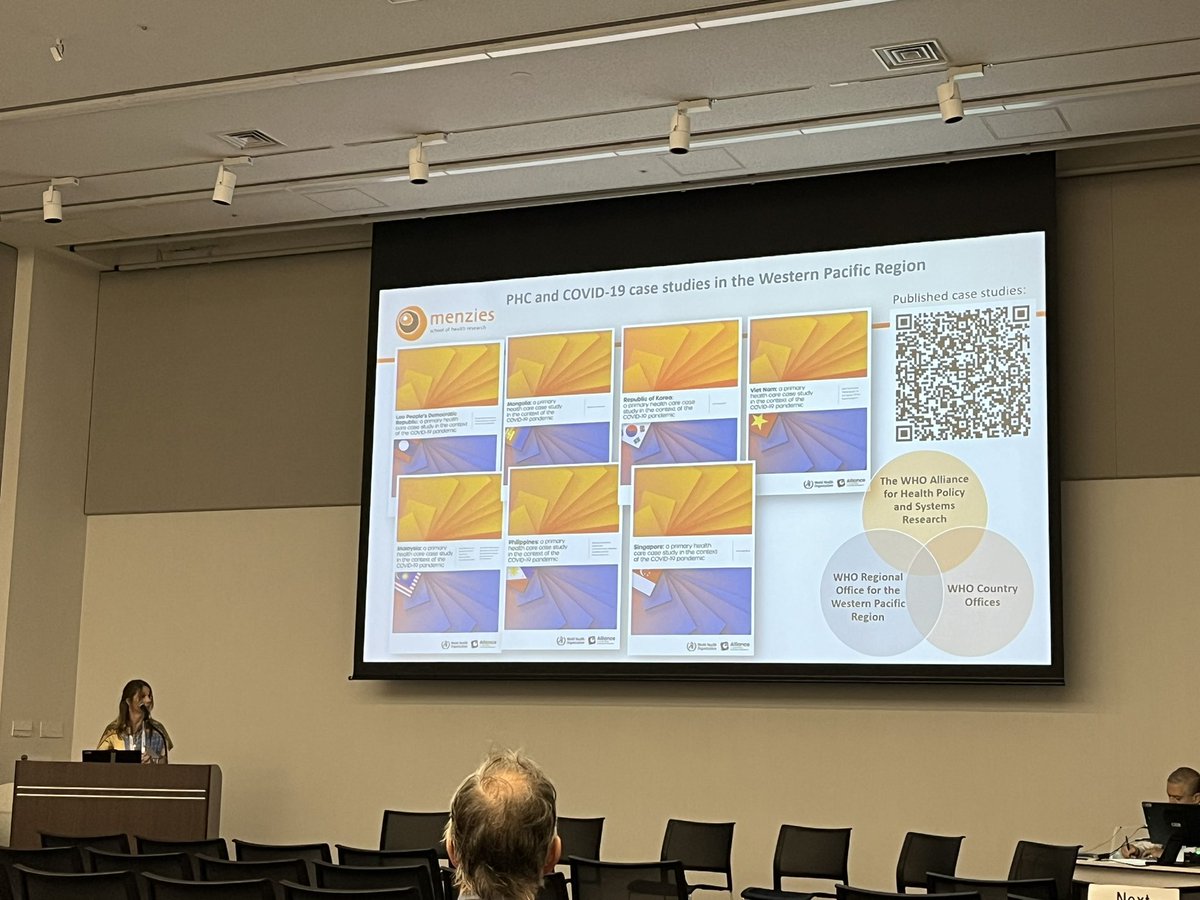
New paper shares insights from 7 country case studies in the WHO Western Pacific Region, highlighting opportunities to strengthen PHC and address health inequities
Lluis Vinyals Torres, @DrAnisKazi @MartenRobert @rasanathan https://t.co/a8sSmUQcTg
Exciting Opportunity!
Join the Remote Health Systems & Climate Change Centre (RHC3) in Mparntwe (Alice Springs) and help shape the future of remote health research!
Be part of real change. Apply now! 👉 https://t.co/w6IEvYTki5
@MenziesResearch
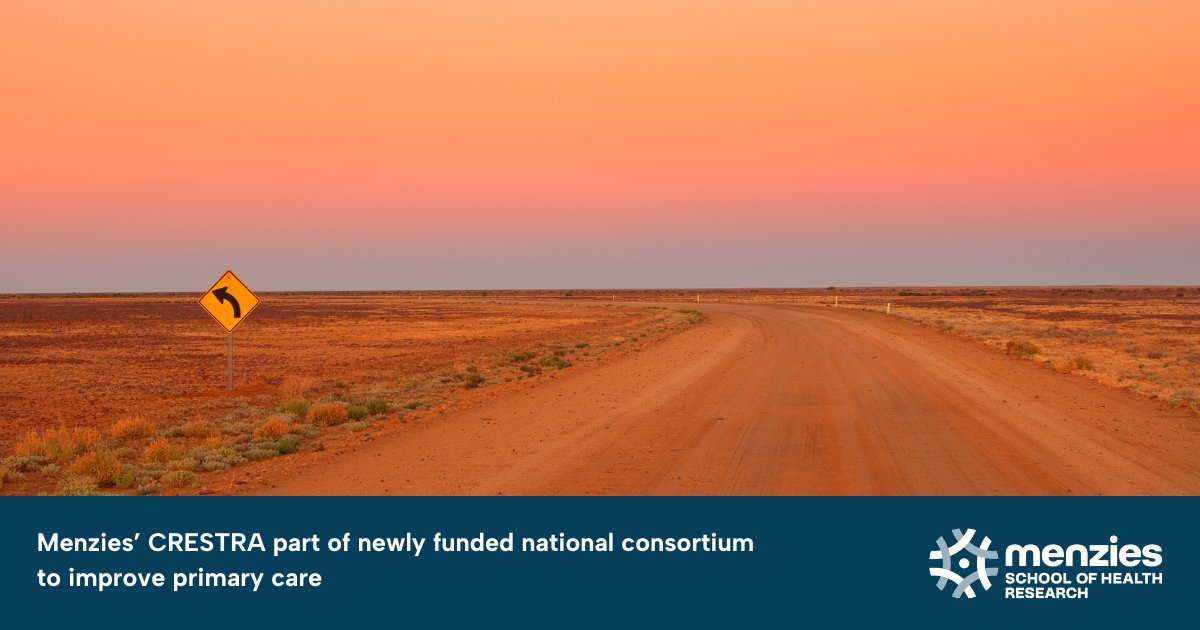
The Menzies-led NHMRC Centre of Research Excellence for Strengthening Health Systems in Remote Australia (CRESTRA) has been named as a key partner in the new National Multidisciplinary Primary Care Research, Policy and Advocacy Consortium, led by UNSW.
🚨Results from the #PERSPECT qualitative study, focused on researcher, funder, patient & public perspectives re: knowledge translation & community engagement in med research, published in https://t.co/7hN95EEU1W @DCNSNeuro Thanks @AdamSmithHouse & @letsgetproof
for funding this!
The use of mentoring for knowledge translation by allied health: a scoping review
This @JBI_EI manuscript explores the benefits of mentoring in guiding allied health professionals to better utilise research evidence in their daily practice.
https://t.co/bAmKOIbBw5
Our health is dependent on the health of Country – ‘1 week to go until #HEAL2024’
To improve our health and health of future generations, we need to treat our environment with much more care than what we are currently doing, says A/Prof Veronica Matthews, HEAL 2024 Co-Chair
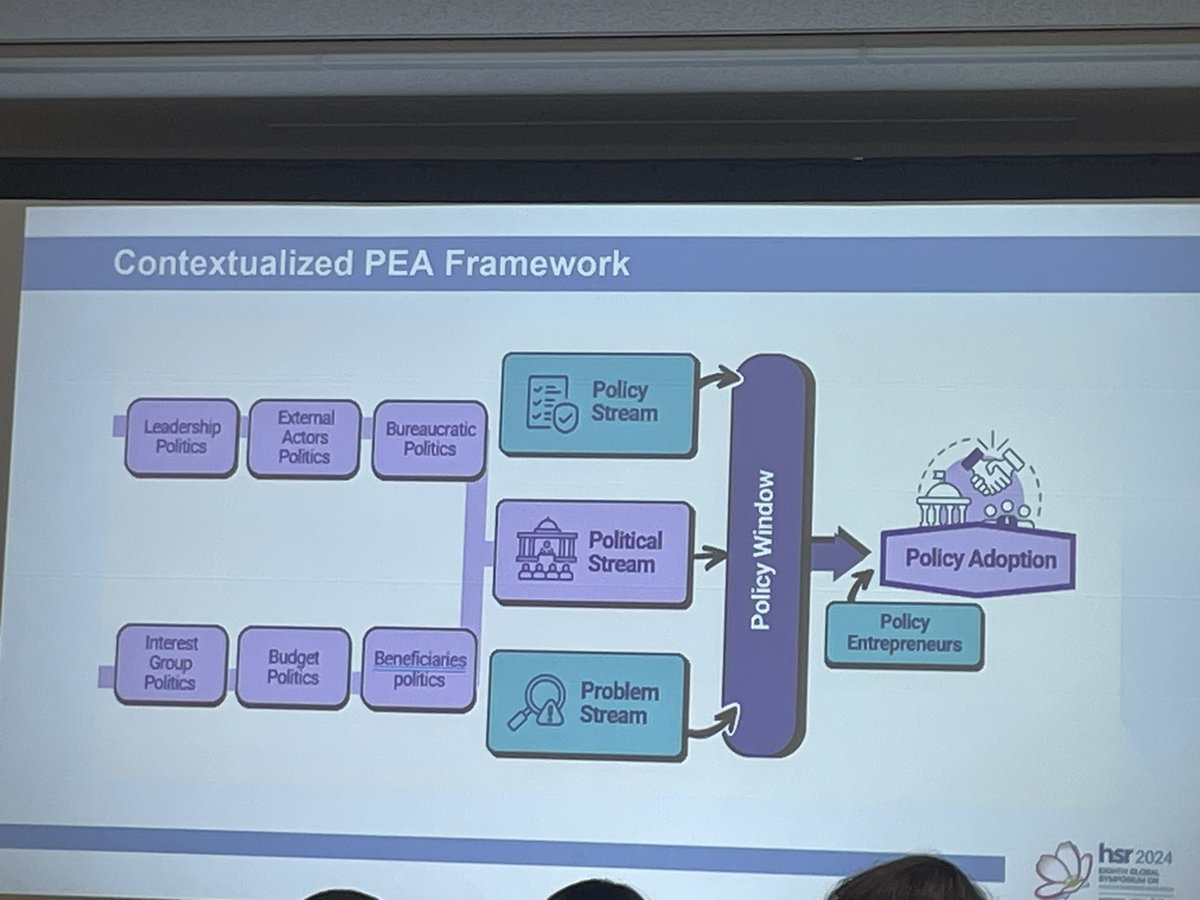
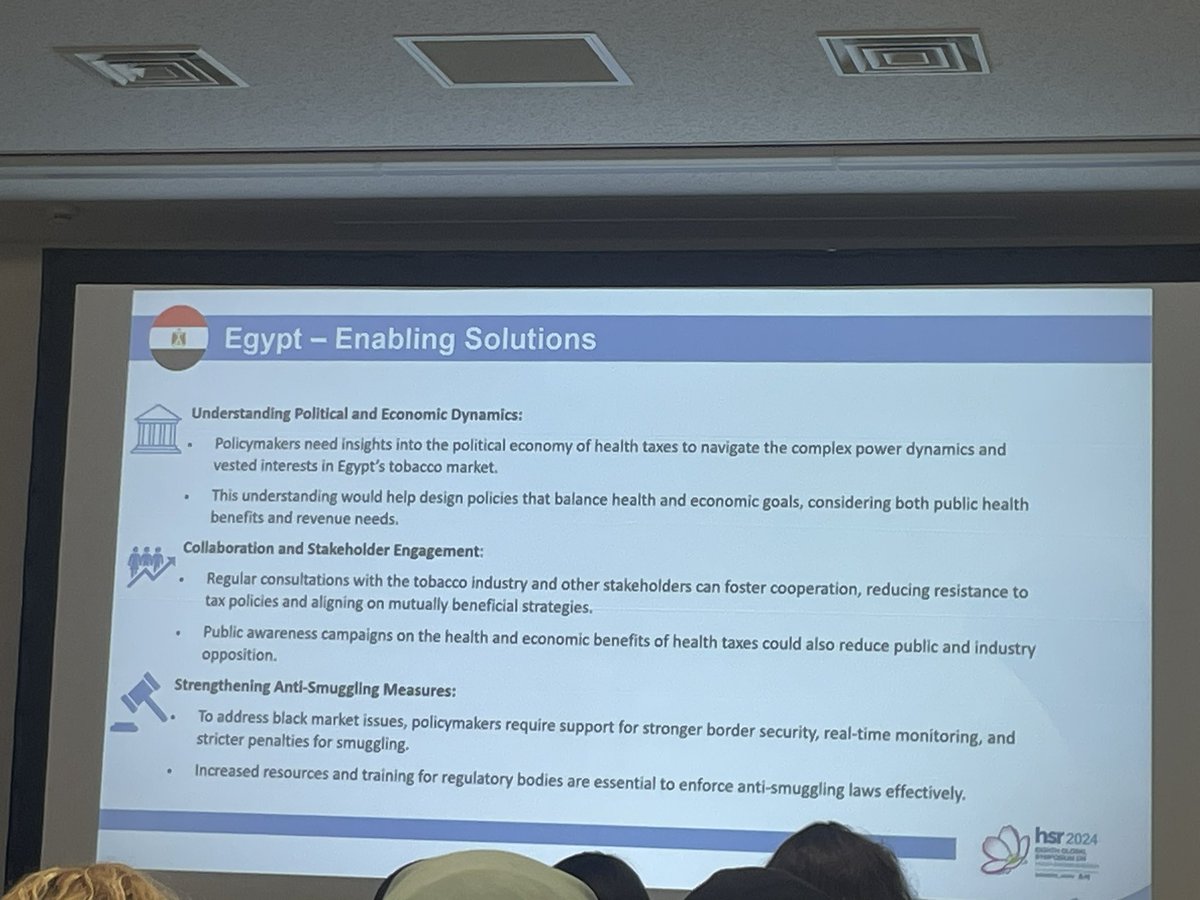
Public health actors must work with policymakers, otherwise health promotion efforts will fail at implementation: Prof Fadi El-Jardali on the political economy of health taxes in Lebanon and Egypt. Great analysis and session! @feljardali@K2PCenter@AllianceHPSR#HSR2024
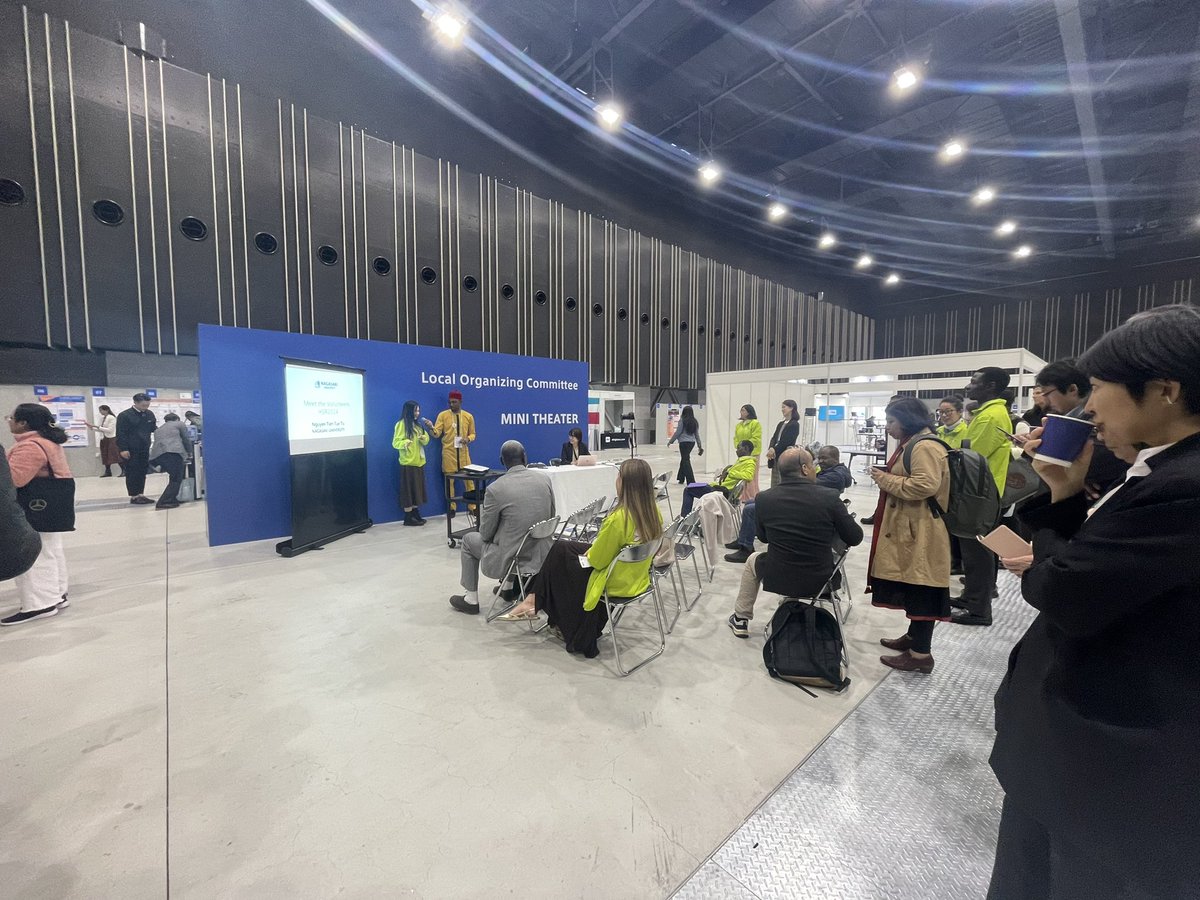
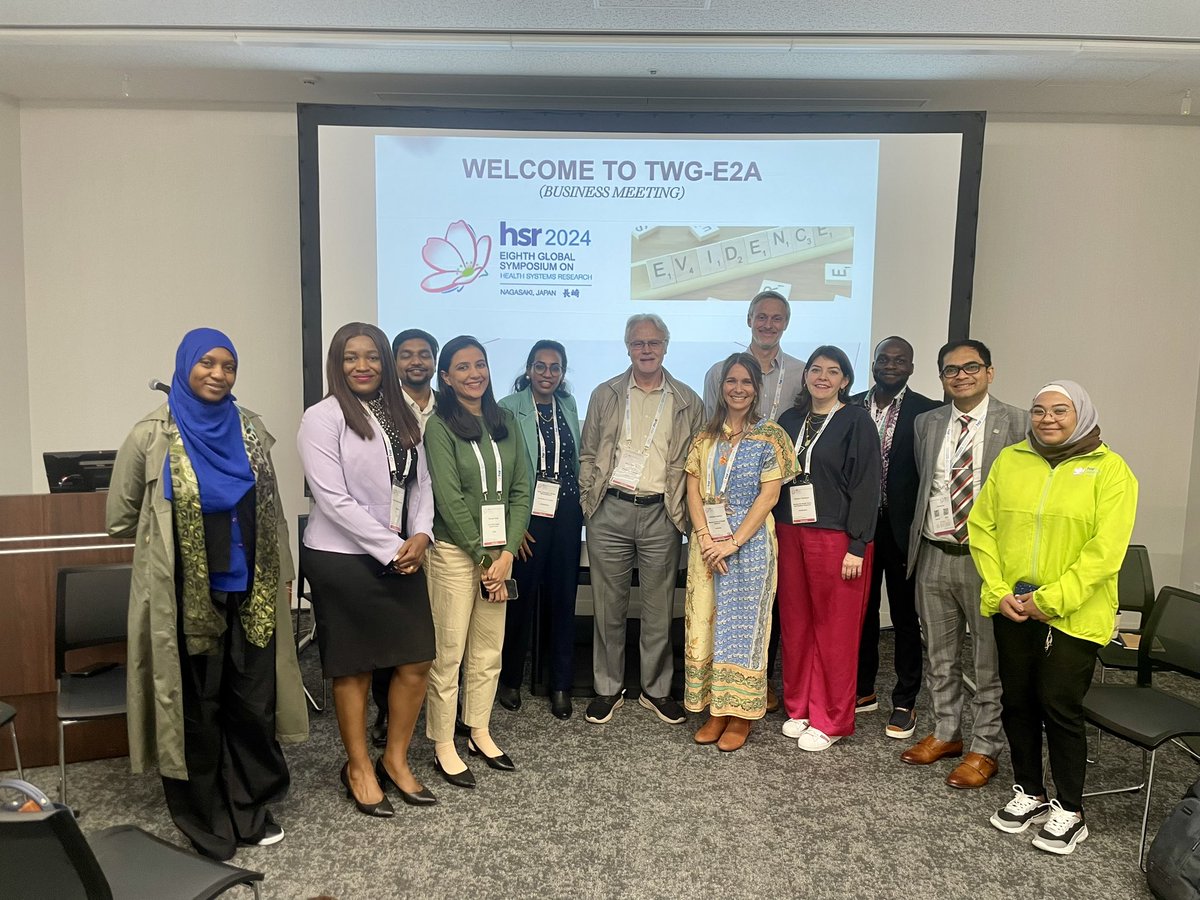
Wonderful to connect with other members of the technical working group - evidence to action (TWG-E2A) at #HSR2024! Excited to continue to connect with this vibrant group and share ideas #KT#impact#HPSR@H_S_Global
Wonderful to work with amazing teams of researchers in the participating countries and with colleagues in @AllianceHPSR and @WHOWPRO on this project, with learnings relevant to #PHC strengthening across the region @MenziesResearch
Alex Edelman @EdelmanAlex presents findings from the @AllianceHPSR Primary Health Care #PHC case studies in the Western Pacific Region at the Health Systems Research Symposium in Nagasaki https://t.co/ruZFCXEFEr
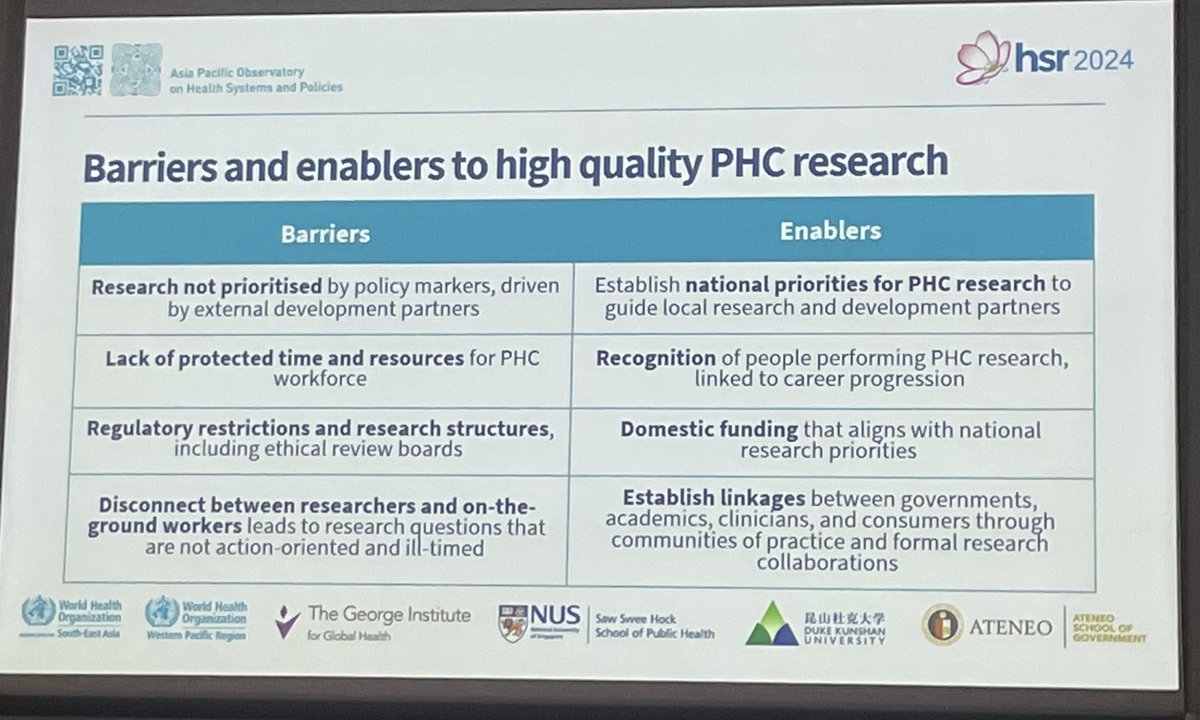
Interesting review presented by @DrJasper1 - a synthesis of studies relevant to #PHC in SEAR and WPR in last 10 years. Findings highlight increasing output; dominant focus on HRH and service delivery, less on information systems, governance & financing @AP_Observatory#HSR2024
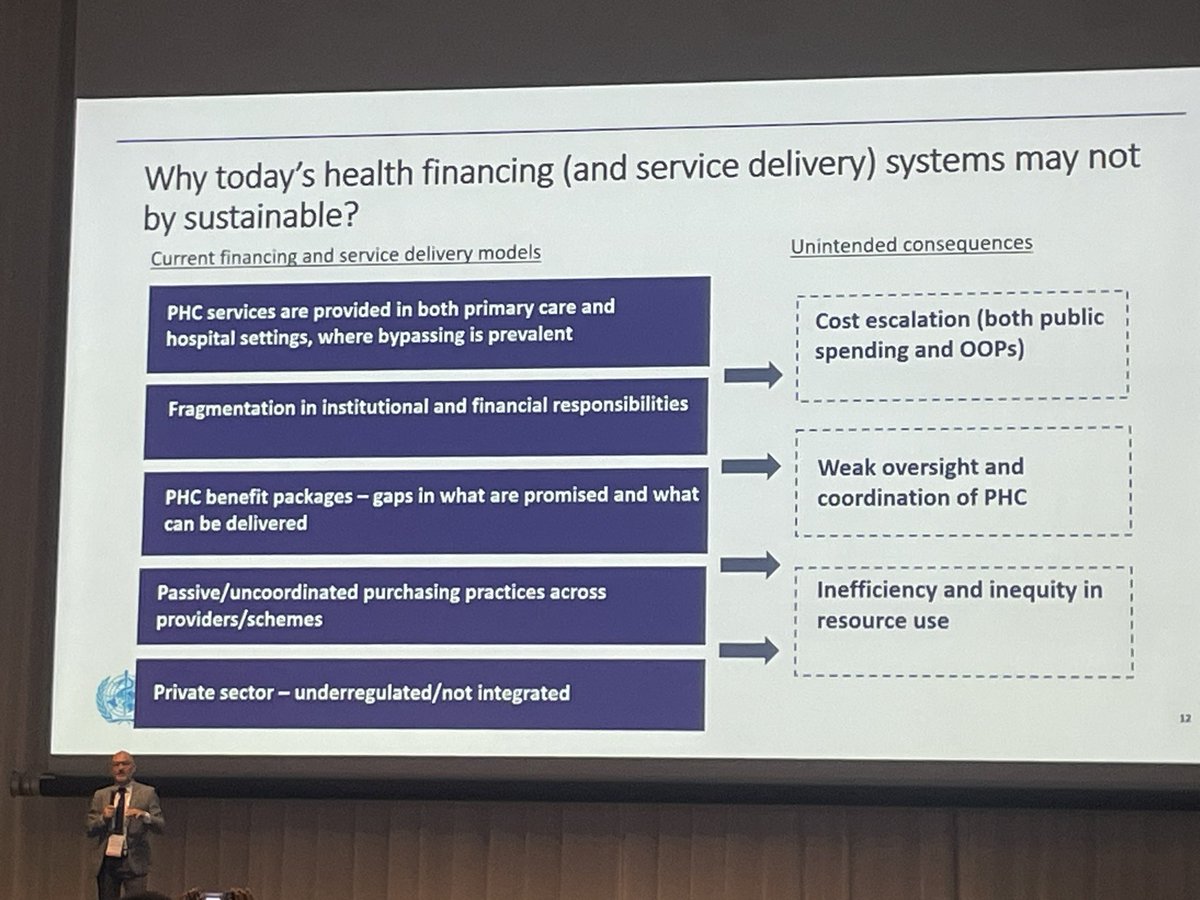
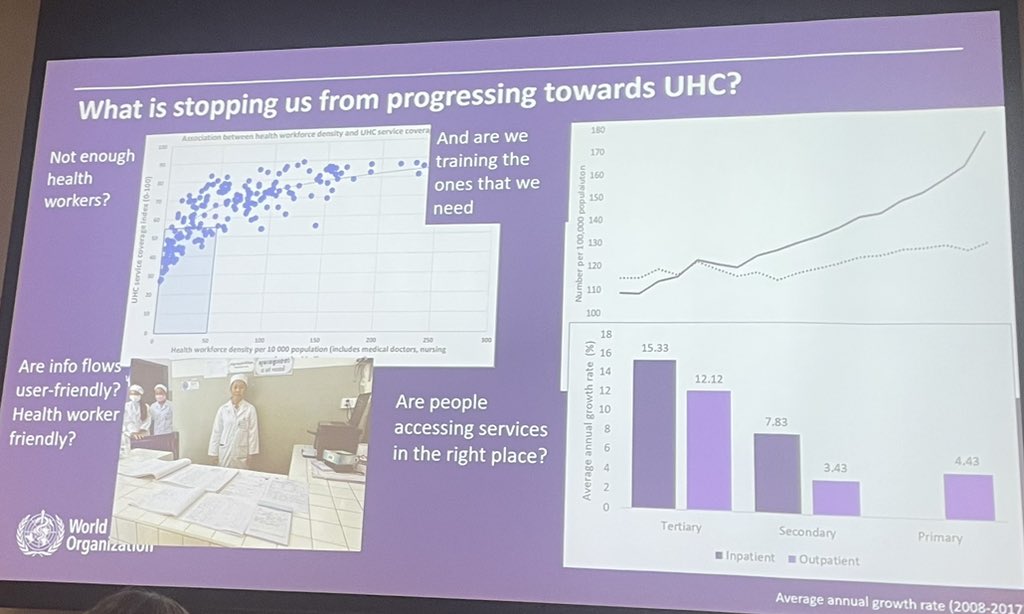
Why today’s health financing systems may not be sustainable: Lluis Vinals Torres sharing insights into unintended consequences of strategic decisions that are not informed by evidence #PHC#HSR2024@WHOWPRO
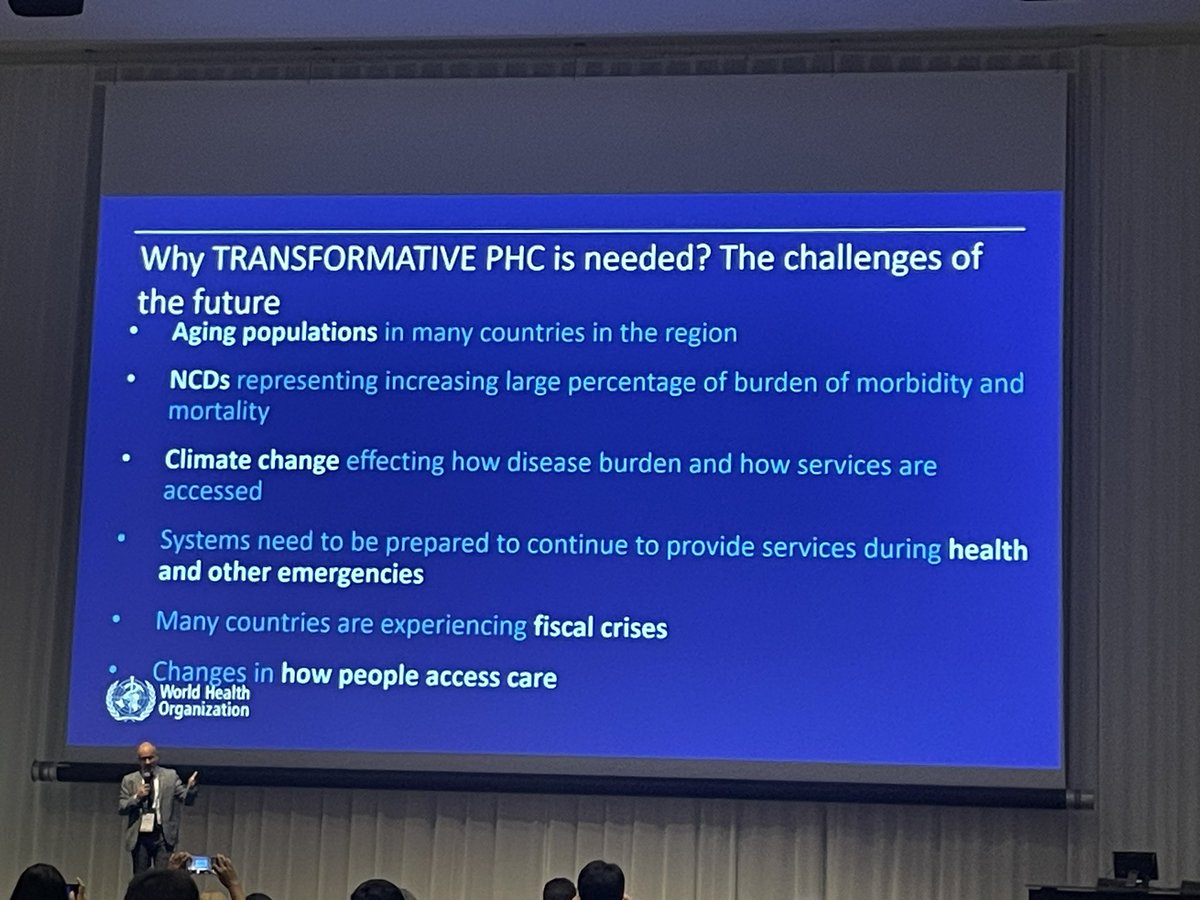
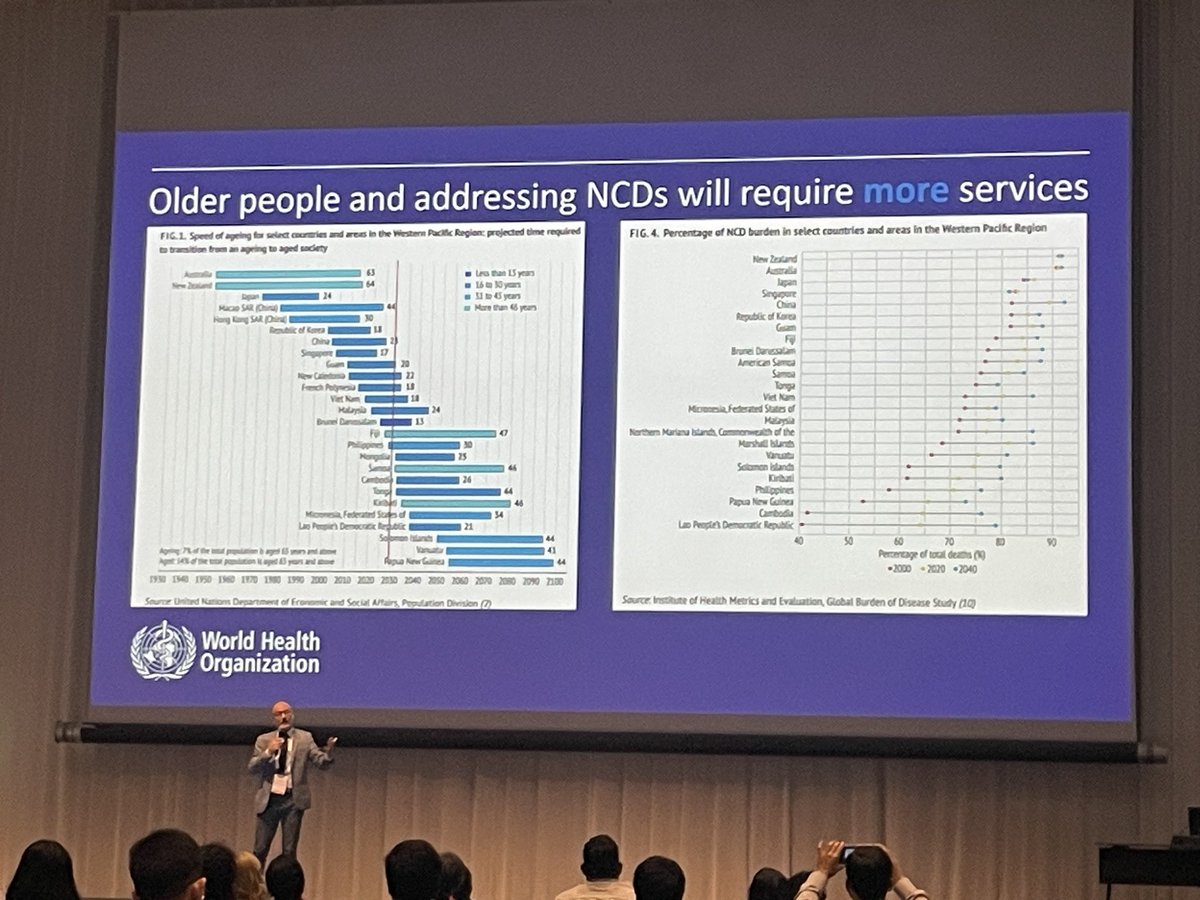
Transformative primary health care is needed now more than ever as populations in @WHOWPRO are ageing and experiencing growing burden of NCDs: Lluis Vinals Torres #HSR2024#PHC
Something I see a lot in qualitative research is a lack of analysis. Basically a rundown of what's in the data, but without doing anything with it (analysis). It's the qualitative equivalent of descriptive stats. Short thread.
WPRO’s Lluis Vinals-Torres sharing insight that more and more people in the region are going to hospitals and we are seeing increasing sub-specialisation of the workforce: these trends are not sustainable for the future #UHC#HPSR2024
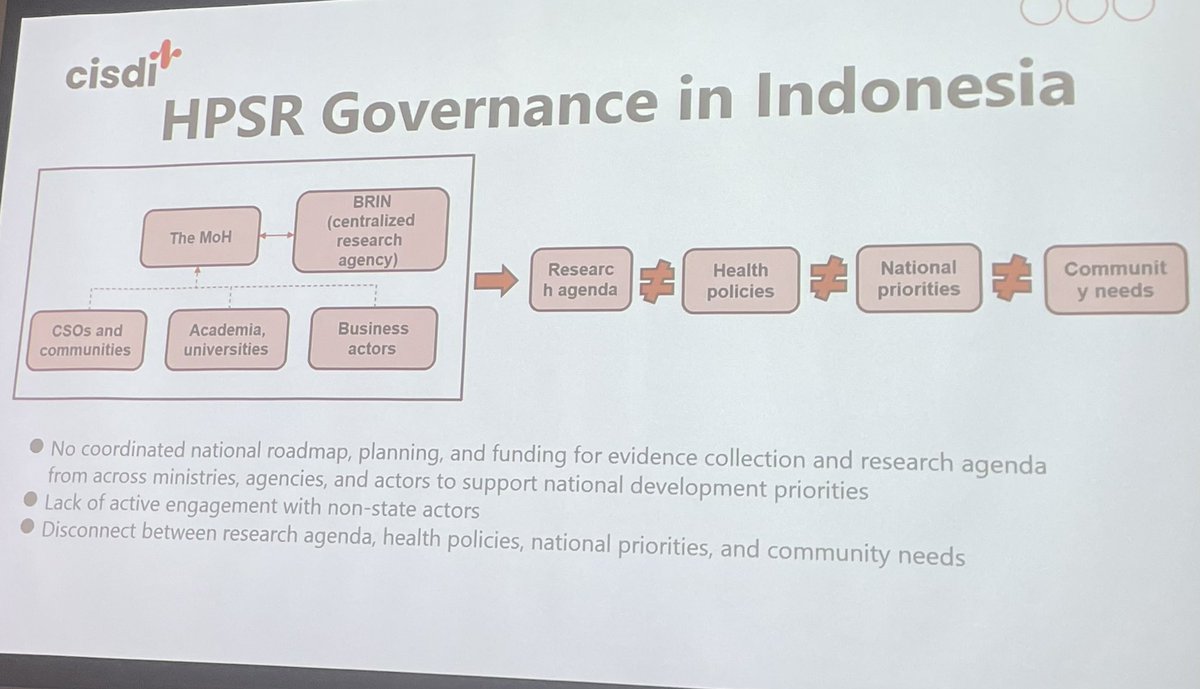
Excellent presentation by @DiahSaminarsih reflecting on experience in Indonesia - the #HPSR research ecosystem needs to be institutionalised, involving triangulation between researchers, policy entrepreneurs and civil society #HSR2024
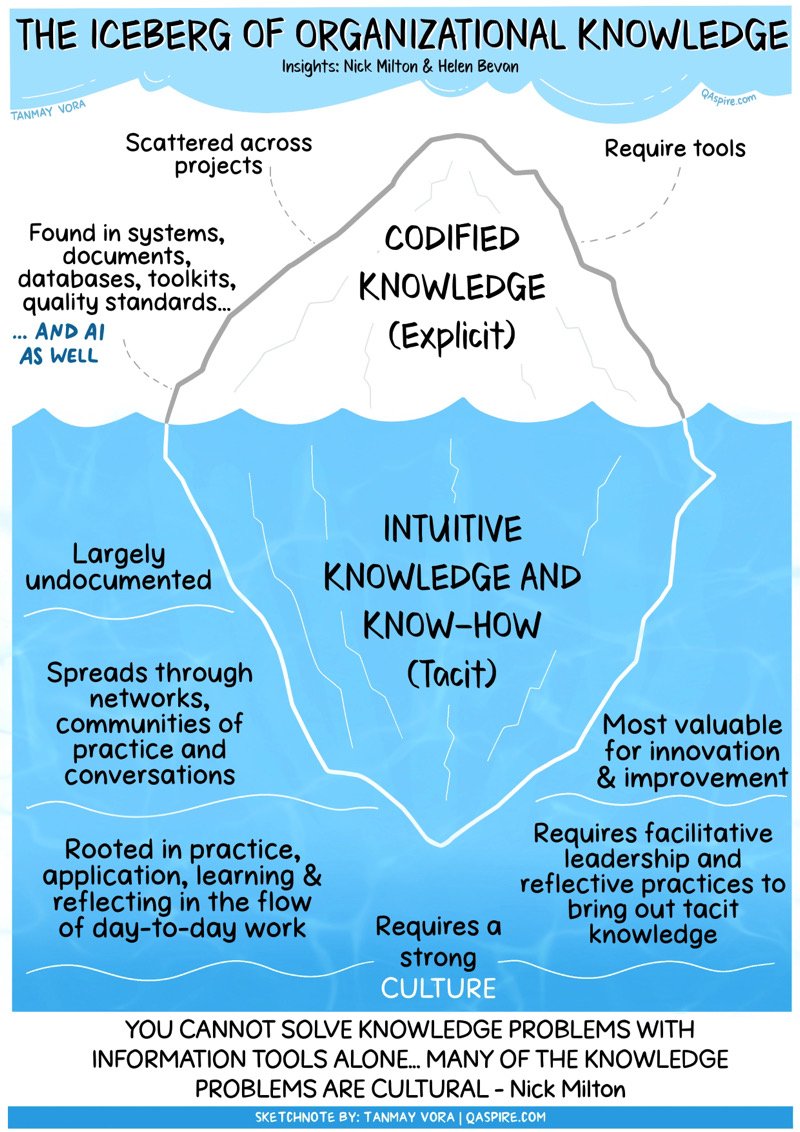
So much of our focus in trying to spread improvements is in "explicit" knowledge: toolkits, good practice databases, standardised pathways etc. Most of the content that AI repurposes from online resources is explicit knowledge.
Yet the biggest opportunities are in "tacit" knowledge: the practical "know-how" rooted in people, their experiences, insights & judgements. Unlocking tacit knowledge is how organisations break past their internal barriers to innovate & improve.
Thanks @tnvora for a striking new version of the explicit/tacit iceberg picture. Tanmay has also written an excellent blog on how to unlock tacit knowledge: https://t.co/IkfVQK4DBE
How to say no. A superb article: "In a world that often values compliance over authenticity....we find ourselves entangled in a web of obligations, constantly saying yes to requests that may not align with our true desires or priorities. Yet, buried beneath the layers of societal expectations & internalised guilt lies the power to reclaim our autonomy".
This article explains:
- the reasons why we always say yes
- why we should learn to say no
- how to recognise when not to say yes
- tips for learning how to say no
- different (positive) ways of saying no
- how to deal with unwelcome responses
https://t.co/T4jymB3H4m. By @LauraCopleyLPC. I paired it with a graphic on the same topic by @donnellycss.