Wrist pain from Pushups comes from weak & immobile wrists… Make yourself a stick & do this.
100 reps both sides, every morning.
Your wrist pain & elbow pain will vanish. Plus your forearms will be explosive AF.
Most people cannot do 15 clean single-leg calf raises.
Each rep forces one calf to lift your full bodyweight with control. This is why it feels hard, why it builds more muscle than bilateral raises, and why it improves the single-leg strength runners and people over 40 actually need.
Lower for 2–3 seconds. Pause at the bottom. No bouncing.
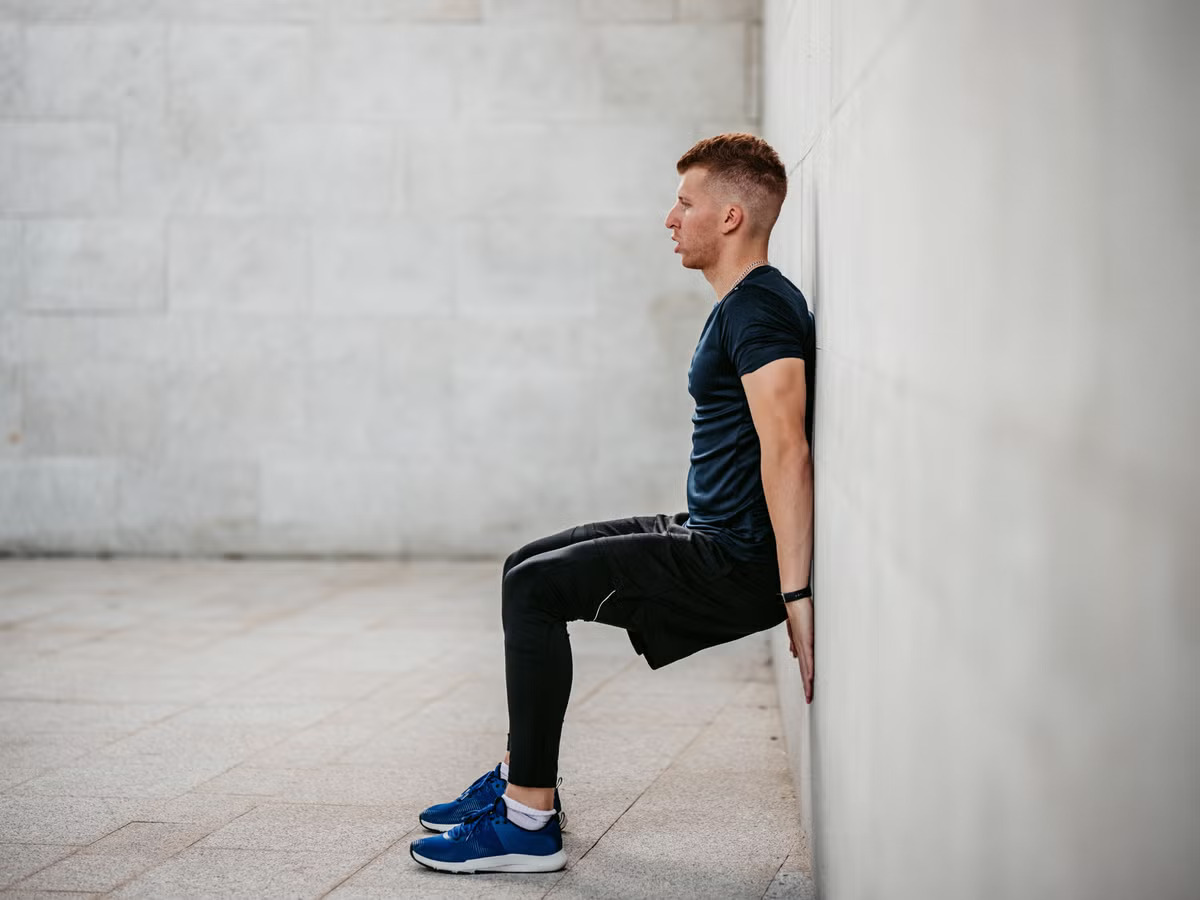
Here’s a proven exercise protocol for significantly lowering blood pressure: 4 sets of 2 minutes of wall squat holds, with 2 minutes of recovery between each one (do this 3 times per week): https://t.co/bkamFZ2Npr
I trained with Cameron Shayne for a week, he has some of the best mobility and athleticism I have seen.
He is 53 and moves like a ninja
Advocates for ground-based training, quadrupedal movement, grappling, and Budokon (movement modality he created)
Powerful for fitness and longevity when done properly
Herbalist Simon Mills has practised since 1977, and his first pick for a cold isn’t a pill. It’s ginger and cinnamon in hot water.
In his explanation, ginger widens the blood vessels in the lining of your nose and throat. The mucus loosens and flows more easily, which helps your body clear things out. He calls ginger and cinnamon a pairing “created in heaven.”
His recipe is very simple:
- A thumb-sized piece of fresh ginger, grated straight into the mug
- A Ceylon cinnamon stick, or about 1 tsp ground. He specifies the tightly rolled kind, not cassia.
- Pour hot water over it
Optional: cover the mug and let it steep 10 minutes so the aromatic oils stay in the cup. Then let it cool until it’s comfortable to sip, and stir in a teaspoon of honey.
His point about Ceylon matters. Cassia, the usual supermarket cinnamon, contains far more coumarin.
In a 2008 Cardiff study, a hot drink relieved cold symptoms better than the same drink at room temperature. Ginger’s compounds activate the same heat receptor as chili, which is why it feels warming. A 2020 Oxford review found honey eased coughs (not for babies under 1).
An old herbal remedy, and one of the few with modern research behind it.
Here’s a 27 MIN Full Body Lymphatic & Fascia Flow | Release Tension & Calm Your Nervous System
Enjoy it ♾️
Let me know how it makes you feel.
https://t.co/pfNoHN67jm
As someone who works with nervous system regulation, here’s the TRUTH I NEED TO TELL YOU:
You don’t “heal” the vagus nerve.
You signal safety to it—repeatedly.
The vagus nerve resets through experience, not explanation.
Here’s how to actually do that ⤵️
Many think stiffness is "getting older." But it's not age.
This is from unexplored movement.
Seek to increase movement vocabulary.
This stimulates neuroplasticity and creates tissue tolerance in all the directions.
Protecting from injury.
A lifelong practice of staying curious in ones own body.
Which ones can you do?
Four weeks of wall squats reduced systolic blood pressure by nearly 10 points in adults with high blood pressure.
Researchers then compared continuing three sessions weekly with reducing to two, one, or none for another month. Systolic pressure remained roughly 7 mmHg below starting levels in the once- and twice-weekly groups. Continuing three sessions weekly produced the greatest reduction of about 14 mmHg. In those who stopped completely, blood pressure moved back toward baseline.
This fits with a previous analysis of randomized trials that identified isometric exercise, which involves holding a muscle contraction, as an effective way to lower resting blood pressure.
What interests me is the practical question - how much of an exercise benefit can we preserve when we temporarily have less time? This study suggests that reducing the frequency can retain part of the benefit for up to a month.
Dr. Vonda Wright is a 58 year old surgeon who wrote a book called Younger in 8 Weeks. She says what changes how you look is a weekly routine, not a product.
On Mel Robbins' podcast, she gave 7 truths about looking younger:
1. Walk four times a week, lift heavy twice
Think squats fix mobility as you age? Think again. 🛑
New research shows aging rewires your ankles — and most leg workouts miss it.
• Stiffening Trap: Nervous system fires opposing ankle muscles at once (co-contraction) — gas + brake.
• Wasted Effort: More muscle activity, but weaker push-off power.
The Real Fix — Train smarter:
1. Single-leg balance holds (30+ seconds, eyes open then closed) — builds proprioception and timing.
2. Calf raises (slow eccentric lowering) — strengthens tendons and improves push-off.
3. Ankle mobility drills like “ankle ABCs” (drawing the alphabet with your foot) or stair dorsiflexion stretches.
4. Tai Chi or balance-focused moves — excellent for coordination and reducing co-contraction. Ankles trade efficiency for stability earlier than you think. (Lindsay et al., Gait & Posture 2026)
Whic of these ankle fixes are you ading to your routine this week?👇
Source:
Ankles trade efficiency for stability earlier than you think. (Lindsay et al., Gait & Posture 2026)
SHOCKING TRUTH ABOUT CELERY JUICE
AND HOW IT MANAGES BLOOD PRESSURE
1. Celery isn't a vegetable—it's a blood pressure killer. Phthalides relax the muscles around your arteries, dropping pressure instantly.
2. Drink 8oz of celery juice daily. By Day 3, blood pressure drops; by Day 21, hypertension is reversed.
3. Never juice it with sugar. Stacking celery with cucumber creates a powerful diuretic that flushes excess sodium.
4. Stop taking blood pressure supplements. Celery regulates blood pressure naturally without side effects.
5. It contains apigenin, which kills c@ncer cells and reduces chronic inflammation in the body.
6. Drink it in the morning for a hidden advantage. It alkalizes your body and boosts digestion for the entire day.
Dr. Ford Brewer is a physician who runs a metabolic health practice focused on preventing arterial plaque and heart disease.
On his YouTube channel, he revealed 10 truths about keeping your arteries clear:
1) 75-95% of plaque comes from one thing
Desk push-ups and chair stands sound too easy to matter. A 60-person trial proved otherwise.
-
Prolonged sitting weakens your quads, glutes, and calves while creating a vicious cycle: weaker legs make standing harder, so you sit even more.
In a 60-person trial of sedentary adults, just 3 sets of 5 or 10 chair sit-to-stands, 3 days a week for 8 weeks, improved muscle quality 40–45% and relative power 29–38%. (Lizama-Pérez et al., PeerJ 2023)
No gym, no equipment.
Here's the line-up:
1. Chair sit-to-stands — Stand from your chair without using your hands, then lower slowly. Great for quads and glutes.
2. Standing calf raises — Rise onto your toes, pause, and lower slowly. Use the desk for balance if needed.
3. Desk push-ups — Hands on a sturdy desk, body straight, lower your chest toward the edge and press back up.
4. Standing hip abductions — Hold the desk and move one straight leg out to the side. Targets the gluteus medius and challenges balance.
5. Seated knee extensions — Straighten one leg, squeeze the quadriceps briefly, then lower with control. Add an ankle weight or resistance band when body weight becomes too easy.
For breaking up prolonged sitting, sit-to-stands may give you the most bang for your buck: one movement gets you out of the chair while training some of the largest muscles in the body.
Start with 5–8 slow sit-to-stands every hour today. Which of these five will you actually do this week?
#DeskExercises
🚨 Your kidneys work 24/7… but most people only think about them when something goes wrong.
💧 Warm water 🍋 Lemon water 🥥 Coconut water 🫐 Cranberry juice 🥒 Cucumber juice 🫚 Turmeric water ❤️ Beetroot juice
Sometimes the best support doesn't come from a bottle… it comes from what you pour into your glass every day.
Your kidneys are silently keeping you alive. Start treating them like it. 🩵