A huge thank you to our friends @WILDLABSNET for highlighting our bumblebee acoustics research 🐝🎧 We look forward to sharing more about how we use bee buzzes in bee conservation on https://t.co/eiPypqc4ia 🥳 #tech4wildlife
Ellie here reporting live from the #tech4wildlife@cv4ecology summer school at The California Institute of Technology! Today I'm learning from students' final presentations on the models they've worked on for the past three weeks, and talking with them about their experiences.
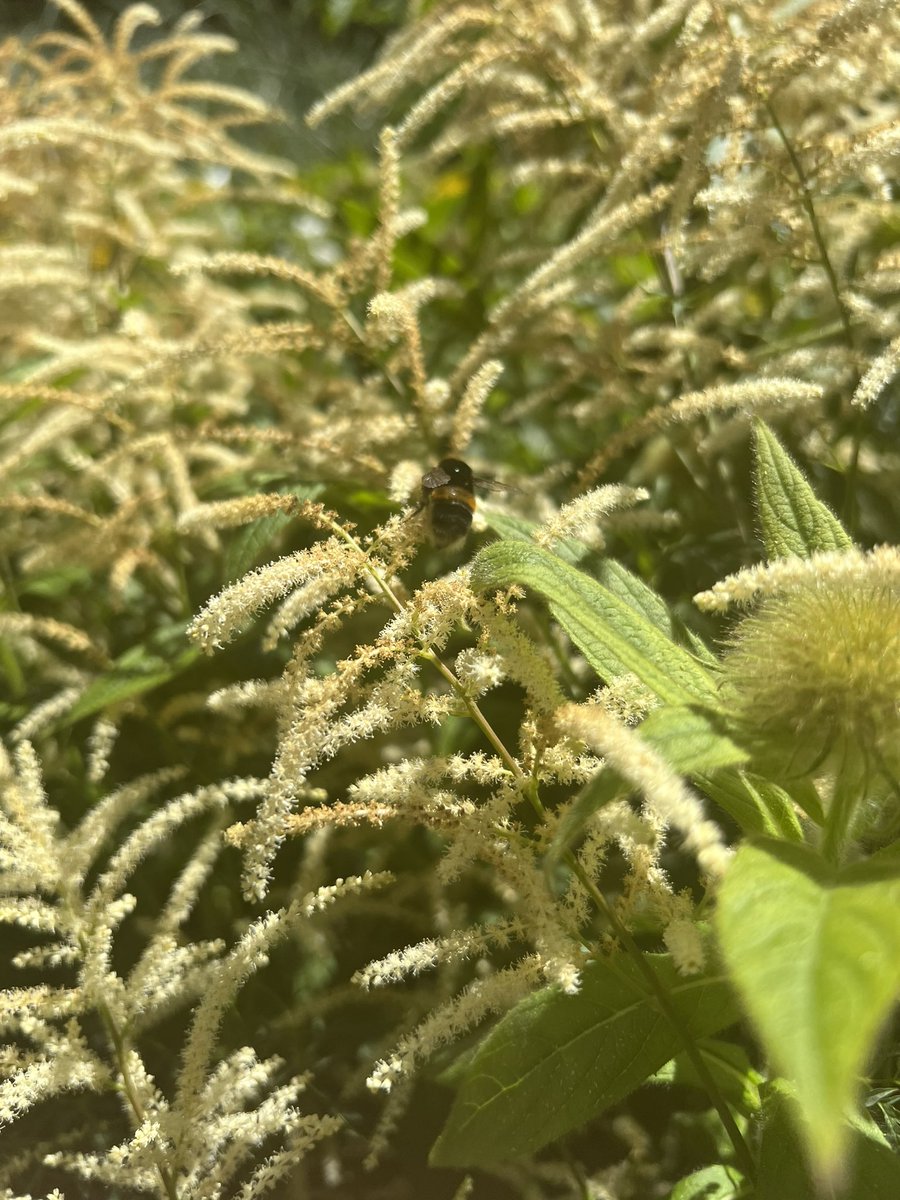
@DCrainium @TheBotanics Hi @DCrainium! Shoot us a DM and we'd be happy to explain our research to you in more detail 😊 In short, the tagging is for our group leader Alix's PhD thesis on the acoustics of bumblebees and how they can be used in bumblebee conservation.
Alixandra Prybyla, a PhD student and Darwin Trust Scholar at @EdinburghUni, will work with the @EdiBeeBrigade to train models to monitor bumblebees in acoustic data, identifying species-diagnostic signatures in a continuous stream of real-time sounds.
How do 🐝s stay cool during the #hottestdayoftheyear? In a #heatwave, bees regurgitate a droplet of fluid and keep it in motion by flexing their proboscis. This causes evaporative cooling of the droplet. The bee's head is cooled up to 2°C! #AcademicTwitter
https://t.co/dAPHunJ7rt
With the temperature set to soar across the UK we are asking you all to offer some shallow bowls of water for hedgehogs and other wildlife - pop in a few pebbles to ensure insects can escape. Please share!
🎥 Paul Bunyard
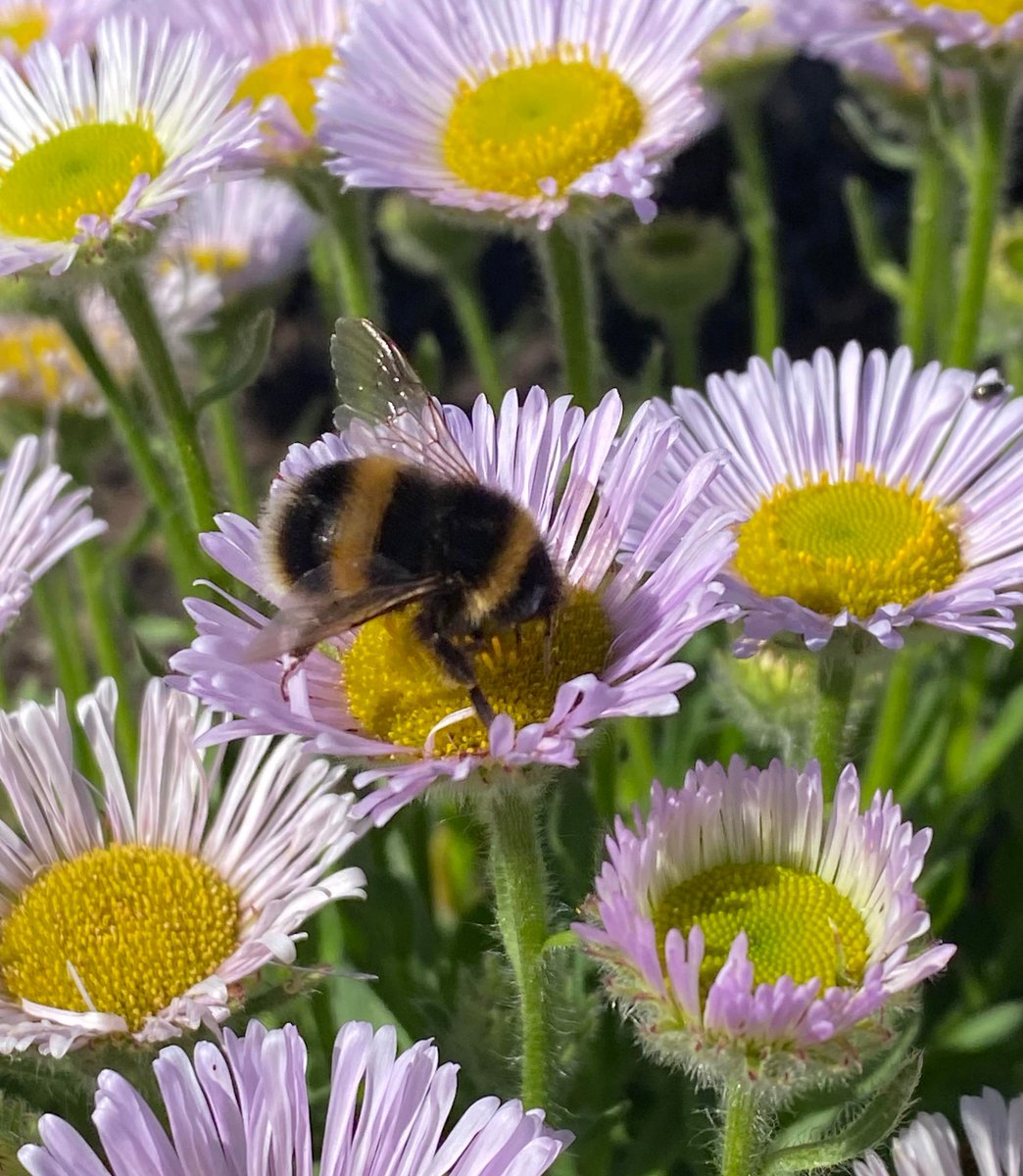
Did you know that only 24 of the ~270 known bee species in the UK are #bumblebees? The majority are solitary bees: each female has her own nest.
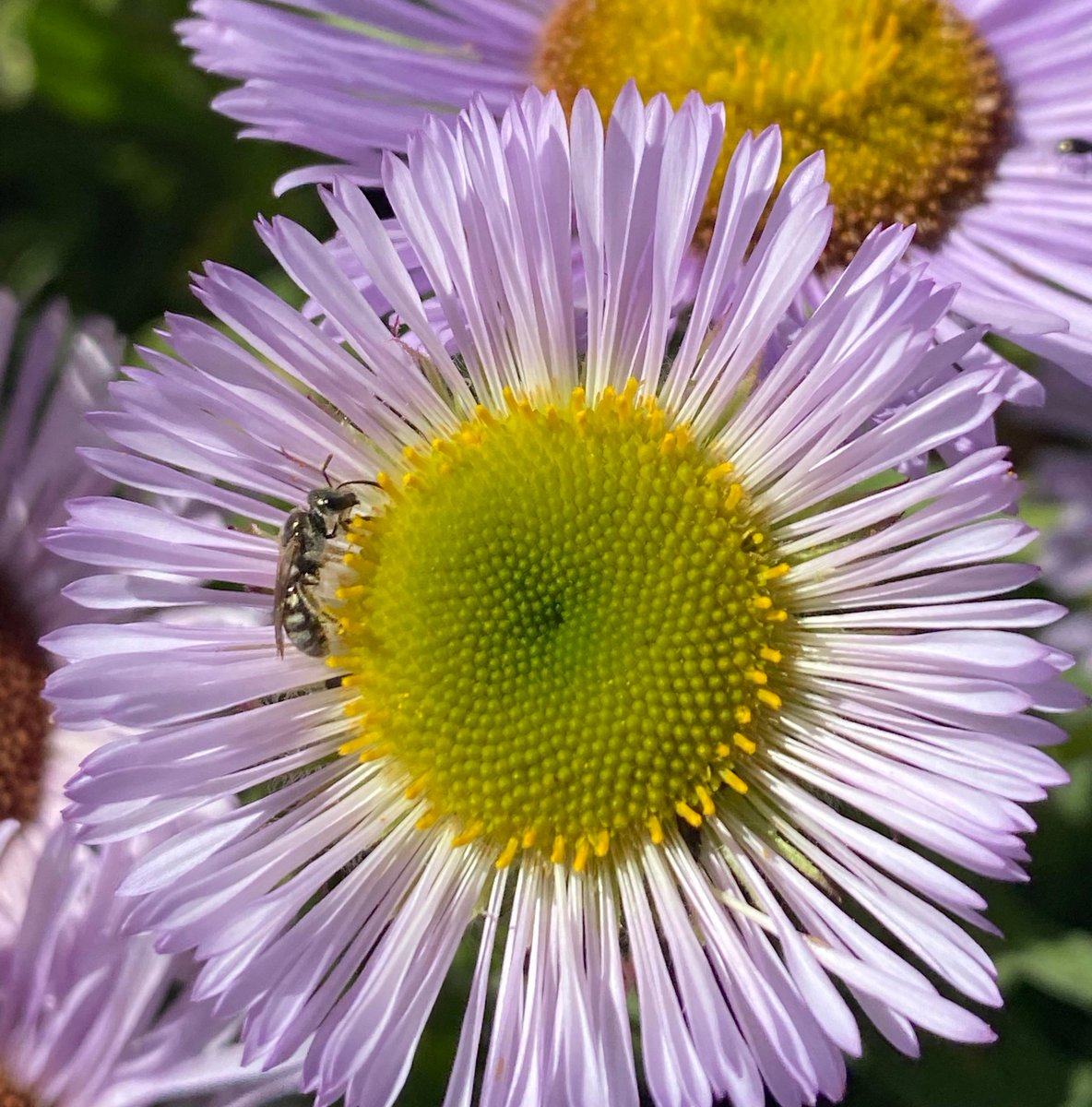
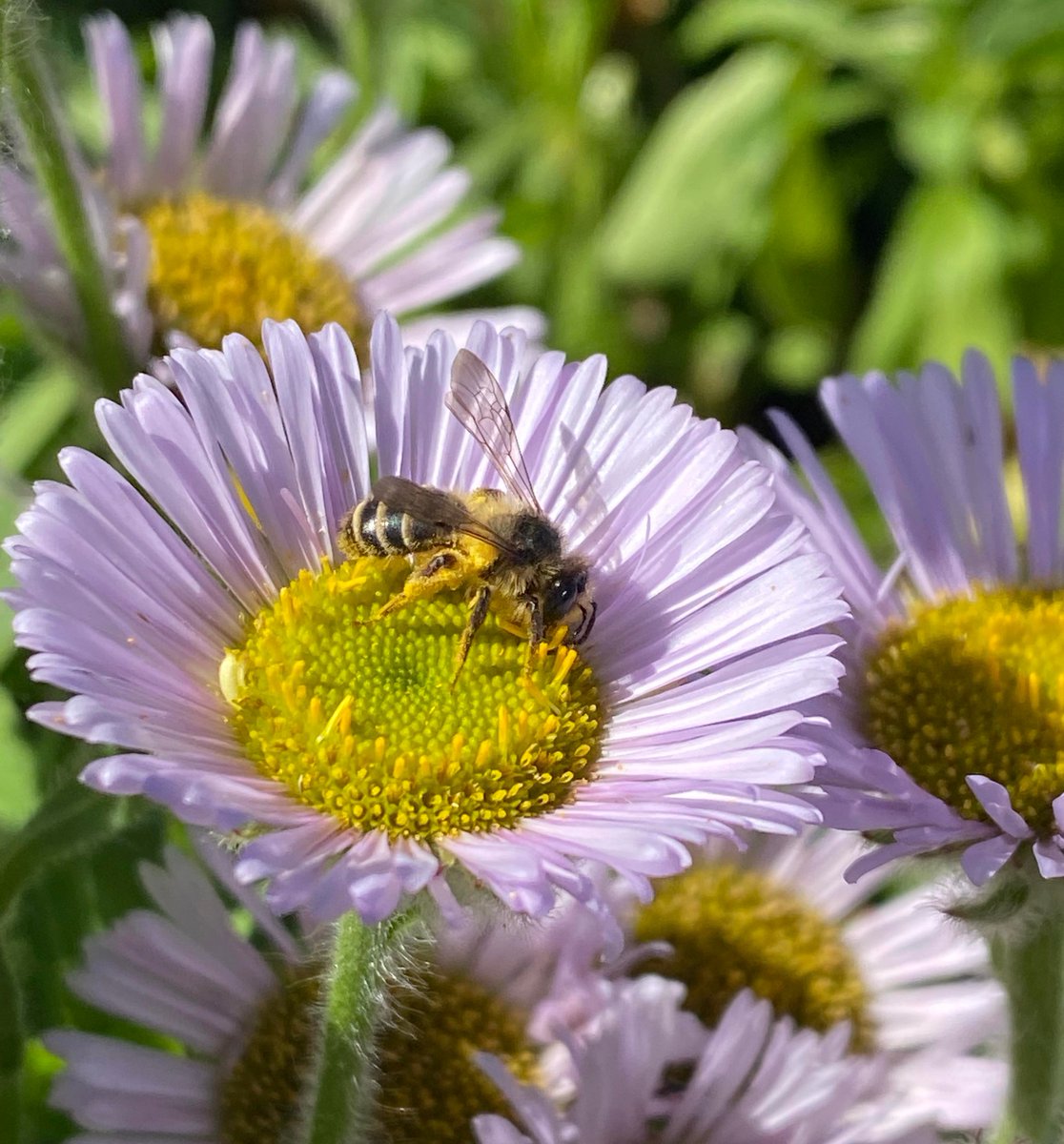
You can still find solitary bees, like Andrena dentiulata and a Lasioglossum sp., foraging side-by-side with eusocial bumblebees!#PhD
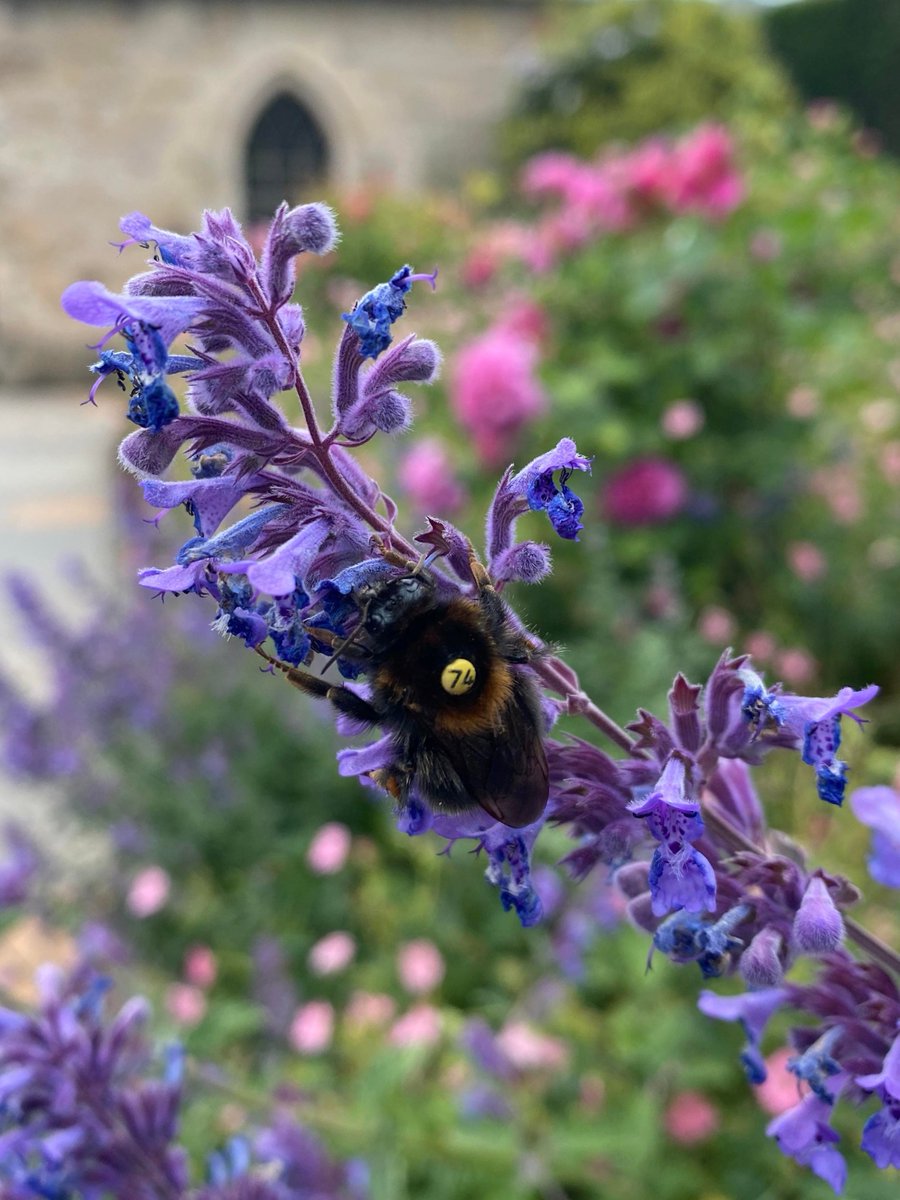
@ElizaCoulson @TheBotanics That is a lovely Bombus hypnorum, or a Tree Bumblebee! They came over from France in the early 2000s and have since established themselves all over the UK. Many nests exist around the Botanics 🐝
Local to #Edinburgh and want to get involved with a family-friendly #citizenscience project?
Join us at @TheBotanics' Demonstration Garden on Sunday, July 10th from 12PM - 4PM for a game of #BingoBees 🎲 Play bingo by finding our tagged bumblebees, gather data, & win prizes 🐝
@craftygreenpoet It's always a treat to see multiple types of pollen in a pollen basket! This one in particular was very beautiful. We spent quite a while admiring the bee's hard work 😊
#Bumblebee pollen loads are monospecific 44%-65% of the time (i.e. they come from one flower species).
When 🐝s forage from multiple species, they create beautifully layered pollen loads. We think Y89's pollen load looks like strawberry ripple #icecream 🍦#365DaysWild#PhdChat
Scientific citations: Free, J. B. "The flower constancy of bumblebees." The Journal of Animal Ecology (1970): 395-402.
&
Willmer, Pat. "Pollination and floral ecology." Pollination and floral ecology. Princeton University Press, 2011.
Ice cream image: https://t.co/GzcIeJq0Lx
@nicrodemo@TheBotanics@SBSatEd We use a unidirectional parabolic microphone. The parabolic dish is specially shaped so that it can direct lower frequencies (as low as 80-100Hz) towards the microphone 🔊
What does an acoustic survey look like? 🎧
For our #PhD#research, it involves a specialized microphone to pick up low-frequency #bumblebee buzzes, two netters to catch the 🐝s, and a cooler to bring our 🐝s to torpor for handling/measurements!
#PollinatorWeek#AcademicTwitter
Would you believe these #bumblebees were the same species? Yellow 73 (left) exhibits Bombus hypnorum's common ginger morph. Yellow 74 (right) is much darker--almost black! She is a great example of a melanistic/melanic morph 🐝 We 🧡🖤 🤍 phenotypic variation.