Banco de México, the Federal Reserve Bank of Dallas, Norges Bank, and Banca d’Italia are organizing the Fourth Women in Central Banking Workshop to be held in Mexico City on the 6th and 7th of November 2026 - further info here: https://t.co/p1ZCnnDWVi . Apply!
The International Economic Review has just published a wonderful paper by the late Marcus Hagedorn (with special thanks to Iourii Manovskii) on A Demand Theory of the Price Level. It is available through @WileyEconomics here: https://t.co/9IzqfY6p60
A few weeks ago I started as Associate Editor at the Journal of Monetary Economics. I am excited about handling papers close to my research interests and interacting with authors and referees. I will work hard to make it a smooth process! 🙂
As real analysis and linear algebra were critical parts of the bootcamp math for PhD in economics, literacy on machine learning is critical now. Overparametrization, benign fitting, transformer, stochastic gradient descent should be part of the pre-training of Ph.Ds
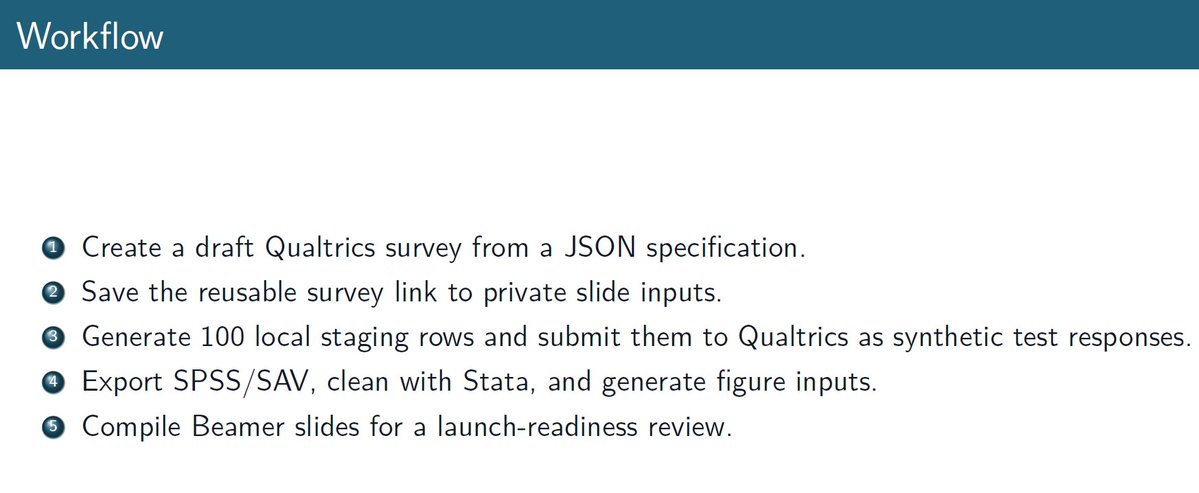
Do you run Qualtrics surveys? Then use my GitHub repo to automate the whole process with Codex! Tell Codex what you want to study, and it will create the survey, push to the survey to Qualtrics and generate synthetic responses, download and clean the data, and produce a set of slides summarizing the process.🧵with complete guided example!
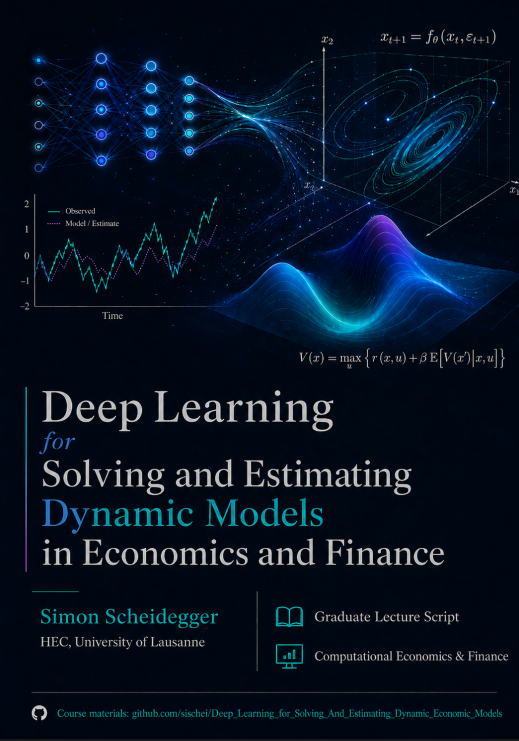
Thrilled to share a project I've been refining: a complete, open-source repository on "Deep Learning for Solving and Estimating Dynamic Models in Economics and Finance."
I've cleaned up the materials from my PhD classes and summer schools into one coherent resource. 🧵 1/6
Berlin Macro Seminar keeps rolling 👇
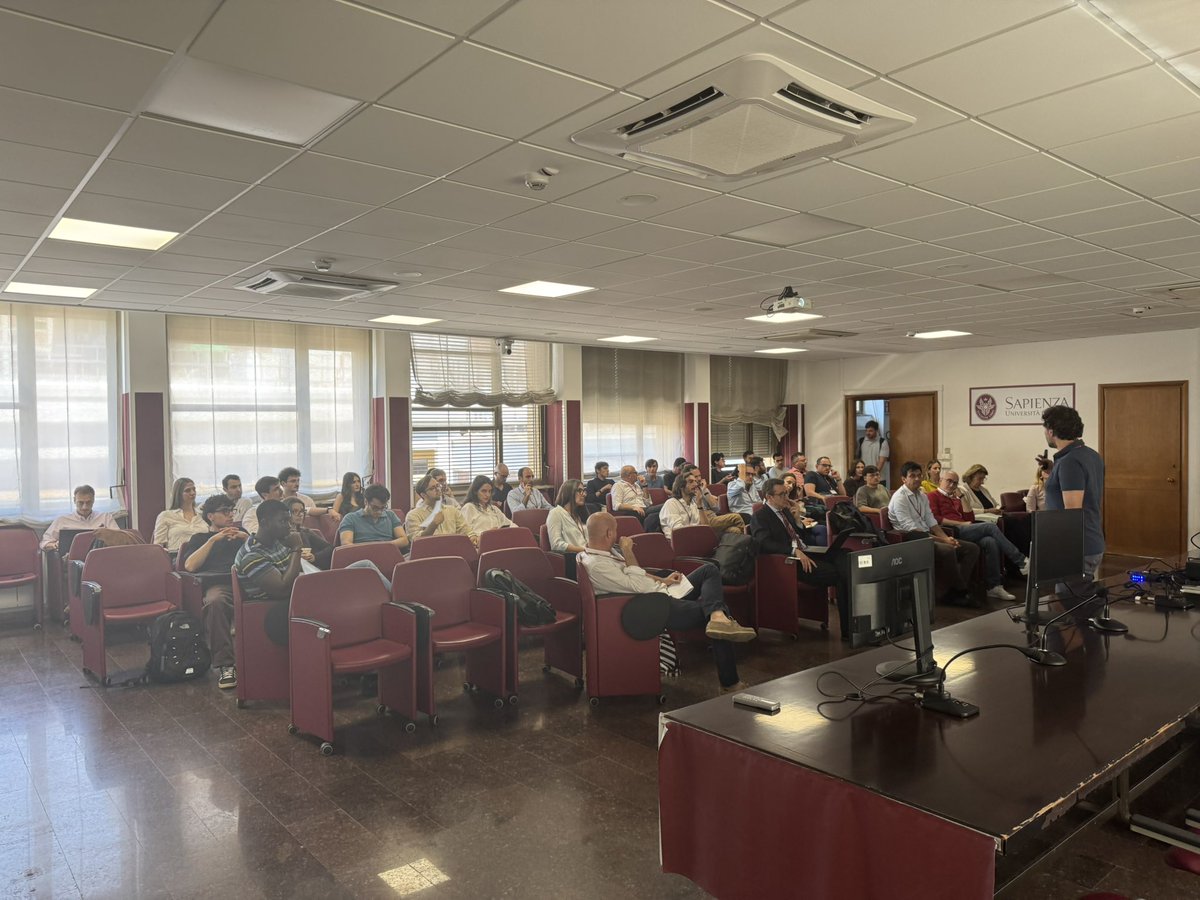
Yesterday @LeonardoMelosi presented “The Taming of the Skew” (with Andrea De Polis & Ivan Petrella) on asymmetric inflation risks and why central banks should lean against upside/downside risks when setting policy.
Good news, and timely given the situation in the Middle East: our paper, “Estimating the Macroeconomic Effects of Oil Supply News,” has been conditionally accepted for publication in @restatjournal!
A thread 🧵
Call for applications - PhD in Economics & Management @UniPadova for 2026/27 is now open!
6 fully funded positions: 4 Economics, 2 Management. Deadline: 20 May 2026, 1:00 PM CEST
Presentation video here: https://t.co/rKqmiq1XSK
Apply here: https://t.co/GkLlMWaPmm
Another reminder the applications for our course "Tools in Macroeconomics" is still open (will likely close by the end of June): https://t.co/Lp4ItiM80h
This is a course that teaches students key computational methods used in macro, as well as the more advanced stuff. 1/3
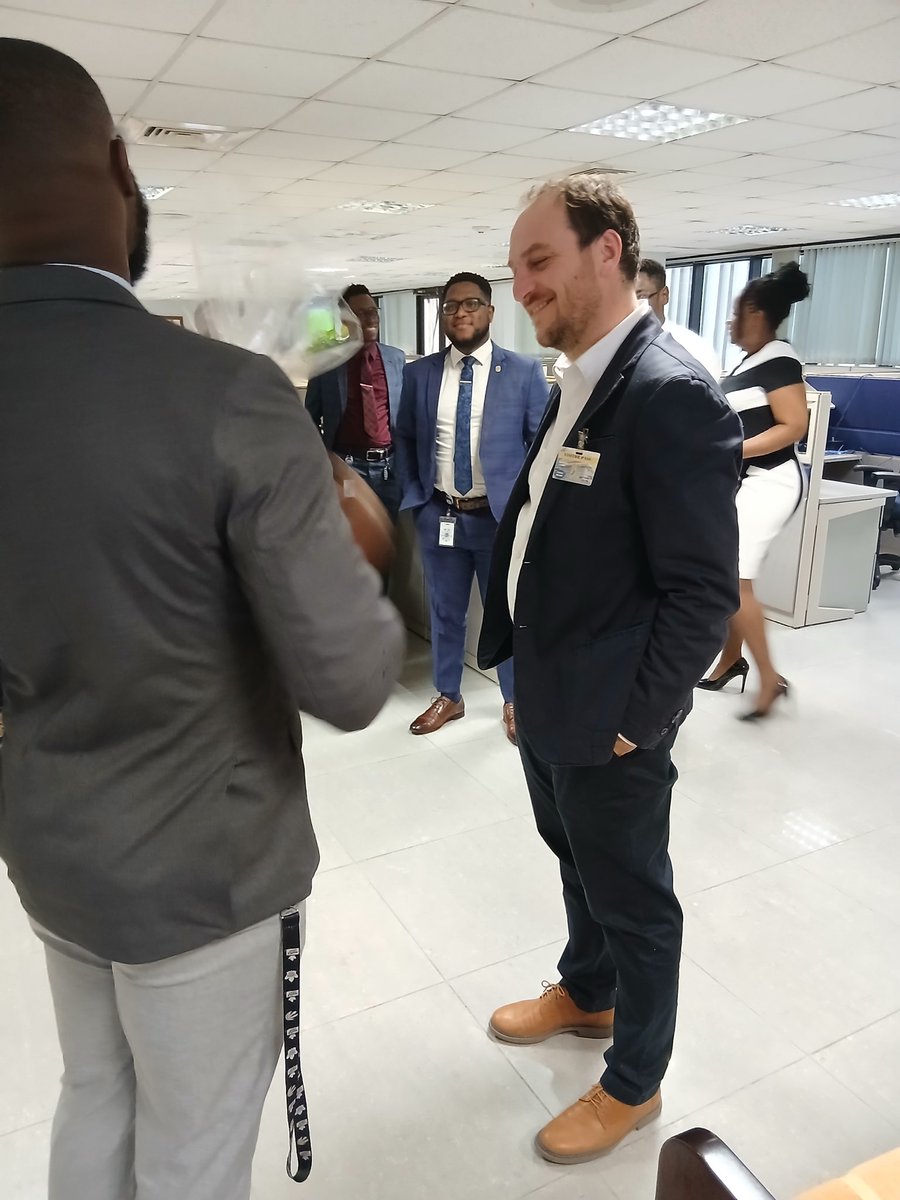
On Monday, I had the pleasure of giving a presentation at the Research Unit of the @CentralBankJA. I received a very warm welcome and enjoyed all the discussions about key challenges that the Jamaican economy is currently facing. 1/2
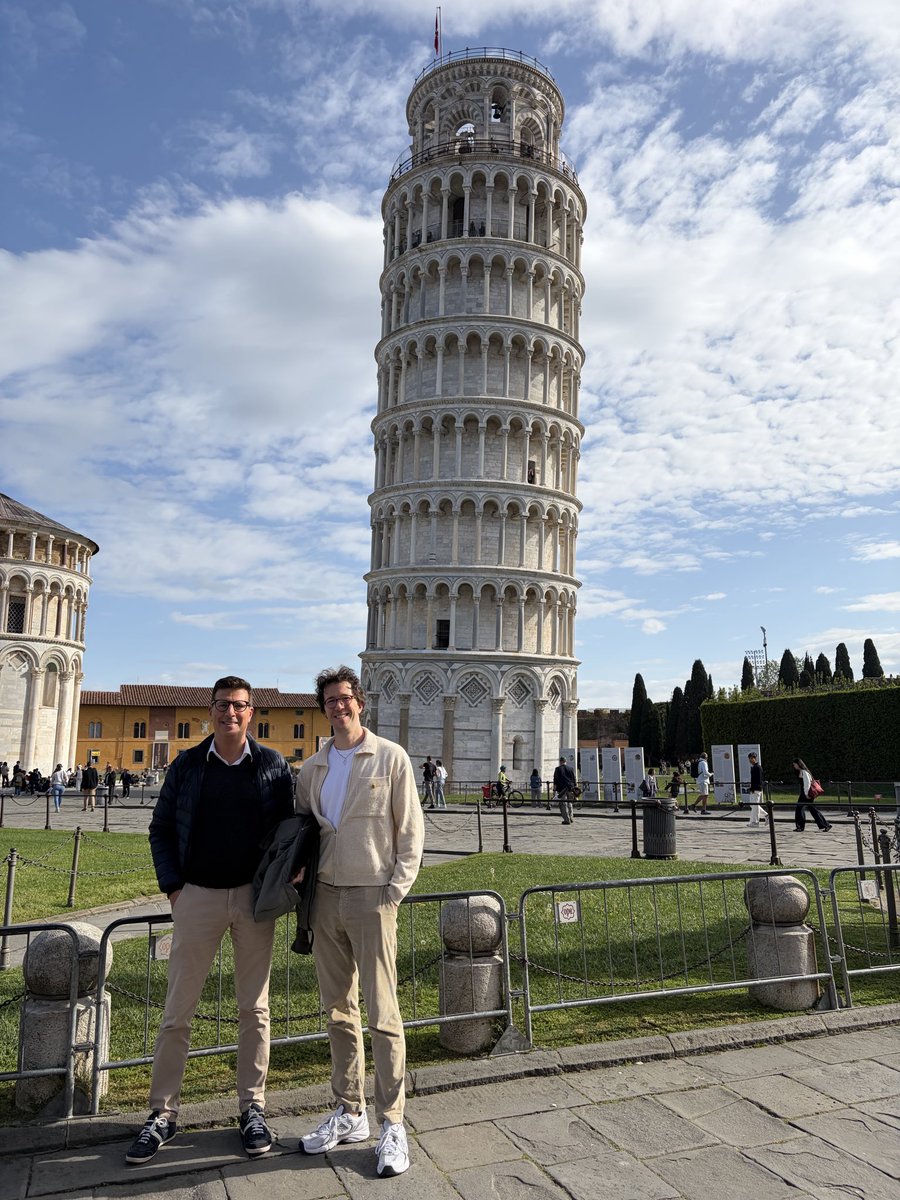
Prof. @nmaffeifaccioli and I are super happy to be @SantAnnaPisa for our annual course on Empirical Macroeconomics. Nicolo’ teaches econometrics of SVAR models while I teach applications (Phillips curve, inflation surge, hysteresis, inequality, labor share, immigration). Pisa 🥰
I am using Florin’s textbook in my first year PhD macro class and it’s a delight. The exposition is beautiful, highly recommended.
Using the book also reminded me that the best way to learn something is to teach it - I am learning a lot going through the book.
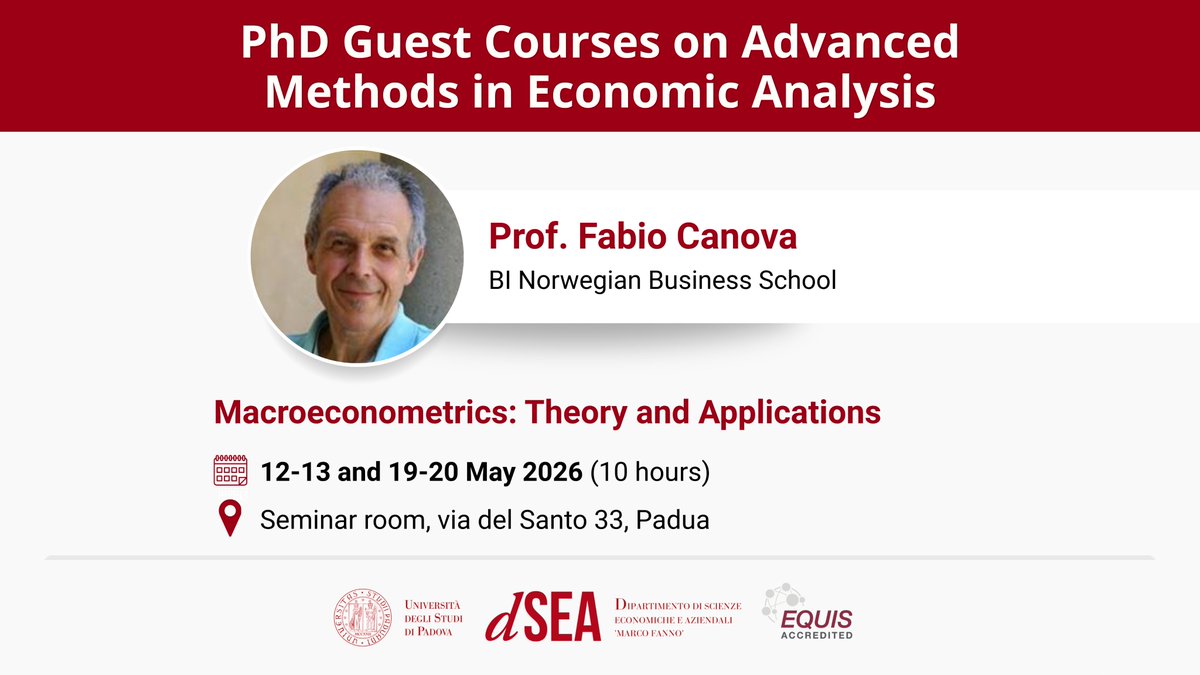
🎓PhD Guest Course: "Macroeconometrics: Theory & Applications"
📅May 12-13 & 19-20
📍#dSEA@UniPadova
With Prof. Fabio Canova (@HandelshoyskBI).
Open to PhD students with a background in econometrics and statistical programming.
🔗Details & Registration: https://t.co/tnvmGVFSzI
We are delighted to share some exciting news!
Luigi Paciello @gigipaciello has been appointed to the Board of Editors of the American Economic Review (AER).
He will serve a 3-year term from Jan 1, 2027 to Dec 31, 2029.
Congrats, Luigi! 🎉
In the last few weeks I have been working on automating economics research. With the current advances in AI coding agents, many are trying to produce high-quality economics research at scale by using autonomous swarms of AI agents, but as far as I can see nobody did crack the code yet.
Therefore, I decided to take it on me to design a sophisticated orchestration system that completely automate economic research from idea to full research article. And I think I have done it. Research in economics will never be the same.
The system still needs some tweaking, and it is very expensive, however at this point I can reveal that it produces AER-level research output. I link here the first paper produced with this new system. I would be grateful for your comments.
https://t.co/IhjT3SEV5h