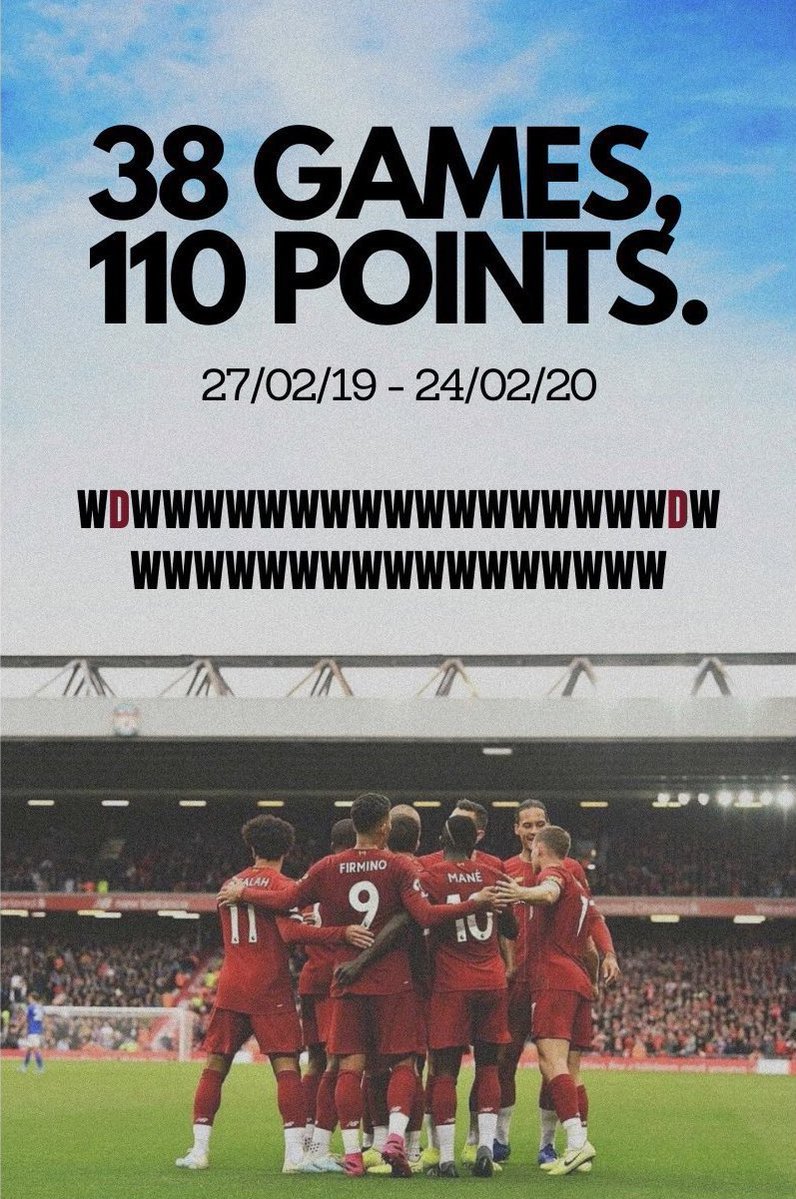
There really have been some howlers so far this season. PL’s key match incidents (KMI) panel ruled 5:0 that Tony Harrington wrongly awarded Palace a penalty against Liverpool.
"The panel unanimously felt that the referee's call of a penalty for a challenge by Kerkez on Osorio was incorrect with the contact being inevitable given the jumping actions of both players."
https://t.co/0APpiduJER
Huberman opened his fridge for Men’s Health and said it wasn’t staged. This is what he actually eats.
Cold brew yerba mate first (organic, zero sugar, usually raspberry). Persian cucumbers still show up two or three times a day. In college people called him cucumber boy for the same reason.
Protein at meals, olive oil, a little butter and Parmesan, blueberries, low sugar fermented stuff like sauerkraut. Bread, oatmeal or rice when training volume is higher. Grass fed steak because his dad’s Argentine.
He’s been eating roughly this way since he was 16. Same basic structure for 25 to 30 years: protein, fibrous produce, healthy fats, starches that move with training. Not identical groceries every week. Just the defaults that stuck.
Most people keep swapping systems. He locked the fridge early and left it alone.
What’s one thing that’s been in your kitchen since your teens that you still buy without thinking?
This interview is the holy grail of insight needed to rehabilitate the human race.
Watch Australian biologist Jeremy Griffith explain his revolutionary breakthrough in understanding human behaviour we've been waiting for.
If you need a new perspective and inspiration that will stay with you going forward, check out @RobertGreene on the latest Huberman Lab podcast. His book Law of the Sublime comes out 11/10/26. Read it & it’s now in my top 10 of all books of all time.
JOE ROGAN: “The guy who wrote the study that’s often quoted about vaccines not causing autism just got arrested for fraud.”
“People around Fauci… that don’t have a pardon from Biden are getting arrested now.”
Rogan is talking about Poul Thorsen, the Danish epidemiologist behind Madsen et al., published in NEJM on November 7, 2002. It covered 537,303 children and claimed “strong evidence against the hypothesis that MMR vaccination causes autism.”
Thorsen just pleaded guilty to wire fraud for stealing more than $1,000,000 in CDC grant money.
In contradiction to Thorsen’s autism claim, Dr. Peter McCullough’s team at the McCullough Foundation reviewed 136 vaccine studies for Determinants of Autism Spectrum Disorder. Twenty-nine came back neutral, and 107 inferred a possible link.
The study’s conclusion: “Combination and early-timed routine childhood vaccination constitutes the most significant modifiable risk factor for ASD…”
An MIT-trained Harvard psychologist ran an experiment that exposes a bug in how you think about money. Drive across town to save $100 on a $200 stereo? Most people say yes. Drive across town to save the exact same $100 on a $31,000 car? Most people say no.
Same $100. Same drive. Same person. The only thing that changed is what the $100 is standing next to.
His name is Dan Gilbert, Harvard psychologist, author of Stumbling on Happiness. He didn't build this from theory — he built it on a rule from 1738. Daniel Bernoulli's original idea for making any decision under uncertainty was simple: multiply the odds of an outcome by how much it's worth to you.
Expected value = probability × value.
Gilbert's argument is that we're bad at both halves of that equation. We misjudge the odds. And we misjudge the value even worse.
The car stereo isn't a one-off trick. It's mental accounting — your brain doesn't evaluate $100 as $100. It evaluates $100 as a percentage of whatever it's attached to. Save 50% on a stereo feels like a win. Save 0.3% on a car feels like nothing. The dollar amount never moved.
Same failure shows up with a lost ticket. Lose a $20 ticket on the way to a show, and most people won't buy a replacement. Lose a $20 bill on the way to the same show, and most people buy the ticket anyway. Economically, you're $20 poorer either way. Psychologically, replacing the ticket feels like paying twice for one seat.
It shows up again with a wine list. Put a $27 bottle between an $8 bottle and a $33 bottle, and it looks reasonable. Change what's sitting next to it, and the same $27 bottle can look expensive or cheap without a single cent changing.
Here's the part that should worry you more than any of the individual examples. Every one of these comparisons — the stereo, the wine, the wallet, the ticket — disappears the moment you actually use what you bought. You don't drink the $8 and $33 bottles next to the $27 one. You just drink the wine. The comparison that decided your purchase evaporates the second the purchase is real.
Your brain isn't running the math wrong by accident. It's running a completely different equation than the one it thinks it's running — and the input it's optimizing for vanishes right after you pay.
PROTOCOLS is 7 Chapters that I’m confident will
1) provide new ways for you to improve your health & performance (cognitive and physical)
2) teach you some super cool biology
3) allow you to navigate other health information better
https://t.co/Y73L4s9la2
Out 9/15/26
A true master class in the human neuroscience of motivation, apathy, procrastination, and more. From a neurologist physician-scientist who truly understands the actionable takeaways.
One of my favorite conversations ever. On or off microphone.
🚨BOMBAZO! El ingeniero que construyó Claude Code desde cero acaba de soltar un video de 28 minutos que es puro oro puro.
Cómo escribir prompts que entregan resultados BRUTALES de verdad.
He visto cursos de 300 dólares que no llegan ni a la suela de lo que él explica en los primeros 10 minutos.
Archivos CLAUDE.md, atajos de memoria, sesiones paralelas y patrones de prompting que casi nadie usa…
Todo en un solo video.
Completamente gratis.
Cero relleno.
Da igual si estás empezando, si eres developer o si ya llevas meses con Claude: esto te cambia el juego desde hoy.
Guárdalo.
Míralo.
Compártelo.
El que lo ve… no vuelve a promptar igual.
Sam Altman (CEO of OpenAI):
"You no longer need to write prompts."
In just 38 minutes, he explains how to use ChatGPT at a level that most people can't even imagine.
It's a talk he gave to Stanford students. A friend sent me the recording last night.
After watching it, I realized I was only taking advantage of about 15% of what this tool can really do.
Watch it in full and then read the guide I leave below on how to create a system that prompts itself.
Follow @AnishJaitwar for more
INSTEAD OF WATCHING NETFLIX TONIGHT. Spend 2 hour with this.
Claude AI FULL COURSE that teaches you how to BUILD and AUTOMATE anything.
The people who watch this tonight will wake up tomorrow with a new skill. Watch it and bookmark it now.
Cc : Respective Author
HARVARD FILMED THE FIRST LECTURE OF THEIR MOST POPULAR STATISTICS COURSE - TAUGHT BY A PROFESSOR WHOSE STUDENTS CALL HIM THE BEST TEACHER THEY HAVE EVER HAD - AND IT PROVES WHY EVEN ISAAC NEWTON GOT PROBABILITY WRONG
This is Joe Blitzstein, Harvard, Statistics 110, lecture 1. He has won Harvard's Excellence in Teaching award multiple times, his textbook Introduction to Probability is used in over 200 universities worldwide, and his online course has been taken by over 2 million people across 190 countries. He opens by saying that after a few weeks of this course you will easily solve calculations that 300 years ago required consulting Isaac Newton - and Newton's intuition was still wrong.
He traces probability to Fermat and Pascal writing letters back and forth in the 1650s analyzing gambling games. No one had mathematically derived the rules before. They invented the subject by betting on dice in correspondence. Then he shows why the naive definition - probability equals favorable outcomes divided by total outcomes - breaks immediately. Ask what the probability of life on Neptune is. Either there is or there isn't. By the naive definition the answer is 1/2. So is the probability of intelligent life on Neptune. Something is severely wrong.
Then the multiplication rule. Two types of ice cream cone and three flavors gives 6 combinations - not because you memorized it but because you can draw a tree and count branches. Every counting problem in the course is just a bigger version of that tree. Then binomial coefficients - n choose k counts the number of ways to select k objects from n when order doesn't matter. The full house in poker falls out in 4 lines of multiplication once you understand the tree.
Watch the moment he fills in the sampling table - with or without replacement, order matters or doesn't. Three of the four boxes are immediate from the multiplication rule. The fourth requires a proof he saves for next lecture. That one box is harder than the other three combined.
A data scientist I know rewatched this lecture before switching careers into statistics. Said it was the first time probability felt like a system with rules rather than a collection of tricks.
Free on YouTube, Harvard, over 2 million views.
bookmark this and watch later - after this lecture you will never again confuse equally likely with obviously true
INSTEAD OF WATCHING NETFLIX TONIGHT.
Spend 1 hour with this.
Claude AI FULL COURSE that teaches you how to BUILD and AUTOMATE anything.
The people who watch this tonight will wake up tomorrow with a new skill.
Watch it and bookmark it now
INSTEAD OF WATCHING AN EPISODE OF NETFLIX TONIGHT...
Watch this 38-minute Stanford lecture by OpenAI CEO Sam Altman.
It will teach you more about using ChatGPT than 99% of prompt engineering guides online.
I watched it last night and realized I was using maybe 15% of what ChatGPT could actually do.
Watch it first.
Then read the guide below on how to build a system that prompts itself.
A billionaire went on stage and explained in 42 minutes how the entire economy works. for free. Wall Street spent the next decade pretending nobody saw it.
he didn't sell a course. he didn't plug a fund. he stood at a whiteboard and drew three lines that explain every crash, every recovery, and every rate decision since 1929.
MBA programs charge $200,000 to teach frameworks he covered in the first 15 minutes. six of the models he drew on that board are still classified as proprietary at three major banks. he gave them away on YouTube.
the part nobody talks about: he predicted exactly what happened in 2020, two years before it played out. interest rates hitting zero, the central bank running out of tools, the money printer. he drew it on a whiteboard in 2018 like he was reading tomorrow's newspaper.
a portfolio manager at a top-five firm told me every new analyst on his desk watches this before they're allowed to open a terminal. not the CFA prep. not the internal training. this one lecture.
40 million people have seen it. almost none of them can name the three forces he draws in the first ten minutes.
it is still free.
A man spends 50 years teaching at MIT.
He knows his time is running out.
So he records one last lecture — everything he knows, distilled into a single hour.
He died 5 months later.
This is that lecture.
The most important hour you'll watch this week.
Bookmark it for later!
INSTEAD OF WATCHING NETFLIX TONIGHT. Spend 2 hour with this. Claude AI FULL COURSE that teaches you how to BUILD and AUTOMATE anything. The people who watch this tonight will wake up tomorrow with a new skill. Watch it and Bookmark it now.