Back in 2004, the Pentagon offered $1 million to anyone who could build a car that drives itself 142 miles across the desert. The best one made it 7.4 miles before it got stuck on a dirt berm and its front tires caught fire.
Paul Graham's car just drove him from his driveway to a parking space at the gym without anyone touching the controls.
That 2004 race cost DARPA $13 million to run, and the teams spent an estimated four to five times that on their entries. Nobody finished.
So in 2007 the Pentagon tried again with something much harder. Robot cars had to drive through a fake city with real traffic, and one of the tests was pulling into a parking lot and parking. Carnegie Mellon's car, Boss, won the $2 million prize.
Just look at what was bolted to its roof. A spinning laser scanner built by Velodyne, a company that had been making home subwoofers a couple of years earlier. Five of the six cars that finished the race used one. It cost $75,000 for that single sensor.
The driveway and the parking space are the impressive part of Paul's tweet, by the way. Highways are the easy part of self-driving. A driveway has no lane lines and has never been mapped by anybody, and your neighbor's trash can is somewhere different every week.
For years Tesla's software wasn't even allowed to shift into reverse. Owners could watch the car's planner on screen trying to back up while a hard-coded rule stopped it. Backing out of park and parking itself at the destination only shipped in late 2024, with FSD v13.2. What Paul described has existed for less than two years.
Nobody at Tesla wrote code for Paul's driveway, either. In 2024 Tesla threw out roughly 300,000 lines of hand-written driving code and replaced it with one neural network trained on video of people driving. It learned to back out of a driveway from watching millions of humans do it.
Back in 2007, Paul's $40k would have bought you about half of the laser on Boss's roof.
Hi, I'm Felix. I'm an eng lead working on Claude. I love watching people take flight and do things they never thought possible.
We often describe that as "being more ambitious" when using AI, which is tricky advice to follow. I wrote a tutorial:
https://t.co/vNPPs5FWm8
Assorted things I've been mulling over regarding agents in the economy:
• Companies are in some sense the original superintelligence. It's often the case that they can use their amortized cognitive surplus to advance their interests against those of certain consumers: relative to the optimization capacity of companies, consumers can be inattentive, underinformed, irrational, etc. (Think, say, of some of the classic insurance upsells at the end of a booking process, which is typically priced substantially above what a regular policy would cost.) Herbert Simon introduced the idea of bounded rationality, and firms often end up benefiting from it. Thanks to personal agents, we will probably get somewhat more rational in how we engage with companies.
• How exactly will outcomes change? Well, certain kinds of price discrimination will work less well (how do coupons work if every agent hunts fastidiously for them?), and certain kinds of customer cross-subsidy will change (today, people who forget to cancel subscriptions subsidize those who don't). Taken across the economy as a whole, I'm not sure what the incidence of all of this will be.
• In corporate strategy, people have long debated the relative importance of distribution and product quality. Perhaps you've made something better, but does anyone know about it? Won't people just continue to buy the ACME Corp Mousetraps? Personal agents will, I think, act as a kind of structural subsidy for product quality. How would markets look different if individuals always spent at least 10 hours researching their purchases? On the margin, focusing on making a product better is, I think, going to become a more effective strategy for companies. This is good!
• It true, a corollary is that information about product quality will become more important and impactful. Today, most people have very limited ability to aggregate and integrate such data, but agents will have insatiable thirst for such signals. (It's often said that data is becoming more valuable because it helps in the training of models. That's obviously true, but I think there's a secondary way in which it's more valuable simply as a complement to cheaper intelligence.)
• A big question is whether agents will increase superstar effects (rational agents all settle on the same product) or increase dispersion (because everyone has slightly different tastes and preferences, which agents are good at eliciting, finally overcoming the artificial clustering we've been subjected to).
• Many internet companies have monetized demand routing, which is in turn often predicated on short attention spans. "I'll click on the first thing I see." This has led to some amount of inefficiency, as companies try to propitiate capricious ranking algorithms and incur various placement fees. It's not all deadweight loss (willingness to pay is itself a kind of signal, which is valuable to buyers), but it's not great. How will the nature and value of this routing change in a world of personal agents? I don't know the answer, but I think that the effects might be pretty big.
• Much of what I'm writing hinges on the assumption that personal agents will be on the consumer's side. I suspect that that will be the winning strategy, but whether it's true, and what it means to be true, involves a lot of other questions.
Taken as a whole, the market is a massively parallelized, decentralized, and highly imperfect value attribution machine, and, taking stock of all of the effects, it seems to me that the quality point may well be the biggest: that agents will change the nature of the backpropagation such that the rewards for better products increase. Maybe this is too optimistic, but I suspect (and hope) that companies that make things that they're proud of will feel that the universe is a little more partisan in their favor.
THIS IS BIG!
The Cancer Cells That Changed Their Minds
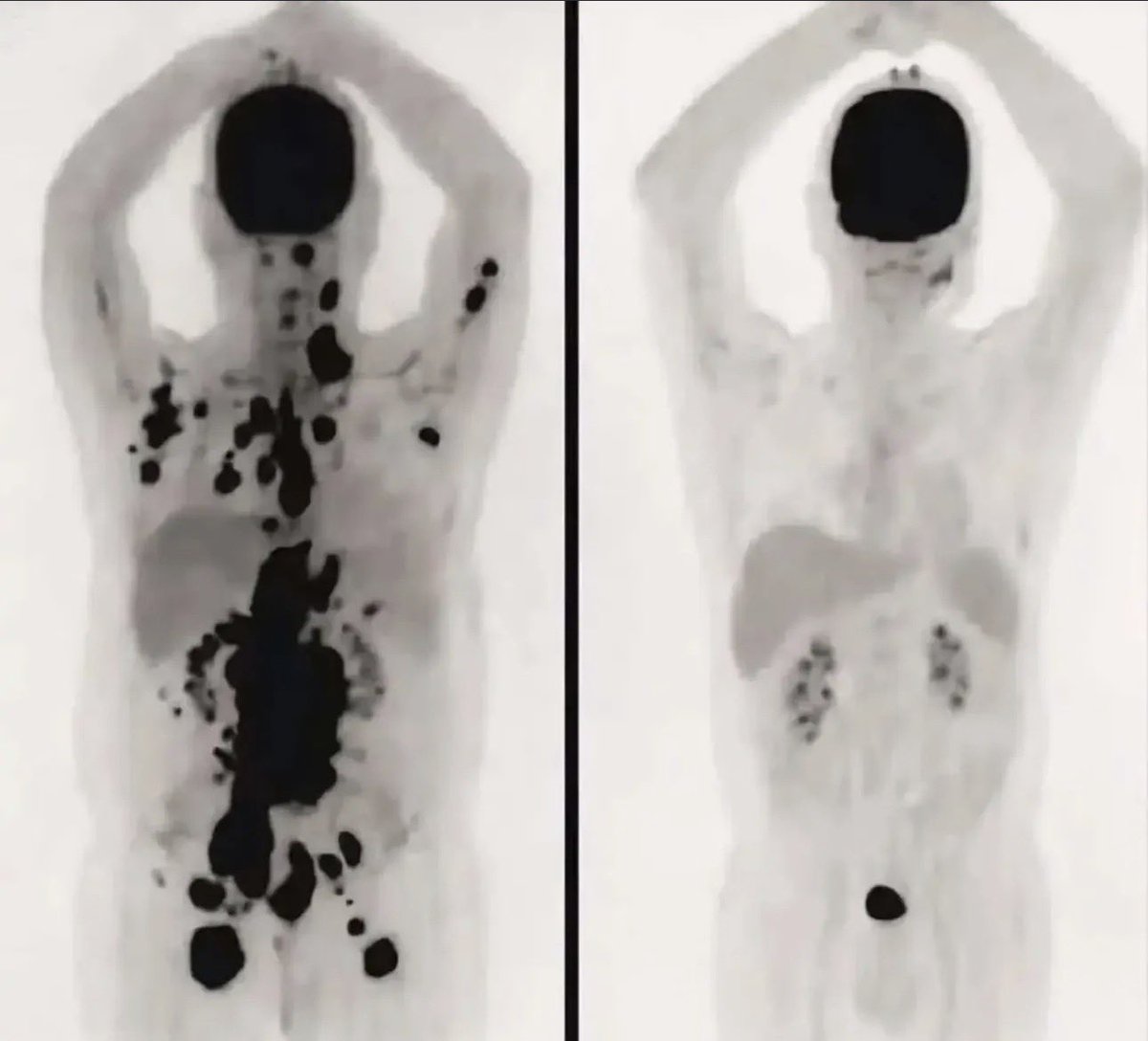
A KAIST team just reversed cancer without killing a single cell — and the method may matter more than the result.
For a century, oncology has had exactly one strategy: find the cancer and destroy it.
Chemotherapy poisons it. Radiation burns it. Surgery cuts it out. Immunotherapy teaches the body to hunt it. Every weapon differs in precision, but not in philosophy. The tumor is an enemy. You win by killing.
Now a team at South Korea's KAIST has proposed a heresy: *what if the tumor doesn't need to die?*
In a study led by Professor Kwang-Hyun Cho of the Department of Bio and Brain Engineering, published in Advanced Science ("Control of Cellular Differentiation Trajectories for Cancer Reversion," DOI 10.1002/advs.202402132), researchers took colon cancer cells and — without poisoning, irradiating, or cutting them — turned them back into normal cells.
Not dead. Not damaged. Just normal again.
The tumors, grown in mice, shrank dramatically. The surrounding tissue was left intact, because there was never an attack to survive.
This is early research — cell lines and animal models, no human trials, real obstacles still unsolved. But the conceptual break is the story. For the first time, cancer treatment has a second verb. Not just destroy. Also: convert.
The digital twin of a cell
The KAIST team's insight begins with a redefinition of what cancer is.
The conventional view treats cancer as a pile of broken machinery: mutations accumulate, checkpoints fail, cells proliferate. Cho's group looked at the same evidence and saw something different — a trajectory. During oncogenesis, they observed, normal cells don't just break. They regress, sliding backward along the differentiation path they followed when they matured. A colon cell becomes, in effect, a confused stem cell: immature, proliferative, lost.
If cancer is a wrong turn on a developmental road, then the treatment question changes. You don't blow up the road. You build a map and find the turn.
That map is what the team calls a digital twin — a complete computational model of the gene network governing a cell's differentiation. Using data from 4,252 intestinal cells, they reconstructed a network of 522 interacting components, capturing how genes regulate one another as a cell matures or degrades.
Then they did the audacious thing: they asked the simulation which levers, flipped together, would push a cancer cell back down the road toward normalcy.
The answer came through a system they built called BENEIN (Boolean Network Inference and Control), which models gene interactions as logical relationships and systematically tests which interventions redirect the network's state. The simulation pointed to three master regulators — the genes MYB, HDAC2, and FOXA2 — acting together as the switch that holds the cancerous state in place.
Turn all three off simultaneously, the model predicted, and the cell would stop proliferating and differentiate into something resembling a normal intestinal cell.
They tested it, and it worked.
In three colon cancer cell lines, suppressing MYB, HDAC2, and FOXA2 together strongly induced differentiation into normal-like cells. The cancer cells began expressing markers of healthy intestinal tissue. Proliferation collapsed — not because the cells died, but because they grew up.
In animal models, tumors formed from the reprogrammed cells were dramatically smaller than controls, and under the microscope they looked far more like normal tissue. The signature achievement, and the one that would matter most to any patient reading this: there was no collateral damage. Nothing was poisoned, burned, or irradiated. The healthy tissue never came under fire, because there was no fire.
1 of 2
ישבתי לרכז את החומר, כדי לא להשתגע.
כדי לבדוק עם עצמי אולי אני מפספס משהו מהותי, אולי אני פשוט לא מבין משהו בסיסי במנגנון הפוליטי שמנהל אותנו. אנחנו צועדים לקראת בחירות, אין עדיין ועדת חקירה ממלכתית שתעשה סדר בתוהו ובוהו השלטוני, וכל מה שאנחנו יכולים להסתמך עליו כרגע הוא החומרים הגלויים, הפרוטוקולים שדלפו למערכות העיתונים, הדיווחים שהצטברו בתקשורת האמינה והעדויות המפורשות של האנשים שהיו שם בזמן אמת.
ההיסטוריה הישראלית הקשה מכולן לא התרחשה בבוקר בהיר אחד וללא שום התראה מוקדמת. היא נבנתה נדבך על גבי נדבך לאורך חודשים ארוכים ומייסרים. זוהי פירמידה הפוכה של אזהרות מודיעיניות וביטחוניות שמלוא כובד משקלה הונח ישירות על שולחן עבודה אחד בלשכת ראש הממשלה בירושלים.
הכל מתחיל בינואר של שנת 2023. שר המשפטים יריב לוין נעמד מול המיקרופונים ומכריז מלחמה פנימית. הוא משיק מהלך פוליטי כוחני שמפרק את החוזה הישראלי הבסיסי ביותר. הציבור הרחב מתעורר בחרדה ויוצא לרחובות בהמוניו. הארץ גועשת ורועדת מן היסוד, בעוד מנהיגי ארגוני הטרור מביטים בנו בנחת.
האויב ניזון מקריאה קפדנית של העיתונות המקומית והרשתות החברתיות שלנו. הם רואים חברה שקורעת את עצמה לגזרים, ומזהים מיד הזדמנות היסטורית נדירה לפעולה צבאית רחבה.
DHH is probably one of the top software artisans of the past decade. Hearing him speak with this much conviction and transparency about one of the most polarizing topics in software right now, writing code by hand vs. with AI, is something pretty much every software engineer should hear a few times.
Especially those still on the wrong side of history.
i’ve spent a ton of hours and tokens prompting @Muse to make me this custom fashion app but holy crap is it worth it:
- gave it my height, weight, measurements, and photos
- gave it my top 20 clothing stores and budget ranges
- it picks a “hero piece” from the catalog
- then builds a look around it (inventing other common pieces)
- i described everything i like and dislike and i keep iterating each time
- these are my “loves” saved category
A few thoughts on the current state of venture capital.
When the Music Is Playing
In July 2007, a few weeks before the credit markets seized up, Chuck Prince, then the CEO of Citigroup, gave an interview to the Financial Times. The line everyone remembers is this one: "As long as the music is playing, you've got to get up and dance." He was mocked for it for years afterward, and he lost his job a few months later. But I have come to think he was saying something honest. He wasn't claiming the music would play forever. He was admitting that he couldn't sit down while it was still going, and neither could anyone else in his seat.
I've been thinking about that quote a lot lately, because right now is the most disorienting period in venture capital I can remember, and I have been doing this for a while.
Here is what makes it disorienting. It's not that things are bad. Some things are spectacular. We have companies in our portfolio growing faster than anything I have seen in my career, and I don't say that lightly. At the same time, we have companies with no revenue, no product, and a founding team you could fit in a conference room raising billions of dollars at valuations of $10 to $50 billion. Both of these things are true at once, and if you try to reason about them with the same framework you will drive yourself crazy.
Two ideas have helped me make sense of it. Neither is mine.
The first is reflexivity, which George Soros has been writing about since the 1980s. In most of life, perception follows reality: the weather is what it is, and your opinion of it changes nothing. In markets, it runs the other way too. Prices change what participants believe, and what participants believe changes the prices. The feedback loop can run for a long time, and while it's running it looks exactly like progress.
Here is how reflexivity is playing out in AI. Full disclosure: Menlo is an investor in Anthropic, so read the following with that in mind. People watched a frontier lab go from a $4 billion valuation to $18 billion, then $60 billion, then $180 billion, then $380 billion, and now something close to a trillion. They drew the obvious conclusion: that is what a neo lab looks like. So the next neo lab gets priced off that path, not off anything it has built. Then it gets marked up in a subsequent round, and the markup itself becomes the proof. Look at Thinking Machines. Look at Reflection. At that point valuation has stopped being an output of the metrics and has become the metric. Nobody is discounting cash flows. They are discounting the last round.
Soros is very clear about one thing, and it's the part people skip: you cannot know when or how a reflexive process ends. You only know that it does. Every one of them has.
The second idea is Chuck Prince's, and it explains why smart people keep dancing even when they can see the loop for what it is. As far as I can tell, there are two groups on the dance floor.
The first group got in early. Firms like ours were in some of these AI companies before the numbers got silly, and the paper gains are enormous. When you are sitting on gains like that, you start to feel like you're playing with house money. I have been around long enough to know that house money is the most dangerous kind, because you don't respect it the way you respect money you had to earn.
The second group missed the early rounds and knows it. Their LPs know it too. So they are trying to make up for lost time by writing very large checks very late, which is the one strategy almost guaranteed to turn a missed opportunity into a real loss.
House money on one side, FOMO on the other, and reflexivity feeding both. That's the whole story. Everyone has a reason to keep dancing, and the reasons are different, which is why nobody can talk anyone else off the floor.
So what do you do? The instinct in our business is to answer with company identification: just pick the right neo lab and you'll be fine. I think that's the trap. When price has become the signal, being right about the company is not enough, because you can be right about the company and still be wrong about the price by a factor of ten. The public-market investors I admire figured this out a long time ago. They spend as much time on how much to own as on what to own.
The winners in venture over the next decade will be the firms that treat portfolio composition and position sizing as seriously as they treat sourcing. How much of the fund is in companies whose valuation rests on the last round rather than on revenue? What happens to the portfolio if the reflexive loop breaks next year instead of in five? Those are not exciting questions. They are the ones that will matter.
The music will stop. It always does. Dance if you must, but know where the chairs are.
A high-intensity interval training program was shown to decrease plaque volume in the arteries
They did this workout twice a week:
- 10 min warmup on the treadmill (60-70% of max HR)
- 4 min of running at 85-95% of max HR
- 3 min of running at 60-70%
- repeated for 4 rounds
- ended with a 5 min cooldown
After 6 months, they saw a decrease in percent atheroma volume from 49.5% to 48.3%, whereas it increased by 0.3% in the control group in patients.
Study: PMID: 36562212
I resigned from Anthropic today. I spent the last three years doing pretraining research at both OpenAI and Anthropic. Neither company is acting responsibly. They are racing straight to self-improving superintelligence and gambling with our lives. More thoughts below.
שנה לאחר דו"ח הרעב של ה-IPC, פורסמו נתונים עדכניים על תת־תזונה בעזה. @TheFP הוא פחות או יותר כלי התקשורת הזר היחיד שסיקר את האירוע הזה בביקורתיות והתייחס ברצינות לטענות נגד הדו"ח. כעת התראיינתי גם לכתבה של @Reingold_Olivia, הסוקרת את הנתונים החדשים.
מה הנתונים האלה אומרים?
🧵
לפני שנתיים הקמתי משהו עם שני חברים שאני מאוד אוהב ומעריך. האמנתי ברעיון ויצאנו לדרך.
שרטטנו על לוח מחיק מתפורר עד 4 לפנות בוקר כל יום, מונעים על ידי קנקני סודה עם ויטמינצ'יק פטל.
אחרי בערך חודש קיבלנו רגליים קרות והתחלנו לחפש סיבות למה זה לא יעבוד. מצאנו אלף.
תוך כדי ראינו סטארטאפ שעשה משהו כמעט זהה.
אמרתי לעצמי שהצוות שלהם פחות חזק משלנו, ולקח לי שנתיים להבין כמה זה שטויות.
לפני כמה שבועות הם מכרו באקזיט יפה.
הם לקחו את זה בשתי ידיים והסתערו. כמה חבר׳ה צעירים בלי הרבה ניסיון שאפילו לא הצליחו להיסגר מי המנכ״ל ומי ה-CTO.
חוזק של צוות זה לא שנות ניסיון או כמה סקייל אתה יודע להרים בבקאנד. זה חוש שישי ורעב מטורף להצליח.
לאחרונה עוד ועוד דברים שעלו אצלנו ב-ideation פשוט צצים לי מול העיניים - חברות בעולמות שדיברנו עליהם מגייסות בשוויים מטורפים, או מוצרים שאני מת להשתמש בהם, שגם עליהם דיברנו.
וגם שם חיפשנו למה לא.
אני הולך עם פרצוף תחת כבר כמה ימים ואין לי טענות לאף אחד, זה עליי. הייתי הססן ונתתי לסביבה לכבות אותי. הלקח הכי גדול שלי מהתקופה ההיא זה שלא צריך עשר סיבות למה לא - צריך סיבה אחת ממש טובה ללמה כן.
יש לך אינטואיציה? תסמוך עליה ותסתער.