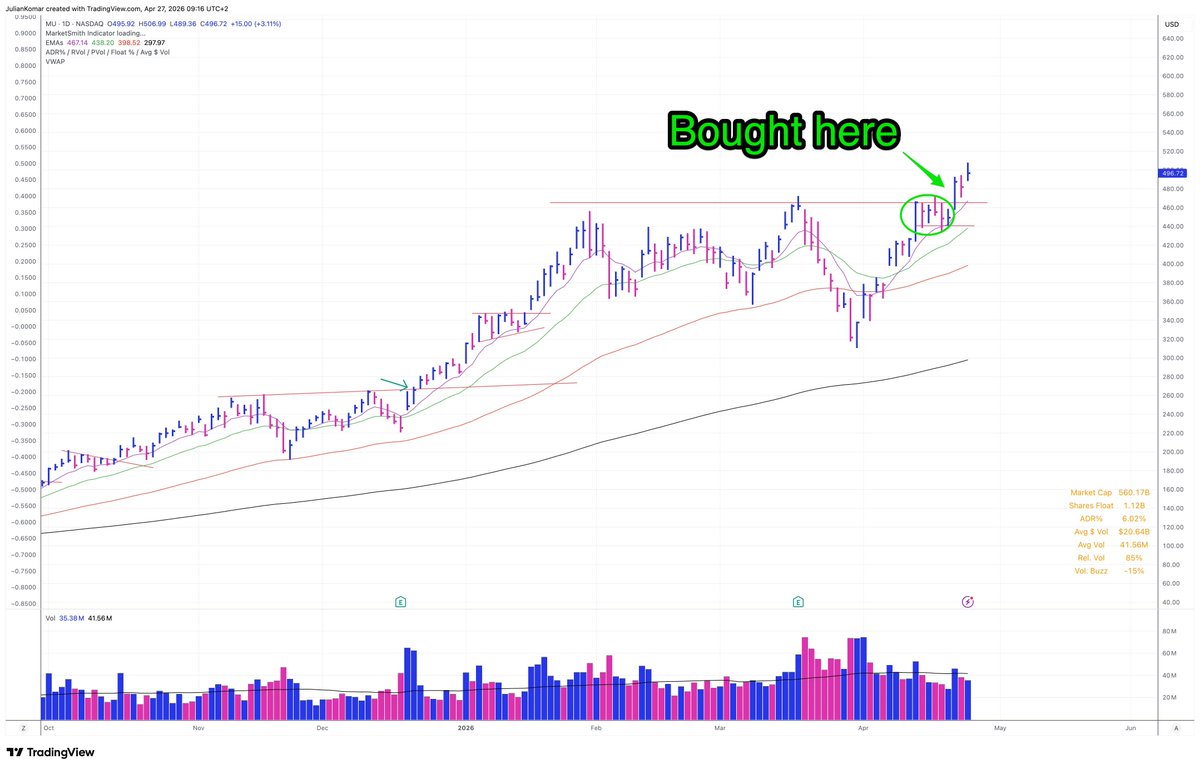
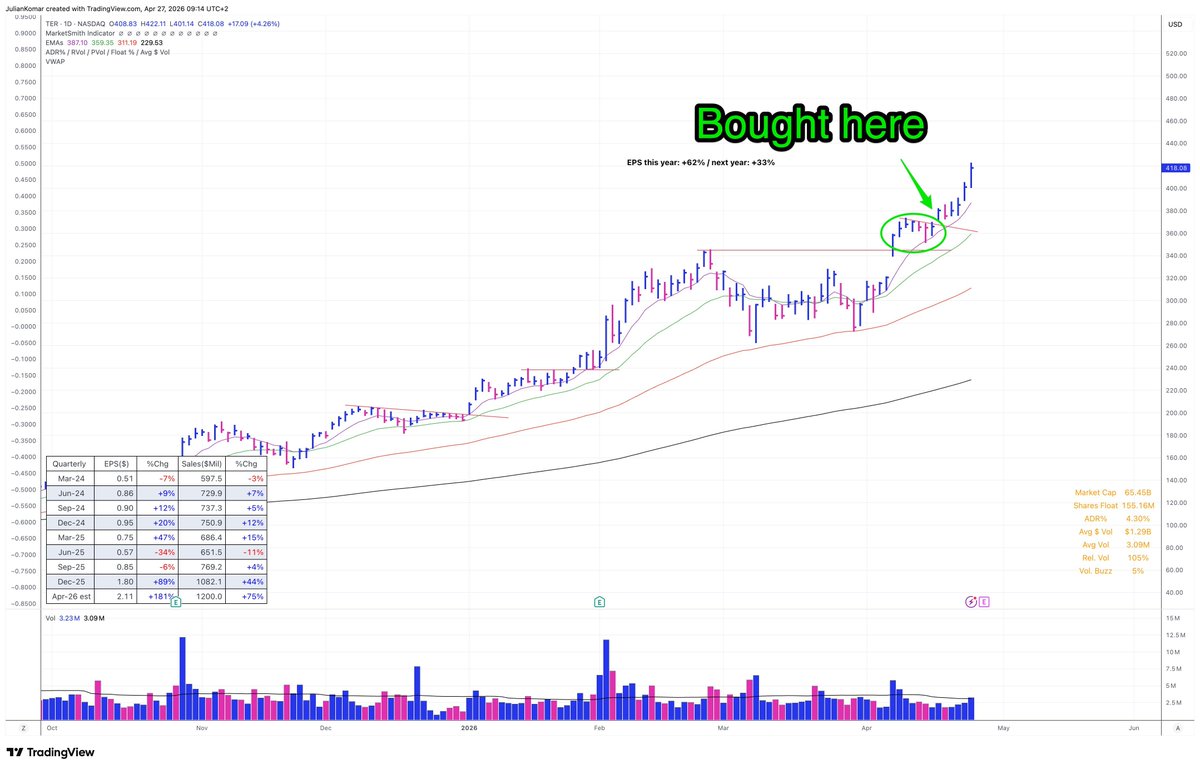
Jumping into a stock after it has already made a big move can be risky. A smarter way is to wait for the pause or small dip that’s where you get a safer entry.
Yes, sometimes chasing works, but most of the time patience gives you the real edge in trading.
#Trading
Tight bases separate amateurs from disciplined #traders. 🚀
Most traders ignore them because they look “boring.”
I see opportunity.
Here’s what matters 👇
1) Volatility Contraction: Tight bases show decreasing volatility. The stock is calming down after a move. That’s not weakness — that’s preparation for expansion.
2) Asymmetric Risk: You can place very tight stops. Small risk, big upside. That’s how I build trades with strong risk-reward.
3= Institutional Support: Tight price action often means strong hands are holding. No panic selling. No noise. Just quiet accumulation.
4) Rarity: In strong markets, they don’t show up often. Most stocks just run or stay extended. That’s why you need to stay patient and ready.
5) Explosive Follow-Through: The tighter the base, the stronger the move can be. I’ve seen this again and again in past winners.
I don’t need 20 trades.
I need one tight base that works.
That’s where real progress happens.
These patterns repeat. I trade them. I teach them. I refine them every single day.
I’m not perfect — I still miss them sometimes or take looser setups. But I come back to this structure again and again.
Because it works.
I think everybody can learn these patterns.
Start thinking of yourself as an elite trader.
In everything you do, do what an elite trader would.
Sleep like an elite trader.
Prepare like an elite trader.
Review like an elite trader.
Collaborate like an elite trader.
Build technology like an elite trader.
Eat like an elite trader.
Execute like an elite trader.
Risk Manage like an elite trader.
Exercise like an elite trader.
Research like an elite trader.
Build a PlayBook like an elite trader.
Be open-minded like an elite trader.
Think of yourself as an elite trader.
I thought this was a really great Q&A session with clients this morning, so I wanted to share it with you. Enjoy.
I hope it brings insight and helps you better your trading.
Private Client Q&A with Mark Minervini at Minervini Private Access using... https://t.co/NEStUdanh7 via @YouTube
I haven’t had a serious drawdown since the 1980s—just a few single-digit down years in over three decades. How? A deep respect for risk and unconditional patience.
A few key rules:
1. Always cut losses short - no big losses. no exceptions!
2. Only trade large on the heels of smaller trades working
3. Always trade progressively smaller when
trades aren't working
4. Never average down
5. Never let a good-size gain turn into a loss
6. No forced trades - no style drift
Stop selling stocks too early..
You cant outsmart the moving averages so might as well let the moving averages tell you when the momentum is gone
Use a daily close under the EMA's to tier out of the position
Trim 25% on a close under the 8 EMA
Trim 25% on a close under 21 EMA
Sell full position under the 50 EMA
Up 200% in 20 days because I didn't sell early.
Exit strategy is just as important as entry strategy.
The combination of QE, Cloud, AI, and fiscal spending has produced a generation of hardcore bulls, trained to buy every dip and simply hold.
The market has turned into a no-lose game, which is exactly what fuels bubbles, where recency bias and hype feed a cycle of FOMO pushing prices ever higher.
Make no mistake:
we are at very elevated multiples, alienating friends, raising taxes through tariffs, and likely facing broader tax hikes ahead (especially if Democrats win the next election).
I believe we are heading toward a lost decade, likely beginning within the next few years and triggered by the end of a parabolic bubble top.
The next decade is more likely to see a resurgence of value after a long period of growth outperformance, along with emerging markets leading.
If easing is pulled back to stabilize lending markets, bonds could also outperform. But if we keep easing to stimulate, the imbalance will only grow.
I expect either a sideways market like the 1970s, or a bear market similar to 2000–2008, either way, declines of -40% or more.
Secular bull markets typically run 16 to 20 years. This one began in 2013, putting us in year 12.
An end around the close of this decade would align with the 16-year cycle seen in the 1970s.
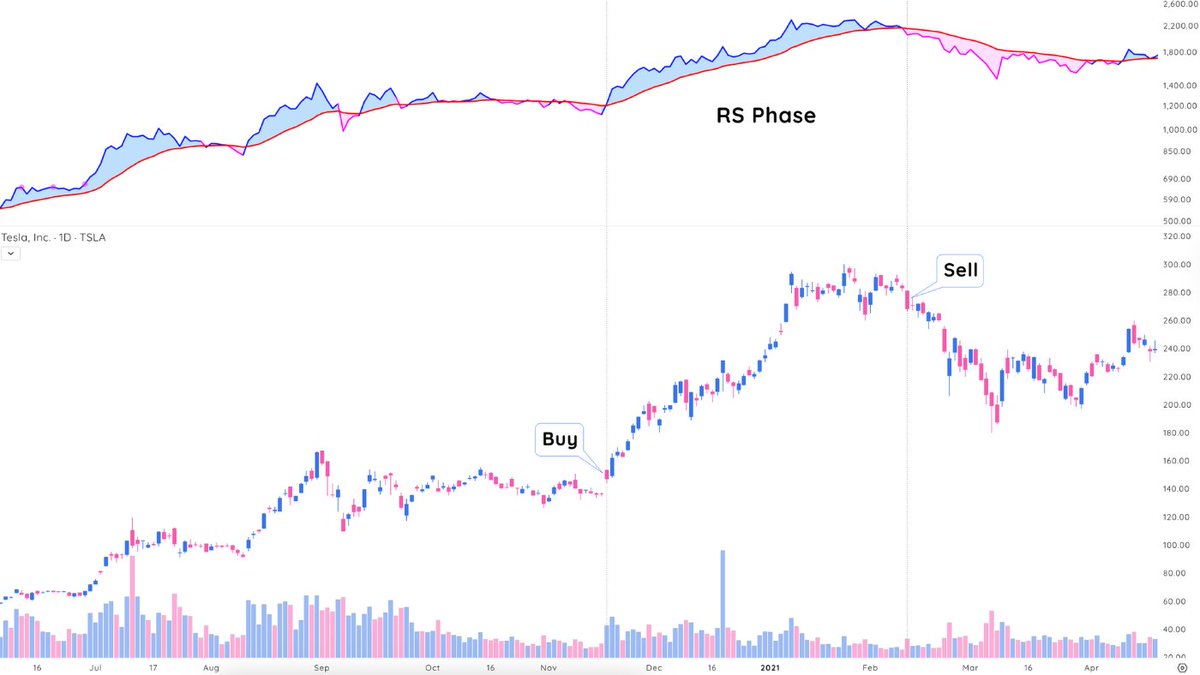
Most traders wait for breakouts.
But the strongest stocks reveal themselves *before* price moves.
It’s called the RS Phase; a repeatable signal of quiet strength.
Here’s how to spot it and trade it step-by-step:
To grow, you must move out of your comfort zone and what is easy. Start today by making a decision to do something you've been putting off. Lean into your fears and your procrastination. Decide to stop waiting for the perfect moment. Decide to decide, TODAY!
Mga anak we need to increase our awareness. 💜🇵🇭
Wala tayong gimmick , malalaking billboard or makinarya na aasahan.
Isang Retweet, Heart and Follow sapat na para dumadagdag ang ating hanay.
Let this be a CAMPAIGN OF THE PEOPLE. NOT OF THE TRAPOS.
#45HeidiMendoza