@khoi_nguyen2 Thank you for sharing this infographic!! It is super helpful to identify concrete steps we can take for improving healthcare access for those who are undocumented. @MClerkship
My classmates put together this infographic highlighting the importance of health literacy for patient care, something we often take for granted in medicine. Check it out! @MClerkship
Thank you for sharing this infographic Dan! There is so much we can do to improve access to health care for undocumented immigrants in our country, both as future providers but more importantly, as citizens by voting!! @MClerkship
Check out this infographic we made for our internal medicine clerkship! Undocumented immigrants in the US have unreliable access to quality healthcare. Do your part and vote this election to ensure future generations of immigrants are better cared for.
@MClerkship
Check out this infographic made by my classmates on substance use and the healthcare system! Substance use is still so stigmatized and this addresses important ways we can combat these notions and provide equitable care. @MClerkship
Homeless individuals with diabetes face so many barriers to managing their diabetes. Check out this infographic our group made to highlight these challenges and how we can address them. @eseosa_odigie@rheafogla@EloraBasu2@MClerkship
1/ Old maps still matter!
Impact of redlining on current health is explored by Dr. Krieger et al. https://t.co/8Jz05o0US9
Taking maps of redlined neighborhoods and intersecting them with recent census data, they reveal the current neighborhood status within past borders.
This review looked at how stigma, defined as othering/discriminating minorities thru negative stereotypes leading to status loss/ discrimination, affects the LGBTQ community thru the lens of minority stress theory (i.e. stigma leads to health disparities)
https://t.co/2CVM6n27OH
Home health care workers, deemed essential during the COVID-19 pandemic, lack adequate hazard compensation and resources, proper PPE, and safe workplace conditions, leaving them and their families more vulnerable to infection and death.
https://t.co/6XIoKlIF2p
@rheafogla Such an interesting point about pain management being impacted by the implicit biases we carry. I wonder if these race-based differences are seen in other patient referrals as well. As doctors we need to provide equal care to all our patients! Thanks for sharing! @MClerkship
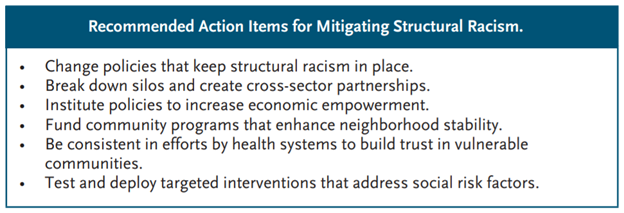
3/ The solution requires work in multiple sectors and within federal, state and county levels. Believe it or not but, you don’t have to be a physician to help improve healthcare for Black Americans. Here’s what needs to happen:
@PamCapellan @MClerkship So much of what doctors do to help patients revolves around pain management + symptom relief to improve healing. It is such an important point you make about checking our own biases, racial, gender, or otherwise, while doing so. Thank you for sharing! @MClerkship
How does race affect #COVID19 ? This article in the NEJM takes a look at differences in outcomes between black and white patients in a Louisiana health system. Here's what they found: https://t.co/fzThEorQkG
3/
Inmates are extremely at-risk, and we must protect them by mass-testing and reducing our prison population to curb the spread! #socialjustice@MClerkship
1/
This Wash Post opinion piece covers the disproportionate impact of Covid-19 on prison inmates, a vulnerable population due to health co-morbidities, overcrowding and lack of sanitation in prisons.
https://t.co/iiTPjkAuZJ
@MClerkship
2/
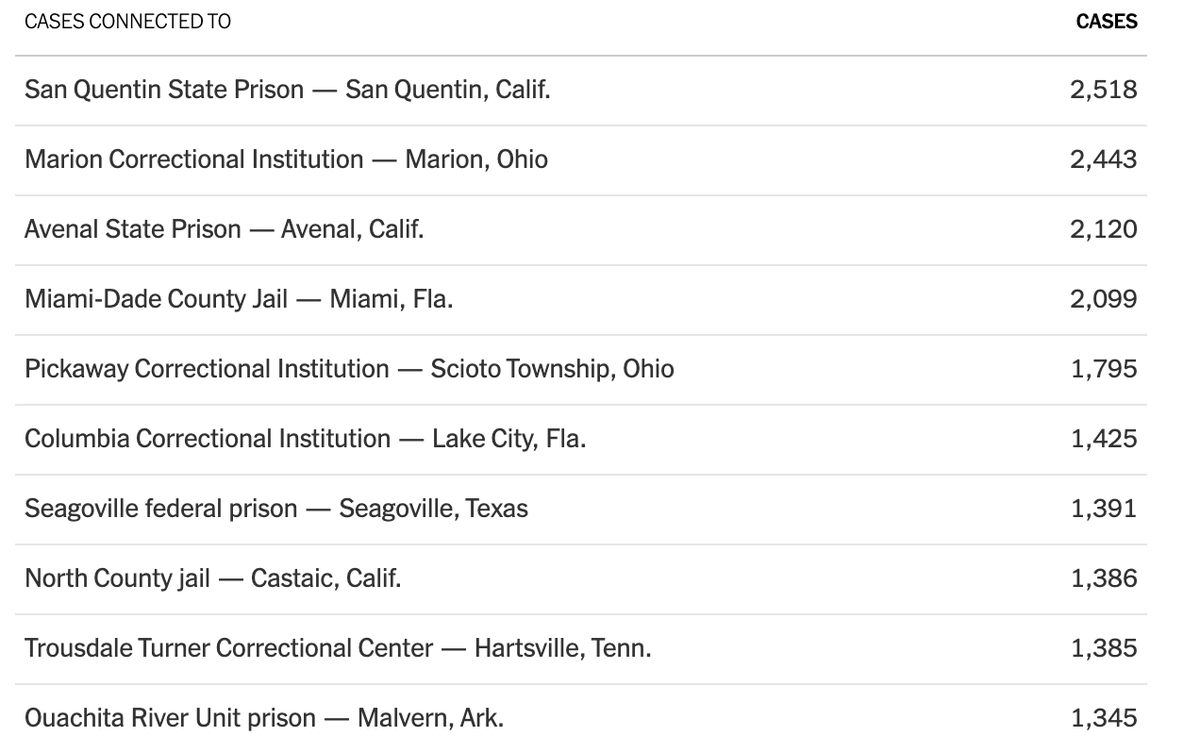
NY Times +Marshall project data shows that 10 largest clusters of the virus in the US are in prisons + new cases are sky-high. Officials are still failing to increase testing rates + decrease prison density. #SDOH#healthdisparities@MClerkship