Founder & CEO of @DyadicInc $DYAI pioneering sustainable biotech solutions to improve access to non animal recombinant proteins for food, nutrition and health.
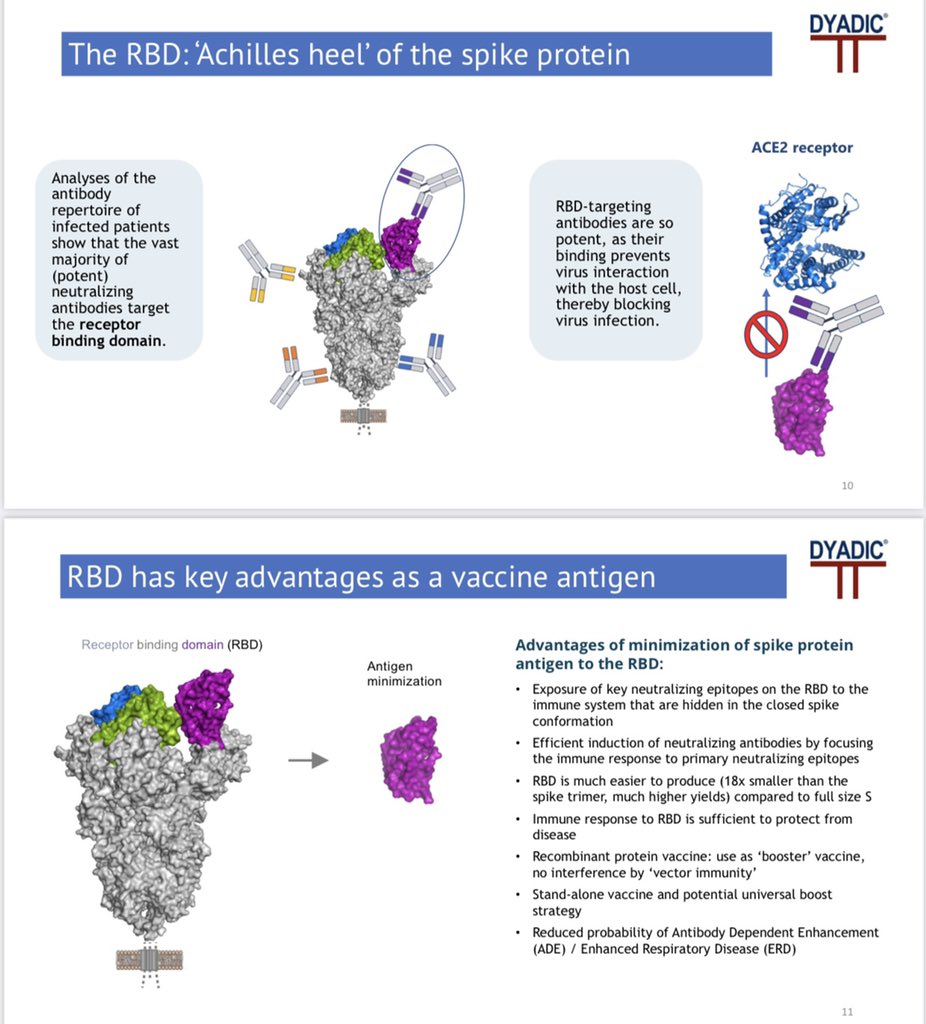
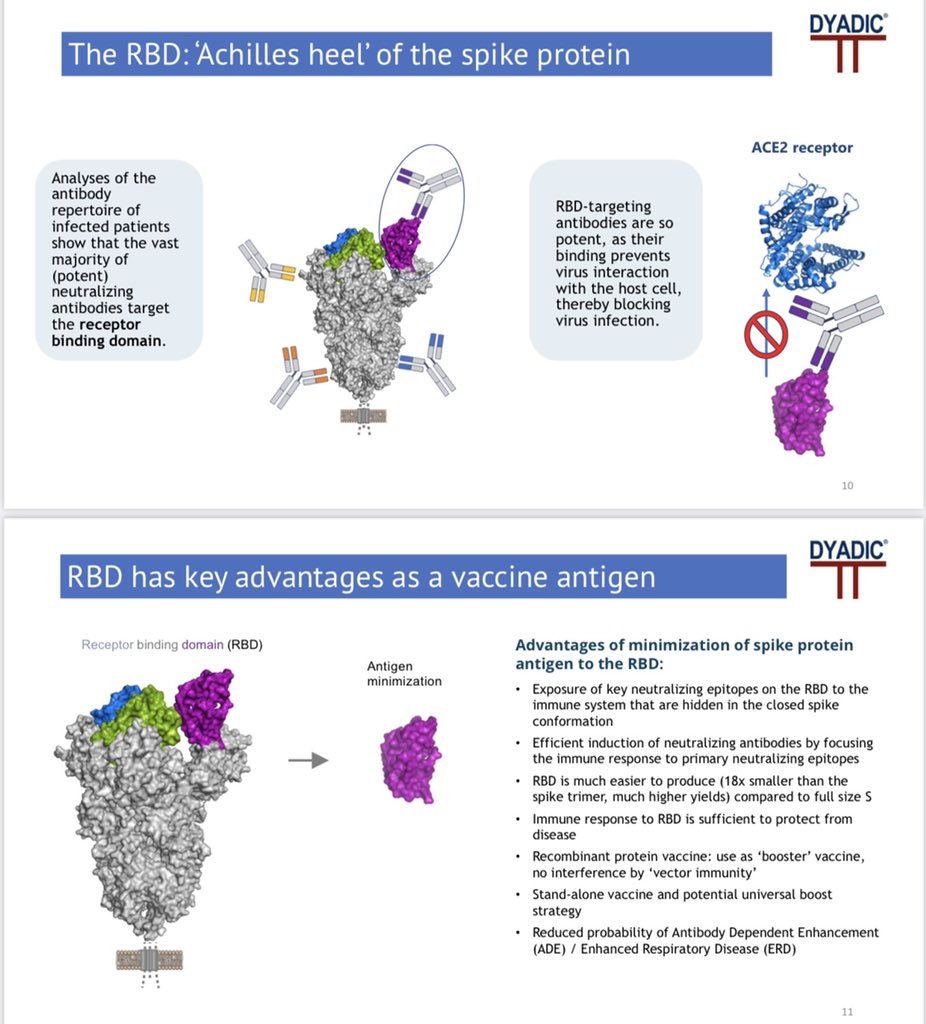
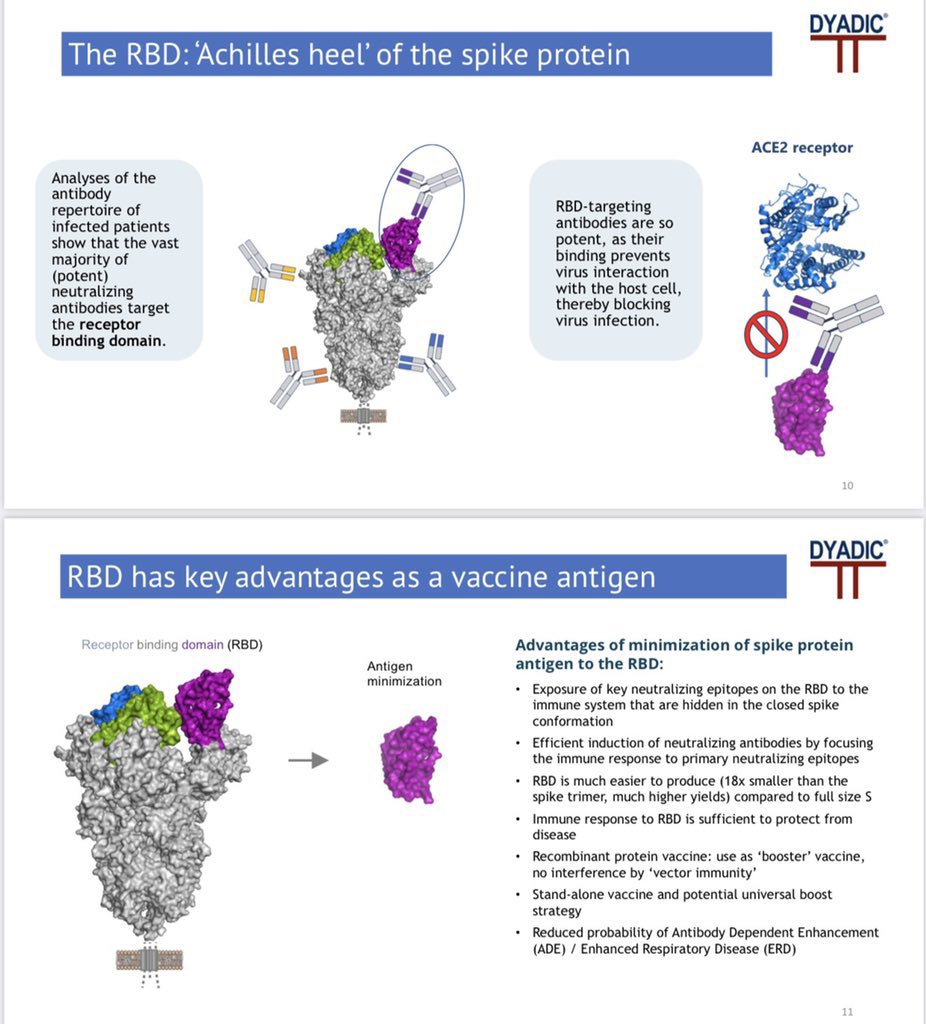
Using the much smaller receptor-binding domain (RBD), rather than the full-length spike protein, may offer a more targeted approach—focusing the immune response on key neutralizing epitopes while potentially reducing exposure to unwanted epitopes.
This was the scientific rationale behind the antigen selected for Dyadic’s DYAI-100 clinical study, guided by European and Israeli scientists and informed by their prior experience with SARS-CoV-1.
Ultimately, comparative safety and immunogenicity data should guide antigen selection. Let science decide. $DYAI
#covid19 #vaccines #SARS
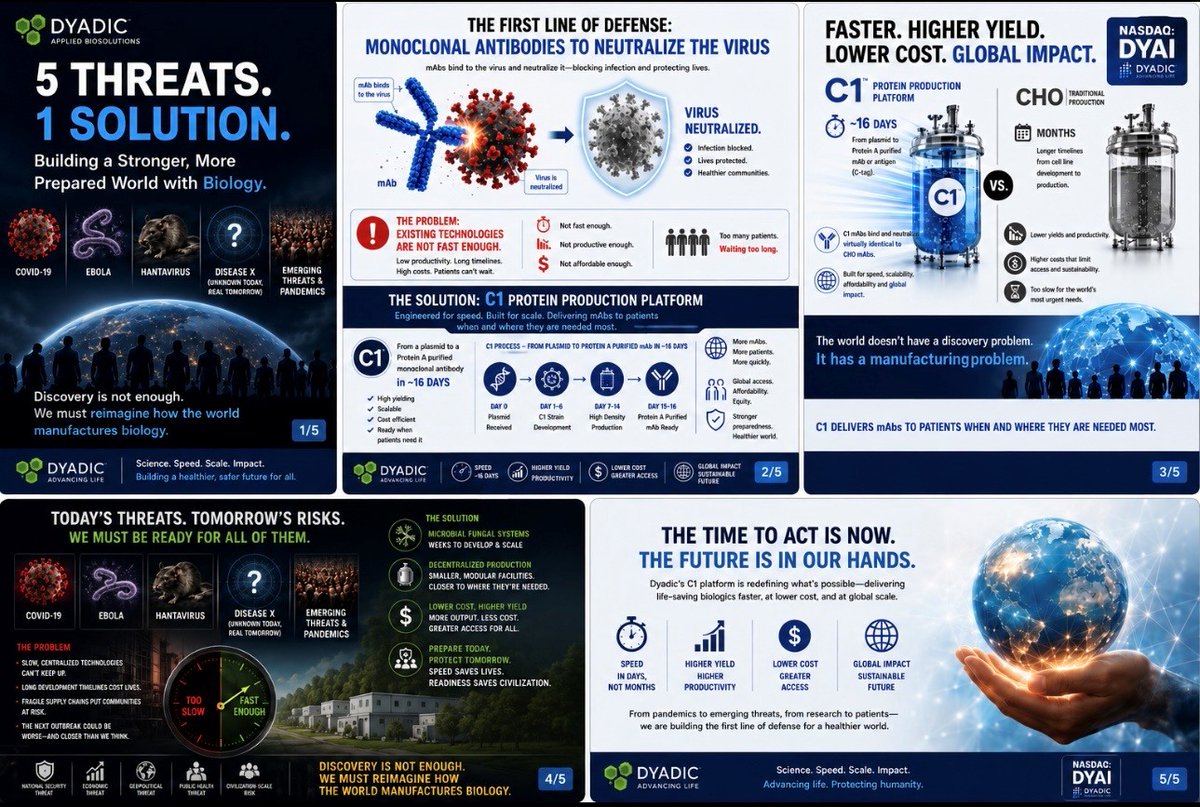
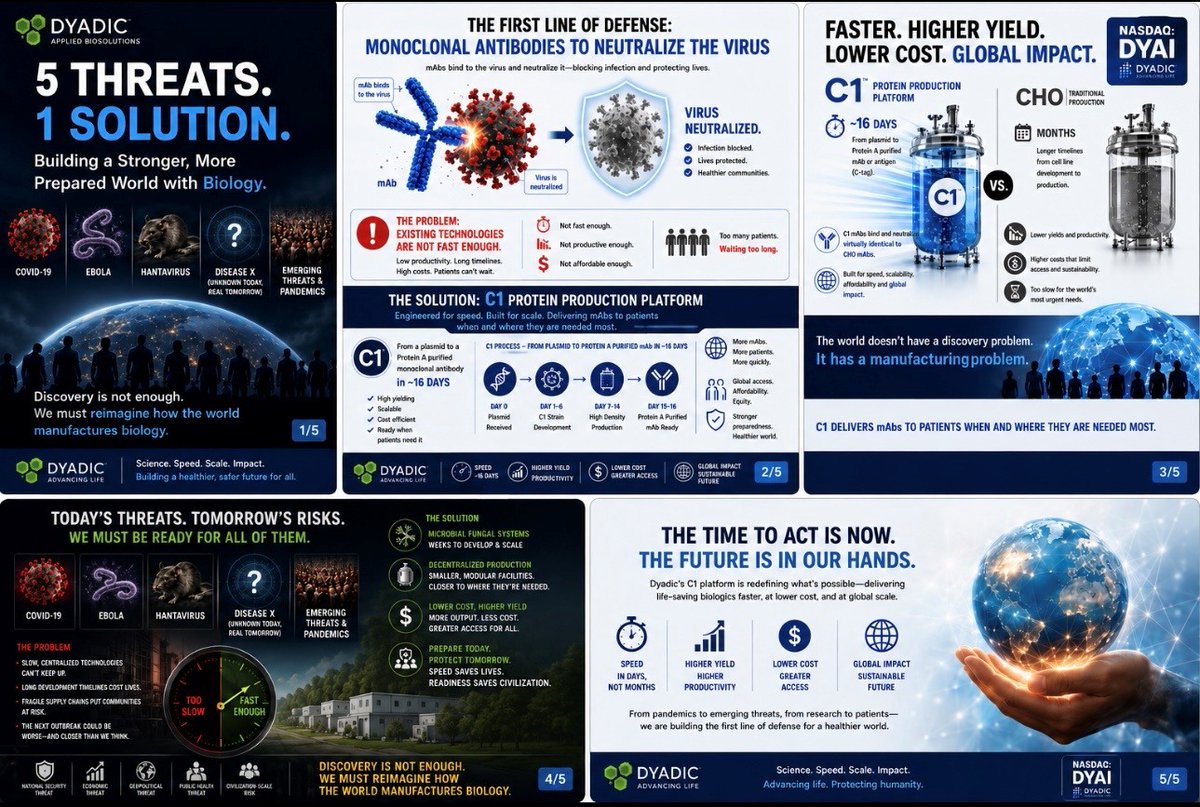
Monoclonal antibodies can rapidly neutralize viruses—but if they aren’t available or affordable, they are 100% ineffective.
Speed. Scale. Lower cost. Faster development, manufacturing and release.
C1 microbial production from @DyadicInc $DYAI.
Isn’t it time to let science decide?
Monoclonal antibodies can rapidly neutralize viruses—but if they aren’t available or affordable, they are 100% ineffective.
Speed. Scale. Lower cost. Faster development, manufacturing and release.
C1 microbial production from @DyadicInc $DYAI.
Isn’t it time to let science decide?
Monoclonal antibodies can rapidly neutralize viruses—but if they aren’t available or affordable, they are 100% ineffective.
Speed. Scale. Lower cost. Faster development, manufacturing and release.
C1 microbial production from @DyadicInc $DYAI.
Isn’t it time to let science decide?
I don’t normally share milestones like this, but I wanted to give credit where it’s due. I withdrew some of my crypto profits yesterday, and today I was able to buy a car. It’s an amazing feeling to see the progress. Huge thanks to @ines_ferre for the support along the way.
There is a growing need for rapid, scalable, non-#mRNA #vaccine approaches that can keep pace with rapidly evolving viruses. Dyadic’s C1 protein-production platform is designed to help accelerate the development and manufacture of recombinant protein vaccines—potentially enabling faster responses, broader access and lower production costs. $DYAI
@SecKennedy@BARDA@HHSResponse@FDA@NIH@HHS_ASH
Tom, in an Ebola outbreak, speed is the enemy. Yet monoclonal antibodies are still being developed on slower, costlier platforms while faster, more productive, lower-cost technologies sit on the shelf. Are Big Pharma and politics blocking progress—and leaving most people behind? $DYAI
Let’s address the elephant in the room: we remain insufficiently prepared to protect the public from highly lethal viral outbreaks because we continue to rely heavily on slow-growing, relatively low-yielding and costly cell-line technologies to develop and manufacture monoclonal antibodies.
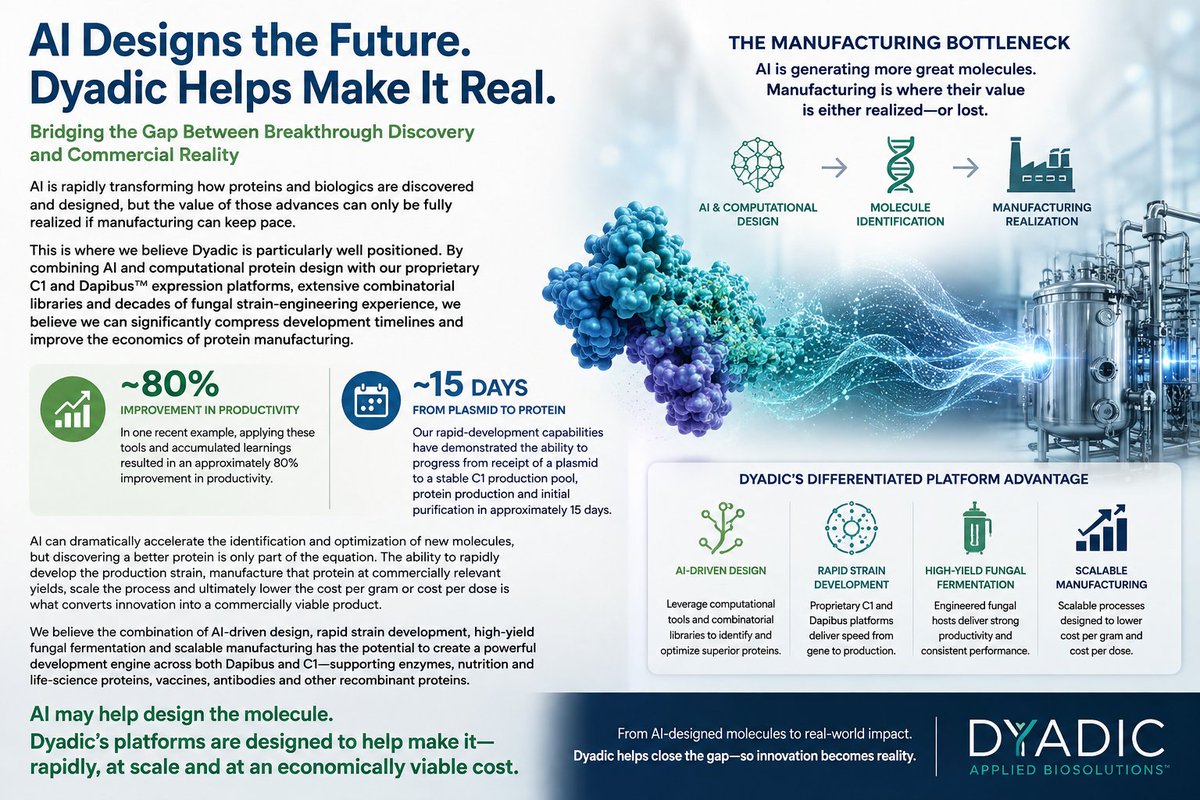
If we want faster, more affordable and more scalable outbreak response, we need to address the manufacturing bottleneck—not just antibody discovery.
Happy to discuss if you want to get to the root cause.
#vaccines #antibodies #treatments #viruses
@SecKennedy@HHS_ASH@FDA@CDCgov
Peter, not all COVID-19 vaccines are alike. There are #mRNA #vaccines, where genetic instructions are delivered into the body and our own cells temporarily produce the antigen that triggers the immune response.
There are also recombinant protein vaccines, where the antigen is manufactured outside the body, purified, and then administered to elicit an immune response.
And even among protein vaccines, the antigen matters. There is an important distinction between using the full spike protein and using the much smaller, more focused receptor-binding domain (RBD)—a key target for neutralizing antibodies. But there is another critical issue: speed of updating and manufacturing.
Traditional mammalian and insect-cell systems used to produce protein vaccines and monoclonal antibodies can take months to develop, scale, manufacture and release an updated product.
Faster protein-production platforms such as Dyadic’s C1 can potentially compress that timeline from months to weeks, allowing antigens and mAbs to be updated sooner as viruses mutate, while also producing substantially more protein at potentially lower cost.
That matters during an outbreak. The goal should not simply be to have a vaccine or treatment—it should be to have the right antigen or antibody against the circulating variant, produced quickly enough and economically enough to reach people globally.
Faster updates. More doses. Lower cost. Greater access, affordability and sustainability.
$DYAI
Not all COVID-19 vaccines are alike. There are #mRNA #vaccines, where genetic instructions are delivered into the body and our own cells temporarily produce the antigen that triggers the immune response.
There are also recombinant protein vaccines, where the antigen is manufactured outside the body, purified, and then administered to elicit an immune response.
And even among protein vaccines, the antigen matters. There is an important distinction between using the full spike protein and using the much smaller, more focused receptor-binding domain (RBD)—a key target for neutralizing antibodies. But there is another critical issue: speed of updating and manufacturing.
Traditional mammalian and insect-cell systems used to produce protein vaccines and monoclonal antibodies can take months to develop, scale, manufacture and release an updated product.
Faster protein-production platforms such as Dyadic’s C1 can potentially compress that timeline from months to weeks, allowing antigens and mAbs to be updated sooner as viruses mutate, while also producing substantially more protein at potentially lower cost.
That matters during an outbreak. The goal should not simply be to have a vaccine or treatment—it should be to have the right antigen or antibody against the circulating variant, produced quickly enough and economically enough to reach people globally.
Faster updates. More doses. Lower cost. Greater access, affordability and sustainability.
$DYAI
Nicholas, not all COVID-19 vaccines are alike. There are #mRNA #vaccines, where genetic instructions are delivered into the body and our own cells temporarily produce the antigen that triggers the immune response.
There are also recombinant protein vaccines, where the antigen is manufactured outside the body, purified, and then administered to elicit an immune response.
And even among protein vaccines, the antigen matters. There is an important distinction between using the full spike protein and using the much smaller, more focused receptor-binding domain (RBD)—a key target for neutralizing antibodies. But there is another critical issue: speed of updating and manufacturing.
Traditional mammalian and insect-cell systems used to produce protein vaccines and monoclonal antibodies can take months to develop, scale, manufacture and release an updated product.
Faster protein-production platforms such as Dyadic’s C1 can potentially compress that timeline from months to weeks, allowing antigens and mAbs to be updated sooner as viruses mutate, while also producing substantially more protein at potentially lower cost.
That matters during an outbreak. The goal should not simply be to have a vaccine or treatment—it should be to have the right antigen or antibody against the circulating variant, produced quickly enough and economically enough to reach people globally.
Faster updates. More doses. Lower cost. Greater access, affordability and sustainability.
$DYAI
Carl, not all COVID-19 vaccines are alike. There are #mRNA #vaccines, where genetic instructions are delivered into the body and our own cells temporarily produce the antigen that triggers the immune response.
There are also recombinant protein vaccines, where the antigen is manufactured outside the body, purified, and then administered to elicit an immune response.
And even among protein vaccines, the antigen matters. There is an important distinction between using the full spike protein and using the much smaller, more focused receptor-binding domain (RBD)—a key target for neutralizing antibodies. But there is another critical issue: speed of updating and manufacturing.
Traditional mammalian and insect-cell systems used to produce protein vaccines and monoclonal antibodies can take months to develop, scale, manufacture and release an updated product.
Faster protein-production platforms such as Dyadic’s C1 can potentially compress that timeline from months to weeks, allowing antigens and mAbs to be updated sooner as viruses mutate, while also producing substantially more protein at potentially lower cost.
That matters during an outbreak. The goal should not simply be to have a vaccine or treatment—it should be to have the right antigen or antibody against the circulating variant, produced quickly enough and economically enough to reach people globally.
Faster updates. More doses. Lower cost. Greater access, affordability and sustainability.
$DYAI
Aaron, not all COVID-19 vaccines are alike. There are #mRNA #vaccines, where genetic instructions are delivered into the body and our own cells temporarily produce the antigen that triggers the immune response.
There are also recombinant protein vaccines, where the antigen is manufactured outside the body, purified, and then administered to elicit an immune response.
And even among protein vaccines, the antigen matters. There is an important distinction between using the full spike protein and using the much smaller, more focused receptor-binding domain (RBD)—a key target for neutralizing antibodies. But there is another critical issue: speed of updating and manufacturing.
Traditional mammalian and insect-cell systems used to produce protein vaccines and monoclonal antibodies can take months to develop, scale, manufacture and release an updated product.
Faster protein-production platforms such as Dyadic’s C1 can potentially compress that timeline from months to weeks, allowing antigens and mAbs to be updated sooner as viruses mutate, while also producing substantially more protein at potentially lower cost.
That matters during an outbreak. The goal should not simply be to have a vaccine or treatment—it should be to have the right antigen or antibody against the circulating variant, produced quickly enough and economically enough to reach people globally.
Faster updates. More doses. Lower cost. Greater access, affordability and sustainability.
$DYAI
Erin, not all COVID-19 vaccines are alike. There are #mRNA #vaccines, where genetic instructions are delivered into the body and our own cells temporarily produce the antigen that triggers the immune response.
There are also recombinant protein vaccines, where the antigen is manufactured outside the body, purified, and then administered to elicit an immune response.
And even among protein vaccines, the antigen matters. There is an important distinction between using the full spike protein and using the much smaller, more focused receptor-binding domain (RBD)—a key target for neutralizing antibodies. But there is another critical issue: speed of updating and manufacturing.
Traditional mammalian and insect-cell systems used to produce protein vaccines and monoclonal antibodies can take months to develop, scale, manufacture and release an updated product.
Faster protein-production platforms such as Dyadic’s C1 can potentially compress that timeline from months to weeks, allowing antigens and mAbs to be updated sooner as viruses mutate, while also producing substantially more protein at potentially lower cost.
That matters during an outbreak. The goal should not simply be to have a vaccine or treatment—it should be to have the right antigen or antibody against the circulating variant, produced quickly enough and economically enough to reach people globally.
Faster updates. More doses. Lower cost. Greater access, affordability and sustainability.
$DYAI
Benny, not all COVID-19 vaccines are alike. There are #mRNA #vaccines, where genetic instructions are delivered into the body and our own cells temporarily produce the antigen that triggers the immune response.
There are also recombinant protein vaccines, where the antigen is manufactured outside the body, purified, and then administered to elicit an immune response.
And even among protein vaccines, the antigen matters. There is an important distinction between using the full spike protein and using the much smaller, more focused receptor-binding domain (RBD)—a key target for neutralizing antibodies. But there is another critical issue: speed of updating and manufacturing.
Traditional mammalian and insect-cell systems used to produce protein vaccines and monoclonal antibodies can take months to develop, scale, manufacture and release an updated product.
Faster protein-production platforms such as Dyadic’s C1 can potentially compress that timeline from months to weeks, allowing antigens and mAbs to be updated sooner as viruses mutate, while also producing substantially more protein at potentially lower cost.
That matters during an outbreak. The goal should not simply be to have a vaccine or treatment—it should be to have the right antigen or antibody against the circulating variant, produced quickly enough and economically enough to reach people globally.
Faster updates. More doses. Lower cost. Greater access, affordability and sustainability.
$DYAI
Katie, not all COVID-19 vaccines are alike. There are #mRNA #vaccines, where genetic instructions are delivered into the body and our own cells temporarily produce the antigen that triggers the immune response.
There are also recombinant protein vaccines, where the antigen is manufactured outside the body, purified, and then administered to elicit an immune response.
And even among protein vaccines, the antigen matters. There is an important distinction between using the full spike protein and using the much smaller, more focused receptor-binding domain (RBD)—a key target for neutralizing antibodies. But there is another critical issue: speed of updating and manufacturing.
Traditional mammalian and insect-cell systems used to produce protein vaccines and monoclonal antibodies can take months to develop, scale, manufacture and release an updated product.
Faster protein-production platforms such as Dyadic’s C1 can potentially compress that timeline from months to weeks, allowing antigens and mAbs to be updated sooner as viruses mutate, while also producing substantially more protein at potentially lower cost.
That matters during an outbreak. The goal should not simply be to have a vaccine or treatment—it should be to have the right antigen or antibody against the circulating variant, produced quickly enough and economically enough to reach people globally.
Faster updates. More doses. Lower cost. Greater access, affordability and sustainability.
$DYAI
Rick, not all COVID-19 vaccines are alike. There are #mRNA #vaccines, where genetic instructions are delivered into the body and our own cells temporarily produce the antigen that triggers the immune response.
There are also recombinant protein vaccines, where the antigen is manufactured outside the body, purified, and then administered to elicit an immune response.
And even among protein vaccines, the antigen matters. There is an important distinction between using the full spike protein and using the much smaller, more focused receptor-binding domain (RBD)—a key target for neutralizing antibodies. But there is another critical issue: speed of updating and manufacturing.
Traditional mammalian and insect-cell systems used to produce protein vaccines and monoclonal antibodies can take months to develop, scale, manufacture and release an updated product.
Faster protein-production platforms such as Dyadic’s C1 can potentially compress that timeline from months to weeks, allowing antigens and mAbs to be updated sooner as viruses mutate, while also producing substantially more protein at potentially lower cost.
That matters during an outbreak. The goal should not simply be to have a vaccine or treatment—it should be to have the right antigen or antibody against the circulating variant, produced quickly enough and economically enough to reach people globally.
Faster updates. More doses. Lower cost. Greater access, affordability and sustainability.
$DYAI
Katie, not all COVID-19 vaccines are alike. There are #mRNA #vaccines, where genetic instructions are delivered into the body and our own cells temporarily produce the antigen that triggers the immune response.
There are also recombinant protein vaccines, where the antigen is manufactured outside the body, purified, and then administered to elicit an immune response.
And even among protein vaccines, the antigen matters. There is an important distinction between using the full spike protein and using the much smaller, more focused receptor-binding domain (RBD)—a key target for neutralizing antibodies. But there is another critical issue: speed of updating and manufacturing.
Traditional mammalian and insect-cell systems used to produce protein vaccines and monoclonal antibodies can take months to develop, scale, manufacture and release an updated product.
Faster protein-production platforms such as Dyadic’s C1 can potentially compress that timeline from months to weeks, allowing antigens and mAbs to be updated sooner as viruses mutate, while also producing substantially more protein at potentially lower cost.
That matters during an outbreak. The goal should not simply be to have a vaccine or treatment—it should be to have the right antigen or antibody against the circulating variant, produced quickly enough and economically enough to reach people globally.
Faster updates. More doses. Lower cost. Greater access, affordability and sustainability.
$DYAI