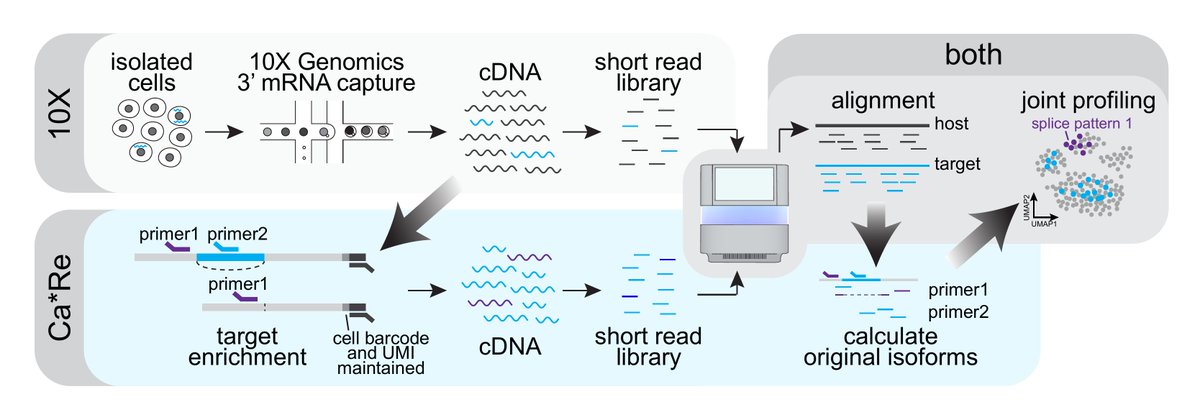
How does alternative splicing vary between individual cells? Splice isoform detection with single-cell RNA-seq is unreliable. In our preprint, we leveraged a common capture bias to recover rare isoforms and link them to host cell transcriptomes: https://t.co/BrzABZ4WVC 🧵(1/n)
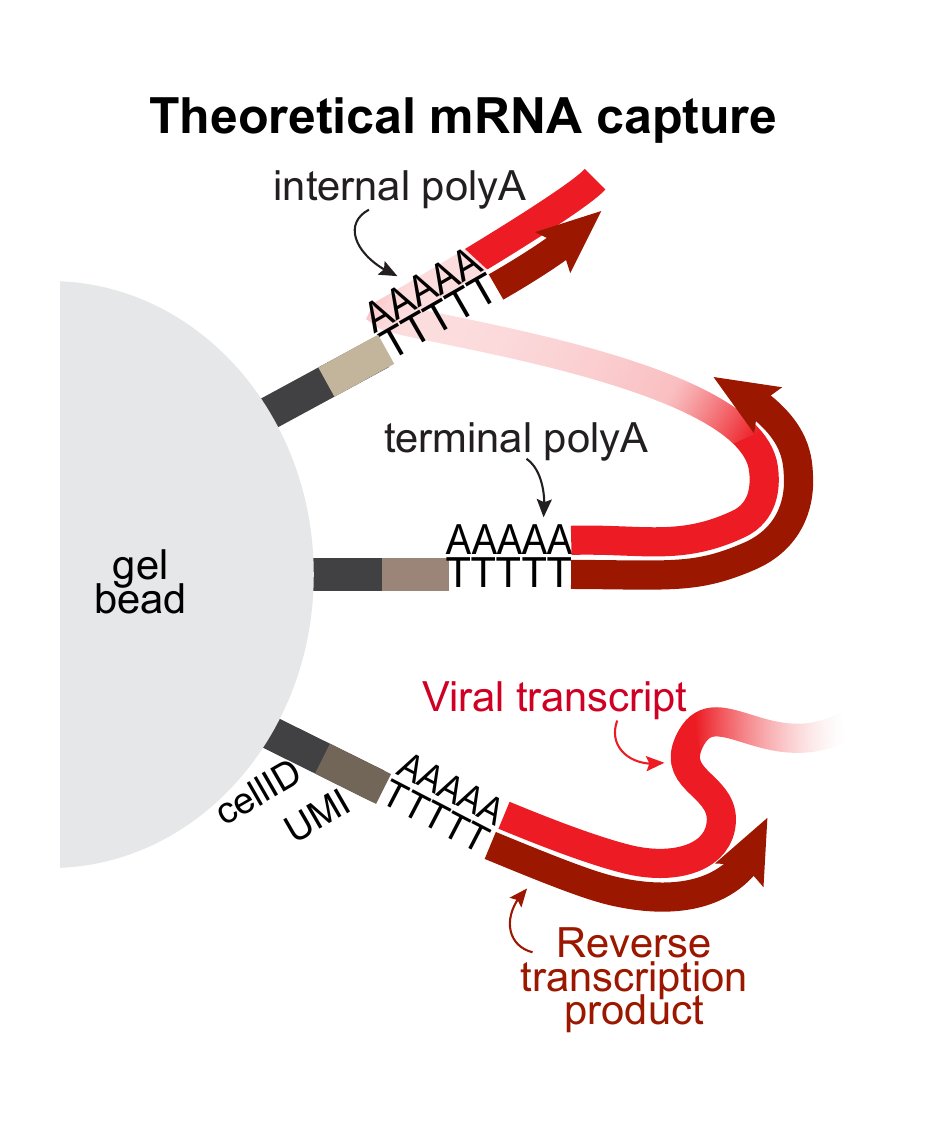
🚨PREPRINT🚨 10X 3' capture has a catch: oligo(dT) primes off internal A-rich stretches ~80x more than the true polyA tail for HIV/SIV (6x for host), fracturing transcripts. We turn the bug into a feature + works on archival samples https://t.co/ZI0hkwhRvK
🧵🔜 @EmanuelleGrody
As a generalizable tool, Catch*ReSeq also pairs with DNA barcoding which traced CD45 cassette splicing heritability in T cell clones, and when applied in mouse liver, uncovered ESRP2 splice regulator compensation in knockout hepatocytes. (8/n)
Remarkable how well this simple, intuitive concept works to predict response to perturbation from unperturbed data. A little bit of physics goes a long way here!
New preprint with Yogesh Goyal and friends! With CIPHER we use statistical physics to predict transcriptome-wide responses to perturbation by harnessing the information hidden in gene fluctuations. https://t.co/wpoK0UdCPo
Interesting read: @benkuznetsspeck shows how to combine causal perturbation data and generative models to uncover distinct gene sets driving subtypes of complex diseases. Nice!
https://t.co/hWrUcfIqfn
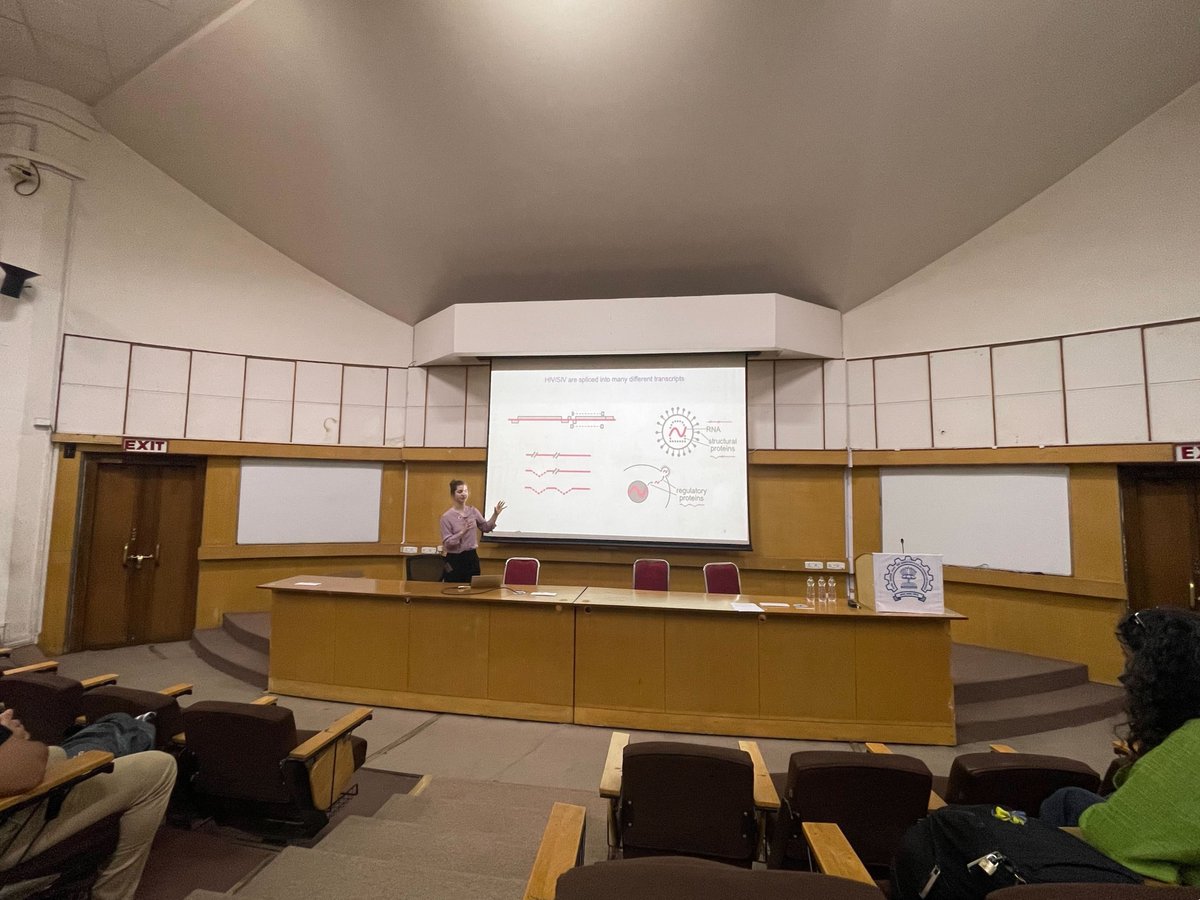
I was blown away by the engagement and discussion at @iitbombay during the Quantitative Bio of Collective Cell Behavior workshop this week, where I presented my project for the first time to an international audience. Huge thank you to @SayantanD2 and Sanbed Das for hosting me!
We are excited to publish a spatially resolved single-cell multi-omic census of the placenta, contributing to the @humancellatlas project. The placenta plays an essential role in maintaining a healthy pregnancy, yet its function remains poorly understood. https://t.co/eqT8m0JgdK
Interested in reliably and robustly extracting ground-truth singlets in your scRNA-seq datasets? Excited to share a project from @yogeshgoyallab and Ziyang Zhang, using DNA barcodes to identify doublets in single-cell RNA sequencing data https://t.co/1EE4xgsNsT (1/
@Anna_Minkina@yogeshgoyallab Ah, my sequence does have several 5 and 6-nucleotide long A-rich regions near the 5' end. I will look into whether these can explain my reads. Thank you!
@dwmckellar Wow, only five As caused internal priming! My sequence does indeed have 5 and 6-nucleotide long A-rich regions. I will look to see if these can explain my reads. Thank you!