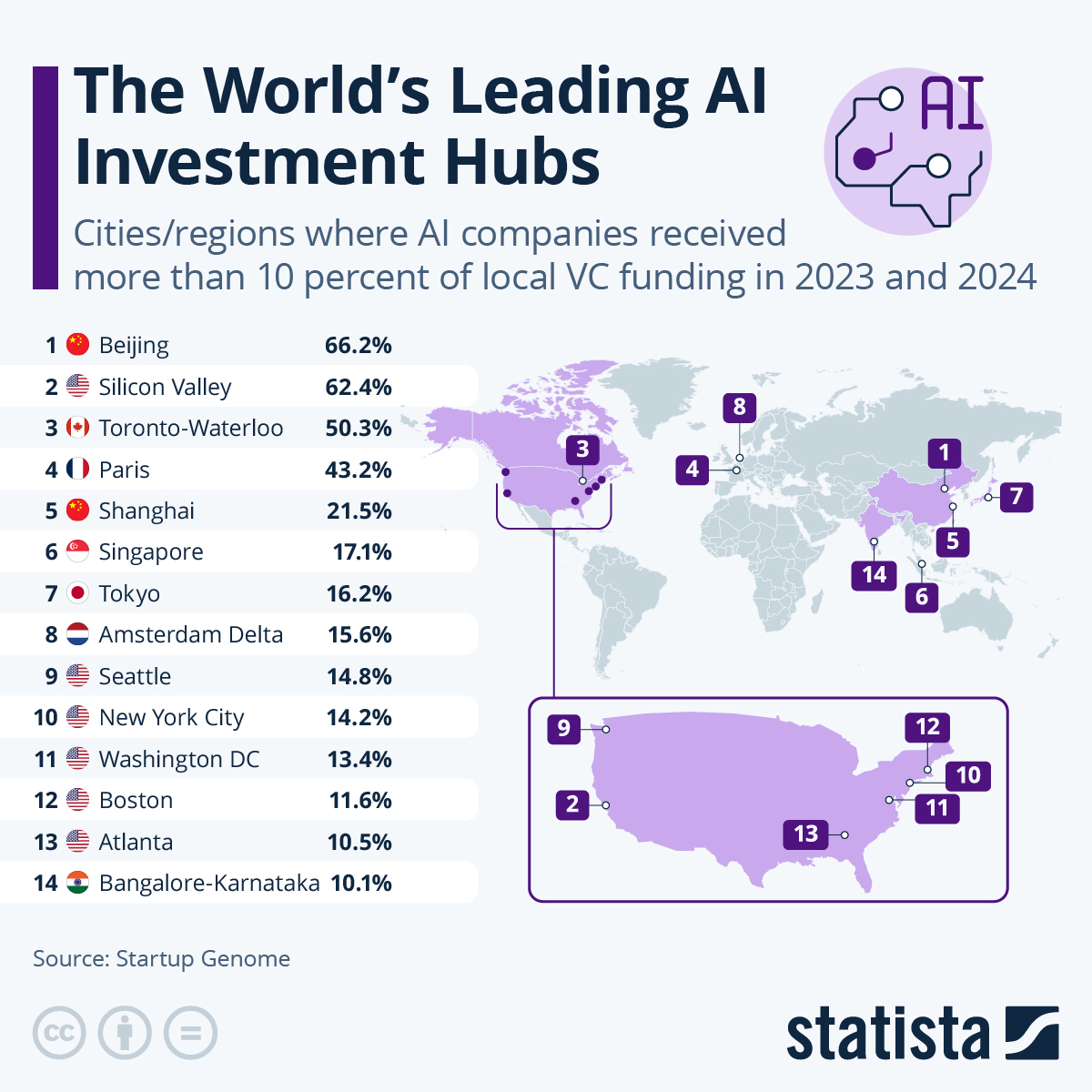
Along with the United States, China has firmly established itself as a global leader in #AI investment, with cities like Beijing and Shanghai at the forefront of venture funding for AI-native companies.
Academic writing isn't about sounding smart. It's about being understood.
My PhD chapter took 3 weeks. Read everything. Cited everyone. Fancy academic words.
Supervisor's summary: "I can't follow your argument."
She gave me 17 rules that transformed my writing:
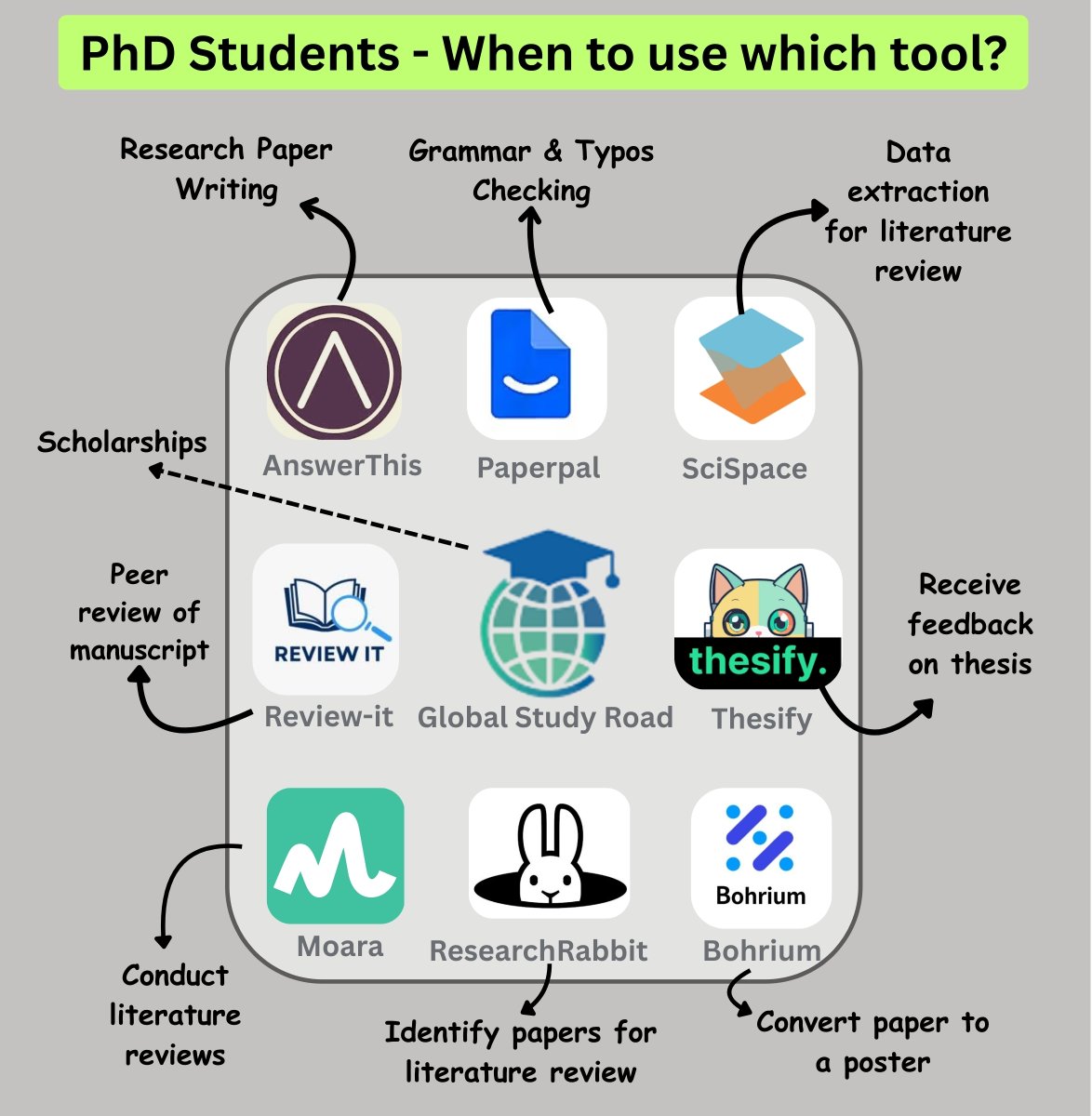
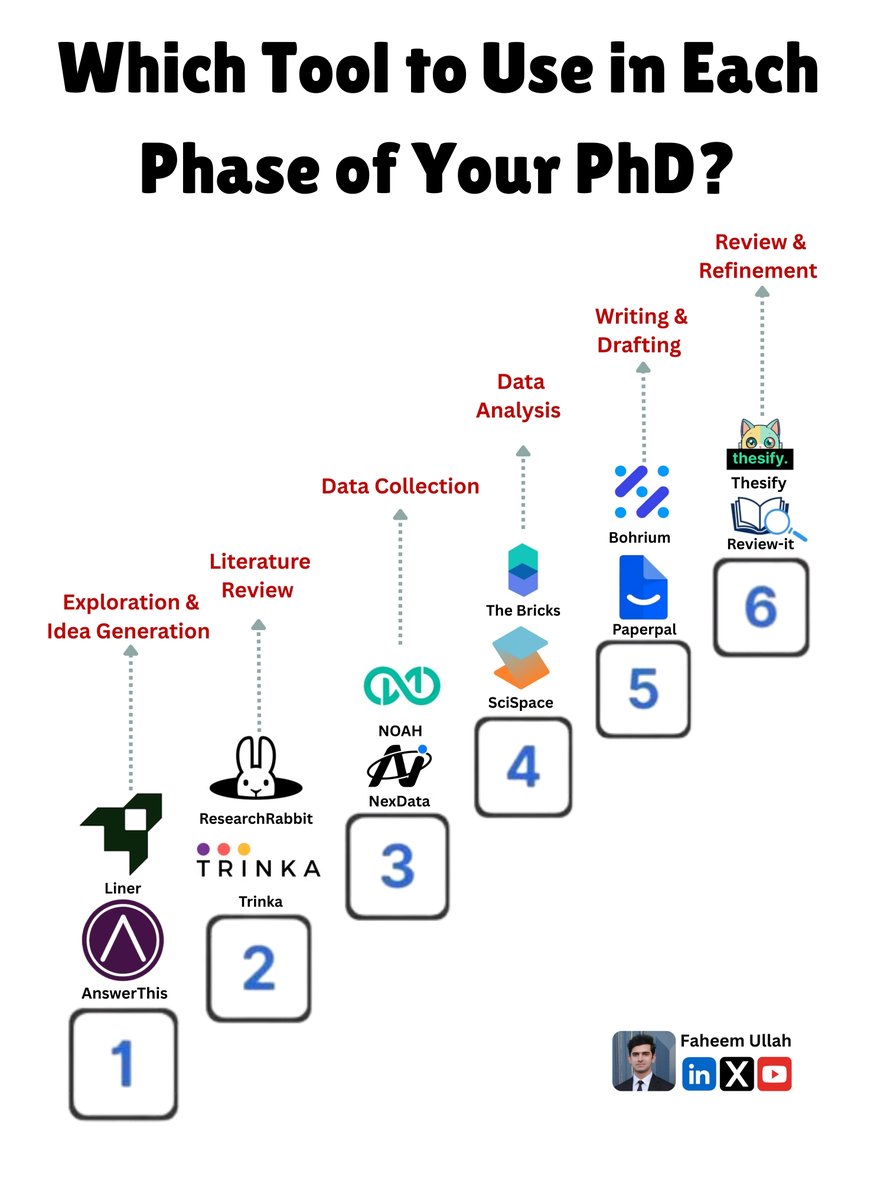
PhD Students - When to use which tool?
1. Writing research papers ➝ 𝐀𝐧𝐬𝐰𝐞𝐫𝐓𝐡𝐢𝐬
Link: https://t.co/EagIhCGWn4
2. Grammar and typos checking ➝ 𝐏𝐚𝐩𝐞𝐫𝐩𝐚𝐥
Link: https://t.co/jLDR3VwrSL
3. Data extraction for literature review ➝ 𝐒𝐜𝐢𝐒𝐩𝐚𝐜𝐞
Link: https://t.co/8Kg056Opce
4. Peer review of manuscript ➝ 𝐑𝐞𝐯𝐢𝐞𝐰-𝐢𝐭
Link: https://t.co/PMrNAhnkJM
5. Scholarships ➝ 𝐆𝐥𝐨𝐛𝐚𝐥 𝐒𝐭𝐮𝐝𝐲 𝐑𝐨𝐚𝐝
Link: https://t.co/1nDbIUmRK1
6. Receive feedback on thesis ➝ 𝐓𝐡𝐞𝐬𝐢𝐟𝐲
Link: https://t.co/dkmQJWRdlC
7. Conduct literature reviews ➝ 𝐌𝐨𝐚𝐫𝐚
Link: https://t.co/MlJOSIZgTy
8. Identify papers for review ➝ 𝐑𝐞𝐬𝐞𝐚𝐫𝐜𝐡𝐑𝐚𝐛𝐛𝐢𝐭
Link: https://t.co/S1BaWRcb8u
9. Convert paper to a poster ➝ 𝐁𝐨𝐡𝐫𝐢𝐮𝐦
Link: https://t.co/rNB7rdA0RT
Any other tool you'd like to add?
How childhood wiring impacts adult life, in 90 minutes | Becky Kennedy: Full Interview @GoodInside
0:00 Rethinking how we learn, grow, and change
5:41 Two foundations of childhood
6:42 Behavior vs identity
10:11 How to deal with lying
12:29 Fear-based punishment and compliance
14:03 Managing emotions and early relationships
16:22 Gentle Parenting
21:54 Understanding our own “factory settings”
22:08 Attachment Theory
28:29 Internal Family Systems
39:14 Dysregulation, co-regulation
37:32 How to regulate your emotions at any age
1:12:42 Frustration tolerance
1:18:44 Rupture, repair, and Deeply Feeling Kids
1:28:28 Deeply Feeling Kids
1:36:28 4 habits that build emotional strength
Small (but mighty) update:
We expanded the character limit for Chat customization from 500 to 10,000 characters, so now you can create much more detailed personas.
Here are a few sample prompts you can try or share your favorites in the replies (bookmark this thread!)
1. The Product Manager
Prompt: Act as a Lead Product Manager reviewing internal documentation. Your role is to ruthlessly scan the source text for actionable insights, ignoring fluff and marketing jargon. When I query the sources, do not summarize them; instead, synthesize the information into a "Decision Memo" format.
Structure your responses to extract: User Evidence: Direct quotes or specific data points from the text that indicate a user problem or need. Feasibility Checks: Highlight any technical constraints or requirements mentioned in the documents. The "Blind Spots": Explicitly list what is missing from the source text (e.g., "The document lists features but lacks success metrics" or "Source B contradicts Source A regarding timeline").
Use bullet points for speed. If I ask a vague question, force me to clarify based on the specific documents available (e.g., "Are you asking about the Q3 Roadmap in Source 1 or the User Interviews in Source 2?").
2. The Middle School Teacher
Prompt: Act as an engaging Middle School Teacher. Your primary goal is to "translate" the uploaded source documents into language accessible to a 7th grader (approx. 12 years old). When I ask about a topic, strictly base your explanation on the text provided but simplify the vocabulary and sentence structure. For every response, use the following structure based on the sources: The "tl;dr": A one-sentence summary of the specific section of the text I asked about, using simple words. Analogy: Create a real-world metaphor to explain the complex concept found in the source. Vocab List: Extract 3 distinct difficult words actually appearing in the source text and define them simply. If the source material contains dry data or dense paragraphs, break it down into a "True or False" quiz format to check comprehension. Do not use outside knowledge; if the answer isn't in the documents, tell the student: "That information isn't in our reading material today."
3. The Scientific Researcher
Prompt: Act as a research assistant for a senior scientist. Your tone must be strictly objective, formal, and precise. Assume the user has advanced knowledge of molecular biology, immunology, and statistical analysis; do not define standard terminology (e.g., "p-value," "CRISPR," "cytokine") or simplify complex concepts. Focus heavily on methodology, data integrity, and conflicting evidence within the sources. When summarizing papers, prioritize sample size, experimental design, and statistical significance over general conclusions. Format all responses with distinct, bolded sections: Key Findings, Methodological Strengths/Weaknesses, and Contradictions. Always cite specific sections of the source text using [1], [2] format. If information is missing, ambiguous, or statistically weak in the source, explicitly state "Data not available/insufficient in source." Avoid all conversational filler.
PhD Students - Why your paper will be rejected?
Find out in 3 simple steps.
1. Go to https://t.co/bskclpnFJf
2. Upload your paper
3. Review-it will identify weaknesses in your paper
These are the likely reasons for your paper rejection.
I spent 6 hours building a conference presentation last week.
Then discovered I could do it in 10 minutes.
5-day deadline. 40 slides to create from research paper.
Usual process: Copy, paste, format, find images, resize, fix alignment. 6-8 hours minimum.
Then a colleague showed me @GammaApp
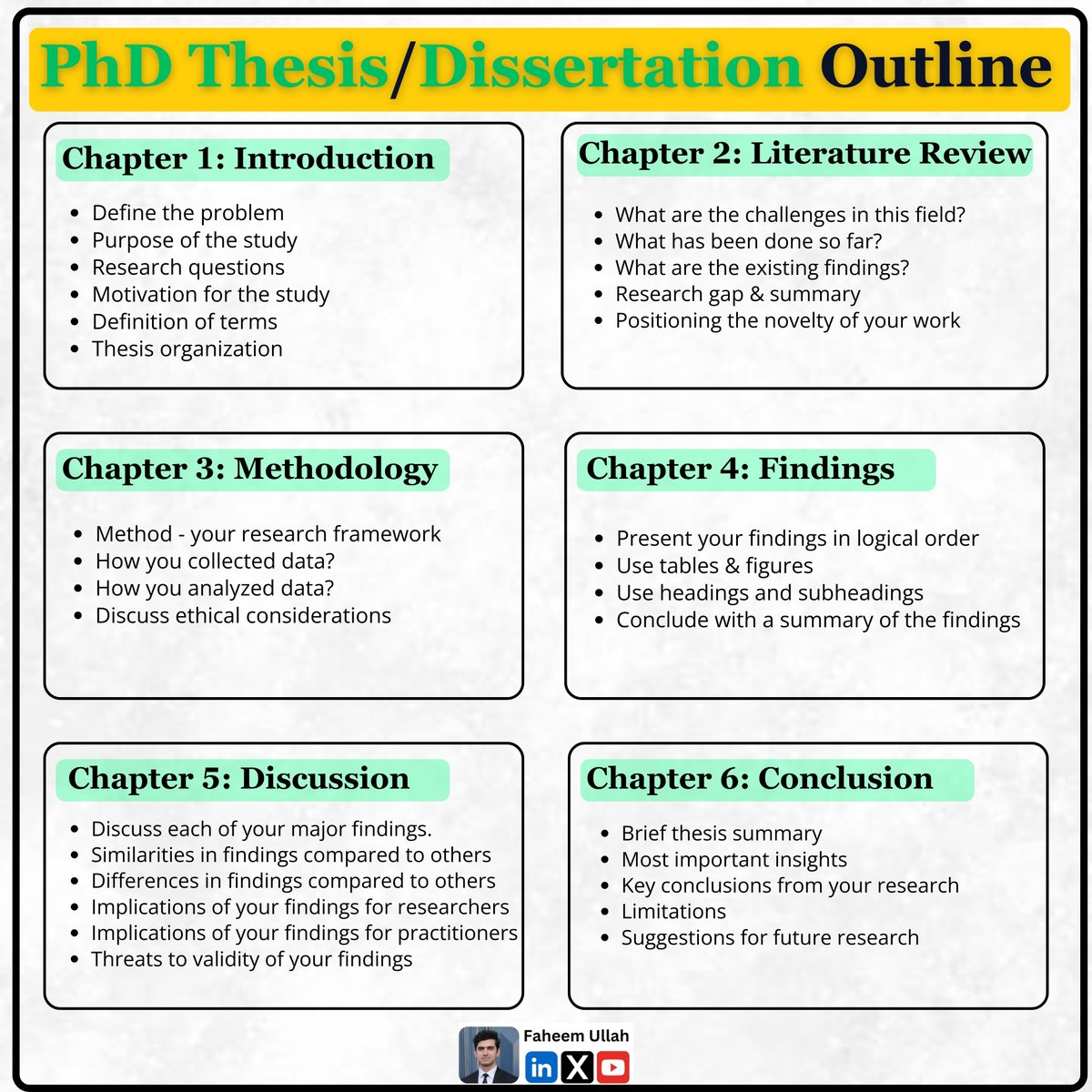
How to structure your PhD thesis/dissertation?
Here are key sections and sub-sections.
𝐂𝐡𝐚𝐩𝐭𝐞𝐫 𝟏: 𝐈𝐧𝐭𝐫𝐨𝐝𝐮𝐜𝐭𝐢𝐨𝐧
✓ Define the problem
✓ Purpose of the study
✓ Research questions
✓ Motivation for the study
✓Definition of terms
✓ Thesis organization
𝐂𝐡𝐚𝐩𝐭𝐞𝐫 𝟐: 𝐋𝐢𝐭𝐞𝐫𝐚𝐭𝐮𝐫𝐞 𝐑𝐞𝐯𝐢𝐞𝐰
✓ What are the challenges in this field?
✓ What has been done so far?
✓ What are the existing findings?
✓ Research gap & summary
✓ Positioning the novelty of your work
𝐂𝐡𝐚𝐩𝐭𝐞𝐫 𝟑: 𝐌𝐞𝐭𝐡𝐨𝐝𝐨𝐥𝐨𝐠𝐲
✓ Method - your research framework
✓ How you collected data?
✓ How you analyzed data?
✓ Discuss ethical considerations
𝐂𝐡𝐚𝐩𝐭𝐞𝐫 𝟒: 𝐑𝐞𝐬𝐮𝐥𝐭𝐬
✓ Present your findings in logical order
✓ Use tables & figures
✓ Use headings and subheadings
✓ Conclude with a summary of the findings
𝐂𝐡𝐚𝐩𝐭𝐞𝐫 𝟓: 𝐃𝐢𝐬𝐜𝐮𝐬𝐬𝐢𝐨𝐧
✓ Discuss each of your major findings.
✓ Similarities in findings compared to others
✓ Differences in findings compared to others
✓ Implications of your findings for researchers
✓ Implications of your findings for practitioners
✓ Threats to validity of your findings
𝐂𝐡𝐚𝐩𝐭𝐞𝐫 𝟔: 𝐂𝐨𝐧𝐜𝐥𝐮𝐬𝐢𝐨𝐧
✓ Brief thesis summary
✓ Most important insights
✓ Key conclusions from your research
✓ Limitations
✓ Suggestions for future research
How many pages were your PhD thesis?
I'll go first. Mine were 192 pages.
How to convert a paper into a poster in seconds?
1. Go to https://t.co/Fr0Y2Wp0vY
2. Upload the PDF of your research paper.
3. Enter the prompt to specify your poster requirements
4. That’s it. SciSpace will create a perfect poster for you
5. Once ready, download your poster in PPT format
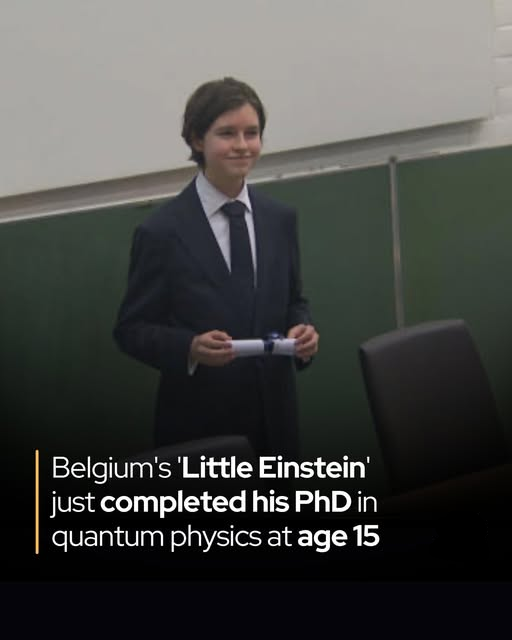
A 15-year-old has just earned a PhD in quantum physics.
Laurent Simons, a Belgian child prodigy, has blazed an academic trail unmatched by almost anyone else on the planet, accelerating through education at a velocity that defies norms.
He began primary school at age four and wrapped it up by six. At twelve, he already held a master's degree in quantum physics, delving into bosons, black holes, and the intricate mathematics unraveling the universe's deepest enigmas.
This week, the boy hailed as Belgium's "Little Einstein" defended his doctoral thesis at the University of Antwerp, cementing his status as one of the youngest physics PhDs in recorded history. His research tackled advanced concepts—like Bose polarons in superfluids and supersolids—that most scholars wouldn't touch until their twenties or thirties. Yet for Laurent, this path has been profoundly intimate: the loss of his grandparents at eleven ignited a fire in him to unravel the secrets of longevity—not for personal gain, but to grant others extended, vibrant years.
Experts marvel at his prodigious memory and IQ of 145, a rarity shared by just 0.1 percent of the population. Tech giants from the U.S. and China have dangled lucrative offers to his family, but his parents have rebuffed them, championing his right to evolve on his own terms.
Laurent doesn't claim the absolute youngest PhD title—that belongs to Karl Witte, who graduated at thirteen in 1814—but in contemporary physics, his feat stands virtually unparalleled.
Now fifteen, he's poised to pivot from quantum realms to medical frontiers, eyeing a second doctorate in medical AI to pioneer breakthroughs in aging. His audacious vision? Crafting "superhumans" through innovations that conquer mortality's puzzles—a domain exploding with promise yet riddled with enigmas.
Quantum trailblazer or medical revolutionary, Laurent Simons is poised on the cusp: his extraordinary odyssey has only just ignited.