Iranians who were pro-West are now changing their minds, says @NegarMortazavi, as US strikes in the #IranWar target civilians
More in #F24Debate ➡️ https://t.co/9xbRa8PpvE
Even amid the massive bombing campaign, the Islamic Republic regime is unlikely to settle for "unconditional surrender." Here's why https://t.co/6AAlpBUqLD
سخنگوی دولت در حقیقت میگوید اینترنت رو به کسانی میدهند که فقط روایت حکومت رو منتشر میکنند باقی مردم ایران زیر موشک و بمب در حال مرگ باشند حق داشتن اینترنت ندارند.
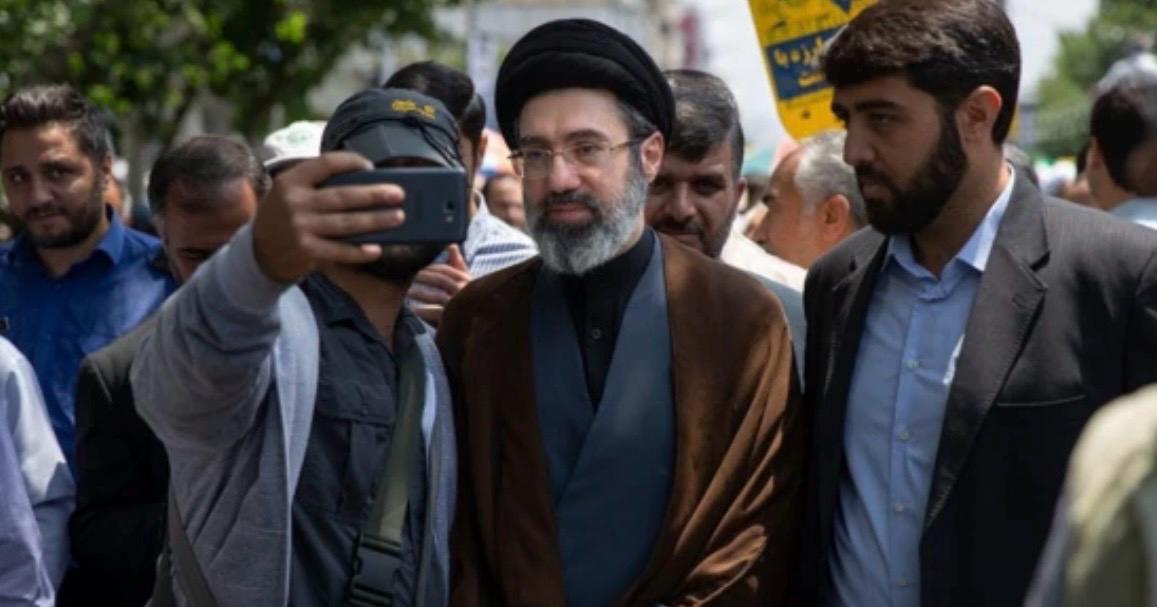
While comparing Khamenei 2.0 to his dead father, it’s important to remember that Ali Khamenei rose to power in 1989, at the age of 50, after 25 years of cultivating an image as an unworldly cleric, mainly interested in poetry and philosophy rather than political power. Even his fiercest critics recognise that Ali Khamenei was a good orator and knew how to read the room. He was a violent, manipulative, and brutal theocrat but knew how to use words, and did that very well in meetings with Revolutionary Guards commanders and hardline clerics in the first years after coming to power to gain their trust.
On the other hand, Mojtaba Khamenei has never (NEVER!) given a public speech. In one private video message sent to his students at the seminary, shared on social media and here, Mojtaba has difficulty putting two sentences together and getting to the point.
That will pose a problem for him and the regime. In a situation in which the “supreme” leader must live in a bunker for the foreseeable future, he and his regime will have a very difficult time working on his image, earning his followers' trust, and finding new acolytes. The result will be an even more brutal rule than his father’s, with no need to pretend that his rule is legitimate or to reach a consensus with different parts of Iranian society.
Mojtaba may have outmanoeuvred his rivals to come to power, but years of operating in the shadow of his father will catch up with him soon. Dark days ahead for Mojtaba, his regime, and, sadly, for millions of innocent Iranians taken hostage by the Khamenei regime.
#iran #IranMassacre #IranRevolution2026
There are indications that Iranian leaders are using civilian infrastructure to stage TV announcements and as operational command stations. Using schools and hospitals for cover is a page out of the Hamas playbook. 1/2 https://t.co/tbfQrLjxGC
Day 4 of Iran vs. U.S./Israel war (focus on Iranian strategic narrative):
🔹The IRGC’s ground forces appear to be entering the conflict more visibly. Iranian reports indicate drone strikes against Kurdish militant positions in northern Iraq and attacks against U.S. targets in Kuwait, suggesting a widening role for the force.
🔹This shift reflects growing Iranian concern that the U.S. may support insurgent groups operating inside Iran, particularly Kurdish and Baloch armed factions along the country’s borders.
🔹Iran has downed an Israeli Elbit Hermes 900 drone largely intact (photo verified). Iranian sources are already discussing possible reverse engineering, something Tehran has attempted with captured systems in the past.
🔹Both sides are signaling confidence in wartime production capacity. Iranian officials claim missile production is keeping pace with launches, while Donald Trump has said U.S. interceptor missile production is also accelerating.
🔹Iran’s maritime pressure campaign continues. An IRGC Navy official stated that ten ships have been targeted so far in the Strait of Hormuz, reinforcing Tehran’s effort to disrupt shipping and raise global energy costs.
🔹The Islamic Resistance of Iraq announced 27 operations against U.S. positions across the region in a single day, marking a sharp escalation in proxy activity.
🔹There have been attacks on U.S. diplomatic and intelligence facilities in Gulf states, including incidents in Dubai and Saudi Arabia.
🔹The United States is considering escorting oil tankers through the Strait of Hormuz. Iranian analysts argue this could paradoxically increase the vulnerability of U.S. naval assets by bringing them closer to Iranian missile ranges.
🔹Iran appears to be concentrating attacks on U.S. radar and surveillance infrastructure in the Persian Gulf. Reports indicate a second THAAD radar in the UAE was targeted by Iranian missiles, suggesting a strategy aimed at degrading early warning capabilities.
🔹At the same time, Iran has reportedly prioritized targeting Israeli reconnaissance drones such as the Hermes 900, which are central to locating Iranian missile launchers.
🔹Some analysts suggest this may explain the recent decline in large-scale Iranian missile barrages: Tehran could be attempting to first degrade Israel’s ISR capabilities before resuming heavier missile operations.
🔹Footage showing Israeli F-16 aircraft operating over Tehran suggests that Israeli and U.S. forces may have achieved significant freedom of maneuver in Iranian airspace after suppressing parts of Iran’s air defense network.
🔹The division of labor between the United States and Israel is becoming clearer. Israeli strikes appear concentrated in Tehran and western Iran, while U.S. operations increasingly target drone bases and military infrastructure in southern Iran.
🔹Israeli strikes also continue to focus on Iran’s government institutions. Police headquarters, intelligence facilities, and IRGC bases in Tehran have been targeted, reinforcing the apparent strategy of weakening the Islamic Republic’s internal security capacity.
🔹At the same time, strikes have targeted western Iranian provinces, raising Iranian fears that insurgent groups could attempt to enter the country from Iraqi Kurdistan.
🔹Iran has responded by striking Kurdish militant positions in Iraq and increasing IRGC deployments along its western borders.
🔹Hezbollah has continued limited operations despite pressure from the Lebanese government, including a suicide drone attack against the Ramat David airbase and rocket fire toward Israeli military targets.
🔹Meanwhile, the Houthis have threatened to close the Bab el-Mandeb Strait and resume attacks against Saudi Arabia if Riyadh joins the war directly.
🔹Energy infrastructure has increasingly become a central battlefield. Iranian drone strikes hit key gas facilities linked to QatarEnergy, forcing a temporary shutdown of LNG operations in Ras Laffan and Mesaieed.
🔹A separate attack targeted the oil export hub at Fujairah in the UAE, a critical route that allows Gulf oil shipments to bypass the Strait of Hormuz.
🔹These strikes suggest a broader Iranian strategy aimed at sustaining pressure on global energy markets even if a full maritime blockade proves difficult to maintain.
🔹Oil markets are already reacting. Iraq has halted Kurdish oil exports through the Ceyhan pipeline and warned that production cuts may follow if Hormuz disruptions continue.
🔹Inside Iran, political developments are accelerating. The Assembly of Experts is reportedly close to selecting a new Supreme Leader following the killing of Ali Khamenei.
🔹The interim leadership council convened again despite the risk of further decapitation strikes, signaling an attempt to project continuity and control.
🔹Concerns are also growing about potential escalation around nuclear facilities. The Natanz nuclear site has reportedly been struck again, while explosions near the Russian-operated Bushehr nuclear power plant have raised fears of a potential nuclear accident.
🔹The tempo of Iranian missile strikes against Israel appears to have decreased in the past day. It remains unclear whether this reflects successful targeting of missile launchers or deliberate conservation of missile stockpiles.
🔹Recent U.S. military deployments are also attracting attention in Iranian commentary. Open-source reporting indicates that Washington has sent additional aerial refueling aircraft to the CENTCOM region and redeployed fighter jets from Europe to the Middle East.
🔹Some Iranian analysts interpret these moves as a sign that the conflict may not be unfolding as Washington initially anticipated, suggesting that the existing U.S. force posture may have been insufficient for the scale and duration of the confrontation.
🔹There are also reports that the United States may be considering redeploying THAAD and Patriot air defense systems from other regions, including East Asia, to reinforce missile defenses in the Middle East amid sustained Iranian missile attacks.
🔹These developments are framed in Iranian media as evidence that interceptor missile consumption may be occurring faster than expected, forcing Washington to draw on additional regional and global resources.
🔹Overall, developments on Day 4 largely reinforce the patterns observed over the past two days: expanding proxy involvement, continued attacks on energy infrastructure, sustained air operations inside Iran, and a widening regional spillover of the conflict.
NEW: The CIA has been working to arm Kurdish forces with the aim of fomenting a popular uprising in Iran, multiple people familiar with the plan told CNN.
Iranian Kurdish opposition forces are expected to take part in a ground operation in Western Iran in the coming days and they expect US and Israeli support, a senior Iranian Kurdish official told CNN.
https://t.co/nppWTSbhCp
Iranian intelligence services are sending threatening text messages to ordinary citizens. One message reads:
“Considering the cruel enemy’s plans to carry out terrorist acts and incite street riots as a follow-up to the bombing of certain military and law enforcement sites, any action that disrupts public security will be regarded as direct cooperation with the enemy and will be met with the strong fist of your children in the IRGC Intelligence Organization.”
**Interesting development** Broadcast Disruptions Spread After Strikes and Satellite Hijacking of Iranian Channels https://t.co/PQ3USjin7U via @TheMediaLine
Here's the moment a tearful host on Iranian state TV confirmed this morning that Supreme Leader Ayatollah Ali Khamenei was killed in US and Israeli air strikes.
The Iranian government has announced 40 days of mourning and a week-long holiday to mark Khamenei's death.
I talked to the president over the phone a short while ago and asked him how long US military operations against Iran would go on.
JK: How long do you think this will last?
Trump: “As long as we want it to, actually. But it’s done such damage already. It’s like — they are incapacitated, essentially.”
I asked him what happens next if the regime falls:
JK: What do you think the next leadership looks like? Have you identified anybody?
Trump: “Yes. We have a very good idea.”
Who? How? He did not elaborate beyond that .
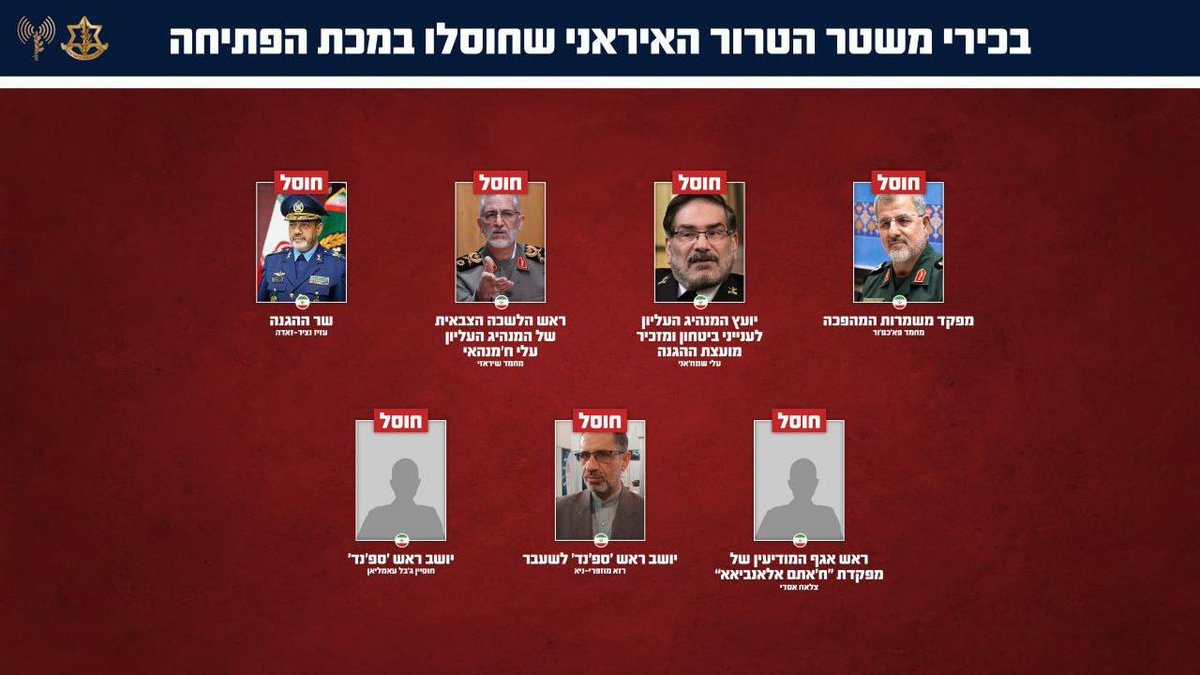
BIG: The Israeli army has released a list of the Iranian officials who were killed with Khamenei.
- Mohammad Pakpour: Commander of the IRGC Ground Forces.
- Ali Shamkhani: Senior Security Adviser to the Supreme Leader
- Mohammad Shirazi: Head of the Military Office of Supreme Leader Ali Khamenei.
- Aziz Nasirzadeh: Minister of Defense.
- Salah Esadi: Intelligence Chief of the “Khatam al-Anbiya” Headquarters.
- Reza Mozaffari-Nia: Former Deputy Defense Minister (Head of SPND).
- Hossein Jabal Ameli: Current Deputy Defense Minister (Head of SPND).
Khamenei is dead. The end of an era: "He was felled by Donald Trump and Benjamin Netanyahu, an American president and Israeli Prime Minister whom he loathed. He lived by “Death to America” and “Death to Israel.” He died by death from America and Israel." https://t.co/ANu1FAnyxi
An Iranian man left this comment on my YouTube channel. This is without a doubt the single best explanation of the reality facing Iranian people today👇
"As an Iranian, I can tell you the situation is no longer just political—it's existential. We are trapped between two collapsing structures: one internal, one external. On one hand, we face a deeply dysfunctional government, led by the Supreme Leader and the Islamic Republic’s unelected institutions.
Decades of economic mismanagement, suppression of dissent, and brutal ideological control have alienated multiple generations. No one believes in reform anymore—because every attempt has either been co-opted or crushed. But here's the paradox: We are also terrified of regime collapse—because we've watched the aftermath of Western intervention in countries like Iraq, Libya, Syria, and Afghanistan. Each was promised freedom; each descended into chaos, civil war, or foreign occupation.
So no, we don't trust the U.S. or Israel. Not because we support our regime—but because we know how imperial powers treat ‘liberated’ nations in the Middle East.
Freedom, in their language, often means vacuum, fire, and permanent instability. Right now, many Iranians live with three truths at once: The Islamic Republic is morally and politically bankrupt. The alternatives offered by foreign actors are not liberation—they’re collapse.
A bad government is survivable. No government is not. We are not silent because we agree. We are cautious because we’ve learned—too well—what happens when superpowers decide to "help." In a sentence: Iran is a nation held hostage by its own regime, but haunted by the fate of its neighbors. We are stuck in a house we hate, surrounded by fires we fear more."
Telegram channels close to IRGC have in past weeks outlined high-end hotels in GCC states as potential targets. Claim is that US soldiers evacuated from military bases are purportedly checked into hotels to escape strikes.
If accurate, would suggest Iranian intel penetration.