Online publication day for my first article as a lead author 🤩😁 A huge thank you to @NooraRonkainen for her guidance and support throughout this entire process. If anyone is interested in reading this, please let me know! @Human_Kinetics
A friend opened a restaurant in Madrid – it’s called Akiro and it’s on track to breakeven 7 months after opening, unheard of for a restaurant.
Talking with him last month, he says its success comes down to 3 things:
1. Foot traffic
He scoped out the entire city to find the spots with the most foot traffic at both lunch and dinner time (they walk everywhere in Madrid).
Then, it’s just a numbers game. How could he get a % of people who walk by to come in? They invested a premium to get an excellent location.
2. Product
He says the product is much more than good food. That’s a bare minimum.
Instead, he said to think of it as the whole experience. What’s the noise level? What music’s playing? How does the restaurant design enhance everything else?
Also, he changes one menu item every week. Has a massive spreadsheet that tells him what’s being ordered, profit margins on each item, etc. He gets rid of the least popular thing, tries something else. Every. Single. Week.
He says the menu is 10x better than it was when they opened.
3. Social proof
They leave a QR code that goes to a Google review on the bottom of each check. 737 reviews, 4.9 stars.
Also, remember the restaurant design thing? They've never paid for a TikTok or Instagram post, but they've earned more than 2 million impressions on those channels from customers taking videos and posting them.
But it’s not only reviews and videos. I thought this was genius…
The restaurant is designed so the line spills onto the street. And, every single day, there’s a line out the door at 2pm and 9pm.
When you walk by and see a line, you think “Oh, that place must be good. I’ll check it out some time.”
It’s fun to think about how each of these three ideas applies to every business.
1. Get eyes on your products
2. Have great products and constantly improve them
3. Ask for case studies and other forms of social proof
Now, 6 months after opening, he’s looking to expand in Barcelona. And he’s running the exact same playbook.
90% of the advice I see online is geared directly towards women’s ⚽️ & does not necessarily apply to men’s ⚽️
So, to help Educate:
Here are
Some but not all of the differences & resulting outcomes in #collegesoccer recruiting for men’s & women’s ⚽️
Male 🇺🇸 keepers are far less in demand (there is a surplus) than female 🇺🇸 keepers of which there is a shortage
🇺🇸 Women’s & girls soccer is currently some of the best in the world
🇺🇸 Men & boys are not & have never been
Men often keep growing physical by 20-22
Women often stop growing physically by 15-17
Approximately 35% of all male players in the NCAA ⚽️ are Internationals while it’s only 13% on the female side
There are approximately 300 more Women’s ⚽️ teams across all divisions than there are men’s
There are millions of more athletic scholarship 💵 available for Women’s ⚽️ players than for mens ⚽️ players
Many men’s ⚽️ coaches wait to fill key roster spots until early spring when Intenational full pro academy players are released from their clubs.
This is rarely seen in the women’s game, just not as much💰 at stake
There is a large surplus of male ⚽️players worldwide (I’d go so far as to call it a excess), while on the Women’s side there is a true shortage
In my experience, it’s largely because girls are generally being far pickier than boys in their pathways & many tend to be prioritizing other things over ⚽️, when push comes to shove
There are many more internationals on the mens side playing NAIA, JC & lower DII levels, many take years 3 & 4 to move up to higher level DII’s & all levels DI, that this heavily affects male 🇺🇸 freshmen recruiting
We don’t see the same impact on the Women’s side, we see, many if not most 🇺🇸 girls & scorn any JC & NAIA’s & many DIII’s, which leaves a void at those levels.
Male 🇺🇸 players do this too, but not in the same ratio as on the women’s side
On the Women’s side of JC & NAIA, DII & DIII’s (no scholarships), many Women’s ⚽️teams across the nation are carrying rosters of 15 or less & quite a few games are played with less than 11 women on the field & scholarships are left unclaimed
We rarely see this on the mens side
Need more information or help?
https://t.co/iSVyrggjoJ
An idea that I can't stop thinking about:
The Capability Gap
Alabama coach Nick Saban refers to the Capability Gap in this clip from a discussion with Holly Rowe:
"We oftentimes talk about what someone's potential is, but I think to put it in better terms...the Capability Gap is what you're capable of relative to what you're doing...if you understand the truth about that, you can actually take information that can help you close that gap."
The Capability Gap is a simple idea with powerful implications across all areas of your life.
It requires an understanding of:
1. Your full capability
2. Your current delivery
In my experience, I would argue that most people underestimate their full capability and overestimate their current delivery.
In other words, they think their Capability Gap is very small, when in reality it's much larger than they realize.
Having mentors, coaches, friends, and family members who help you see the truth about your full capability and keep you honest on your current level of delivery is everything.
This isn't about sports, this is about your life:
Do you have people in your life who help you think bigger about what you're capable of?
Do you have people in your life who tell you that your current delivery isn't good enough?
We all need those people in our lives.
We need people who push us to get uncomfortable, to think bigger, and to be better.
We need people who push us to be better partners, parents, friends, siblings, colleagues, community members, and leaders.
Find the people who tell you the two truths:
1. What you're truly capable of
2. What you're currently delivering on
Identify your Capability Gap and then work relentlessly to close it!
If you enjoyed this or learned something, share it with others and follow me @SahilBloom for more in future!
Love this illustration between motivation and discipline.
“Self-discipline is the ability to make yourself do what you should do, when you should do it, whether you feel like it or not.” —Elbert Hubbard
https://t.co/AndbJM3IoO
Halftime!
Do you have a specific halftime routine you use?
Here are a few principles and routines for halftime that have become more deliberate for me over time.
A short 🧵
Halftime!
Do you have a specific halftime routine you use?
Here are a few principles and routines for halftime that have become more deliberate for me over time.
A short 🧵
Sir Alex Ferguson’s life advice👇
🗣️”Failure, disappointment, it will happen. It’s part of your life, you can’t let it go without confronting it. I was better manager after we lost. Don’t think you’re going to go through life without it. This is where you find yourself.”
After his second year at Michigan, Tom Brady wanted to transfer.
He wasn't playing in games, and he was so low on the depth chart that he only got 2 reps in practice.
Brady met with his coach to express his frustration, “The other quarterbacks get all the reps.”
Coach replied,
“Brady, I want you to stop worrying about what all the other players on our team are doing. All you do is worry about what the starter is doing, what the second guy is doing, what everyone else is doing. You don't worry about what you're doing.”
Coach reminded him, “You came here to be the best. If you're going to be the best, you have to beat out the best.”
And then he recommended that Brady start meeting with Greg Harden, a sports psychologist who worked in Michigan's athletic department.
Brady went to Harden's office and whined, “I'm never going to get my chance. They're only giving me 2 reps.”
Harden simply replied, “Just go out there and focus on doing the best you can with those 2 reps. Make them as perfect as you possibly can.”
“So that's what I did,” Brady said. “They'd put me in for those 2 reps, man, I'd sprint out there like it was Super Bowl 39. 'Let's go boys! Here we go! What play we got?'”
“And I started to do really well with those 2 reps. Because I brought enthusiasm, I brought energy.”
Soon, it went from getting 2 reps to getting 4 reps. Then from 4 to 10, “and before you knew it,” Brady said, with this new mindset that Greg instilled in me—to focus on what you can control, to focus on what you're getting, not what anyone else is getting, to treat every rep like it's the Super Bowl—eventually, I became the starter.”
Takeaway 1:
Greg Harden telling Brady to just focus on being great during his 2 reps reminded me of a piece of advice from the entrepreneur Mark Cuban.
“People come to me all the time and tell me they're stuck,” Cuban explained. “They're stuck in a job they don't like. They're stuck working for a boss they don't like. They're stuck on a team they don't like.”
“I just tell them, 'Be great.'”
“The reality of life is that you can't just always quit your job. You can't just always go to your boss and say, 'Give me the promotion, or I'm out of here.'” You can't just always go to your coach and say, 'Give me more reps, or I'm transferring.'
“So when you're stuck, you've gotta find it within yourself to say, 'Ok, this is where I am. And if I'm going to be here, I'm going to be great.'
Because if you're great at your job, typically other people and companies find out, so it creates opportunities.”
Takeaway 2:
I've written before about “lead measures”—the actions and behaviors that predictably drive success.
The core characteristic of a lead measure, the authors of The 4 Disciplines of Execution (4DX) write, is that “a lead measure is influenceable; it can be directly influenced by you.”
To achieve your goals, they recommend (echoing what the Michigan Coach told Brady), apply a disproportionate energy to the things that are in your control.
Starting at Michigan and for the rest of his career, that’s what Brady did, that’s what drove his success.
In his first media call after he was selected by the New England Patriots with the 199th pick in the 2000 draft, Brady was asked: “Are you aware that [along with starting quarterback, Drew Bledsoe] there’s another quarterback here that they drafted last year?”
Brady said he was aware of that. “And I know he’s a heck of a player,” Brady said. “But I’ve always really concerned myself just with the things I can control. I don’t put a lot of thinking into the other guys because I know I’m not at my best when I’m not just thinking about playing as well as I possibly can.”
- - -
“I never once in my life ever said I wanted to be the best of all time. Ever. I wanted to be the best I could be, period. I learned that in college. It didn’t matter what the other guys were doing. It mattered what I was doing.” — Tom Brady
Follow @bpoppenheimer for more content like this!
As a sport psych and mum to a sporty daughter if I could design my ideal sports campaign it would involve helping young female athletes build their confidence and resilience. And I got asked by @LEGO_Group to help them do just this… a thread 1/12
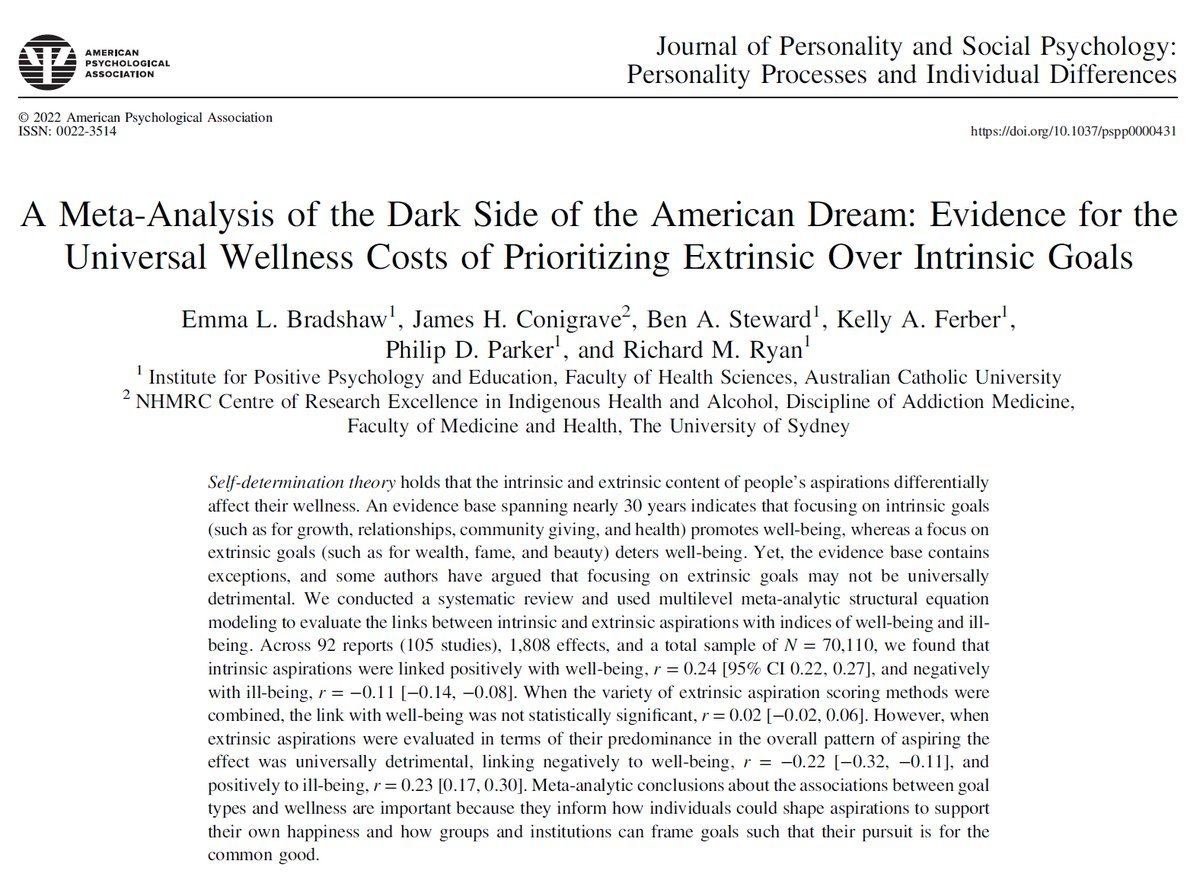
A recent study with over 70K people:
Seeking fame or money (above a certain threshold) does not contribute to life-satisfaction.
Here are 5 principles that do:
You’ve gotta see this.
In full.
Football is football. Sport is sport.
End of story.
Get into sport played by women, and the phenomenal athletes in the @FIFAWWC
Copyright @orangefrance
What career would you realistically pursue if you wanted the most money? What career would you realistically pursue if you wanted the biggest impact? What career would you realistically pursue if you wanted to have the most fun? What career offers the best mix?
Spent the last 30 days in America
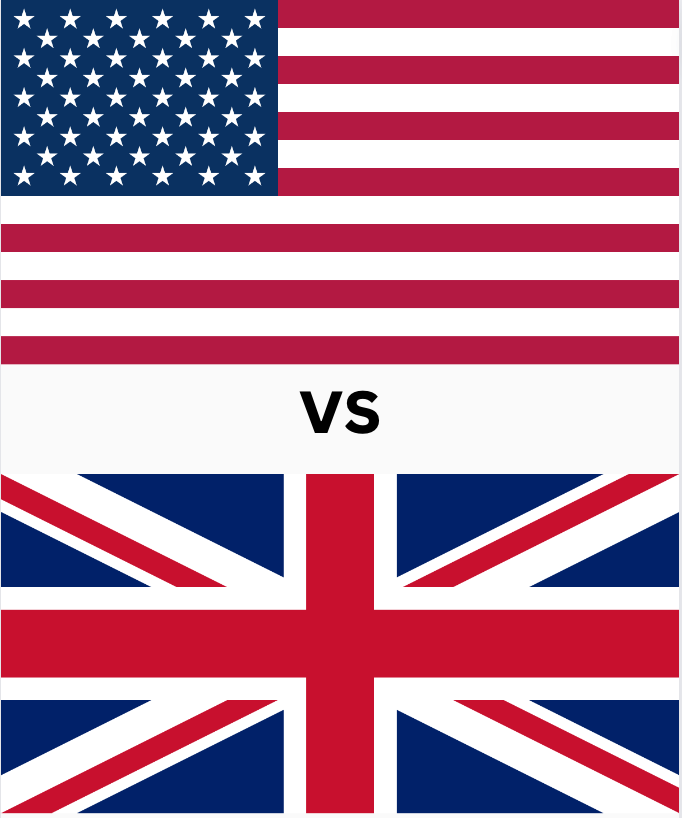
Some thoughts on the USA vs the UK:
1. Flags - In America, if you fly the national flag -- it's normal. In Britain, if you fly the national flag -- you're labeled a neo-nazi.
2. Accents - In America, if you drive for 2 hours -- people's accents don't change much. In Britain, if you drive for 2 hours -- people's accents change a lot.
3. Work - In American culture, people sell themselves well when meeting strangers. In British culture, you're taught to downplay everything you do.
4. Fashion - In America, the biggest companies are tech. In Europe, the biggest companies are fashion.
If you're European -- you immediately become the top 10% of fashion sense in America.
This rule even applies to Brits -- who are notoriously the worst dressed in Europe.
5. Nice cars - In America, if you have a nice car -- most people will ask: "Wow. What do you do for work?"
In Britain, if you have a nice car -- some people will wait for you to leave it, and scratch their key down the side of it.
6. The British accent - Most Brits don't realize this but Americans love the British accent.
You immediately appear smarter and more attractive than you are. The British accent is a commodity in the rest of the world -- except Britain.
If you have a British accent, the worst ROI you get for it is ironically in Britain.
Unfortunately, the reverse isn't true for American accents.
7. History - In the 1700s, Americans were the ones that decided to get on a random boat for 50 days and travel across the whole world in search of a better life.
The Brits were the ones that said: "What a silly idea. Why would I do that?!"
This historical A/B test can explain 99% of their differences generations later.
8. Decentralisation - In America, if you want to get into politics - Washington.
If you want to get into tech - San Francisco.
If you want to get into finance - New York.
If you want to get into entertainment - LA.
In Britain, if you want to get into elite politics, tech, finance, or entertainment: You move to London.
(Remote work and Manchester's boom is changing this slightly)
9. Anti-Fragile - American kids are told they can do anything. This is great -- but can result in fragile self-esteem when reality meets their imagination.
British kids take the piss out of one another. This looks bad on the surface -- but it results in anti-fragile self-esteem. You learn to publicly laugh at your own insecurities.
10. Comedy - Chris Rock once broke down the difference between him (American) and Ricky Gervais (British).
American comedy is often so loud. They shout to get their joke across to everyone in the room.
British comedy is usually subtle. The best joke is the one that only the smart people in the room understood.
11. Road rage - There appears to be less road rage in America relative to Britain.
In Britain, there are 10x more car horns and fights.
I suspect this might be because of bigger roads -- or that you're unsure if the person you're starting a fight with has a gun.
12. Naming conventions - America often calls things what they are.
E.g. Joshua Tree in LA -- because it has a lot of Joshua Trees.
In British culture, it's more obscure.
E.g. Big Ben's own Wikipedia page has a debate about why a clock is called Big Ben. All we know is it involved some bloke called Ben.
13. War scar tissue - During WW1 and WW2, Britain saw millions of people die near their own soil. Major British cities got bombed into rubble.
Americans have barely seen any losses near their land. And the wars where they did take damage (E.g. Iraq, Afghanistan, and Vietnam) - they were all so far away from America.
As a result, the British culture is more stoic. Brits mentally prepare for the worst outcome. It's the spirit that got us through watching our country get blown up twice.
Bonus thought:
14. Meta point - I poked more fun at Britain than America.
Why? Because I'm British. And mocking yourself rather than someone else is a very British thing to do.
And I love that part of British culture.
------
Nuance: This is largely satire from my own personal observations. The sample size is 1 and none of the above is a scientific fact.
Some wisdom from my interview with @EmilySleeman_8. She's right. We may question whether we're "qualified" to do what we're being asked to do. Often we are more than qualified! So get out there, do your thing and trust your own training.







![bpoppenheimer's tweet photo. After his second year at Michigan, Tom Brady wanted to transfer.
He wasn't playing in games, and he was so low on the depth chart that he only got 2 reps in practice.
Brady met with his coach to express his frustration, “The other quarterbacks get all the reps.”
Coach replied,
“Brady, I want you to stop worrying about what all the other players on our team are doing. All you do is worry about what the starter is doing, what the second guy is doing, what everyone else is doing. You don't worry about what you're doing.”
Coach reminded him, “You came here to be the best. If you're going to be the best, you have to beat out the best.”
And then he recommended that Brady start meeting with Greg Harden, a sports psychologist who worked in Michigan's athletic department.
Brady went to Harden's office and whined, “I'm never going to get my chance. They're only giving me 2 reps.”
Harden simply replied, “Just go out there and focus on doing the best you can with those 2 reps. Make them as perfect as you possibly can.”
“So that's what I did,” Brady said. “They'd put me in for those 2 reps, man, I'd sprint out there like it was Super Bowl 39. 'Let's go boys! Here we go! What play we got?'”
“And I started to do really well with those 2 reps. Because I brought enthusiasm, I brought energy.”
Soon, it went from getting 2 reps to getting 4 reps. Then from 4 to 10, “and before you knew it,” Brady said, with this new mindset that Greg instilled in me—to focus on what you can control, to focus on what you're getting, not what anyone else is getting, to treat every rep like it's the Super Bowl—eventually, I became the starter.”
Takeaway 1:
Greg Harden telling Brady to just focus on being great during his 2 reps reminded me of a piece of advice from the entrepreneur Mark Cuban.
“People come to me all the time and tell me they're stuck,” Cuban explained. “They're stuck in a job they don't like. They're stuck working for a boss they don't like. They're stuck on a team they don't like.”
“I just tell them, 'Be great.'”
“The reality of life is that you can't just always quit your job. You can't just always go to your boss and say, 'Give me the promotion, or I'm out of here.'” You can't just always go to your coach and say, 'Give me more reps, or I'm transferring.'
“So when you're stuck, you've gotta find it within yourself to say, 'Ok, this is where I am. And if I'm going to be here, I'm going to be great.'
Because if you're great at your job, typically other people and companies find out, so it creates opportunities.”
Takeaway 2:
I've written before about “lead measures”—the actions and behaviors that predictably drive success.
The core characteristic of a lead measure, the authors of The 4 Disciplines of Execution (4DX) write, is that “a lead measure is influenceable; it can be directly influenced by you.”
To achieve your goals, they recommend (echoing what the Michigan Coach told Brady), apply a disproportionate energy to the things that are in your control.
Starting at Michigan and for the rest of his career, that’s what Brady did, that’s what drove his success.
In his first media call after he was selected by the New England Patriots with the 199th pick in the 2000 draft, Brady was asked: “Are you aware that [along with starting quarterback, Drew Bledsoe] there’s another quarterback here that they drafted last year?”
Brady said he was aware of that. “And I know he’s a heck of a player,” Brady said. “But I’ve always really concerned myself just with the things I can control. I don’t put a lot of thinking into the other guys because I know I’m not at my best when I’m not just thinking about playing as well as I possibly can.”
- - -
“I never once in my life ever said I wanted to be the best of all time. Ever. I wanted to be the best I could be, period. I learned that in college. It didn’t matter what the other guys were doing. It mattered what I was doing.” — Tom Brady
Follow @bpoppenheimer for more content like this!](https://pbs.twimg.com/media/F85l1KpWUAAeAcO.jpg)