Nairobi Senator Edwin Sifuna @edwinsifuna recently cracked a joke that got everyone talking.
How is a chicken from Western Kenya supposed to walk up to the 12th floor of these new affordable high-rise apartments?
While it made us laugh, it actually points to a real, deep cultural shift as Kenya modernizes. History shows we are simply retracing the footsteps of giants. When founding father Lee Kuan Yew started moving citizens into Singapore’s famous high-rise public housing in the 1960s, they faced the exact same "kampung" growing pains.
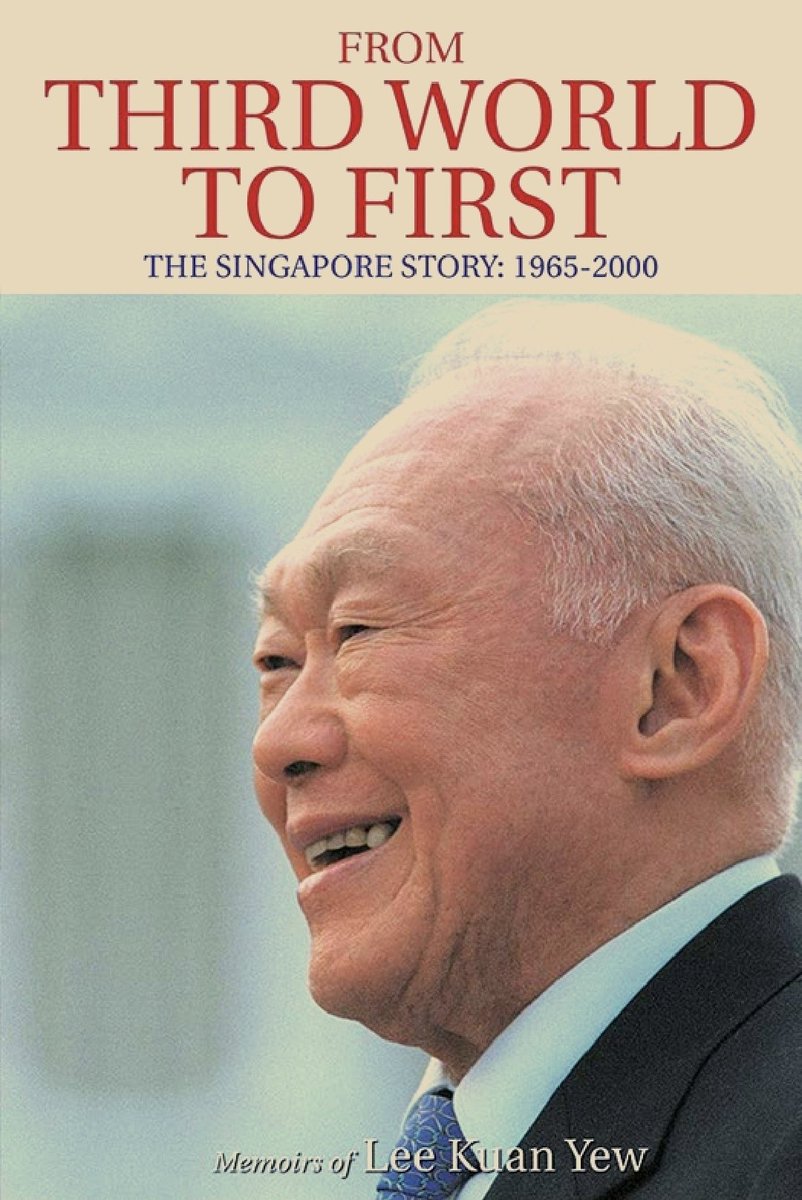
Well our benchmark is Singapore , guess what ? Lee Kuan Yew in his book " From third world to first world " wrote about families trying to rear ducks in their kitchens and farmers literally coaxing bewildered pigs up concrete apartment stairwells! People who had lived on the ground for generations had to learn a completely new way of life. Singapore didn't stop building they patiently educated their people and adapted we can do the same.
Sifuna’s 12th-floor chicken voyage is a genuine concern and it isn't a reason to abandon vertical housing. It is a creative invitation for our planners. By designing lower-level community spaces or urban markets, we can preserve our rich social fabric while lifting millions into dignified, modern homes. Progress takes time, but with the right mindset, our transition from the village to the sky will be a beautiful success story.
Indeed the debate about the chicken walking up 12th floor is real it happened in Singapore our benchmark.
As always I choose to remain an optimist
MH
Introducing Claude Fable 5: a Mythos-class model that we’ve made safe for general use.
Its capabilities exceed those of any model we’ve ever made generally available.
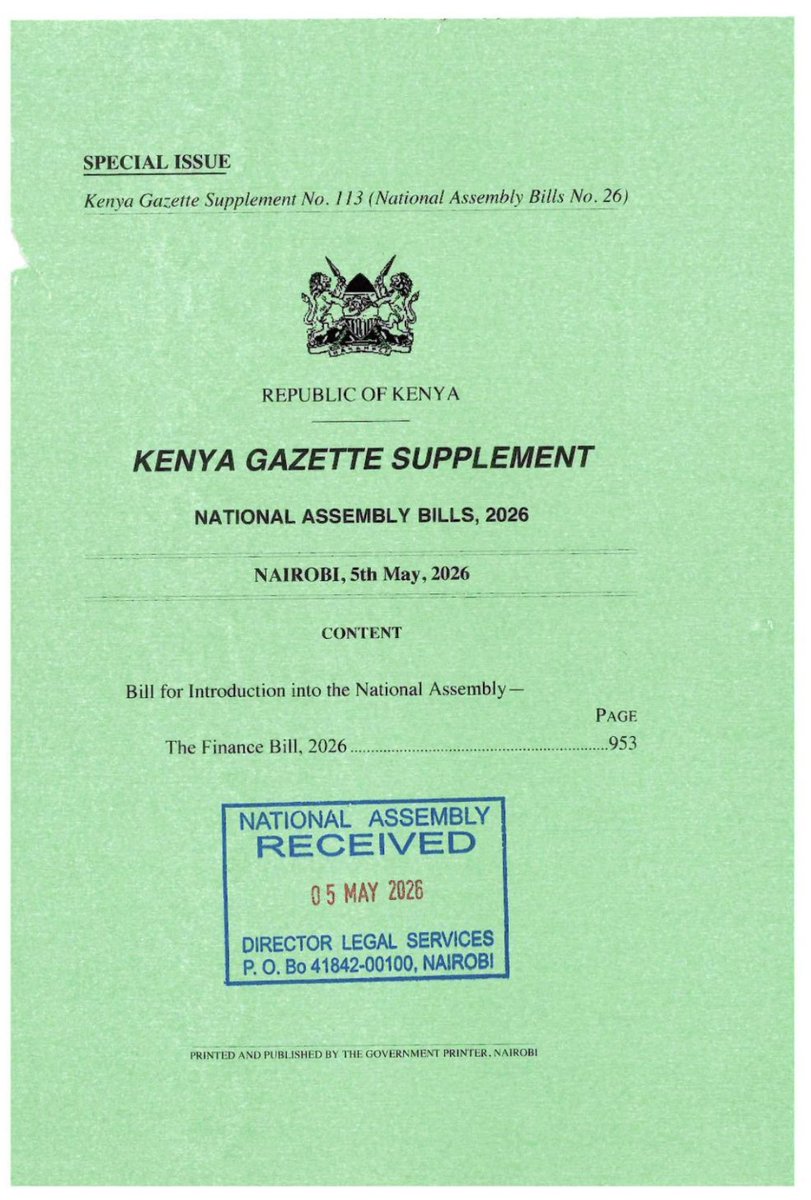
One thing about the just concluded Finance Bill 2026 stakeholder submissions, they were truly rich with simulations on the implications of the proposals.
A 🧵on some simulations that stood out for me.
One of my highlights this week in Finance Bill 2026 submissions was the ask by the Law Society of Kenya (@lawsocietykenya) that the Income Tax Act be amended to provide that Sacco contributions made through the check-off system from employment income be granted non-taxable deduction status.
The Society's argument is that in Kenya, Sacco contributions, by & large, play the role of long-term savings & retirement function pretty much the same way as pension contributions & therefore ought to enjoy the same tax treatment.
The Society also weighed in on the push for PAYE bands adjustment proposing:
· On the first Kes 30,000 — 10%
· On the next Kes 8,333 — 20%
· On the next Kes 461,667 — 25%
· On the next Kes 300,000 — 27.5%
· On all income over Kes 800,000 — 30%
A man's end month:
"Daddy, new shoes for church. Mummy said the one I wanted was 2,000."
"Hello dear, also, don't forget to deposit Ray's fees tomorrow. It is 18,000 for Grade 5 pupils."
"Hello Dad, the WiFi isn't working. I have an online lesson for Research Writing this evening. Send 6,500 to pay for its reconnection."
"Hello parents, the Grade 10 Yellow will be going for a Mathematics trip to the Museum of Illusion, Nairobi. The cost of the trip per student is 15,000."
"Boss, the tree on the lower side fell on the cowshed. Fundi repaired it. Send 4,000."
"Hello, dear, my dad's monthly diabetes clinic is tomorrow. Send me 7,000 to fuel the car."
"Baba Ray, good afternoon. Ray took three bunches of bananas for cooking yesterday. The Bill is 1500."
"Bro, the vet treated mum's cow. I paid 100, the balance is 2,900."
"Boss, the balance on the previous repair of the sockets and bulbs was 6,000. Please send me so that I can pay the electrical shop."
"Bro, my husband was severely injured last night after a fight. We are fundraising for his head surgery. As my elder bro, send 3,000."
"Hello, sir, James, the janitor in the maintenance department, lost his wife. We are fundraising. Send 1,000."
"Boss, I will not be there on Wednesday, so bring your car for service tomorrow morning. The bill is 8,000."
"Hello, cousin, I was called for an interview but I don't have fare. Please send me 1,000 for fare and lunch."
"Praise God, brethren, Kevin's wedding committee will sit tomorrow. As the chairman, you will kickstart the fundraising with 25,000."
"Good evening, your gym subscription will end tomorrow. Please pay 2,500 to continue with your fitness classes without interruption. Thank you."
"Hi, I need a favour. My gas went off when I had just put the veggies on cooker. Please send me 3,000. I will refund you tomorrow."
To be a MAN is to bear responsibility for all things.
#MasculinitySaturday
Is it (il)legal to draft pleadings using Artificial Intelligence (AI) tools?
Kenya's High Court has set aside a judgment delivered in December 23rd 2025 after it emerged that pleadings in the case had been generated using AI tools.
· The High Court holds that this raises serious concerns about fairness & the integrity of court processes
· "The drafting of Pleadings in Kenya is regulated by Order 2 of the civil Procedure rules"
· "The generation of pleadings through unknown tools or artificial intelligence gives an unfair advantage to the person drafting using such tools. This amounts to an affront to access to justice as guaranteed under Article 48 of the Constitution"
· "Drafting pleadings, using artificial tools unknown to the Civil Procedure Rules and artificial intelligence which are not provided for in our Laws, gives such a user or litigant an unfair advantage over their rival in an adversarial system"
· "Kenya is currently working towards legally embracing artificial intelligence. Once the legislators come up with an appropriate legislative framework of at all, then artificial intelligence will then form part of our Laws"
Safaricom went for the Big Bang / “Cold Turkey” Approach strategy of system rollover with the new My OneApp, and that has not gone well, with customers wailing and complaining all over the country. The same thing happened with the Government and the SHA system, and many people should have learned from that. There are many ways or strategies to roll out a new system. It is very brave to go for the direct cutover, or what is also known as the Cold Turkey Approach. The cutover strategy is very simple: the entire system goes live across the whole organization at a single point in time. The old system is immediately switched off.
I can see why organisations choose to use this approach or strategy. Chief among them is that it offers the fastest overall timeline and quickest realization of benefits. It is also simple and the cheapest to implement. Of course, Safaricom has resources, so I do not think they would go for this approach simply because it is cheap.
So why did Safaricom go for the Big Bang? I have no exact idea, but I think it could be internal pressure on the tech team. For example, if the tech team has been working on a system for a while and the launch or the implementation has been postponed several times, then the pressure to have it ready would be too high, making it hard to make a case for other rollout strategies. I know I have mentioned cost cutting and ruled it out as a reason, but there are scenarios where even the richest company in East and Central Africa would not want to spend money on a lost cause. So, this scenario is similar to the time factor mentioned above. If a system is taking too long and running way above the original budget, then again, the pressure would be too high, and the tech team would not have room to suggest a more expensive approach.
Before I come back to what other approaches Safaricom could have used, let me look at some of the problems with the Safaricom My OneApp. The following are the areas where Safaricom went wrong with their approach:
1. Forced Migration Without Notice
This, to my view, was the biggest mistake. Many users woke up to find their familiar M-PESA app replaced by a completely different interface without any prior warning or SMS notification. Well, this would have been okay if everything went smoothly, with customers seeing some new cool features. But it is a time bomb if things are not okay, as has been the case with the Safaricom new My OneApp.
The conventional way of doing it is to upload the update on the app stores and then prompt users to update their apps. From core system updates on different phones to different apps on app stores, people are given a chance to update their favourite apps when there are changes.
2. Connectivity & SIM Restrictions
The new app introduced rigid requirements that broke the experience for many users. And there are three problems under this:
Wi-Fi Issues: Many users reported that the app fails to function properly over Wi-Fi, often demanding a Safaricom data connection to authenticate. On Twitter (X), @ImbayiK noted the irony that the app uses Wi-Fi to download itself but prevents users from using the same Wi-Fi to actually use it.
"The irony that us the Safaricom mpesa app updating itself using WiFi but can't access the app using the same WiFi. Wananibore kweli"
SIM Slot Dependency: There are widespread complaints that the app only works if the Safaricom SIM is in Slot 1. For dual-SIM users, this forced a physical hardware change just to use the app.
Our beloved Diasporans: Kenyan users abroad reported being locked out because the app now requires a direct Safaricom network on the phone, making it nearly impossible to manage accounts from outside the country.
3. Data Loss
A major technical oversight was the failure to migrate saved data. Many users found that their carefully curated lists of Paybills, Till numbers, and frequent contacts vanished during the update, forcing them to manually re-enter account numbers. I saw so many people annoyed because of this.
There are others, but the above three are the most significant challenges to the users that I have seen many people complain about.
So instead of the Big Bang approach, what are the other strategies that Safaricom should have used? I think the best would be Parallel Adoption / Running. In this case, the new system runs alongside the old one for a period of time. Users operate both until the new app is validated, then the old is decommissioned. The main advantages of this approach are:
-Lowest risk: The old app acts as a safety net with easy fallback.
-Allows real-time comparison, data validation, and output checking.
-Minimal disruption for users.
-High confidence before full switchover.
The other strategy that makes more sense is the Pilot / Test Rollout. The new system is first implemented with a small, representative group before wider rollout. I guess they did that internally, but the problem with internal rollout is what could be described as an echo chamber factor. People have the same views and are subject to the same conditions.
World Bank Group debars PwC Associates, PwC Kenya, & PwC Rwanda in connection with collusive & fraudulent practices as part of the Eastern Electricity Highway Project under the First Phase of the Eastern Africa Power Integration Program in Ethiopia.
Effectively, PwC Associates, PwC Kenya, PwC Rwanda, & any affiliates they control will be ineligible to participate in Bank Group-financed projects & operations.
The World Bank says the settlement agreement provides for a reduced period of debarment in light of the companies’ admission of misconduct, cooperation, strengthening of aspects of their existing integrity compliance program, & voluntary remedial actions.
The remedial actions include an internal investigation, internal action against responsible parties, ceasing business with all involved sub-consultants & voluntary restraint from bidding for Bank Group-financed contracts during the settlement agreement negotiations.
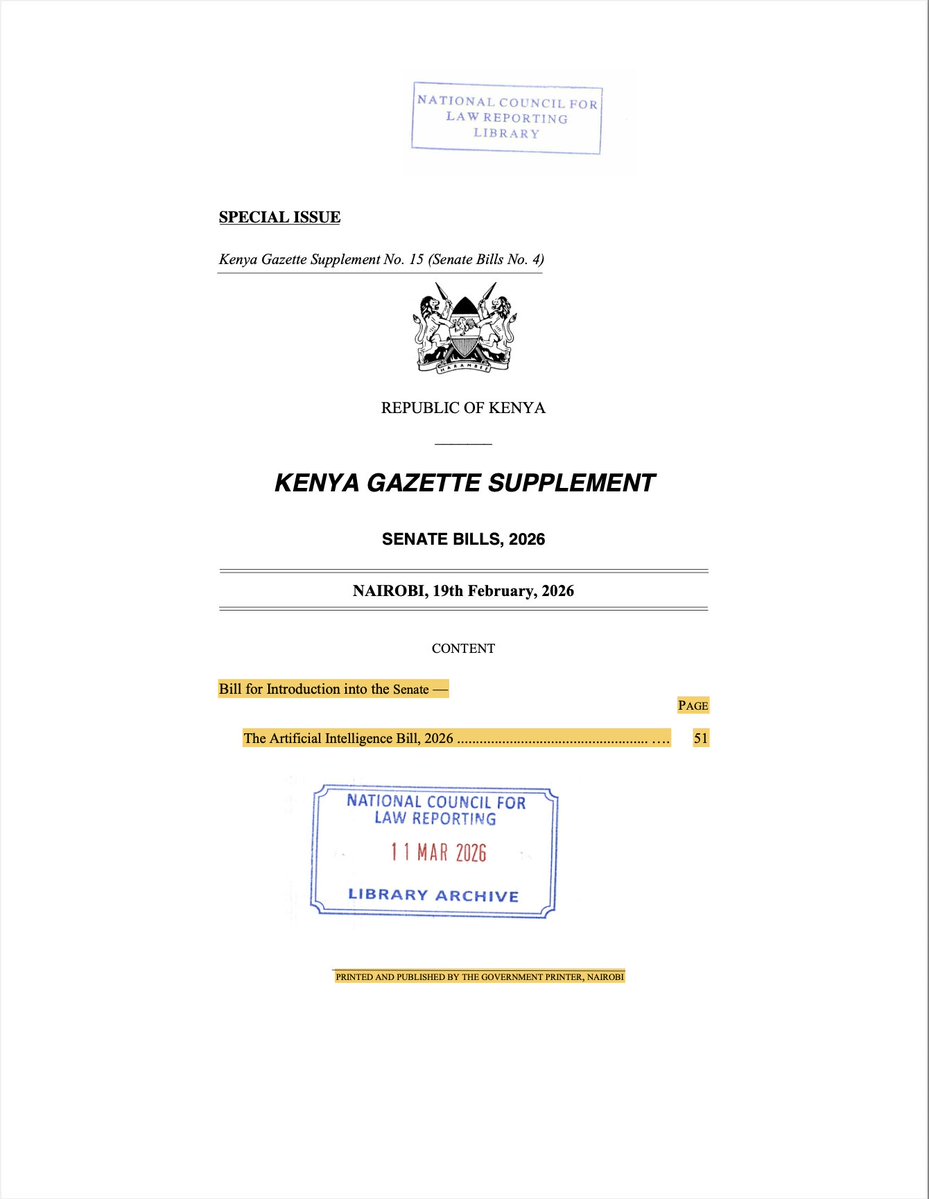
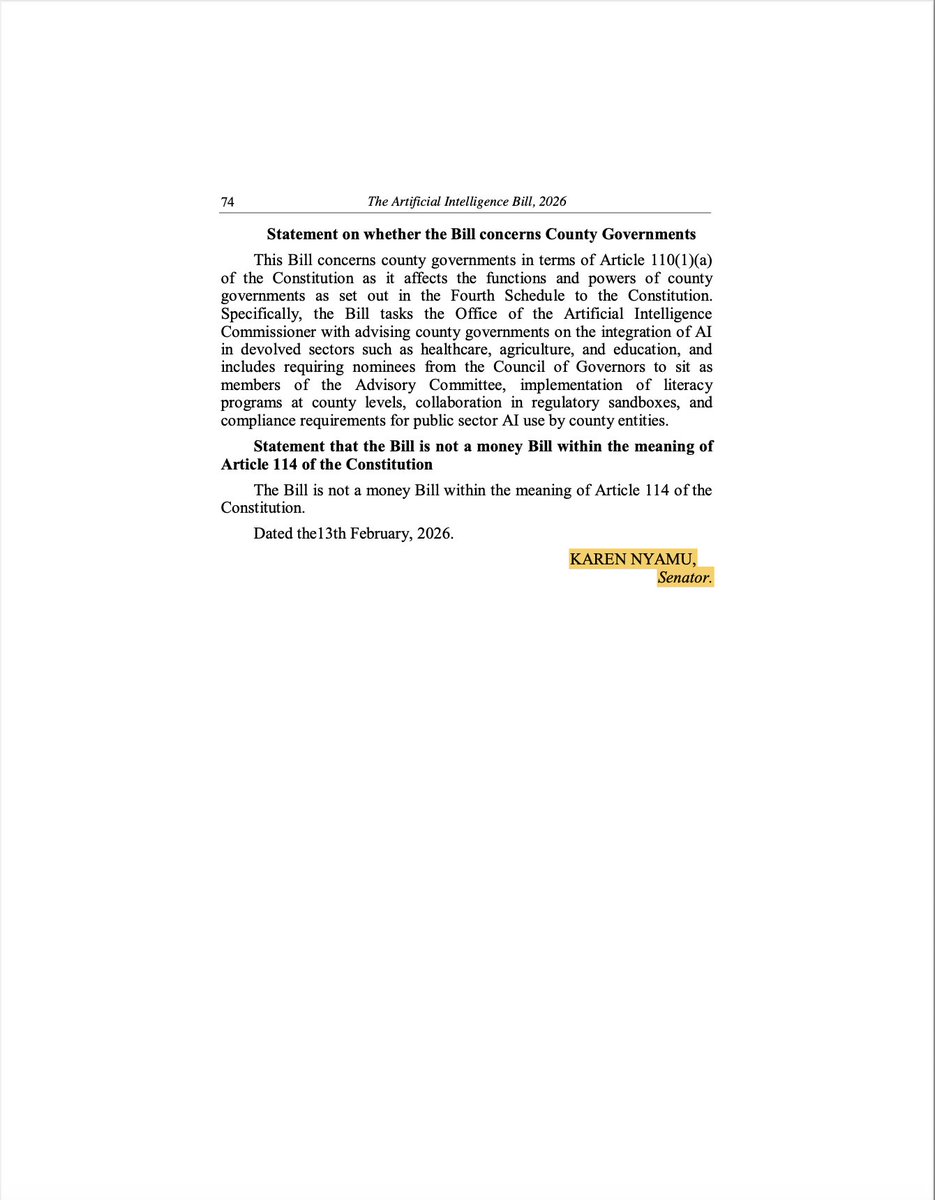
There's an Artificial Intelligence Bill 2026 sponsored by Senator Karen Nyamu.
What are we seeing here?
· It proposes establishment of the Office of the Artificial Intelligence Commissioner who will be nominated by the President & approved by Parliament
· The Commissioner of Artificial Intelligence will have powers to:
1. Enter premises & inspect artificial intelligence
systems, records or data upon reasonable notice
2. Require the production of records, documents or
information relating to artificial intelligence
systems
3. Issue enforcement notices, orders or directives to
ensure compliance
4. Impose administrative fines for non-compliance as
prescribed by regulations
5. Summon persons to give evidence or produce
documents
6. Classify artificial intelligence systems according to the level of risk they pose to health, safety, fundamental rights, the environment or societal welfare. A system classified as unacceptable risk is
prohibited in Kenya
7. Prescribe guidelines on risk management, security
protocols, bias detection, & ethical standards for high-risk artificial intelligence systems
8. Develop & publish ethical guidelines for the development, deployment & use of artificial intelligence systems
· The Commissioner of Artificial Intelligence will hold office for a term of five years & will be eligible for
re-appointment for one further term of five years
· The Artificial Intelligence Commissioner may
be removed from office by the President on the
recommendation by the Cabinet Secretary on account of serious violation of the Constitution or any other
law
· Among the duties of the Artificial Intelligence Commissioner will be:
1. Conduct risk assessments of artificial intelligence
systems
2. Perform conformity audits & post-market
surveillance of artificial intelligence systems
3. Assess high-risk artificial intelligence systems to
ensure compliance with ethical standards & risk
mitigation requirements
4. Develop policies, guidelines, codes of practice
& standards on artificial intelligence
governance, ethics, safety, risk classification &
responsible deployment in consultation with the
relevant agencies and the public
5. Promote responsible development, deployment
& use of artificial intelligence systems in
Kenya
6. Establish & manage regulatory sandboxes to
facilitate safe innovation, testing and piloting of
artificial intelligence while mitigating risks and
promoting local solutions
7. Receive & investigate complaints relating to
artificial intelligence systems, including harms
such as bias, discrimination or infringement of
rights
8. Maintain a public register of high-risk artificial
intelligence systems, including those used by
county governments
· The bill proposes establishment of an Advisory Committee on Artificial Intelligence comprising:
1. The Artificial Intelligence Commissioner
2. A representative of the Cabinet Secretary ICT
3. A representative of the Office of the Data Protection Commissioner
4. A representative of the National Commission for
Science, Technology & Innovation
5. Two persons with expertise in artificial intelligence ethics and human rights, nominated by relevant professional bodies
6. Two persons, being one man & one woman,
nominated by the Council of Governors
7. One person representing the private sector
8. One person representing civil society organizations
· The bill stipulates that a provider of a high-risk artificial intelligence system shall submit annual compliance reports to the Artificial Intelligence Commissioner, and non-confidential information from the reports shall be made available to the
public
· A person who fails to comply with the Artificial Intelligence Act shall be subjected to a fine not exceeding Kes 5.0 Million or to imprisonment for a term not exceeding 2 years, or to both; and
If you hold several properties under your name,
You are what we call a SOLE owner.
And there is pride in that.
Assets make you look like a HNI - High Net Worth Individual.
But being a sole owner quietly carries a dangerous meaning:
- Sued once. Lose everything.
We live in a very litigious society.
One lawsuit,
And every property under your name becomes a target.
That is why your wealth requires asset protection.
One of the most powerful tools is moving property into:
- A Family Trust, or
- A Private Limited Company
Let us focus on companies today.
Here is the least known part.
If you transfer property from your name into a company where:
- You own 100% of its shares, or
- You co-own it with your spouse, or
- You co-own it with your children
The transfer does NOT attract the 15% Capital Gains Tax.
You move the assets KRA free.
And you still retain control of everything.
This is how many wealthy families structure their wealth.
They own nothing personally.
But control everything.
What is holding you back?
The reported arm-twisting of NSSF to buy KPC share at the inflated price of sh9 brings back memories of the 1990s when NSSF was being used as a conduit for cashing out of grabbed parcels of land.
What is it about ADANI that can’t be done by any other company? If ADANI is so good in airports, how come no single airport in India is in Global TOP100 Airports? If ADANI is so good on Health Insurance, how come 80% of Indians don’t have health insurance of any kind?
So, PLEASE, don’t CON US!
Yoooh… the 2024 finance bill is being implemented chini ya maji daily.
This bank message made me do a research early this morning like a WITCH!
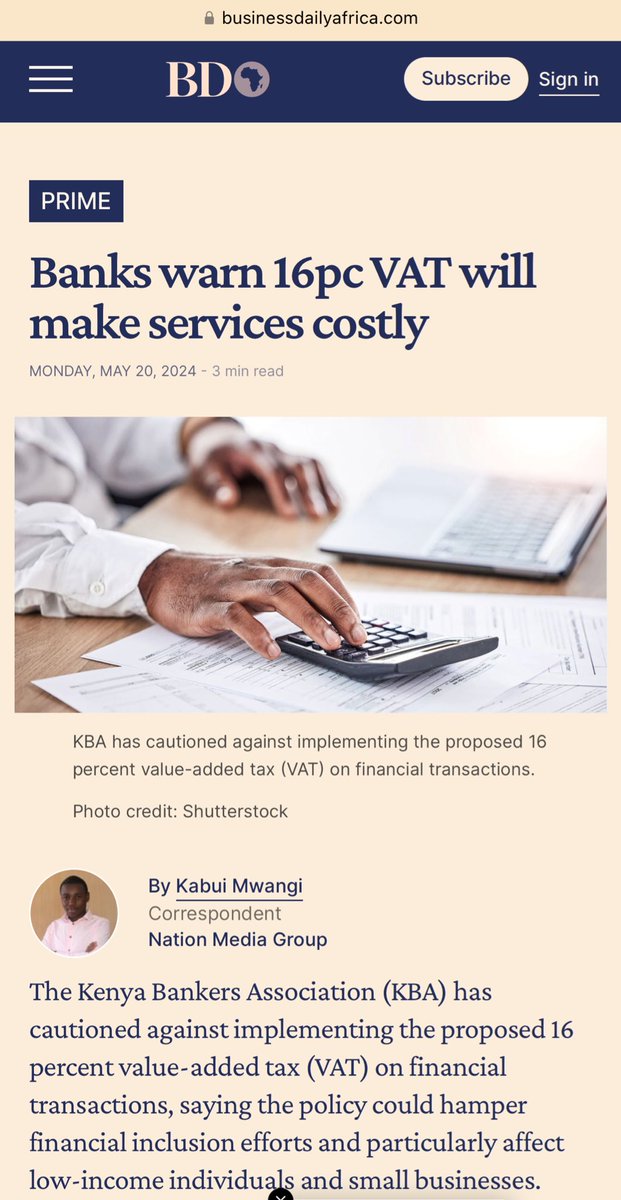
PesaLink transactions are being slapped with 16% VAT?
Starting June 17, 2025, moving YOUR OWN MONEY will cost you more because the gvt wants a cut every time you make a transaction.
We’re making digital banking harder in the name of “compliance”?
I’m tired. You?
John 20:25 ".... Unless I see in his hands the mark of the nails, and place my finger into the mark of the nails, and place my hand into his side, I will never believe."